DIY Granola

At Better Farm, we make every effort to buy ingredients as opposed to pre-made, processed foods. By learning to create our own dishes, breads, and other products, we can control what is in our food and ensure only the healthiest, best ingredients make it to our table. Our latest "from-scratch" effort was to make granola.

First, we gathered our ingredients: oats, dried cranberries, almonds, dried apricots, salt, oil, honey, and molasses. There's no exact list of ingredients you need; this is all about what you like! NO matter what ingredients you pick, here's the basic tutorial on making the granola:
  • Turn the oven on to 350 
  • In a large bowl, mix all your dried ingredients
  • Add wet ingredients (you will know you've added enough when the mixture begins to clump)
  • Pour the mixture onto a greased cookie sheet and press it down into all the corners.
  • Bake for 12 minutes
  • Take out the tray and mix up the granola, then return the tray to the oven
  • Bake until the granola is golden-brown
  • Enjoy with yogurt, milk, soy or almond milk!

Better Mud Run Recap

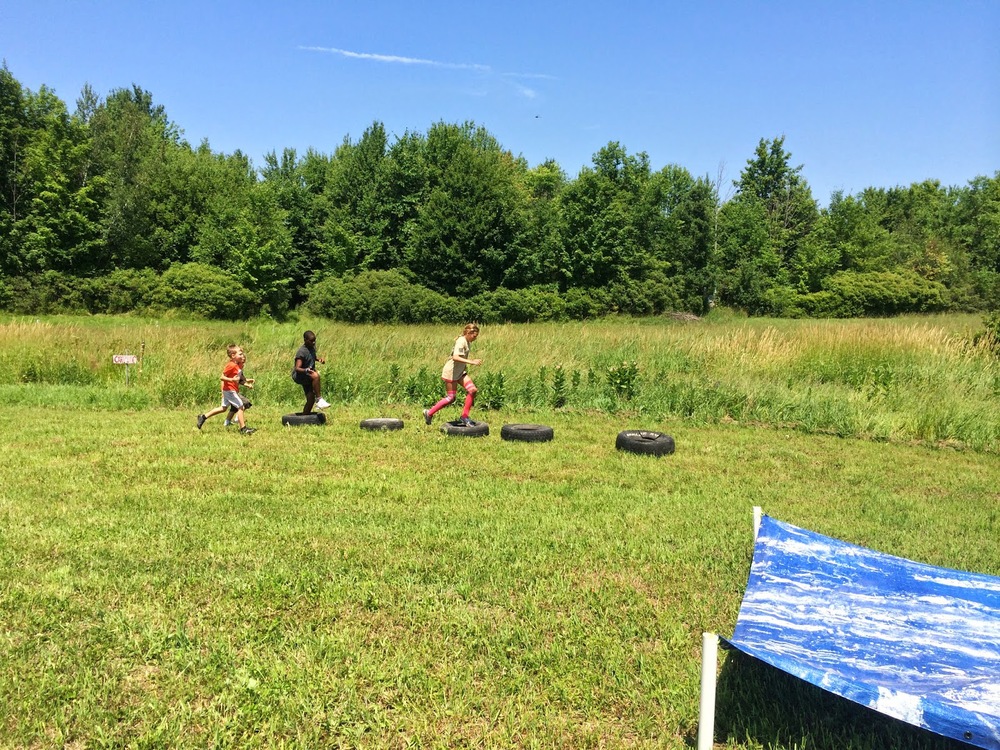
The fierce youth competitors of last Saturday's Better Mud Run.
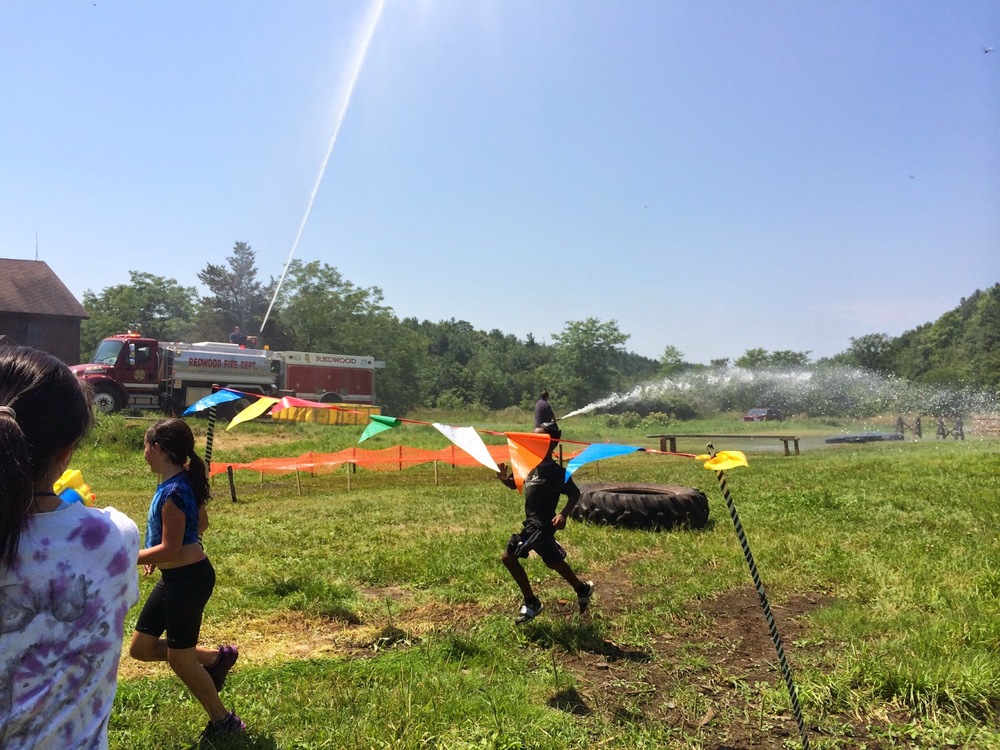
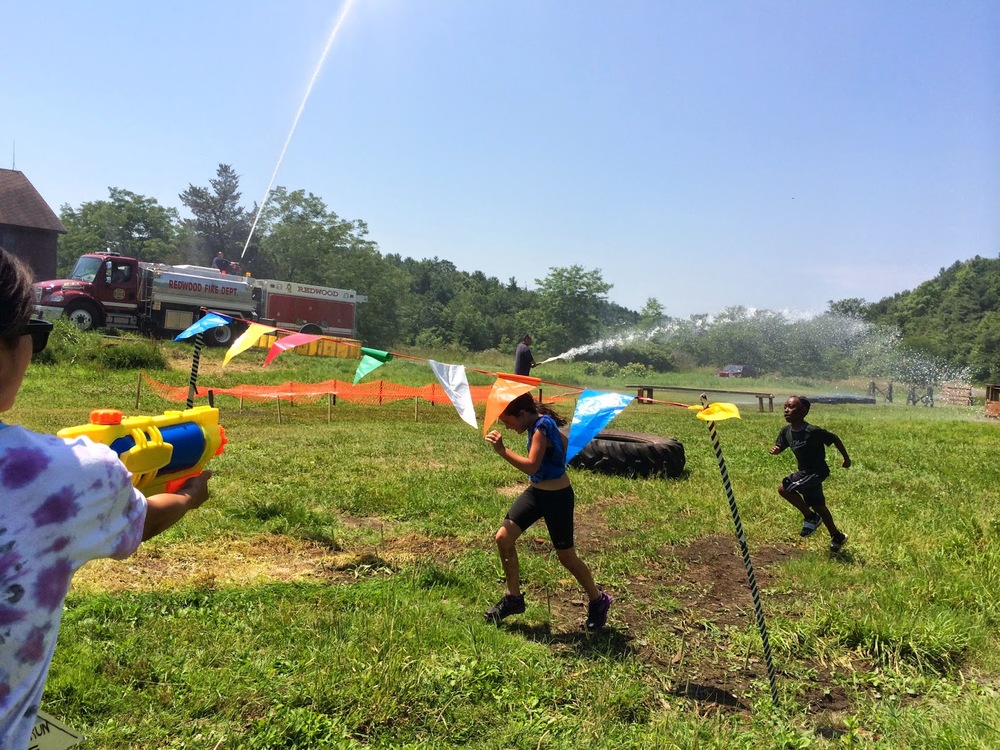
Redwood Volunteer Fire Department members who came out to soak the course.
Last Saturday marked the First Annual Better Mud Run at Better Farm, which raised funds for Better Farm's wellness outreach as well as for nearby USO Fort Drum.

Hosted by Better Farm and featuring more than 20 obstacles, the Better Mud Run invited the fiercest  athletes and thrill-seekers to the Better Farm campus for agility obstacles, a road run, scaling mountains, and—of course—getting really, really muddy. There was an abridged course for younger competitors—and even the Redwood Volunteer Fire Department got involved, agreeing to take time out of their day to wet down the course:

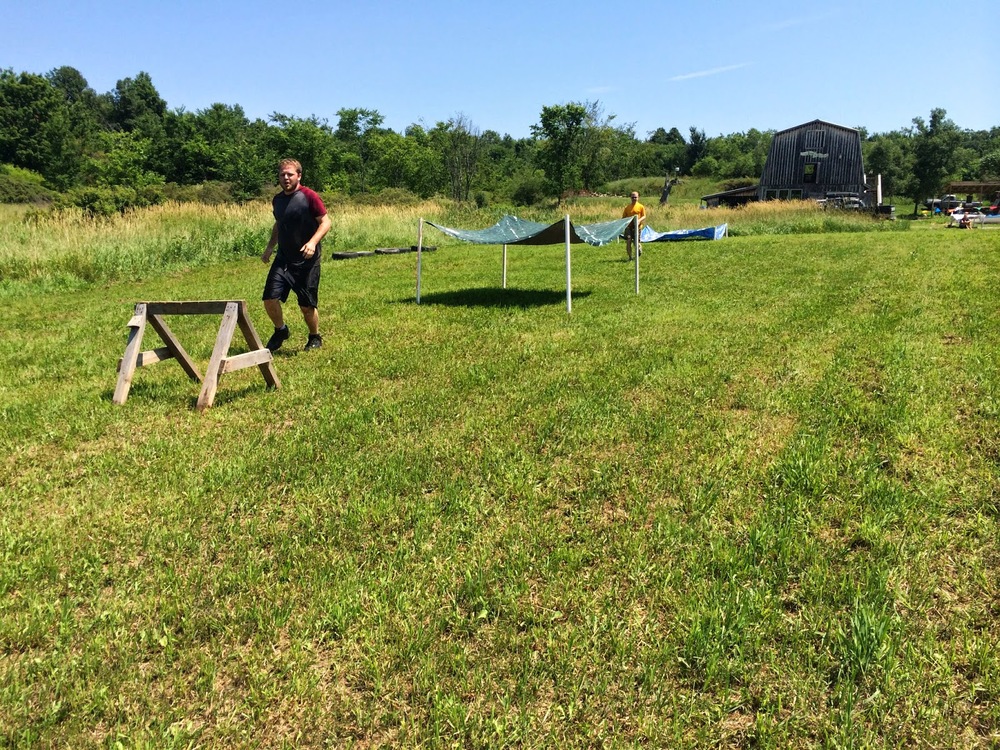
Our grounds crew worked tirelessly the week prior, getting everything in order for the day:

Finally, the big day arrived. Here are some shots from the event itself:


Many thanks to Doc, Carl, James, Mollica, and our other organizers; Cheesman for running the tree-stand shootout tower, all our volunteers, and to everyone who came out to support such great causes. See you in 2015!

Comment

Nicole Caldwell

Nicole Caldwell is a self-taught environmentalist, green-living savant and sustainability educator with more than a decade of professional writing experience. She is also the co-founder of Better Farm and president of betterArts. Nicole’s work has been featured in Mother Earth News, Reader’s Digest, Time Out New York, and many other publications. Her first book, Better: The Everyday Art of Sustainable Living, is due out this July through New Society Publishers.

The Humanure Compost Toilet System

One of the most wasteful uses of fresh, drinkable water in the world is that of flushing the toilet. Residential toilets alone account for roughly 30 percent of indoor residential water use in the United States—that's equal to more than 2.1 trillion gallons of freshwater each year, according to the EPA. There's got to be a better way.

Why would we use fresh, drinkable water—which, by the way, is in limited supply—to flush humanure away into some unknowable place for endless processing, especially at a time when we are increasingly aware of the benefits of at-home composting systems? Why do people insist on being the only animals on the planet to live so far removed from any natural systems?

There is a better way. Whether you 're hosting an event and need a few extra porta-potties, in need of a toilet out by your work room or garage, re-doing your camp on the lake and lack a bathroom, or if you're ready to transition from a water-based septic or sewer system, the "humanure" compost toilet is a simple, cheap, ecologically responsible way to deal with human waste.

Over the course of your lifetime, you will likely flush the toilet nearly 140,000 times; with each flush using somewhere between 1.28 gallons (if high-efficiency) and 7 gallons of fresh water. Leaking toilets (even the ones you only hear at night) can lose 30 to 500 gallons per day.

Joseph Jenkin's amazingly informative website The Humanure Handbook offers tons of ideas for alternatives to traditional, flush toilets—none of which are so gross that the average person can't figure out how to maintain, clean, and utilize the system in his or her everyday life. Although most of the world's humanure is quickly flushed down a drain, or discarded into the environment as a pollutant, it could instead be converted, through composting, into lush vegetative growth, and used to feed humanity.

The humanure process involves a compost toilet, a compost bin and cover material. Toilet instructions are simple. There are a variety of ways to make a humanure toilet (or you can buy one).

One of the Better Farm projects last year was to teach students how to construct a basic humanure compost system utilizing discarded scraps of lumber, a 5-gallon pail, and sawdust.

The popularity of that project fostered a second workshop this year. It was also my first time using power tools… thankfully, no fingers were hurt in the process.

First, we constructed the base.
Then, we added the sides.

Next, we added the top with the toilet seat and hinges.

Voila! Our completed compost bin (dubbed Shitty Prototype II):

Who knew that recycled wood, a bucket, and an old toilet seat could come in so handy? 

Gallery Showing of Works by betterArts Resident Kiran Chandra July 11

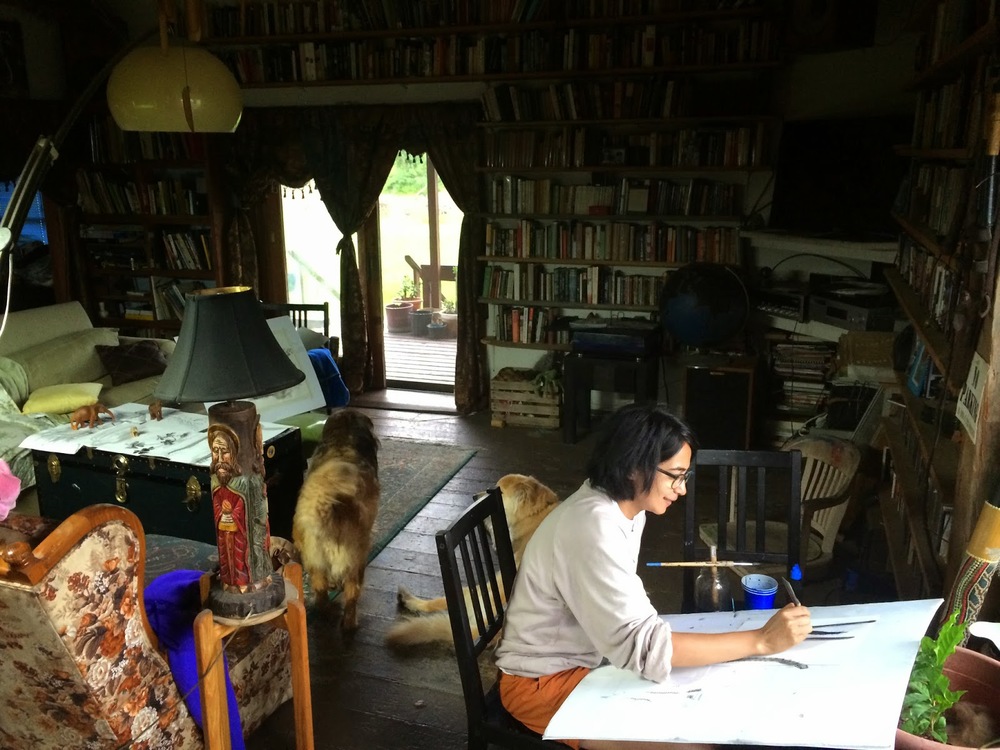
Kiran at work in the Art Barn.
A gallery showcasing the work of betterArts resident Kiran Chandra is slated at 6 p.m. Friday, July 11, at Better Farm's Art Barn in Redwood.


Kiran has been at Better Farm since June 25 through the betterArts Residency Program, creating a body of work that investigates notions of time, place, communication, and dialogue.

Kiran works with paper, water colors, India and colored inks, spoken word, and video. "I write original texts which become recorded audio pieces that are heard alongside drawings or 3-dimensional work," she said. "The sound, drawings and objects come together to create an effect, and often become an immersive environment for the viewer to enter. The materials are in dialogue together, connected by their physical materiality, but also the very structure of the language that informs the work."

Here are some shots of Kiran-in-action:

Kiran doing a plant study in Better Farm's library.


The artist earned a bachelor's degree from St. Stephen's College at Delhi University in India before moving from Calcutta to Boston to earn a secondary bachelor's in fine art from the Art Institute of Boston. In 2013 she earned an MFA from Hunter College in Manhattan. She now lives in Brooklyn, where she is a teaching artist with various organizations throughout New York City; including the Brooklyn Arts Council, City Lore, Artistic Noise, Studio in aSchool, and the Sadie Nash Leadership Program for Young Women.

Light refreshments and snacks will be served at the gallery opening.


The Art Barn is located at Better Farm, 31060 Cottage Hill Road, Redwood NY, 13679. For more information about the betterArts residency program, click here.
Comment

Nicole Caldwell

Nicole Caldwell is a self-taught environmentalist, green-living savant and sustainability educator with more than a decade of professional writing experience. She is also the co-founder of Better Farm and president of betterArts. Nicole’s work has been featured in Mother Earth News, Reader’s Digest, Time Out New York, and many other publications. Her first book, Better: The Everyday Art of Sustainable Living, is due out this July through New Society Publishers.

betterArts Presents: Film Noir Movie Night This Thursday!

BetterArts' new movie-screening series kicks off at 6:30 p.m. this Thursday, July 10, with a double-feature of film noir classics at Better Farm in Redwood.

Film noir is a cinematic term used primarily to describe stylish Hollywood crime dramas, particularly those that emphasize cynical attitudes and sexual motivations. Hollywood's classical film noir period is generally regarded as extending from the early 1940s to the late 1950s. 

Thursday's screenings are set to include Orson Welles' Touch of Evil and John Huston's The Maltese Falcon. Summary sheets—and popcorn!—will be provided. Before the screening, attendees will hear a bit about the genre of the films and their impact on the film community and society as a whole. A led discussion with instructor James Challice will follow the films. 

Please pre-register by emailing info@betterarts.org. Better Farm is located at 31060 Cottage Hill Road in Redwood. For further information, email info@betterarts.org or call (315) 482-2536. For a full listing of upcoming events and workshops, click here.
1 Comment

Nicole Caldwell

Nicole Caldwell is a self-taught environmentalist, green-living savant and sustainability educator with more than a decade of professional writing experience. She is also the co-founder of Better Farm and president of betterArts. Nicole’s work has been featured in Mother Earth News, Reader’s Digest, Time Out New York, and many other publications. Her first book, Better: The Everyday Art of Sustainable Living, is due out this July through New Society Publishers.

Oregano!

A patch of oregano growing in Better Farm's herb beds.
Oregano, or “mountain joy”, is native to northern Europe and grows as an annual plant in North America. I automatically think of pizza whenever anyone mentions the herb, but it can add a warm, aromatic flavor to many different dishes, including sautéed mushrooms and onions, omelets and frittatas, and homemade garlic bread. Oregano is not only a great source of vitamin K, manganese, iron, dietary fiber, and calcium, but also has anti-bacterial and antioxidant properties.

Mollica and I gathered some oregano from the herb garden (and fended off an army of mosquitoes in the process). We cut oregano stalks that were on the edge of flowering, because the flowers give the herb a bitter taste. After bringing them into the kitchen, we hung them in small clusters from the ceiling. When they’re all dried, we can start using the herb to enhance our dishes!  

A tip for cooking: Oregano, in either its dried or fresh form, should be added toward the end of the cooking process, because heat can diminish its flavor.

Better Bee Update


Each Tuesday, we have been checking on Better Farm's new bee hive to see if they are filling up the frames that are in the bee box.

 
While most experienced beekeepers check on hives every other week, when learning about bees it's good to check regularly while trying not to be overly disruptive with smokers and such. So, we've been going out on a weekly basis and pulling a few trays out to see how the hive has grown, keep track of the queen, and keep up with how much honey is being produced.

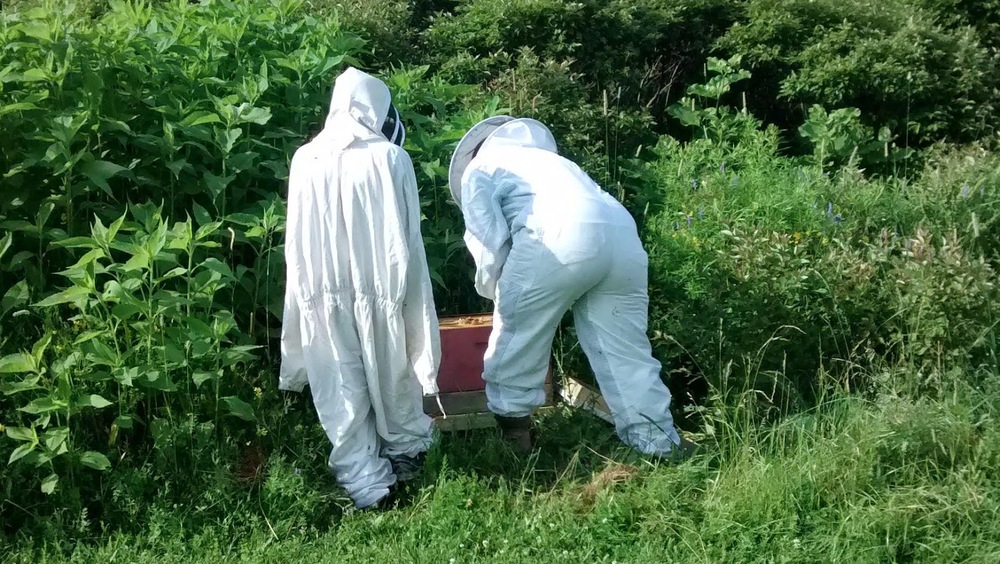
This Tuesday around 9 a.m. our friend Eileen and her son Kane stopped by to learn about beekeeping. Kane and I suited up in your bee suits—his was a big for him:

Because we are doing it 9 in the morning while the bees are still sleepy, we did not need to use smoke for the bees. I open up the bee box to see all the bees hard at work. We have 10 frames in the box and from what I saw, the bees have taken over seven of the frames. This is great news: It means the bees have a queen and are now making honey to feed themselves and also to make honey for the winter months. I took out two of the frames to see if there was any honey being made and I saw honey shining in the frame. I showed Kane the frames with all the bees and pointed out the worker bees and the drones to him. After that, the bees started to make a lot more buzzing which I took as a cue to let them get back to work. Everything looked really good in the box; so next Tuesday we will suit up once again to see if they took over the rest of the frames. If so, we will have to add other box to it so they can fill those frames, too.

Youth Poetry Workshop, All-Ages Open Mic Set July 18 at Better Farm

BetterArts' annual Youth Poetry Workshop is slated from 5-7 p.m. Friday, July 18, at Better Farm in Redwood.

Students will be encouraged to bring one to two poems to present to the group for editing and critiquing. Students will also have the opportunity to read, listen to, and analyze work from prominent poets. There are three specific learning objectives in this workshop:
  1. Improved poetic prowess
  2. knowledge of leaders in the field; and
  3.  confidence to read their work aloud.
Following the workshop, the public is invited to bring poems to Better Farm to read aloud in front of an audience. Light refreshments and food will be available for sale; or individuals are welcome to bring a picnic dinner! Pre-registration is requested! To register or for more information, please email noeltague@betterarts.org.

Better Farm is located at 31060 Cottage Hill Road, Redwood NY, 13679. For a full listing of upcoming workshops and events, click here.
Comment

Nicole Caldwell

Nicole Caldwell is a self-taught environmentalist, green-living savant and sustainability educator with more than a decade of professional writing experience. She is also the co-founder of Better Farm and president of betterArts. Nicole’s work has been featured in Mother Earth News, Reader’s Digest, Time Out New York, and many other publications. Her first book, Better: The Everyday Art of Sustainable Living, is due out this July through New Society Publishers.

Introducing betterArts Resident Kiran Chandra

Kiran Chandra.
BetterArts resident Kiran Chandra joins us from June 25 to July 13 to create a body of work investigating notions of time, place, communication, and dialogue.

"While at Better Farm I am interested in making drawings," Kiran told us, "and writing a text piece about swarm intelligence and non-verbal communication amongst humans. Inspired by a book by the South African naturalist Eugene Marais, who wrote about group behavior and intelligence amongst termites, the piece I am writing aims at making connections between his text and how human beings communicate and live in groups. I really believe the experience of living in a more communal environment such as at the farm, may allow for different ways for thinking about how I can write this piece."

In Marais' book, he came to understand termite colonies as sentient beings unto themselves. The Queen Bee becomes the colony's "nerve center," Kiran explained, "and termitaries capable of communicating telepathically within itself and other colonies. At Better Farm I would like to work on a text which lyrically links Marais' observations of termites behavior to human impulses of forming community, outside of the immediate nuclear family."

Kiran works with paper, water colors, India and colored inks, spoken word, and video. "I write original texts which become recorded audio pieces that are heard alongside drawings or 3-dimensional work," she said. "The sound, drawings and objects come together to create an effect, and often become an immersive environment for the viewer to enter. The materials are in dialogue together, connected by their physical materiality, but also the very structure of the language that informs the work." 

Kiran is very interested in storytelling; specifically, multiple points of telling tales and relating information such as is evidenced in oral, folkloric, mythological, and day-to-day narratives. "I am interested in language: textual and concrete. And I am particularly interested in that place where written language fails, and other forms persist: such as in the caves of Lascaux and Bhimbhetka, or that moment of encounter with a piece of pottery, ages old."

Kiran earned a bachelor's degree from St. Stephen's College at Delhi University in India before moving from Calcutta to Boston to earn a secondary bachelor's in fine art from the Art Institute of Boston. In 2013 she earned an MFA from Hunter College in Manhattan. She now lives in Brooklyn, where she is a teaching artist with various organizations throughout New York City; including the Brooklyn Arts Council, City Lore, Artistic Noise, Studio in aSchool, and the Sadie Nash Leadership Program for Young Women.

Kiran keeps a small, fire escape garden in her Buschwick apartment. "Every spring I give a stab at planting a few things I can eat," she told us, including, "potatoes, parsley, chives and a curry leaf tree. I have also attempted composting, with worms and all." She describes herself has having "a commitment to sustainable living in my own small way, and am open to learning any new skills to help maintain the life and community at Better Farm."

In addition to her art, Kiran has been active with chores around the farm, cooking for the people here, swimming, boating, running, and helping in the garden. A gallery exhibit and reading of Kiran's work will be held Friday, July 11, at 6 p.m. in the Art Barn.

The Art Barn is located at Better Farm, 31060 Cottage Hill Road, Redwood NY, 13679. For more information about the betterArts residency program, click here.
1 Comment

Nicole Caldwell

Nicole Caldwell is a self-taught environmentalist, green-living savant and sustainability educator with more than a decade of professional writing experience. She is also the co-founder of Better Farm and president of betterArts. Nicole’s work has been featured in Mother Earth News, Reader’s Digest, Time Out New York, and many other publications. Her first book, Better: The Everyday Art of Sustainable Living, is due out this July through New Society Publishers.

Do These DIYs: Cooling the Home with Less Energy

Stills from the 1959 Twilight Zone episode "Midnight Sun".
As the thermometer dial climbs in the North Country this summer, we can only imagine what you city dwellers downstate and across the country are dealing with. But instead of automatically flicking on the AC the next time temperatures hit 80, consider using one of these easy DIY tricks instead—and save the big guns for the next extreme heat wave.

Homemade AC Designs
The folks over at the Good Survivalist have come up with a genius way to make a $454 air conditioner for about $15. Keeping your home cool in the summer can be very expensive if you use your air conditioner. This air conditioner is very simple to make, and can be made in a few minutes if your are handy.

Even if you are not handy you’ll be able to make one of these DIY air conditioners. One of the nice things about this air conditioner is that it will give you up to 6 hours of coolness. This thing works so well you may need to put on a sweatshirt! To make one of these babies you need a few simple tools, a couple of 5 gallon buckets, along with a few other items. Everything is shown in the video:


The crew at Snapguide has an alternative design, this one using a Styrofoam cooler:
Here's a great list of great, cooling life hacks anyone can do at home or work as alternatives to actual air conditioners, as gleaned from Life Hacker:
  • Create a Makeshift Air Conditioner—If you don't have an air conditioner, hopefully you have a fan. On its own, however, a fan isn't always sufficiently cooling. If your home is a hot air trap, blowing that hot air around isn't going to help much. Instead of just running the fan and hoping for the best, take a shallow bowl and fill it with ice. Place the bowl in front of the fan and as the ice evaporates, it will cool the air. 
  • Cool Your Drapes—If it isn't hotter outside than it is in your home, you've probably cracked a window already to at least cool things down a little bit. If you're finding an open window isn't sufficient, spray a sheet with cold water and use it to cover the window's opening. As the breeze passes through, the cold and damp sheet will cool it bringing in chilled air and further helping to reduce the temperature in your home. 
  • Schedule Your Windows—If all you have are windows to work with, you can still use them to your advantage. While the difference is more significant in arid environments, the temperature outdoors cools at night, and that's the air you want to let into your home. If you keep your windows closed while the sun is up and open them while the sun is down, you can trap the cooler air in your home and keep the temperature a few degrees lower. Even better: Set up a couple of inexpensive box fans in windows on opposite sides of a room to create a nice through-breeze. 
  • Do Nothing—Much of the heat in your home comes from heat-generating sources within it. If you avoid generating large amounts of heat you won't have as much of a need to cool. Things like air drying your clothes, skipping the dry cycle on your dishwasher, and turning off your computer(s) when they aren't in use are all good ways to keep the temperature down.
Comment

Nicole Caldwell

Nicole Caldwell is a self-taught environmentalist, green-living savant and sustainability educator with more than a decade of professional writing experience. She is also the co-founder of Better Farm and president of betterArts. Nicole’s work has been featured in Mother Earth News, Reader’s Digest, Time Out New York, and many other publications. Her first book, Better: The Everyday Art of Sustainable Living, is due out this July through New Society Publishers.

Better Festival's Featured Artist, betterArts Resident Mary Negro

Drawings made of Sharpie ink on an index card. Each is approximately 3 x 2.5 inches.  
BetterArts resident Mary Negro will be Better Festival's featured artist in the Art Barn this Saturday, June 21, from 12-8 p.m.

Mary is a born-and-bred Connecticut girl living and working in New York City. She has degrees from Fordham University's College of Rose Hill and the Fashion Institute of Technology. Her chief artistic pursuits involve drawings and collage; both focusing primarily on her feelings toward technology, the media, and digital methods of communication. Mary works by day as gallery manager at the Brooklyn Art Space and Trestle Gallery; and though her worked is steeped in art and she has a studio space in Brooklyn that she uses regularly, Mary sought additional time and space to focus on her work.

"For the past few years," she told us, "I have been balancing multiple jobs while receiving a master's degree in art-market studies. These experiences have been extremely rewarding, but it has been difficult to maintain a continual, rigorous practice... I am at a crucial point in my career where I really need to delve into projects that have been brewing in my mind for over a year. Further, I would absolutely love the opportunity to escape New York City and spend time at a rural farm that highlights the arts and sustainability. It will be a welcome change of pace and environment that I really believe will invigorate my practice. I think the betterArts dual-purpose mission is very interesting and I would love to participate in all of the programs you offer."

Mary has been extremely active at the farm since her arrival June 9. In addition to all the art she's producing, she's kept busy by helping to paint siding for a house, planting Brussels sprouts, boating and swimming in local lakes, helping to prepare for the festival this weekend, and helping with the rehabilitation process of our rescue hens.

At Better Festival this weekend, you'll have the opportunity to check out some completed works and works-in-progress to learn more about Mary's creative process.

"The crux of my work lies in an unease of how information is filtered and distributed," Mary told us. "I always use commonplace materials, like crayon, Sharpie and newspaper—and I typically work both sides of the surface. The scale references the size of my cell phone. I aim to visualize a tenuous relationship between the amount of information readily available at our fingertips and the amount of information we encounter that is obscured, censored, or just plain false.

Here's her work station in the Art Barn:

...and a couple works-in-progress:

Learn more about Mary at her website, www.marynegro.com. For more information about the betterArts Residency Program, click here.
Comment

Nicole Caldwell

Nicole Caldwell is a self-taught environmentalist, green-living savant and sustainability educator with more than a decade of professional writing experience. She is also the co-founder of Better Farm and president of betterArts. Nicole’s work has been featured in Mother Earth News, Reader’s Digest, Time Out New York, and many other publications. Her first book, Better: The Everyday Art of Sustainable Living, is due out this July through New Society Publishers.

Better Festival This Saturday!

Better Festival, the annual open house, fundraiser, and alumni weekend for Better Farm and betterArts, is slated from 12-8 p.m. this Saturday, June 21, 2014. 

All money raised at the annual music, sustainability, and arts festival will directly fund art- and sustainability-related community outreach initiatives in and around Redwood. 


The day-long event features live performances by local and regional bands, a gallery showcasing artwork by painters, sculptors, photographers, and more, booths featuring art and handmade items for sale, tours of the Better Farm campus, information about Better Farm and betterArts 2014 programming, arts 'n' crafts for kids (and adults!), freshly prepared and locally sourced food, a refreshments tent, games, bouncy castle, and more! 

To introduce betterArts' latest endeavor Better Radio, there will be a booth set up for people to create content for that station. Music will also be recorded for live-streaming and podcasts. For complete information, be sure to visit www.betterarts.org/better-festival. Here's what the lineup looks like for Saturday:
Musical Lineup
1 p.m. MIND THE GAP
2 p.m. THE BAD HUSBANDS CLUB
4 p.m. NORTHERN BLEND CHORUS
5 p.m. FOX RICHARDSON
6 p.m. THE MIGHTY HIGH and DRY
8 p.m. OPEN JAM (all musicians invited on-stage to play)
 

Confirmed Vendors
Artists
Sponsors
Camping for the weekend is available for $10/nigh/person. Reserve a spot early by emailing info@betterfarm.org. RSVP to the event here.

Garden Growth Spurts

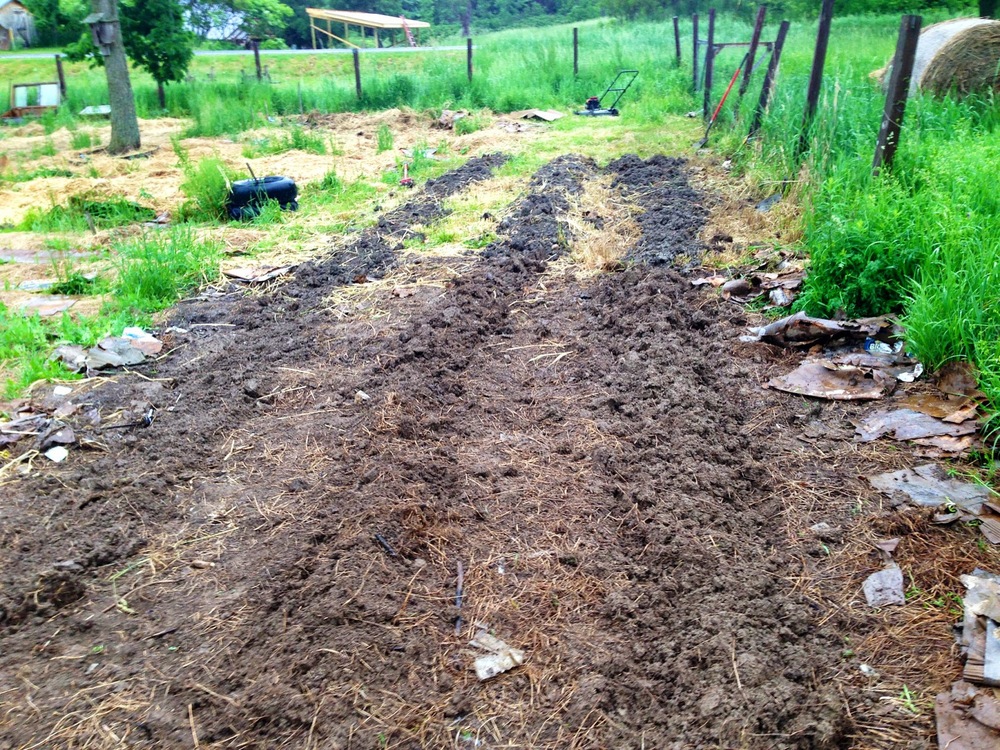
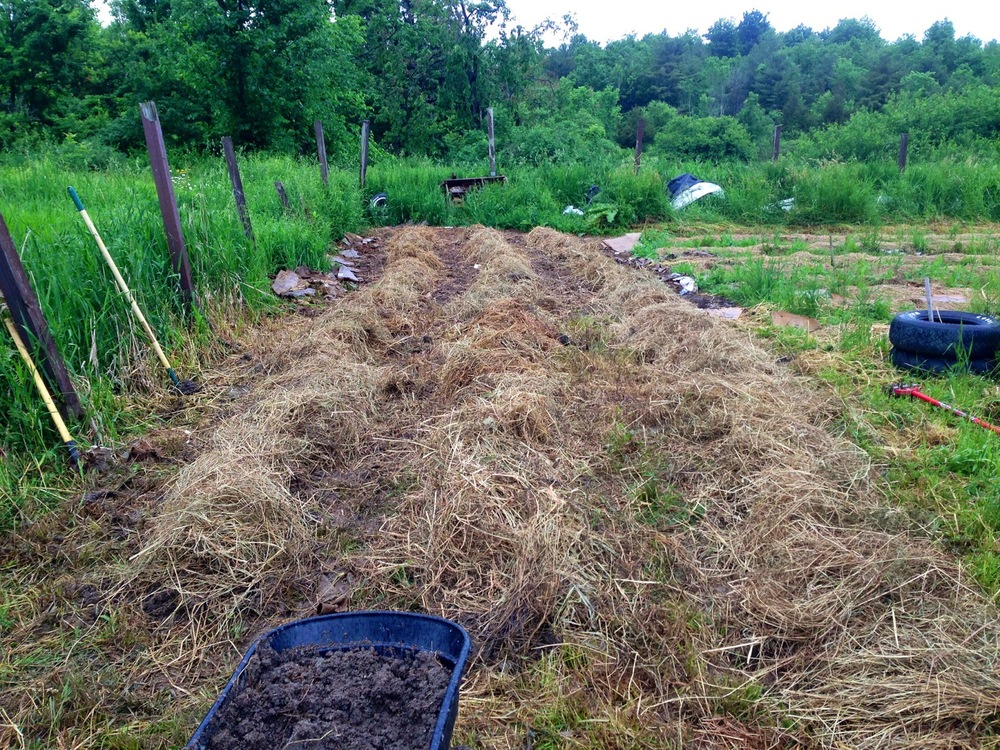
New, mounded rows are added to the back corner of Better Farm's garden to house pumpkins, melons, and squash.
Exciting partnerships this year with high-end restaurants in the Thousand Islands Region, a burgeoning CSA program, increasingly popular farm stand, and the perennial mouths to feed at Better Farm itself inspired us to add three more rows to Better Farm's main garden.

We put the new rows in the right-back corner of the garden. The first thing we had to do was to turn the clay-rich soil over up the rows and rake the fresh dirt into mounds. After that, we hayed the new rows and started planting pumpkins, squash, and melons.

Meanwhile, in the other rows...
Pink Beauty Radishes
From left: King Richard Leeks, Pink Beauty Radishes, and oodles of Sunset Lettuce.
Penelope weeding out the bugs.
 To learn more about Better Farm's CSA program or to sign up, visit www.betterfarm.org/csa.