Throwing a Zero-Waste Party

One of the obvious hazards of having a bunch of wonderful people over is dealing with everything those wonders leave behind.

So few of us want to spend time with loved ones washing dishes and cleaning, we often opt for what seems easiest: disposable everything.  Yet, we just threw a party with six bands and hundreds of people and ended up with less than one full bag of garbage. How on earth did we pull that off?

First, the problem.

From Styrofoam plates to plastic cups, we are so accustomed to throwaway meal items that we barely give a second thought to utilizing stuff that we only use for minutes (sometimes seconds) before tossing it along on its dead-end course with a landfill. Here are the facts (from reuseit.com):
  • In 2009, the United States generated 13 million tons of plastics waste from containers and packaging, and 7 million tons of nondurable plastic waste (for example plates and cups). The combined total of nondurable disposables exceeded the 11 million tons of plastic durable goods, such as appliances [EPA]. Only 7 percent was recovered for recycling.
  • Plastic cutlery is non-biodegradable, can leach toxic chemicals when handled improperly, and is widely used. Worldcentric.org estimates 40 billion plastic utensils are used every year in just the United States. The majority of these are thrown out after just one use.
  • 3,460,000 tons of tissues and paper towels wound up in landfills in 2008.
  • The Environmental Protection Agency estimates that 780,000 tons of plastic and polystyrene cups and plates were discarded in 2008.
  • Americans produce enough Styrofoam cups every year to circle the earth 436 times. These cups are completely non-biodegradable, deplete the Earth’s ozone layer, waste enormous amounts of landfill, and are deadly to marine life.
  • The Container Recycling Institute claims that 2.81 million juice boxes were sold in the U.S. in 2006, most of which cannot be recycled due to the inseparability of the cardboard, plastic, and aluminum foil used in the product.
  • According to the EPA, Americans discarded about 2.7 million tons of aluminum, the largest source being used beverage and packaging containers. And in the time it takes you to read this sentence, more than 50,000 12-oz. aluminum cans were made. 
  • The Container Recycling Institute estimates that supplying plastic water bottles to American consumers in one year requires more than 47 million gallons of oil, the equivalent of one billion pounds of carbon dioxide that is released into the atmosphere. 
So what's the solution?
At last week's Summerfest, we welcomed hundreds of people to Better Farm to help support betterArts' mission of arts and cultural outreach against a backdrop of responsible environmentalism and practical sustainability.

So what did we do to steer away from such a disposable-obsessed culture?
  • Instead of Styrofoam plates, we went with compostable ones that will turn into dirt by next spring.
  • We opted to invest in real silverware and cutlery, along with heavy-duty plastic tubs for bussing dirty silverware.
  • We utilized real glasses for iced tea, lemonade, water, beer and wine.
  • We ditched all the single-serving bottles. That means no water bottles, no bottles of juice. We filled pitchers and loaded people up with glasses.
  • We put out carefully marked garbage pails: compost, burnable, washable, recyclable. That left cigarette butts and empty bags of ice as the party's only actual trash items.
  • We made our food from actual ingredients, not pre-packaged or store-bought stuff. That meant no cellophane, Styrofoam, or even plastics to contend with. As a bonus, most of the side-dish items came from just a few feet away in Better Farm's garden!
For a party of several hundred people over the course of 12 hours, there were about six trips to the kitchen sink to wash glasses and cutlery. We divided up the responsibilities on this, so no one was stuck doing it more than once. The few minutes it took to clean everything and bring it all back to the party makes the investment more than worthwhile—over the course of several years, betterArts is saving hundreds of dollars by not having to buy disposable items. That's more money that can be spent doing arts outreach in the North Country—and less junk clogging up the environment. We can all feel good about that.
Got some great ideas for throwing zero-waste parties? Email us at info@betterfarm.org.
Comment

Nicole Caldwell

Nicole Caldwell is a self-taught environmentalist, green-living savant and sustainability educator with more than a decade of professional writing experience. She is also the co-founder of Better Farm and president of betterArts. Nicole’s work has been featured in Mother Earth News, Reader’s Digest, Time Out New York, and many other publications. Her first book, Better: The Everyday Art of Sustainable Living, is due out this July through New Society Publishers.

Zucchini Relish!

Best. Relish. Ever.

The zucchini is coming in hot this week in the Better Farm garden, leading to a rainy-day decision to put it to good use and can up some sweet zucchini relish! Based on what we found in the kitchen cabinets, Xuan and I cooked up a fresh batch, forged from two different recipes we found online.

The recipes came from Food.com and Taste of Home sites.  Borrowing some tips from each, here are the steps Xuan and I took to make the (truly, absolutely delicious) relish.

Ingredients

  • 5 c. finely chopped zucchini
  • 2 medium onions
  • 2 Tbs. pickling salt (we used sea salt)
  • 1 ¼ c. granulated sugar
  • ¾ c. apple cider vinegar
  • ¼ tsp. curry powder
  • 1 tsp. celery seed
  • ¼ tsp. black pepper
  • ½ tsp. turmeric
  • 1 tsp. water
  • 2 tsp. cornstarch

Instructions

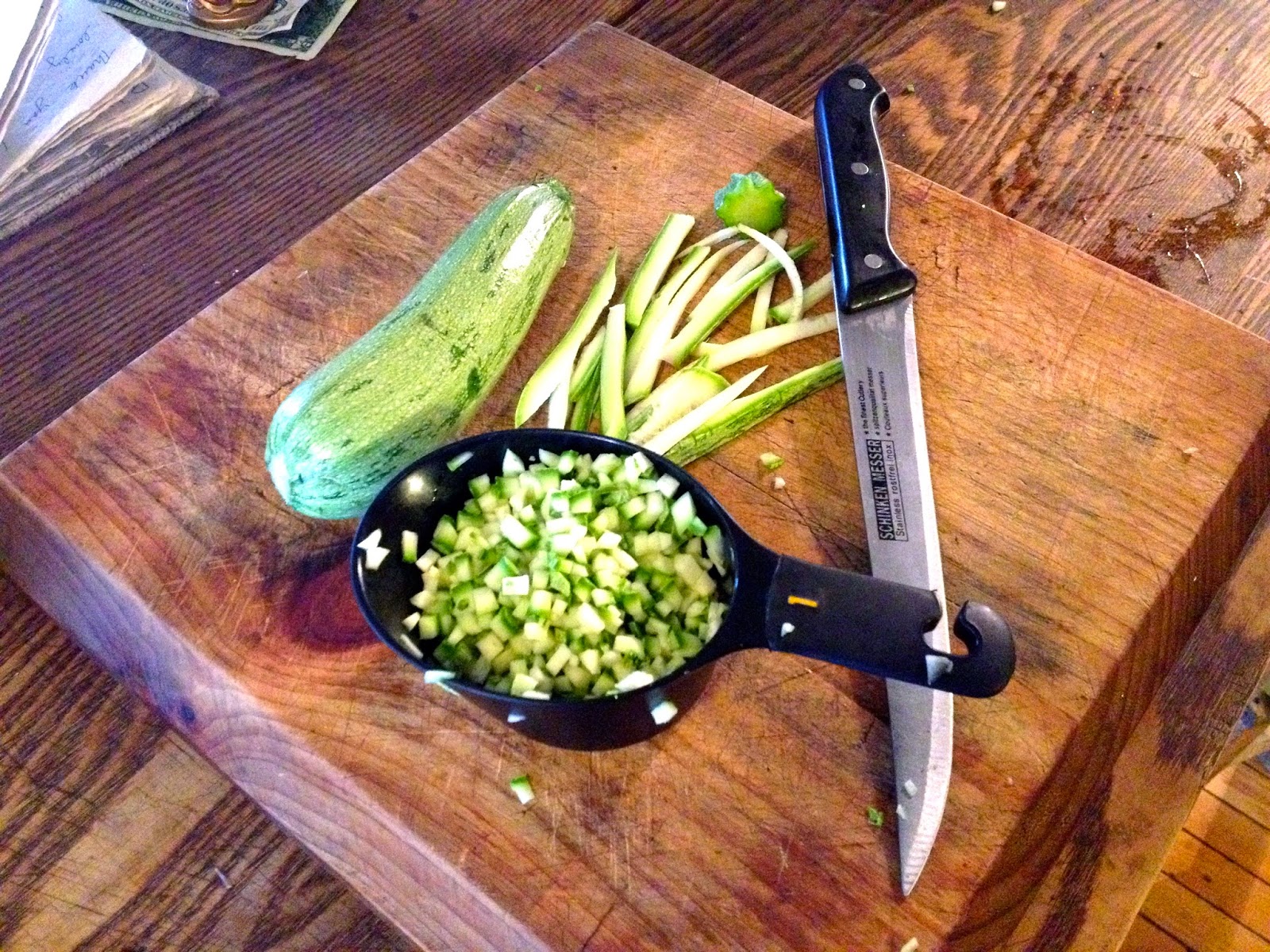
Xuan Du chops up some heirloom zucchinis.

  1. Finely chop the zucchini and onions, and add them to a large bowl.
  2. Stir in the salt and let the mixture sit for one hour.
  3. Drain the mixture through a sieve, rinse, and drain again. Press out as much water as possible.
  4. In a large saucepan, combine mix with granulated sugar, cider vinegar, curry powder, celery seed, black pepper and turmeric.
  5. Bring everything to a boil on high heat, then gently boil for about 15 minutes.
  6. Stir blended water and cornstarch into the pot and cook for another 5 minutes, stirring frequently until the relish thickens and clears. 
  7. Transfer the sweet zucchini relish into a hot, sterilized pint Mason jar (heat the jar and lid in the oven for five minutes).
  8. Wipe the jar clean and seal with the still-hot lid and ring.

Redwood Firemen's Field Days Parade 2014

Better Farm's WINNING float!
The most wonderful time of year has come and gone yet again in Redwood, N.Y.—the Redwood Firemen's Field Days.

Three days each August for the last 56 years, Redwood and neighboring hamlets and towns come together to support Redwood's Volunteer Fire Department at the organization's biggest fundraiser of the year. An auction, barbecue, carnival, parade, live bands, and and tons of merriment are among the main—but not only—attractions at the event.

The Redwood Volunteer Fire Department does much, much more in the community than putting out fires. These men and women are pillars of North Country culture; coming out to support other organizations, offering neighborly services to people near and far, and giving their time selflessly at events throughout the region. These folks even helped to hose down the Better Mud Run course back in July.

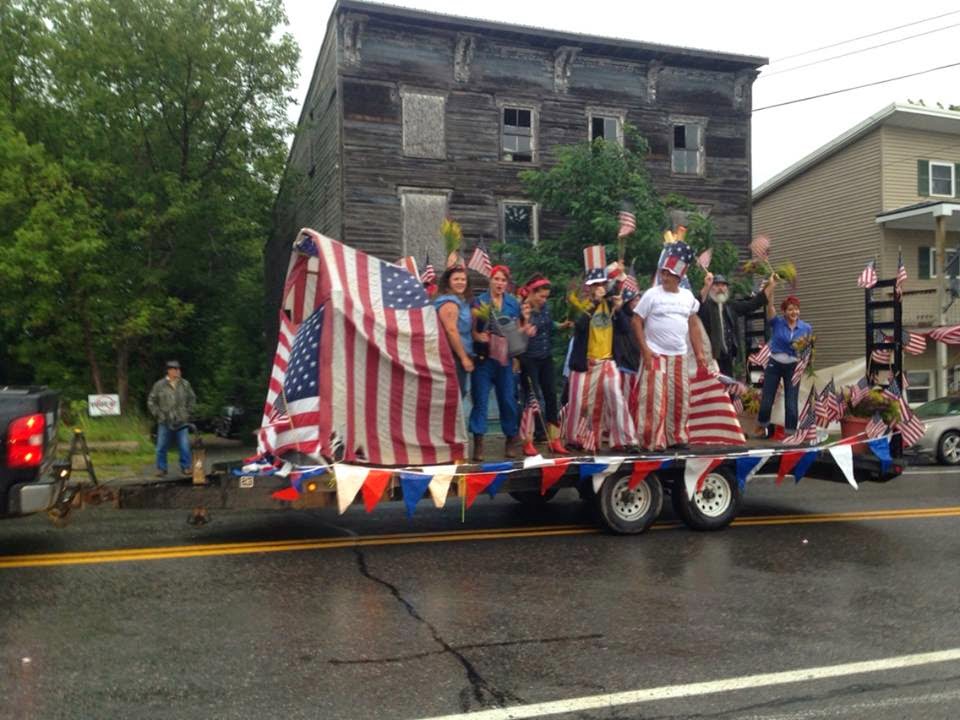
Better Farm has developed a particular fondness for the Field Days Parade, held during the last evening of Field Days and boasting a cavalcade of antique cars, fire trucks, and floats for organizations, businesses, political candidates, nursery schools, and more. We've been in the parade every year since 2009; and each year, we've inched higher on the totem pole as we scored third place in 2010,  second place in 2012 and 2013. This was our year! But it would take a whole lot of preparation...

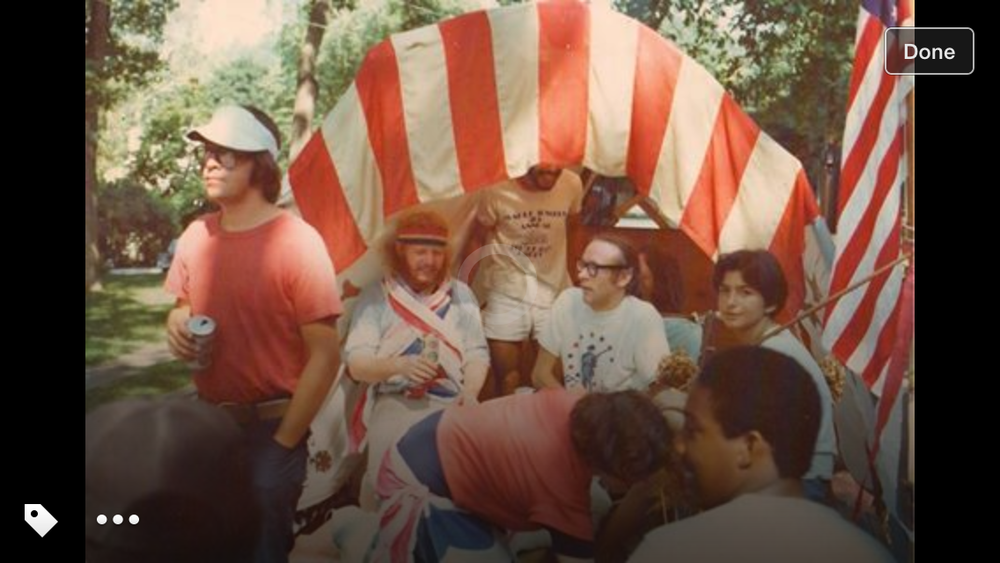
Like, about 40 years' worth. Here's the Better Farm float in a parade back in 1974-ish:
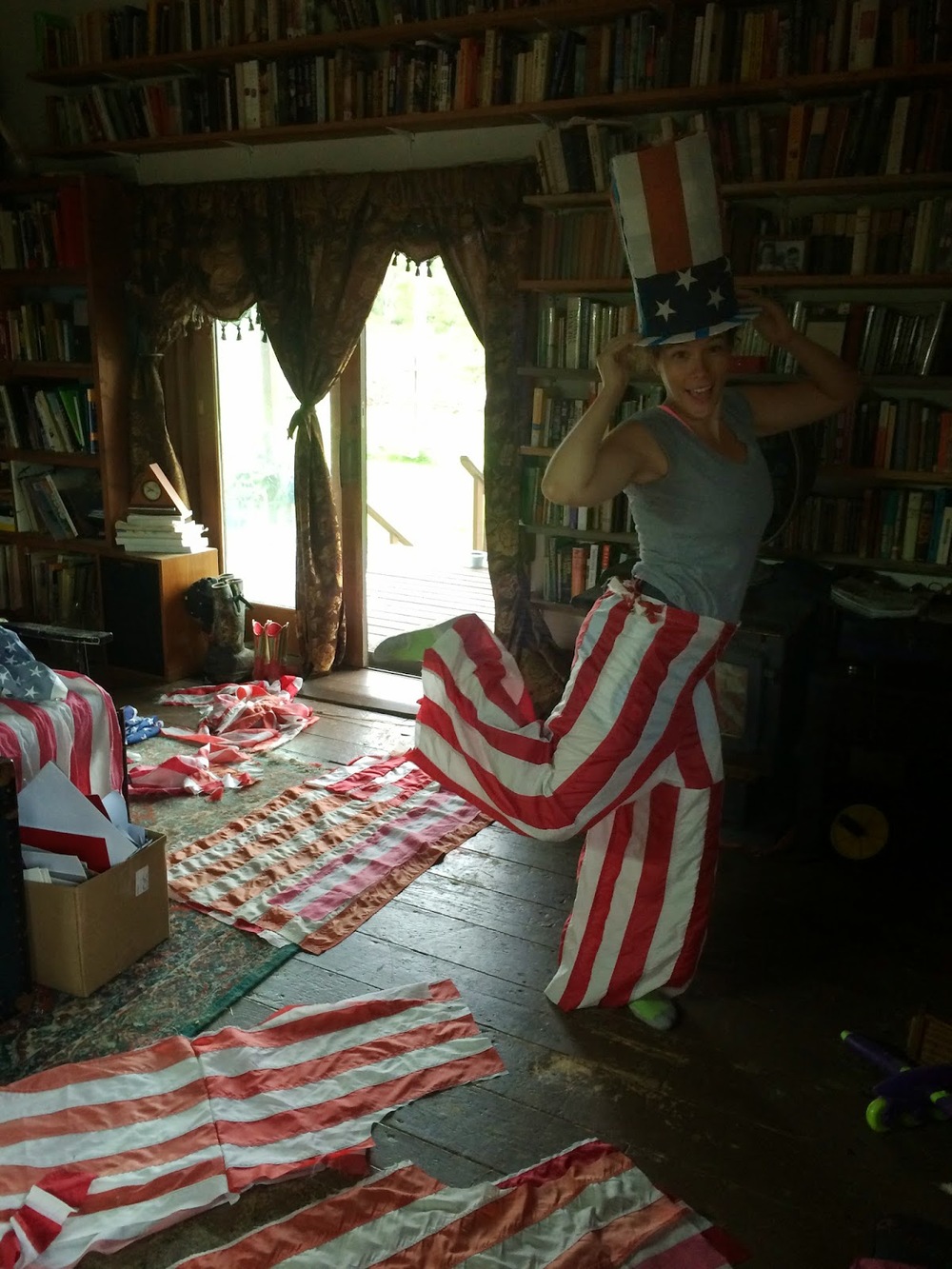
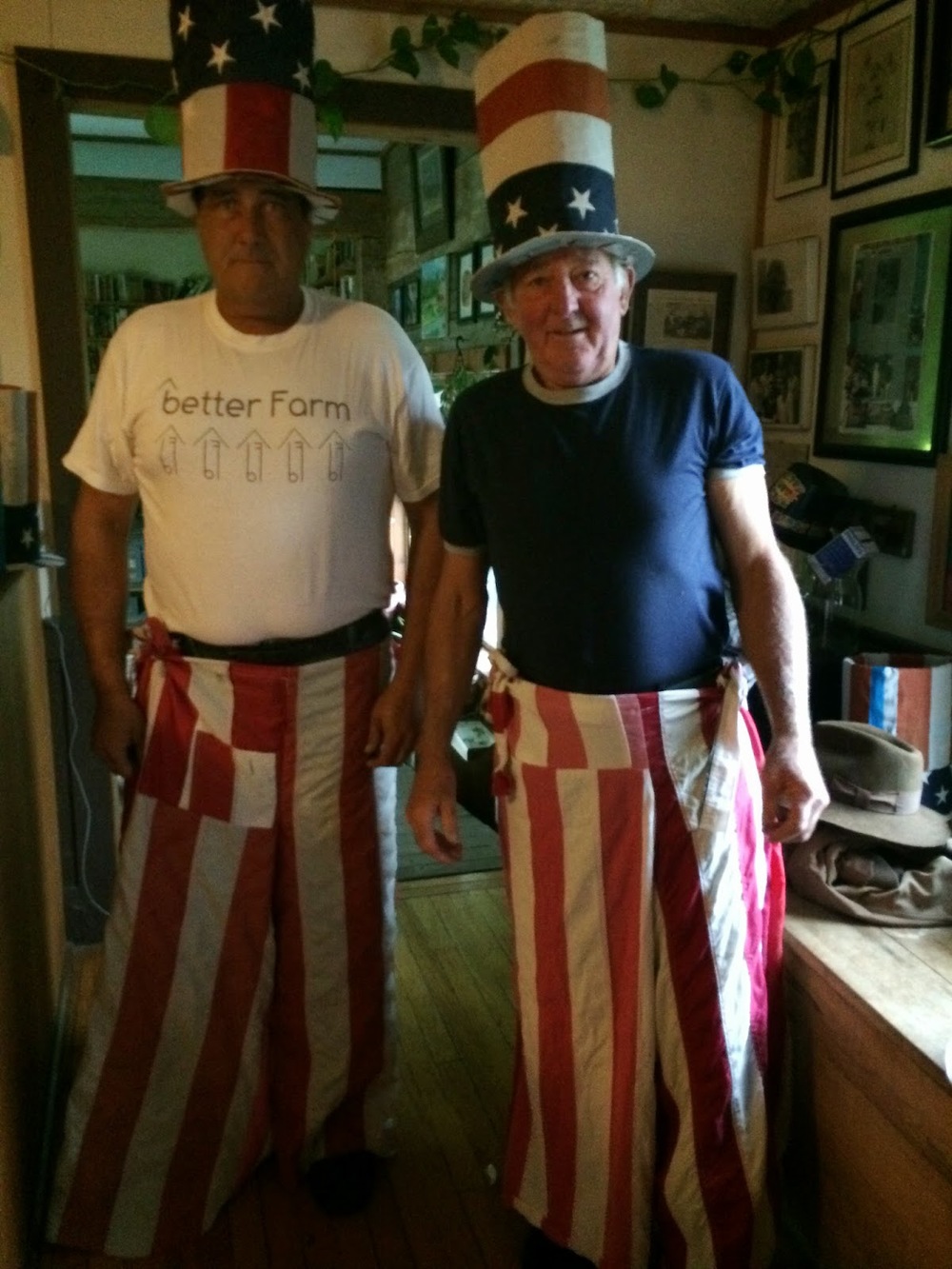
We opted to repeat that theme with a stars-and-stripes motif on our float and in our outfits. For half of our float participants, we used striped fabric and stars to make Uncle Sam costumes:


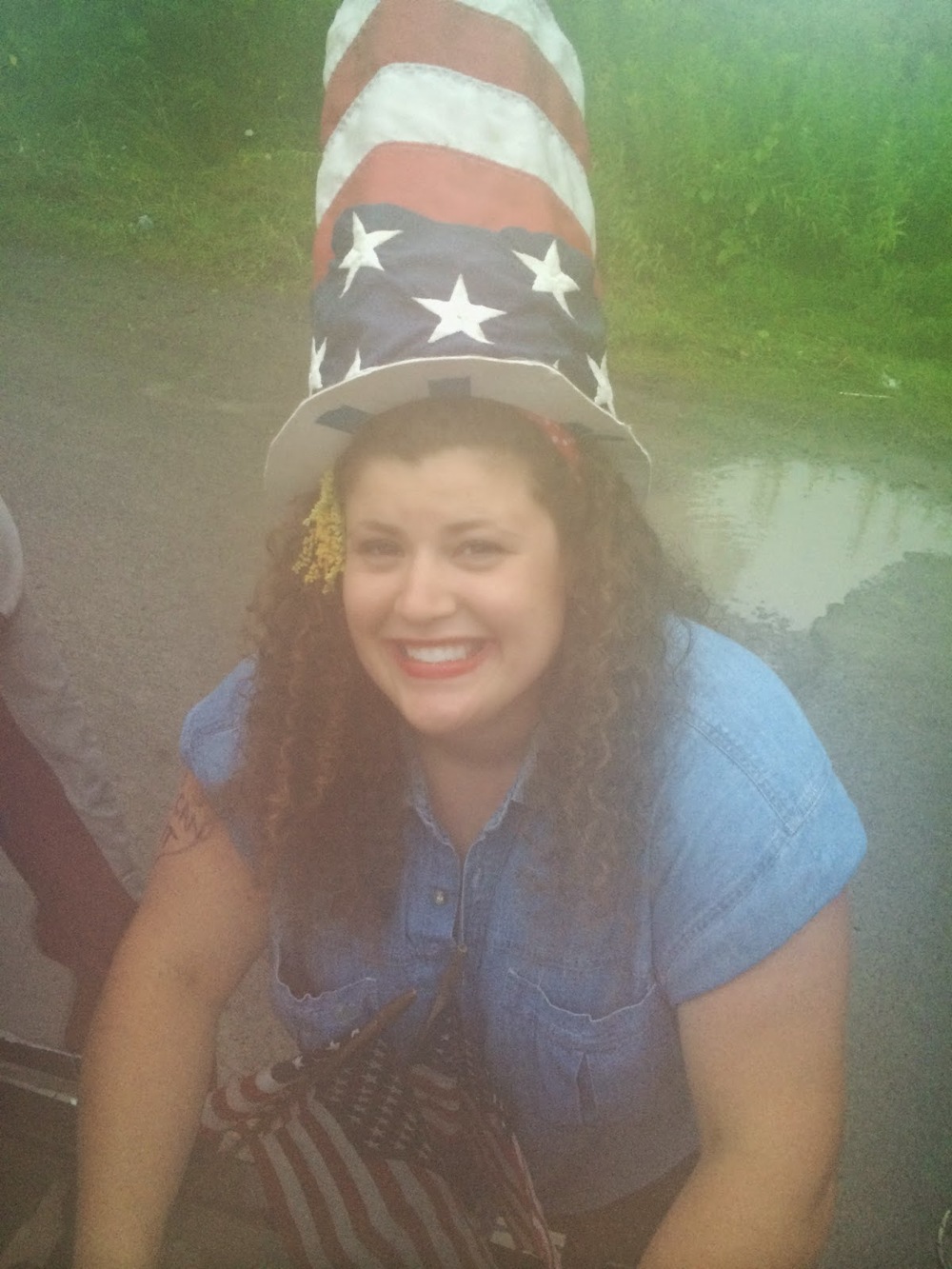
For the ladies on the float, we decided to invoke some Rosie the Riveter spirit:

Here we all are putting the final touches on the float and heading downtown:


...and here's the parade in motion!


Thank you Redwood Volunteer Fire Department for all you do! See Better Farm's full Redwood Field Days album by clicking here.
Comment

Nicole Caldwell

Nicole Caldwell is a self-taught environmentalist, green-living savant and sustainability educator with more than a decade of professional writing experience. She is also the co-founder of Better Farm and president of betterArts. Nicole’s work has been featured in Mother Earth News, Reader’s Digest, Time Out New York, and many other publications. Her first book, Better: The Everyday Art of Sustainable Living, is due out this July through New Society Publishers.

Braiding Isn't Just For Hair

Native to central Asia, garlic is one of the world’s oldest cultivated plants. Throughout history, it has been cherished in many cultures for its culinary and medicinal uses. The sulfur compounds in garlic are especially beneficial, with antioxidant and anti-inflammatory properties. Garlic is also a great source of calcium, copper, manganese, phosphorus, selenium, vitamin B1, vitamin B6, and vitamin C. Its bold, aromatic flavor is guaranteed to transform any meal, and soon, my taste buds will be thanking me, because the garlic from our garden is ready!

Once Mollica and I saw the tops of the bulbs start to emerge, we dug around the sides of the bulbs to loosen them up, avoiding the roots to prevent damage to the garlic.

We brought them to the kitchen and washed off the dirt.

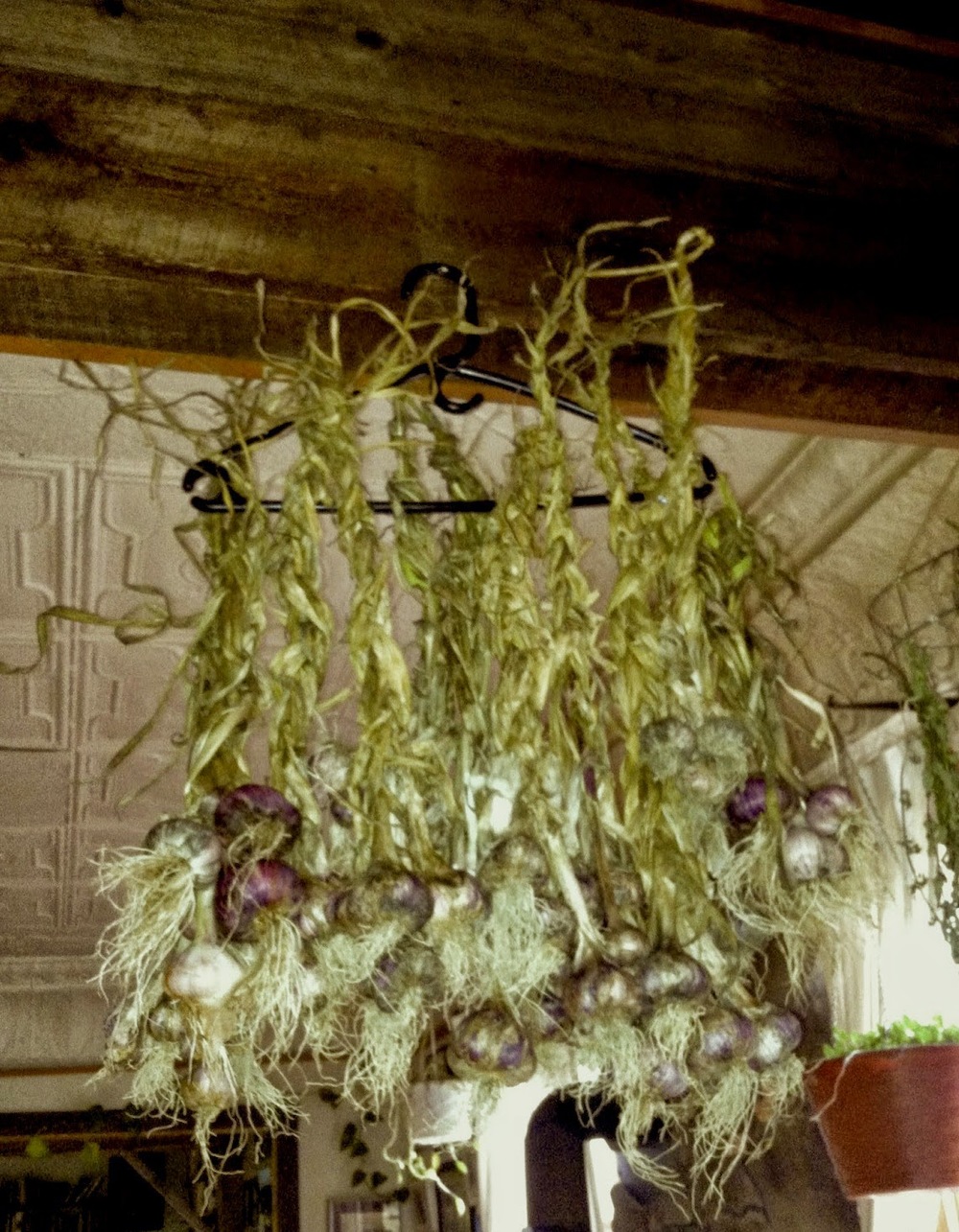
Now onto the fun part—braiding the garlic. Using six at a time, I braided in pairs, starting at the bulbs and making my way down to the ends.

Ever the resourceful person, Mollica attached the braided garlic to a clothes hanger and hung it from the kitchen arch. Once the garlic is dry, I'll try to restrain myself from using it in everything!
 
For further information about Better Farm's Sustainability Education Program, click here.

Children's Weaving Workshop Aug. 23

A children's weaving class hosted by betterArts is slated for 12 p.m. Saturday, Aug. 23, at Better Farm in Redwood.

Children of all ages are invited to this two-hour class to learn different types of weaving. Students will acquire basic weaving knowledge, gain hands-on experience, and discuss basic weaving vocabulary. Students may additionally bring old clothes, fabric, or yarn for their projects if they like.

The class is taught by local artist Alyssa Curley, a fiber-working expert. Curley earned a BA in Art Education from SUNY Potsdam.

Cost for the class is $5.

Email info@betterarts.org for more information or to pre-register. Students (and their parents!) are invited to stay afterward for Summerfest, betterArts' second music, art, and sustainability festival for the summer featuring activities for kids of all ages!

Comment

Nicole Caldwell

Nicole Caldwell is a self-taught environmentalist, green-living savant and sustainability educator with more than a decade of professional writing experience. She is also the co-founder of Better Farm and president of betterArts. Nicole’s work has been featured in Mother Earth News, Reader’s Digest, Time Out New York, and many other publications. Her first book, Better: The Everyday Art of Sustainable Living, is due out this July through New Society Publishers.

Home-Grown Remedies for Bee Stings

The friendly honeybees at Better Farm.
By Allison Bachner

They say "Don’t throw stones if you live in a glass house." Well, perhaps I would recommend "Don’t throw swats if you live in a temple of the bees." One of the many benefits of having an organic farm that doesn’t use harmful pesticides and is surrounded by fields of wild and native plants is a healthy population of bees that help preserve these natural habitats. Bees are absolutely essential to healthy production on a farm. However, not all bees are created equal; and the wasp nest that sprang up at our farmstand was filled with nasty bugs hungry for an easy shot. I was stung under my left eye.


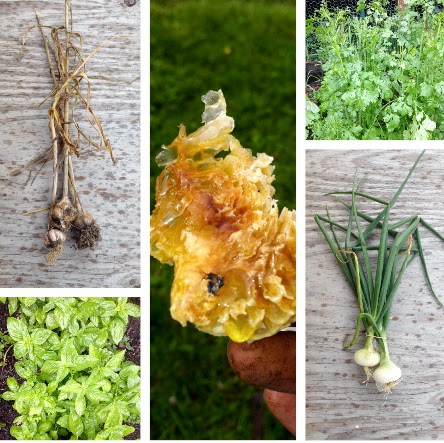
After the initial, painful confusion, my eye was swollen shut to the likes of Popeye the Sailor Man. Thankfully, Better Farm cultivates a number of suggested natural treatments; including honey, garlic, onions, basil, and parsley, to alleviate the symptoms of bee stings. Unfortunately for me, stings near eyes and mouths tend to last for at least three days of varying severity depending on treatment.

After removing the stinger and washing the sting site, you can try these homeopathic remedies to help reduce pain, itching and swelling:
-Honey- Apply honey on the affected site
-Garlic- Apply crushed garlic to the sting site, cover and let it sit for a half hour
-Onion- Cut an onion slice and press on sting site
-Basil- Apply crushed basil to sting to help alleviate pain and swelling
-Parley- Apply crushed parsley
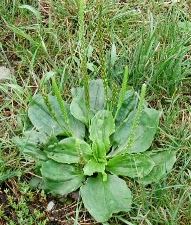
-Plantain- This common weed’s leaves can be crushed up and the juice applied to sting site as an antibacterial and anti-inflammatory (image below)

Along with the remedies found in your garden, these household items also help:

-Ice- Applying ice both helps numb pain and reduce the swelling significantly
-Vinegar- Application of vinegar to affected site can help draw out the sting’s venom
-Baking Soda- Applying a paste of baking soda and water can help neutralize the sting venom

Comment

Nicole Caldwell

Nicole Caldwell is a self-taught environmentalist, green-living savant and sustainability educator with more than a decade of professional writing experience. She is also the co-founder of Better Farm and president of betterArts. Nicole’s work has been featured in Mother Earth News, Reader’s Digest, Time Out New York, and many other publications. Her first book, Better: The Everyday Art of Sustainable Living, is due out this July through New Society Publishers.

New Partnership Brings Fresh Produce to Redwood Food Pantry

The belles of Better Farm transport Redwood's Community Greenhouse to its new home.
A new partnership has turned the Redwood Community Greenhouse into a produce operation that will supply fresh greens and veggies to the Redwood Food Pantry.

Local organizations Hearts for Youth, Redwood Neighborhood Association, and Better Farm have teamed up to provide volunteer hours that will cultivate fresh, organic produce earmarked specifically for use by the Redwood Food Pantry in order to provide local residents with healthy, local food.
Redwood Community Greenhouse.
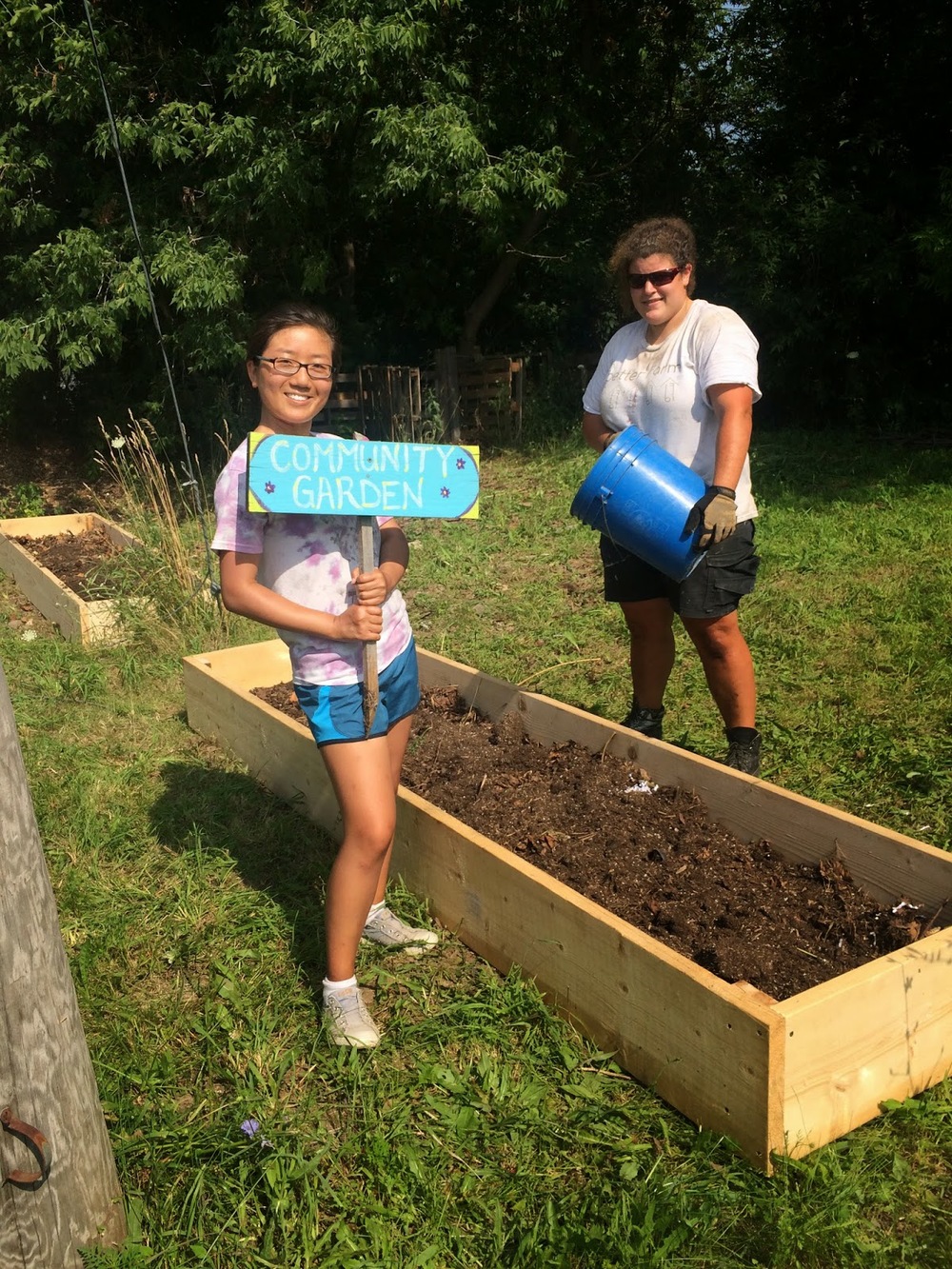
To that end, the Community Greenhouse has been relocated to Better Farm in order to receive the round-the-clock attention and watering a summer greenhouse requires; while also taking advantage of the extended growing season a greenhouse can provide. In the greenhouse's former home along Route 37 in downtown Redwood, raised beds have been constructed for public use. Now a community garden, it is the hope of these partnered organizations that people within the hamlet who do not have access to a garden will take advantage of the Redwood Community Garden to grow veggies from corn to broccoli.
Xuan Du and Kathryn Mollica fill raised beds in Redwood's Community Garden.
For more information or to volunteer at the greenhouse or community garden, call (315) 482-2536 or email info@betterfarm.org.
Comment

Nicole Caldwell

Nicole Caldwell is a self-taught environmentalist, green-living savant and sustainability educator with more than a decade of professional writing experience. She is also the co-founder of Better Farm and president of betterArts. Nicole’s work has been featured in Mother Earth News, Reader’s Digest, Time Out New York, and many other publications. Her first book, Better: The Everyday Art of Sustainable Living, is due out this July through New Society Publishers.

BetterArts Partners with Macomb Historical Association for Old Home Days

BetterArts is partnering with the Macomb Historical Association for Macomb Old Home Days this Saturday, Aug. 9, at the Macomb Historical Society Building in Hammond.

This year's event  additionally marks the 50th anniversary of the Macomb Historical Association.

Bill Berry, president of the Macomb Historical Association, says the event is a chance for people to get together to share their stories and memories of the community (see his interview with 7 News This Morning here).

There will be museum and cemetery tours, a chicken barbecue, a cake walk, old-fashioned games for kids, and a band from 8 to 11 p.m.

BetterArts will have a table set up with arts and crafts, information about the upcoming Summerfest, a workshop schedule and sign-up sheet, and games for children.

Reps will also have digital recorders to allow revelers to record memories they have of growing up and living in the North Country. These stories will be archived for us on the upcoming Better Radio.

Other events at the Old Home Days include a silent auction, chicken BBQ, dance Saturday night), cemetery tours, demonstrations of old time skills, children's games, a tour of the museum, and the sharing of memories.

Old Home Days will be held at the Macomb Historical Society building at 6766 State Highway 58 in Hammond, NY.

1 Comment

Nicole Caldwell

Nicole Caldwell is a self-taught environmentalist, green-living savant and sustainability educator with more than a decade of professional writing experience. She is also the co-founder of Better Farm and president of betterArts. Nicole’s work has been featured in Mother Earth News, Reader’s Digest, Time Out New York, and many other publications. Her first book, Better: The Everyday Art of Sustainable Living, is due out this July through New Society Publishers.

Troubleshooting At-Home Hydroponics and Aquaponics Kits

Better Farm's aquaponics tanks.
Aquaponics is the method of growing aquatic animals and crops simultaneously in a closed system. Water from the aquaculture component transfers to the hydroponics component, where nitrogen-fixing bacteria break down the byproducts into nitrates and nitrites (which the plants use as nutrients). The clean water then recirculates back into the aquaculture component, and the process starts again.


With Better Farm’s aquaponics system, a bed of lettuce and tomato rests above a fish tank, and pea gravel is used in place of soil. A tube transports water from the fish tank to the bed, and because the bed tilts at an angle, excess water drains back into the tank. Essentially, aquaponics requires no soil, fertilizers, weeding, or direct watering to grow the plants—and the fish tank gets cleaned out, too. Pretty darn cool.

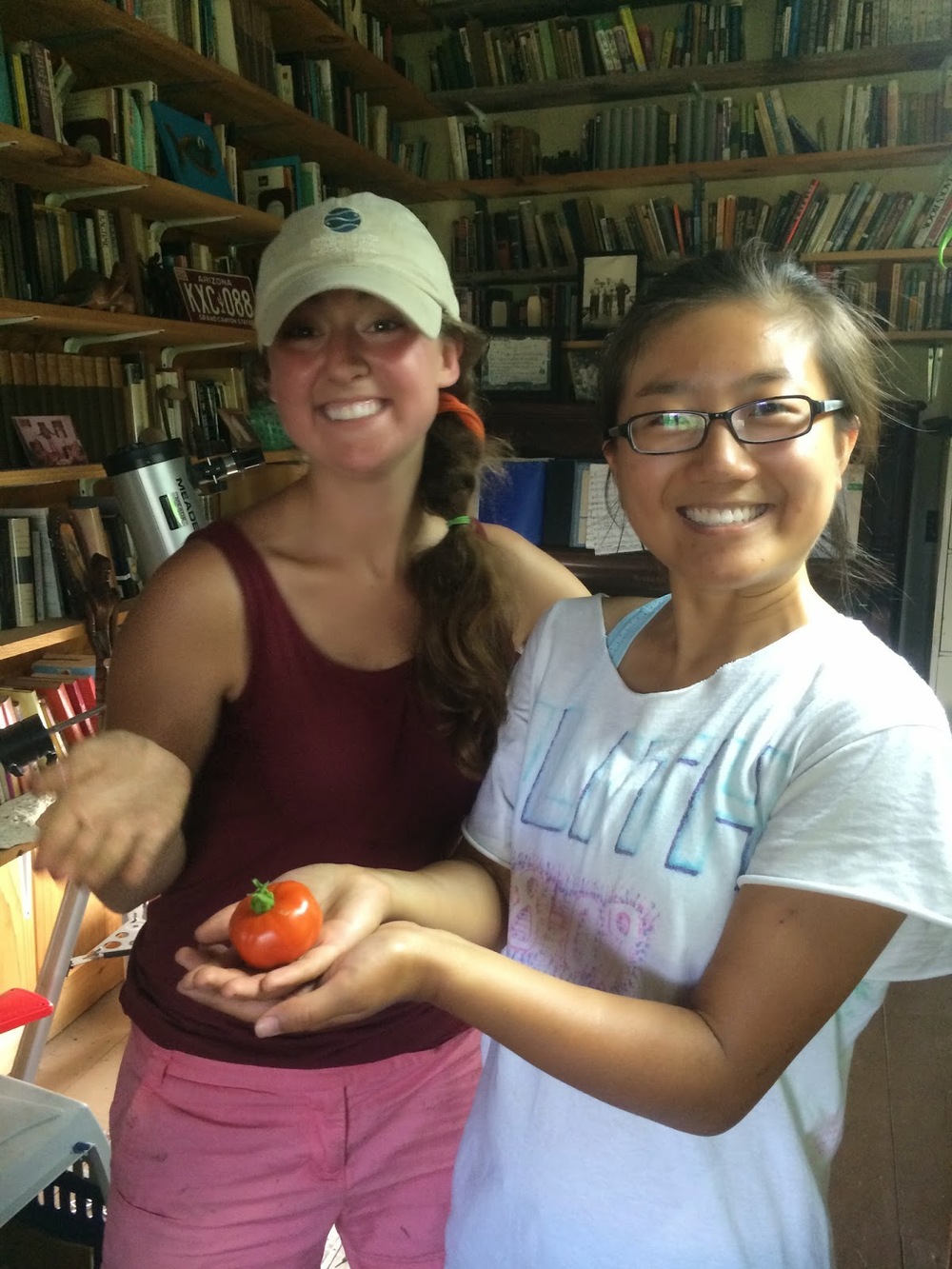
Here's our first aquaponic tomato:
In any basic hydroponic or aquaponic system, you want to keep a close eye on a few major factors: one, the nutrients getting to your plants; two, the health of your water (and fish in aquaponics); and three, the life cycle of your plants and timing regular clean-outs for your setup.
 
We learned by trial-and-error that in an aquaponics setup, you need to be careful how much food you are feeding your fish. Too much, and you'll be dealing with a disastrously cloudy tank.  We dealt with this last month by doing a thorough cleaning-out of the entire grow bed. Rinsing out the pea gravel and scrubbing the container (and scrubbing the walls of fish tank, and changing the tank's filters) gave us a pristine system in which to continue growing.

Yesterday, we did our annual maintenance of the hydroponic setup, which involves cleaning out the grow bed and water tank, scrubbing the gravel, and refilling the tank with fresh water.


The annual or semi-annual maintenance required for aquaponics and hydroponics makes these methods some of the easiest for growing fresh, organic produce.

Further reading:
Aquaponics at Better Farm
Hydroponics

Blueberry Wine Workshop Aug. 10

BetterArts presents its third annual Art of Winemaking workshop at 2 p.m. Sunday, Aug. 10, at Better Farm in Redwood.

Fermentation expert Paul Jennings will teach attendees basic fermentation principles and discuss various methods for wine- and beer-making. Students will gain hands-on experience creating their own batch of blueberry wine with blueberries picked locally.

Each participant is invited to take a bottle of blueberry wine home for aging (wine may be picked up at Better Farm several weeks after the class, when bottling has occurred).

The cost for this class is $10. Pre-register by emailing info@betterarts.org. If you would like to participate in the picking of local, wild blueberries, please let us know! There will be a picking field trip scheduled several days prior to the workshop.

Better Farm is located at 31060 Cottage Hill Road in Redwood. To see a complete listing of upcoming workshops and events, visit www.betterfarm.org/upcoming-workshops.
Comment

Nicole Caldwell

Nicole Caldwell is a self-taught environmentalist, green-living savant and sustainability educator with more than a decade of professional writing experience. She is also the co-founder of Better Farm and president of betterArts. Nicole’s work has been featured in Mother Earth News, Reader’s Digest, Time Out New York, and many other publications. Her first book, Better: The Everyday Art of Sustainable Living, is due out this July through New Society Publishers.

All-Ages Upcycling Workshop This Saturday!

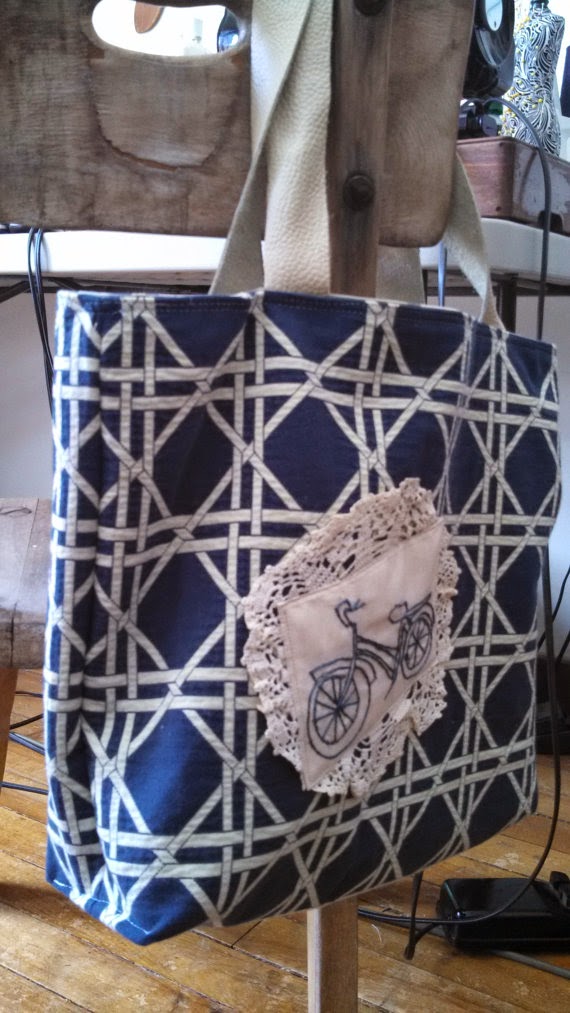
Images from La Mia Designs.

BetterArts presents an Upcycling Workshop for all ages at 11 a.m. this Saturday, Aug. 2, at Better Farm in Redwood.

This all-ages workshop invites students to transform old items into something new. Furniture, clothing, or anything else you find is welcome! Crafts supplies like glue, needle and thread, embroidery floss, and other items will be available. If you don't have something specific in mind, we will also have a bunch of old items available for you to upcycle. The fun will last two to three hours. 

The workshop is being taught for the second year in a row by Stephanie DeJoseph of La Mia Designs. La Mia Designs is an eco- conscious business offering handcrafted items such as original artwork, unique photographic images, handbags, jewelry, and home accent pieces such as furniture. In addition to customizing interiors, La Mia minimizes waste by repurposing old and vintage fabrics, clothing, jewelry, furniture and building materials.

There is a suggested $5 donation for this course to help defray instructor and material fees. Email info@betterarts.org to pre-register. Better Farm is located at 31060 Cottage Hill Road, Redwood. For a full list of upcoming events at the farm, visit http://www.betterfarm.org/upcoming-events.
Comment

Nicole Caldwell

Nicole Caldwell is a self-taught environmentalist, green-living savant and sustainability educator with more than a decade of professional writing experience. She is also the co-founder of Better Farm and president of betterArts. Nicole’s work has been featured in Mother Earth News, Reader’s Digest, Time Out New York, and many other publications. Her first book, Better: The Everyday Art of Sustainable Living, is due out this July through New Society Publishers.

Soap-Making for Rainy Days

Have I entered the world of Little House on the Prairie? On a rainy day last week, I decided to make soap. No, I didn't use animal fats—I'm not that hardcore—but I did pick some fresh lemon balm, oregano, and sage from our herb garden to add to the concoction.


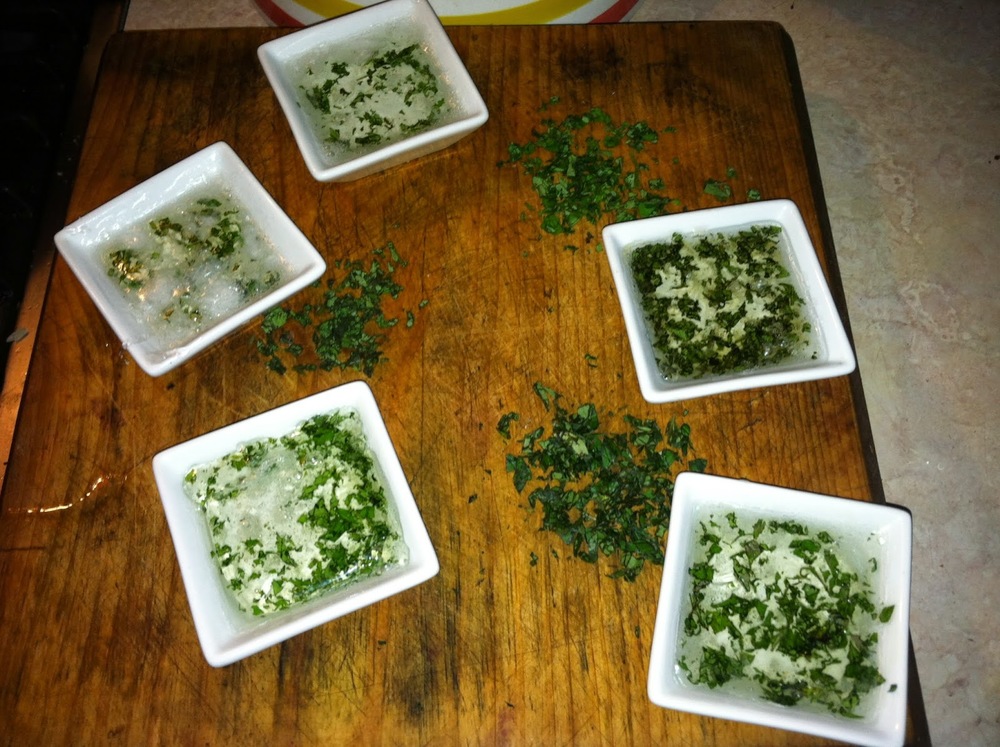
chopped herbs

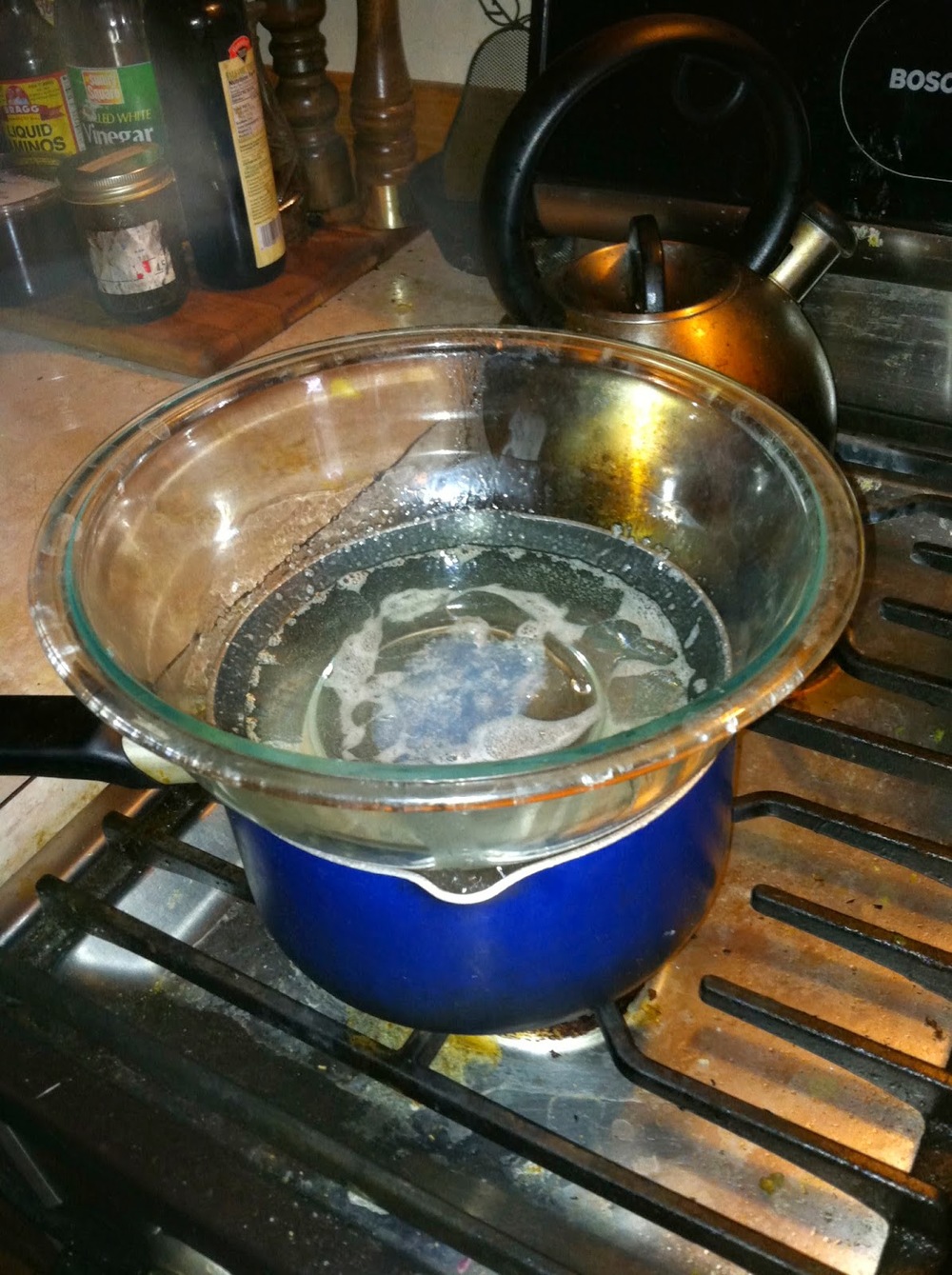
I cut off a piece of soap brick from our handy soap-making kit (Life of the Party: Moisturizing Clear Glycerin Soap) and melted it using a double boiler method (put a glass bowl over a saucepan).


 I added the herbs to bowls...

...and poured the melted soap into them. After they dry, I have the perfect gift for my parents :)

This Friday: Works by Graphic Novelist and betterArts Resident Maggie Fishman

"Faceoff" by Maggie Fishman
Visual artist Maggie Fishman will have pieces from her graphic novel The End of Oil on display at 6 p.m. Friday, July 25, in Better Farm's Art Barn gallery in Redwood.
"Fieldwork Detail" by Maggie Fishman
Fishman, a Brooklyn-based artist who focuses on drawing, painting, and graphic poetry, has spent the last several weeks in Northern New York as an artist-in-residence through the betterArts Residency Program. That program invites artists of every discipline and from all over the world to visit the Better Farm campus in Redwood to focus on a body of work against a backdrop of sustainability initiatives and green living.

In addition to her work as a professional artist, Fishman has worked in education, activism, anthropology, and writing while exploring how we put beliefs into action, how we connect the personal with political and artistic expression and social change—and how we can nurture and educate the next generation to build the world anew. By combining drawing, painting, comic narrative, and visual poetry, Fishman speaks in different voices from the unconscious to the documentarian.

The End of Oil is a series of drawings and paintings in ink and watercolor which Fishman is building into a book. The pieces explore how common stories and themes shared by humanity are acted out in a world we are told is near its end. The book has three parts: The first follows a claustrophobic car journey of a nuclear family; the second, they gather with others in the countryside; and in the third, this small community joins the wider public by the sea. Fishman has used her betterArts residency to work on the second section, using her time in a community-based living situation to reflect and clarify the themes and stories in her work.

Fishman possesses a PhD with Honors in cultural anthropology from New York University, a BA with honors from Haverford College, and has earned fellowships and scholarships to New York University and the New York Studio School. She has worked as a lead researcher, visiting professor, adjunct instructor, and developer for arts outreach organizations and at colleges; and is co-founder of the River School Project. Her work has been featured in solo and group exhibitions for more than 20 years.

This gallery event is free and open to the public. Better Farm is located at 31060 Cottage Hill Road in Redwood. To learn more about Maggie Fishman's work, click here. For more information about the betterArts Residency Program, visit www.betterarts.org.
Comment

Nicole Caldwell

Nicole Caldwell is a self-taught environmentalist, green-living savant and sustainability educator with more than a decade of professional writing experience. She is also the co-founder of Better Farm and president of betterArts. Nicole’s work has been featured in Mother Earth News, Reader’s Digest, Time Out New York, and many other publications. Her first book, Better: The Everyday Art of Sustainable Living, is due out this July through New Society Publishers.