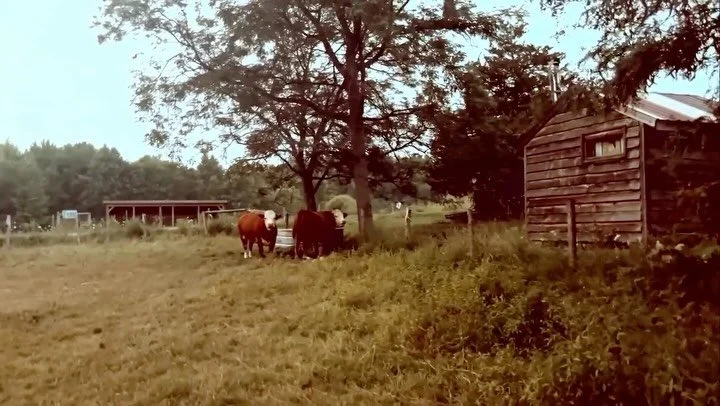

Blazing a Trail
/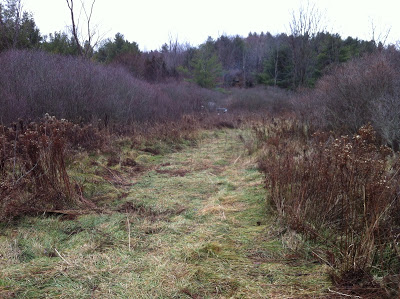
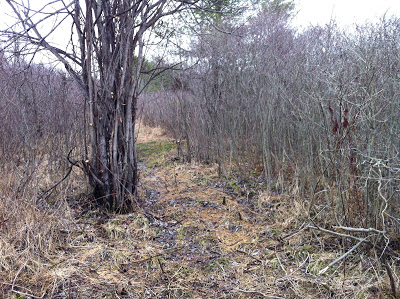
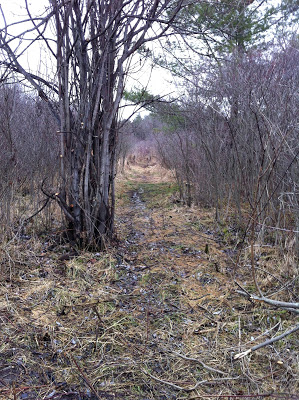
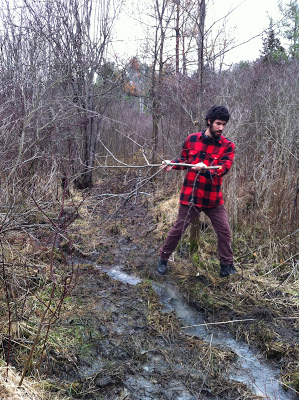
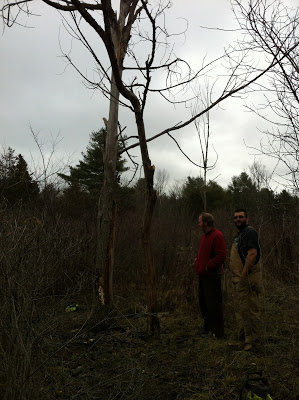
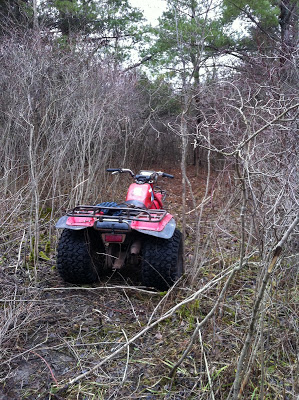
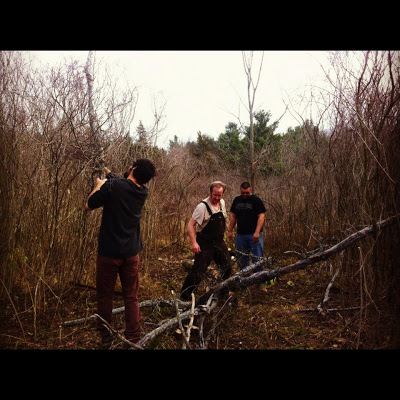
They've been hard at work in the last few weeks laying out an initial series of trails. Here are a few shots of the network; more to come soon!
By Jackson Pittman
Composting is a great and easy way to put garbage to a real use. By harnessing scraps and organic waste as fuel for plants we can cut down our what we put out to a landfill, and also accommodate life! Stores offer a wide variety of compost and worm containers, but a simple one can be built without having to buy anything! These DIY methods even prevent rodent attraction and block odors if fed the right kinds of waste.
What you will need:
2 containers (one should be able to fit in the other with room), 1 lid for the larger container, drill, 1 brick and soil or wood chips.
Instructions
Drill half an inch in diameter holes across the bottom and up the sides of the smaller container. Put brick in the bottom of larger container and sit the smaller container on top of it. Fill the space in between the containers with wood chips or soil and place the lid over the larger container.
Wastes to put in
: fruits, vegetables, eggshells, coffee grounds and filters, tea bags, nut shells, shredded newspaper, cardboard, paper, grass clippings, houseplants, hay and straw, leaves, sawdust, wood chips, cotton and wool rags, dryer and vacuum cleaner lint, hair, fur and fireplace ashes
Compost should be ready in 2-5 weeks.
Wastes which will attract pests and produce odors: dairy, eggs and meat products, oils, greases and pet wastes
What you will need:
composting worms, container (not translucent), lid or rag, lots of shredded paper, several fruit or vegetable scraps
Instructions
Composting worms need 6-7 inches of bedding, and a gallon of worms need about a square foot of space, keeping in mind the worms reproduce and will need to expand. At the end of the vermicomposting cycle more bins will be necessary to accomodate the growing worm population.
Once the right size container is chosen, soak the shredded paper, and then dry it by hand until it has the moisture of a run out sponge. There should be enough paper to spread six to seven inches of bedding across the bottom of the container, and once this is done, throw some produce scraps on so the bacteria can begin to propagate before the worms are introduced (worms love bacteria). Add the worms and close the container-- however since the worms need air you can drill holes in a lid, leave the lid slightly ajar or place a wet, dark , wrung out cloth over the bin (this eliminates light (worms hate light) and keeps the bedding moist while keeping out flies or other pests).
Well-kept worms will be reproducing a lot and can live several years!
Wastes to put in: Fruits, vegetables, paper, plant matter and any food scraps without dairy, meat or grease.
Ice and Snow.
Ice within the pore spaces of frozen soils typically reduces infiltration rates, but only soils that were saturated on freezing will completely prevent water from entering. Summer melting of the upper layer of permafrost in cold regions often results in a saturated zone of soil above the frozen ground.
Precipitation that falls as snow is stored until snowmelt, when a large pulse of runoff may be generated. Runoff occurs only after the entire snowpack has reached 0°C (32°F), some melting has occurred, and pore spaces between snow grains can no longer hold all the water supplied.
The rate of snowmelt depends on heat inputs into the snowpack through solar radiation and via water from melting and rainfall moving through the snow. The soil surface underneath the melting snowpack may become saturated, such that runoff flows through the base of the snowpack toward streams. Saturated zones and surface runoff commonly occur on slopes below the melting
snow line
.
Read more:
http://www.waterencyclopedia.com/Re-St/Runoff-Factors-Affecting.html#ixzz2DY8QkgXY
How This Year's Snowfall will Influence Next Year's Gardens and Farms
Many people understand that a water table has something to do with ground water, but they may not understand fully
what a water table entails or the purpose it serves
—and what weather elements cause the water table to fluctuate. In this blog, we'll break down water tables and explain how a nice winter of snow can actually ensure your gardens have plenty of water next year.
The "zone of saturation" is the underground depth at which the ground is totally saturated with water. The upper surface of this zone is called the water table. It is also the level at which groundwater pressure is equal to atmospheric pressure. Much of the water present on Earth is trapped under the ground. Rain, river and stream runoff and snow melt contribute to the water that seeps down into the soil and eventually into deposits of water under the ground. When water deposits are large enough to be used as a water source, they are known as aquifers.
The water table can fluctuate depending on the season and weather conditions. When there is an excess of rain or runoff, the water table may rise considerably. During periods of drought, the water table may diminish.
It's also important to note that a water table is not a flat line of water. The table actually fluctuates depending on the landscape and human modification of subterranean topography. The water table may be shallow in some areas and deep in others. In some cases, people may live in areas with a "high water table." The water may be enough to saturate the ground and contribute to springs where water flows naturally from rock onto the surface of the land. Springs may seep from places where the water table intersects the land surface. Water may also flow out of the ground along fractures. A high water table may contribute to leaks in basements and crawl spaces. That's because hydrostatic pressure, or the pressure of the groundwater pressing up against the home foundation, can cause the water to find weak points and other areas of entry. In these instances, a method of keeping the water from entering the home may need to be investigated.
Some people and industries tap the water table and aquifers for use. Underground water can provide irrigation for crops or be used to bring water to a home instead of relying on public water supplies. When a well is sunk to pump ground water, it must be put deep enough to reach the zone of saturation.
In areas with sufficient precipitation, water infiltrates through pore spaces in the soil, passing through the unsaturated zone. At increasing depths water fills in more of the pore spaces in the soils, until the zone of saturation is reached. In permeable or porous materials, such as sands and well fractured bedrock, the water table forms a relatively horizontal plane. Below the water table, in the
, permeable units that yield groundwater are called
. The ability of the
to store
is dependent on the primary and secondary
and
of the rock or soil. In less permeable soils, such as tight bedrock formations and historic lakebed deposits, the water table may be more difficult to define.
The water table should not be confused with the water level in a deeper well. If a deeper
has a lower permeable unit that confines the upward flow, then the water level in a well screened in this aquifer may rise to a level that is greater or less than the elevation of the actual water table. The elevation of the water in this deeper well is dependent upon the pressure in the deeper aquifer and is referred to as the
, not the water table.
Snowfall
Generally speaking,
snow will raise the water table for longer than rain will
. Once the ground is saturated, rain will just continue to run off the surface, and no longer impact the local water table. However if in that same watershed, the precipitation falls as snow and it does not melt immediately then it will have a delayed impact on the water table, raising the water table later in the spring when the snow melts. In many seasonally arid mountainous places, the water table is dependent on snow melt through the dry season. So if that snow falls as rain, if temperatures rise, than those regions will not have the more continued water source that both the human and ecological communities depend on.
How does snow affect water supplies?
In the western United States, mountain snow pack contributes up to 75 percent of all year-round surface water supplies.
Snow that falls this winter will melt out of the ground in the spring, providing young plants with plenty of hydration.
What is the water content of snow?
The commonly used ten-to-one ratio of snowfall to water content is a myth for much of the United States. This ratio varies from as low as 100-to-one to as high as about three-to-one depending on the meteorological conditions associated with the snowfall.
Average snowfall amount
Nationwide, the average snowfall amount per day when snow falls is about two inches, but in some mountain areas of the West, an average of seven inches per snow day is observed.
Ice within the pore spaces of frozen soils typically reduces infiltration rates, but only soils that were saturated on freezing will completely prevent water from entering. Summer melting of the upper layer of
permafrost
in cold regions often results in a saturated zone of soil above the frozen ground.
Precipitation that falls as snow is stored until snowmelt, when a large pulse of runoff may be generated. Runoff occurs only after the entire
snowpack
has reached 0°C (32°F), some melting has occurred, and pore spaces between snow grains can no longer hold all the water supplied.
The rate of snowmelt depends on heat inputs into the snowpack through solar radiation and via water from melting and rainfall moving through the snow. The soil surface underneath the melting snowpack may become saturated, such that runoff flows through the base of the snowpack toward streams. Saturated zones and surface runoff commonly occur on slopes below the melting
snow line
.
Read more:
http://www.waterencyclopedia.com/Re-St/Runoff-Factors-Affecting.html#ixzz2DY8QkgXY
How does snow affect water supplies?
In the western United States, mountain snow pack contributes up to 75 percent of all year-round surface water supplies.
What is the water content of snow?
The commonly used ten-to-one ratio of snowfall to water content is a myth for much of the United States. This ratio varies from as low as 100-to-one to as high as about three-to-one depending on the meteorological conditions associated with the snowfall.
Average snowfall amount.
Nationwide, the average snowfall amount per day when snow falls is about two inches, but in some mountain areas of the West, an average of seven inches per snow day is observed.
Ice within the pore spaces of frozen soils typically reduces infiltration rates, but only soils that were saturated on freezing will completely prevent water from entering. Summer melting of the upper layer of
permafrost
in cold regions often results in a saturated zone of soil above the frozen ground.
Precipitation that falls as snow is stored until snowmelt, when a large pulse of runoff may be generated. Runoff occurs only after the entire
snowpack
has reached 0°C (32°F), some melting has occurred, and pore spaces between snow grains can no longer hold all the water supplied.
The rate of snowmelt depends on heat inputs into the snowpack through solar radiation and via water from melting and rainfall moving through the snow. The soil surface underneath the melting snowpack may become saturated, such that runoff flows through the base of the snowpack toward streams. Saturated zones and surface runoff commonly occur on slopes below the melting
snow line
.
Read more:
http://www.waterencyclopedia.com/Re-St/Runoff-Factors-Affecting.html#ixzz2DY8QkgXY
Ice within the pore spaces of frozen soils typically reduces infiltration rates, but only soils that were saturated on freezing will completely prevent water from entering. Summer melting of the upper layer of
permafrost
in cold regions often results in a saturated zone of soil above the frozen ground.
Precipitation that falls as snow is stored until snowmelt, when a large pulse of runoff may be generated. Runoff occurs only after the entire
snowpack
has reached 0°C (32°F), some melting has occurred, and pore spaces between snow grains can no longer hold all the water supplied.
The rate of snowmelt depends on heat inputs into the snowpack through solar radiation and via water from melting and rainfall moving through the snow. The soil surface underneath the melting snowpack may become saturated, such that runoff flows through the base of the snowpack toward streams. Saturated zones and surface runoff commonly occur on slopes below the melting
snow line
.
Read more:
http://www.waterencyclopedia.com/Re-St/Runoff-Factors-Affecting.html#ixzz2DY8QkgXY
Winter Plants
Winter is the
hardest season for a plant's survival
; plants need water to live and in Winter the soil is often frozen with ice and snow, trapping any water within it. The plant can not replace any water losses and as a result, the plant will die. Therefore, plants and trees have adapted various ways in which to survive the Winter.
Which Plants Survive the Winter?
Annual plants do not the survive the Winter and flower for only one growing season; perennial plants do survive the Winter but 'hibernate' under ground. The growth above ground dies at the end of the growing season but the roots of the plant are protected by snow, which acts as insulation; new growth follows in the Spring.
How Snow Helps Winter Plant Survival
Snow is vital to the Winter survival of plants and trees as snow acts as an insulator and protects the plant from harsh, Winter conditions. Snow flakes have a unique structure; snow flakes have small intervening spaces within their structure which are filled with air. This means there is low heat conductivity; as a result, the daily temperature penetration into the snow is minimal and plants are protected from frost and freezing conditions. Once the snow melts, the moisture is also good for the plants.
Actually the old farmers prefer a snowy winter than a smooth winter season.
According to
the scientists, the connection between the cold and the earth is a
natural
one.
During the biggest snow storms, the vegetables in your
garden
will grow even healthier. Of course there are
advantages and disadvantages
, when it comes to
cold winters and veggie
gardens
.
The biggest amounts of snow aren’t that dangerous. They actually protect the vegetables against frost and ice, so the snow is providing a cover for your garden. For instance, snow is very useful for the flavor of many vegetables like Brussels sprouts and parsnips.
It improves their sweetness and makes them tastier. The snow has another major
advantage
, when it comes to healthy vegetables. If there is lot of snow, it kills the pest populations. Pest communities such as aphids can’t survive in low temperatures, so they will not damage your plants during a cold winter. It is a proven fact that the coldest winters are more useful for a veggie garden than a smooth winter.
Snow provides moisture as well as protection from cold and wind. Snow is an excellent insulator against low temperatures and excessive winds. The extent of protection depends on the depth of snow. Generally, the temperature below the snow increases by about 2 degrees F for each inch of accumulation. In addition, the soil gives off some heat so that the temperature at the soil surface can be much warmer than the air temperature. One study found that the soil surface temperature was 28 degrees F with a 9-inch snow depth and an air temperature of -14 F!
Snow brings welcome moisture to many landscape plants, which will in turn help prevent desiccation injury. Even dormant plants continue to lose moisture from twigs (as water vapor) in the process known as transpiration. Evergreen plants, which keep their leaves through the winter, are at even greater risk of injury.
The Effect of Changing Snowfalls on Plants
In some areas of the world snowfall is reducing; in other areas of the world snowfall is occurring earlier in the season than it has traditionally occurred. A
Global Outlook for Snow and Ice stated that in the Northern Hemisphere snowfall had reduced by seven to ten per cent over the last 40 years for the months of March and April. Throughout the Northern Hemisphere, the period of the year when there is no snow cover has also lengthened.
If snowfalls occur early in the Winter season, or even at the end of Fall, some plants may traditionally be unprepared for the sudden climate change which may result in the plant dying; however, should snowfall be later or lighter in the traditional Winter months, plants may struggle to survive too. If high alpine and mountainous areas experience less snow, the traditional plant species found in these areas may eventually alter or die out completely.
When moisture from the sky falls short, it's our job to make up the difference with winter watering. When we go without a good soaking snow every month or so, we need to drag out our garden hoses and make up for the difference. Remember that on average, in our soil, 85% of a tree's roots are in the top 12- to 18-inches of soil. Trees, shrubs, perennials and even lawns don't need
frequent
winter watering, they need occasional
deep
winter watering. There's a big difference.
Newly-planted trees, shrubs and perennials need enough moisture to soak down to the bottom of their root ball. More mature plants will have larger root systems, and should be watered near their "drip line," the outer-most point of their branches.
 |
| Sissy keeping cozy in winter months. Photo/Jennifer Elizabeth Crone |
Survivor Outreach Services of Fort Drum
and
Hospice of Jefferson County present:
A Time of Holiday Remembrance
For
children
ages 6 to 12
who have experienced the loss of a loved one
Join us for a time of
Holiday crafts, lunch, and cookie decorating
Held at Hospice Facility 1398 Gotham St., Watertown
December 8, 2012
11:00 -1:30
bett
erArts, Inc., invites f
amilie
s
to join in the making of a collage in honor of their loved one by coming from 12:45-1:30.
Please bring pictures to use in this activity
.
To RSVP or for more information
contact Joyce Combs 788-7323
by Dec. 3
Funding for this betterArts project was made possible by
.


 |
| Ready for the Thanksgiving feast. |
 |
| Backyard eggs used in bread recipes. |
 |
| Dinner party cast of characters |

Up here in Redwood we're receiving frost every night and expecting snow anytime. During these times when the garden doesn't produce as much we like, we have come up with simple instructions for creating a homemade hydroponic system.
To create hydroponics using the reservoir method is surprisingly easy. The first thing needed is a tub to hold the water and the plants, it can be a fish tank or a large bin or container. Following this, a sheet of Styrofoam should be cut out to the bottom dimensions of the tub with a quarter inch less than each dimension. Then, the plant pots should be appropriately arranged on the Styrofoam tray and traced in a formation that will allow each plant to get the light they need. Cut a hole in the Styrofoam along the tracings so that the plant containers can rest on the tray easily.
The next step is to get an air pump specific for the amount of water in the tub (be sure to measure how many gallons it takes to fill your reservoir). Connect the pump to the tub so the airline is well below the tray so that the oxygen flow can reach the roots of the plants.
The plant containers used can be filled with soil or another growing agent or they can simply support the seeds from falling in the water.
Make sure to supplement the water with nutrients depending on the growing material used for the plants. Once the air pump, tray and containers are complete, fill the halfway to two thirds with water and drop the tray in. Add the pots, and place a grow lamp overhead, turning it on and off every 12 hours. That's the basics for deep water culture hydroponics! We'll be back with more ways to keep your kitchen full of greens in the winter!
For detailed information on creating your own aquaponics setup, click here
.

Destiny's Child (at right) and Kiwi lead the chicken brigade at Better Farm.
Originally published at Make it Missoula
By PAUL WHEATON
I used to sell my chickens for almost exactly the same price I paid for feed. And the story for the eggs was pretty much the same. This is not sustainable.
So I started exploring ways to cut feed costs and ended up on techniques that not only eliminate feed costs, but also provides a far higher quality of feed! My goal was to cut my chicken feed bill by 80% or more.
When I was first trying to figure out a better solution, I was thinking about growing all the stuff that comes in a bag of feed. Grain mostly.
So then I was thinking that I would harvest it, store it, and feed it to the chickens later. Wow, a lot of work. And I’m a lazy bastard. So what can I do to be lazier? Can I get the chickens to maybe harvest some of it? I’ll plant the grain and put the chickens where the grain is and they will figure out how to get it? I see other birds doing that.
In time my plans grew bigger and bigger. After all, if you let the chickens into the garden, they will eat damn near everything. While that leaves less garden for me, that also makes for less chicken feed bill.
So then I got the idea of planting a lot of perennial stuff that chickens like. And how about stuff that is annual, but manages to reseed itself? And fruit trees? Berry canes?
This whole path became richer and richer and richer. And now …. ladies and gentlemen, I present to you …. a system where I spend absolutely zero on chicken feed. And the chickens eat a far richer diet than moldy, dried up, commercial “ chicken feed.”
Wanting something that the chickens can harvest themselves, I considered two angles: 1) most chicken food per acre per year, and 2) most chicken food per acre in January. Imagine an area for the chickens which has an enormous mulberry tree dropping fruit throughout June, July and August. There is a plethora of clover, alfalfa, grains, sunflowers, buckwheat, peas, and lentils in the more open areas. Fruit and nut trees are surrounded by siberian pea shrubs, chickweed, comfrey, dandelion, amaranth, nettles, and sunchokes. Maybe some raspberries and blueberries are in the mix too.
Assuming it is summer, why would a chicken eat dried up “chicken feed” with this bounty at hand?
Generally I have a lot more chickens in the summer time, before many get moved to the freezer, but I still need winter chicken feed. What, specifically, to grow depends on a lot of factors.
Source: Irene Kightley
How much room do you have; how cold does it get; what is your soil like; how much does it rain …. Some plants produce more food per acre per year than other plants. And some produce food for a just a week and others produce food for six months.
The best producers appear to be mulberry trees (lots of fruit dropped constantly over three months) and wheat (when grown with the
method). Sepp Holzer pushes a perennial rye and sunchokes as the core chicken/pig feeds.
I advocate using the
. And along with that, I think that the lion’s share of the people food should be grown in those same paddocks. A lot of the stuff we eat is great chicken food! And the chickens clean up anything we drop and anything we leave behind. Less waste.
So, my top 10 list of the
is a work in progress, but mulberry trees definitely makes my #1 spot. They are perennial and are heavy producers of feed all summer. And, they actually contain protein! They sound rather dreamy for chicken feed!
Other crops I’m experimenting with:
Kale
Raspberries (they will take the low berries and will leave the high berries)
Fall field peas/lentils that dried and are still sitting out there at chicken head level
Winter keeper apples that are still falling off the tree
Other fruit? Brazilian cherry, peaches, sea buckthorn, figs, honey locust seeds?
Grasses, clover
Chickens are omnivores and will eat meat protein. I’ve actually seen a chicken catch and eat a mouse.
The protein source for chickens is typically insects. In the winter, a little extra protein makes an ENORMOUS difference in laying quantity. I experimented with leaving some
in some chicken feed for a few weeks and it pretty much translated into low protein chicken feed converting itself into high protein chicken feed with very little effort. It seems like a big winner and pretty cost effective.
Along this line, why not use maggots for chicken feed? Turn leftover meat waste, road kill, sickly critters, (
not-so-pleasant things)
into nutritious food for the chicken by feeding them the maggots that arise from fly eggs. The chickens love them!
And if you are really enthusiastic, chickens have been trained to eat slugs!
*******************
Paul Wheaton is is the tyrannical ruler of two on-line communities. One is about permaculture and one is about software engineering. There is even one for Missoula. Paul has written several
starting with one on
that he presented at the
17 years ago, including articles on
,
and
. Paul also regularly uploads
and
. In his spare time, Paul has plans for world domination and is currently shopping for a hollowed out volcano in the Missoula area, with good submarine access.
See all of Paul’s contributions to Make it Missoula
.
By Jackson Pittman
has entered the digital (music) age with a new program running on its main office computer:
!
is an integrated music recording and production studio with unlimited audio tracks, million-dollar mixing, and a massive collection of sounds included. Reason comes with all the instruments, effects, and mixing tools you need for writing, recording, remixing and producing great-sounding tracks. This will now be permanently accessible on Better Farm's desktop computer for all
and
to try. Below are some basic instructions explaining the complicated mechanics of the program.
(Editor's note: Check out the tracks Jackson made by
.)
Overview
To make a song on reason create an instrument and use the on screen piano keys to make melodies. The melodies can be arranged in the sequencer section.
'Reason' Tutorial
When accessing Reason through the icon on the desktop (as opposed to using a previously saved .rsn file), a Demo Song will appear. To make an original song, the first thing you'll need to do is make a new document. This is the first option under the file category at the upper-left corner of the Reason document (or Ctrl+N). The file menu has simple functions: create a new document, open a saved document, save an unsaved document, and an important one which will be explained later, exporting the document.
The interface of the program is set up with two main sections. There is the virtual hardware section, and the sequencer sections. The virtual hardware section is at the top and displays all the instruments and effect patches being used—as well as the mixer and mastering suite, which are what every new document begins with. Any instrument created will be hooked up to the mixer board so that once all instruments are in use you can adjust their volumes, treble and bass levels, and pan them to the left or right through the mixer without having to go to each instrument individually.
If an instrument is not plugged into the mixer it won't have any sound output. By pressing the tab button on the keyboard, the hardware section flips to the backside and displays all wires and connections between the machines (these can be changed manually). The mastering suite (when expanded by clicking the sideways arrow at its left-hand side) can compress the entire track, increase the volume, or adjust the equalizer of the entire track as needed. Although the mastering suite and mixer are essentials every new document starts with, they are used at the end of the project to finish and polish the song. They are not necessary tools for the new user but if something goes wrong (i.e. an instrument is not making sound) it is important to check them (especially the mixer).
The second section on the bottom of the screen is the sequencer. When loops are recorded into reason they can be arranged here, and notes can be edited. There there is an icon for every instrument in the hardware section (shortcut: select your instruments in the sequencing section). Underneath the sequencing section are some important essentials: tempo, time signature, time, position, and metronome. The click marks the tempo of the song and can be turned on and off. A pre-click can be used to give a sample of the tempo right before recording.
Under the sequencing section there are also the standard forward, backward, stop, pause, play and record buttons. There is also a button that looks like a plus sign that will add a lane to any instrument. To the right of that is the loop button, which turns the loop in the sequencer section (marked by the left and right bumpers) on and off. Instruments and Effects So now that the basics are somewhat understood the fun stuff can (almost) start happening.
Under the create menu at the top of the document, a specific instrument or effect could be created, or one of the hardware devices can be selected. When an instrument is selected, press F4 and the onscreen piano keys will show up and the melodies can begin! Any instrument has many patches which can be browsed through using up and down arrows on the device, or through a small folder icon which will display all of the patches. These patches are pre-made sounds which are easy to use. To create an original sound, the instrument must be highlighted, and then under the edit menu 'initialize patch' must be selected. This turns the specific device into a black slate that can be adjusted using the various knobs and wheels of the instrument.
For synthesizers such as the Subtractor, Malstrom and Thor, an initialized patch can be completely reprogrammed to a unique sound (Thor has a button on the bottom which reads 'show programmer' which access its extensive machinery). However, for samplers such as the NNXT and NN19, and even the Redrum Drum Machine, samples can be used as sounds when the device is initialized using the folder-like icon. On the NNXT, once the remote editor is accessed (through a tiny arrow button on its bottom left corner), a second folder icon will appear and this is the one that will allow a sample to be played (the other one changes the patch, but when the patch is initialized all the pre-made samples are erased). It's complicated but this is how to created original sounds.
The Redrum drum computer is a particularly interesting machine which has ten notes, numerically labelled, which can each hold a sample. Although this machine can be played on the on-screen keys, it can also be sequenced on the 16 steps at the bottom of the device. Select one of the drum sounds and then select steps on the sequencer and the sound will automatically repeat to the selected tempo!
It's truly amazing.
Also, the number of steps can be changed, so to have a more complicated drum pattern the step count can be brought up to 32 from sixteen, and that higher range of steps can be accessed through a sliding switch directly above the steps called edit steps which has 1-64 sections in multiples of 16. Another cool thing about Redrum is that you can change the pace of the sequencer, making it double time or half time of the tempo, by adjusting the resolution, also right above the step sequencer. In addition to that, there are 4 banks labelled A,B,C and D, each with 8 patterns to them, allowing a total of 32 separate patterns to be stored on the same drum machine.
To copy the drum notes from the drum sequencer to the sequencer section, select the Redrum device and go to edit, and select Copy pattern to track. Once that is done, to prevent the drum machine from playing over the drum notes in the sequencer, disable the button above the 'run' button (which runs the sequencer) that reads 'enable pattern section'. Effect patches are directly under the devices in the create menu. These are pretty self-explanitory (distortion, reverb, compressor), however always make sure the desired device is selected before creating the effect patch for it!
Finale
To get the song off of Reason, place the left- and right-loop bumpers at the beginning and end of the song, go to the file menu, and click export loop! That's it!
Well, I hope I didn't unnecessarily complicate things, I just wanted to have a little
troubleshooting guide for the digital music making program I use so frequently. A lot of this stuff is easy to figure out on your own, and with a software as vast as reason experimentation is the best way to learn! But this guide is here for reference and... stuff like that! Happy playing!
Samples
Here are a few samples of the music I've created:
See more:
As part of its curriculum, the Introduction to Business (BUS 112) course at Jefferson Community College hosts a lecture series that invites small-business owners in the North Country to come on campus in Watertown, N.Y., and recount how they started their companies. Cheryl Ditch, associate professor of business at JCC, got in touch with me a few months ago to see if I'd be willing to talk about my circuitous entrance into the business world via none other than the incorporation of Better Farm herself..
I was, and gave my lecture at the college yesterday morning. I was admittedly nervous: As my route into the business world was so roundabout, it came to be without me taking a lick of business schooling or having any sort of real knowledge about how all this business stuff works. That meant a bumpy road with a lot of missteps. But I've learned a lot in three years, and tried to share as much as I could with the students. Below are some of my notes...
Lecture to BUS 112 Students, 11/12/2012
By Nicole Caldwell
I grew up writing. In journals, in the margins of the books I read, in letters, on walls, on the soles of my sneakers while I sat in class. I always knew I wanted to write. So it was an easy move to apply at the writing-centric
in Western Massachusetts, an obvious decision to major in literary journalism, and a natural extension of myself to take on a senior thesis project that involved a 2-month, cross-country trip by Greyhound Bus documenting the people I met and the communities I visited. My love affair with writing about the world around me was cemented.
After college, I took a job in New Jersey working as managing editor at a
. I was underqualified for the job—having never worked at any publication before, or even so much as serving on the yearbook committee in high school.
I learned the ropes, from press releases to editing to hard news coverage and concert reviews. But after a year, I also grew impatient. I knew I'd need several more years' experience if I wanted to move up the ladder to the daily papers; more than that if I wanted to work in magazines. I daydreamed about one day landing on the masthead over at National Geographic, for whom I could criss-cross the globe talking to people doing all sorts of extraordinary things in their daily lives. I could write about the environment; a topic I grew increasingly obsessed with.
I looked into grad school.
was just across the Hudson River from where I lived in New Jersey. And though I felt it was a long shot, I applied for the school's graduate journalism program. I studied for their entrance exam at a
; sipping chocolate porters and oatmeal stouts while memorizing the names of George W. Bush's cabinet members and learning the geography of every country in the world. By the time I took that test, I was reading four newspapers a day in order to be well versed in everything from pop culture to politics—any news item I might get grilled on.
When I was accepted at Columbia, I found a small apartment in Harlem and moved in with two friends. The curriculum was rigorous. For my graduate project, I wrote a feature-length story about scuba divers using New York City's waterways as their playground. And when I graduated, as all my classmates signed up for the Associated Press' waiting list and took jobs at daily newspapers across the country, I climbed back aboard a Greyhound bus and took off for a summer of talking to strangers and seeing all I could before the inevitable cubicle culture took me over.
As I traveled that summer, I remembered back to the guest lecture series we had in my grad-school program. The speakers from that series were tasked with lecturing us on how they got to where they were professionally—much like this lecture series. What struck me about those lecturers—war journalists, famous news anchors, columnists for the New Yorker—was that their stories weren't clean, straight lines. You never heard people say “I took such and such class” or “I got this degree” and then success just sort of rained down on them.
In fact, overwhelmingly these success stories were peppered with failures; missteps that any normal person might fall into, bad judgments or errors that led them down different paths less-frequented by the masses. Or, the stories began in unlikely circumstances; places we overlook everyday for their mundane nature. It was in these alternative endings that the real beginnings started—the cocktail-party conversation that led to a book deal; the odd local news story that turned into a Pulitzer. I thought about this as I made my way from little town to big city all across the country, and I decided that I believed in circuitous routes, alternate endings, and question marks. I forgave myself for not jumping right into the work force, and quietly applauded myself for loving the unknown.
I got back at the end of the summer and applied for every journalism job available, eventually being hired at 24 years old as managing editor of Playgirl Magazine. A year later, I was promoted to editor-in-chief. I worked for Playgirl until the magazine went online-only in 2008. I switched gears to become editor-in-chief of a small trade publication covering the diamond trade in Midtown Manhattan.
I was unhappy at the new job. Working overtime in a cramped cubicle space below ground level took its toll. Gone were the Greyhound bus trips. So long to hitchhiking, jaywalking, honky-tonking, and kootchy-kooing. I was too tired to keep up with my “Finnegans Wake” book discussion group. The bicycle I had in my apartment collected dust. Even the spinach plants I labored to grow on my windowsill looked ill.
At just 26, I'd become a woman without a cause; working for a paycheck instead of a passion. I was rooted to my monthly bills, and a sense of gathering experience for someday down the road. I got up early, took a combination of subways to work, sat in my cubicle while people around me discussed TV shows, took the reverse route home, went for a jog, made dinner, and lay in bed reading until I fell asleep. It was no way to live—though I knew all along this was exactly how many people do.
Now, in the midst of this in early 2009, my uncle contracted pneumonia and landed in the hospital. After battling in the ICU unit for months, he passed away. I was devastated. I looked around at my life in New York and felt deeply unsatisfied. As I grieved and handled funeral arrangements, there was another particular that needed ironing out: My uncle's 65-acre farm 350 miles away in Upstate New York, which he'd decided to leave to none other than yours truly.
BETTER FARM'S ORIGINS
My uncle bought “Better Farm”, as he so-called it, in 1970, and turned it into a commune. The name came from the “Better Theory”, a belief among my uncle and his friends that every experience, good or bad, is an opportunity for growth—or, in their words, to be better. We transform actions, memory, and responses with our perspective, the theory goes, and to seize our full potential requires that we take advantage of the experiences put in front of us by turning them into opportunities. Unfortunately (or fortunately, as “better” would have it), it's often the most trying, difficult times in our lives which offer the greatest opportunities.
My father and I regularly logged the 700-mile-roundtrip voyage from my suburban New Jersey home to Better Farm throughout my adolescence during the 1990s. I saw it go from a social hub in the early 80s to a one-man kingdom by the late 90s. After my dad died in 1999, I began making the trip myself and visited with my uncle, the only one left in a house the rest of the world had long-since left behind. Soon after my uncle died in March 2009, the house sat vacant.
I wanted to
reclaim my life. I wa
nted
something new. So on June 15, 2009, I sublet my apartment, loaded my belongings into my car, said goodbye to my loved ones, and headed across and up New York State toward Better Farm; nestled in a sleepy hamlet called Redwood somewhere along the Canadian border with a population of only 500.
In the coming days and weeks, I kayaked more than I walked. I sat on the back deck and looked out over empty fields. I listened to crickets and coyotes at night. I swam in lakes and hopped rides on motorcycles and wrote in my journal and signed up for horseback lessons. I advertised rooms for rent and threw fresh coats of paint onto Better Farm's walls. While they dried, I pieced together a game plan for the farmhouse to be turned into an artists' retreat and sustainability education center; initiatives my uncle and I had dreamily discussed, not knowing he'd check out and I'd check in so soon. I picked up dozens of freelance gigs and wrote morning, day, and night.
After six weeks in the North Country, I'd made some pretty major tradeoffs: pumps for rubber boots, smog for stars, pencil skirts for Carhartts, window-shopping for gardening, makeup for bug spray, and subway cars for pick-up trucks. I felt myself slowly waking up. Better Farm, not Brooklyn, was fast becoming home.
But now that I'd decided to start a business, I had to figure out how. I envisioned creating a “living laboratory” where people from all over the world could come to study green living and learn about sustainability. But I didn't have so much as a garden at the farm—just acre after acre of open fields and unkempt forest. As I sorted out the mechanics of making my imaginings a reality,
Playgirl
came calling: the magazine was coming back. I restarted work for that publication remotely; hosting meetings by computer and organizing photo shoots through e-mail when I wasn't ordering seeds for the garden or fielding applications for sustainability interns and artists-in-residence.
BASIC FRAMEWORK OF BUSINESS
This was the Who, What, and How. For me, this was very vague at first. I knew I wanted to offer a “living lab” to the public for education in sustainability and green living. I also knew I wanted to offer a space for artists to come and get away from city settings.
What I needed:
a formation of a business: Better Farm
identification of my strengths
a revenue stream
a facility (realization of space: garden, living quarters, studio space, etc.)
a curriculum
willing participants
credibility in the community
a marketing strategy
FORMATION OF BUSINESS: LLC
A Limited Liability Company (LLC): a business structure with a flexible form of enterprise that blends elements of partnership and corporate structures. A few types of businesses generally cannot be LLCs, such as banks and insurance companies. I thought this was the simplest business model I could create; and since it was just me starting it, it was perfect.
Better Farm's mission statement:
Better Farm is a sustainability education center and artists' colony founded on the principles of the Better Theory—a belief that every experience brings with it an opportunity for exponential personal growth. Through educational workshops, internships, artist residencies, gallery showings and events, and an ongoing commitment to sustainable living and community outreach, we strive to apply the Better Theory to all our endeavors while offering the curious an opportunity to expand, grow, and flourish.
I t
alked to friends and family members who knew what an LLC was and the basic steps to go about forming one. I formed the LLC with the help of those people and extensive Google searches. Some recommend a lawyer for this step. My business structure was so simplistic, I passed on that.
From there, I figur
ed out (again, through o
nline research) how to c
reated an Employer Identification Number (EIN) for the LLC so I could open a bank account. After that, I went a
head and
opened the bank
account.
IDENTIFY YOUR STRENGTHS
Things I had going in my favor:
My ability to network and communicate
My ability to do extensive research and relate information in a digestable way
The property itself lent itself to communal living and farming: old property was a farm, big old farmhouse with 8 bedrooms, two-story barn on property, several outbuildings, and lots of natural resources made it a draw for visitors
My background in writing meant I could write press releases, blog every day, submit articles about the farm, and design the website without the help of an editor.
The recession meant people were looking for less-expensive living situations, and because the job market was terrible, people were looking at other ways to spend their time between work.
My access to talented experts in their fields: My friends are a diverse bunch; from community organizers to teachers to engineers. Calling on them to piece together programming or set up e-mail helped in ways I can't begin to calculate.
REVENUE STREAM
The money for my business was to come from people paying to be at Better Farm. Some money would also come from merchandising (T-shirts, mugs, etc.), and overflow of produce we grew. I decided not to take out a small business loan, which meant I had to figure out a revenue stream that started very small without a lot of money down.
SUSTAINABILITY STUDENTS/INTERNS: College students were basically offered the opportunity to study, work, and learn at the farm free of charge; but if they wanted to live at Better Farm while they did so, they were asked to pay a low stipend to cover their share of utilities and food.
ARTISTS-IN-RESIDENCE: Artists had to apply and submit a portfolio to be considered as a resident at Better Farm. The program started out very simplistic; but with its eventual success would command its own business—I formed the non-profit subsidiary of Better Farm called betterArts in 2011. Those accepted to the residency program paid a lodging stipend.
OVERNIGHT GUESTS: I listed Better Farm on bed and breakfast and youth hostel websites, which allowed me to supplement income from artists and interns with nightly fees for visitors. I offered private rooms, shared bunk-style rooms, and camping facilities.
MERCHANDISE: I printed 300 T-shirts that said "Better Farm" and sold them online and out of the farm stand at Better Farm.
PRODUCE: A big part of Better Farm involved community outreach. The organic produce we grew fed people staying at the farm; but was also sold to local grocers, and out of farmers' markets and the farm stand we had on-site.
FACILITY
GARDEN: I had a friend down the street come over and plow up a 1,000-square-foot area of dirt. Thus began the garden. Because I was interested in organic gardening and permaculture, I utilized an alternative method called mulch gardening. The garden (and all its additions—herb gardens, aquaponics inside, etc.) became the living laboratory.
STUDIO SPACE FOR ARTISTS In the last two years, I've converted an old, two-story hay barn on the property into an art gallery and studio space for artists and musicians. Having the gallery space has allowed us to host art openings for the public at the conclusion of each artist's residency. This additionally offers us the opportunity to sell artwork.
LIVING QUARTERS: Name of game was renovation. Added bathroom, replaced railing on staircase, painted all rooms, bought a bunch of bunkbeds off Craigslist, added several lofts, etc. (this process is still happening... continual improvements)
CURRICULUM
In another business, this would basically be what you're selling and how that's being presented. But for Better Farm, we sell an education and an experience. Those points include:
Communal Living and Simple Homesteading: Cooking and cleaning on our own, growing our own food, shared responsibility, reduced carbon footprint, using only what we need, looking out for each other. This is very different from shared-housing in college or roommates in the “real world”.
Sustainability Education and Outreach: Rainwater catchment, compost, organic gardening, alternative energy, green building, chicken and livestock care, education in the community, aquaponics, etc.
Workshops: wine making, music lessons, organic cooking, etc.
Artist Residency Space: I allocated two private bedrooms in the hosue for visiting artists and began work on renovating the barn on the property so it could serve as a gallery and studio space.
WILLING PARTICIPANTS
OR, my target audience: These would include
(but not be limited by)
college students, local volunteers, and artists.
CREDIBILITY IN the COMMUNITY
Tricky in Redwood! Not a lot of incoming people, community is close-knit and has been here a long time. In addition to volunteering my time with the Redwood Neighborhood Association, I took a job working a few shifts a week at the Redwood Tavern in order to get to know the people living and working in the area, to create a rapport with local contractors, and make myself a knowable character. I made community service a major part of the work I did at Better Farm. Whether painting the post office in town, partnering with Watertown Hospice, running a compost workshop outside the Alexandria Bay library, the artists and interns and I got to know our neighbors. That in turn upped attendance at our workshops, gallery openings, concerts, and farm stand.
MARKETING
With just the name and a vague business plan, marketing might seem like a big, expensive challenge.
BUT one thing I did understand: writing. Better Farm's blog, Facebook page, and website were easy to get going—and proved to be some of the most valuable assets I started with. All were free.
* * *
THE FIRST YEAR
While I got that list together, my friends and family took on roles as Better Farm's IT, community outreach, and publicity departments back in New Jersey and New York City. I can't underscore enough how valuable the expertise of my love
d
ones was. It saved me thousands of dollars in services, and nurtured those friendships.
The outpouring of support and the diversity of ideas pushed me.
As spring of 2010 rolled around and I got ready to celebrate my first year in the North Country, I also began the crucial work any small business must excel at in order to be successful: getting the word out.
I spent a few hundred dollars on printing up flyers about Better Farm. For the sustainability internship program, I e-mailed dozens of schools to let them know we had a new, experimental education program opening up near the Canadian border. I posted the “Better Farm Sustainability Internship” job description on college job boards across the country, on websites like idealist.org, and the application on our website at www.betterfarm.net.
For the artist residency program, I did the same thing but framed it as an opportunity for individuals to get away from their schools, cities, and homes to have the space and time to work on their craft. Every accepted artist would be required, at the conclusion of his or her residency, to present work to the public as a gallery show, performance, or reading.
I posted overnight lodging information on hostelworld.com, intentional communities.org, and on a bunch of tourism websites for the thousand islands region.
The first summer of programming brought with it six artists and interns; as well as dozens of overnight lodgers. I couldn't believe it was working, but it was. College students across the world began applying to work alongside me in this great experiment as we farmed organically, built and renovated in a green way, ate mostly local food, composted, and made a starting—but lasting—mark on this little hamlet along the United States-Canadian border. The following year, that number more than doubled.
With the increasing success, I needed more help and a better organization of my ideas. I bartered room and board for help. And instead of leaving the internships and residencies so open-ended, I honed the curriculum and the scheduling. With ever-increasing applications for artist residencies and the urging of those around me to offer arts- and music-specific workshops, I got together with some friends to create a non-profit subsidiary of Better Farm called betterArts.
CREATING A NON-PROFIT
This was much more difficult than just starting a for-profit business. It involved more of everything: more paperwork,
m
ore of a paper trail,
mo
re of an explanation, and more people. There were more personalities to deal with, more scheduling, and more communication. For betterArts, I couldn't just go out and get something done. Everything was a vote, everything was a meeting.
But this design also meant I had the help I so
greatly needed. As a non-profit, we would also be free to
apply for grants, partner with fellow non-profits, a
nd
allow people make tax-deductible donations.
, which functioned as an arts and music outreach initiative offering free and low-cost workshops, residencies, events, and community outreach out of its location at Better Farm. BetterArts residents today live and work alongside Better Farm's interns who farm and garden on the property.
The breakdown worked like this:
Better Farm as the facility: an organic farm that offers sustainability education.
BetterArts: an arts and music outreach initiative housed at Better Farm.
SECOND YEAR OF PROGRAMMING
By June of 2011, Better Farm was hosting individuals from all over the world who wanted a premier education in sustainability. Students from Singapore and Kenya showed up to learn about installing rainwater catchment bins and grow produce without any chemical fertilizers. We hosted six interns that summer a handful of farm volunteers, campers and visitors. In total, roughly 50 people came through our doors as guests. Many many more than that came through for events, from fundraisers to supper-club dinner parties to concerts.
Living and working alongside our resident farmers were artists from across the country who wanted the unique living situation only Better Farm could offer. They had open space, peace, and quiet in which to work; but they also had a communal living set-up and sustainability center to boot. Painters pulled weeds in the gardens alongside interns; guitarists opened up the chicken coops in the morning and helped build a greenhouse. And our farmers got to flex their creative muscles, as well; helping to curate art shows and play music with composers. A discarded piano was painted and turned into a planter outside. Trash was turned into robots. A visiting artist made sculpture out of a years' worth of plastic grocery bags.
THIRD YEAR OF PROGRAMMING
This year, I brought in a woman who used to intern with us and had her run the intern program. With her working in the field with everyone, I was freed up to handle paperwork, networking, maintaining the farm's web presence, and overall management. We had almost a dozen interns, and an equal number of artists come through so far in 2012; which means every year we've been in business, our numbers have just about doubled. To handle the increasing number of visitors to the farm house, I've started spreading the programming out year-round instead of only during May through August.
With the help of the people living and working at Better Farm, I've also expanded our lodging options. Sleeper lofts tucked away throughout the house, as well as alternative outbuildings, have been built by the group. One of our favorite projects was a one-room cottage built to look like a giant birdhouse (complete with perch) and offered as a housing option for visiting artists. In 2013, we'll be completing an earth ship made out of tires and a hobbit house.
MOVING FORWARD
I'm spending this winter further honing the curriculum for our internship program, and will begin contacting colleges in the area about creating a partnership for field study work at Better Farm. We recently created a partnership with Cornell Cooperative Extension's 4-H after-school program, and will hopefully also be partnering with JCC to offer ecology and science students hands-on experience. Those who complete Better Farm's internship program from here on out will also receive a certification in sustainability.
BetterArts will be pursuing grant monies for a summer concert series, further community outreach initiatives, and scholarship opportunities for promising artists. We partnered this year with Watertown Hospice, Watertown Evening Rotary, Bay House Artisans, and other local organizations for a variety of workshops and outreach initiatives.
TOP PIECES OF ADVICE FOR FUTURE BUSINESS OWNERS:
WORK WITH THE SKILLS AND GIFTS YOU HAVE
Whatever skills you have learned along the way, whatever your specialty at work today, it will likely be true that you will need to bring those to bear in your startup right from the very beginning. When you start, your resources and help are limited. You will wear a lot of hats. If you are good at accounting, great, that is one less thing you will need to pay for. If you have marketing skills, those will be vital to your startup. Sure you will be doing other new and fun and interesting things, but do not discount how important those old tried and true things will be as well.
Consider what you have at your disposal. Not everyone can be handed a farm mortgage-free; but you might have access to a space you haven't considered yet, or talented friends you've never worked with professionally before. I am lucky to have friends working in a variety of fields—but very likely, so are you. Utilize the experience around you and never be afraid to ask for help. The worst that happens is people will say no.
IF YOU ENLIST THE HELP OF FRIENDS, DRAW VERY CLEAR BOUNDARIES—Al
most every friend I have has he
lped and supported me in one way or another as I built Better Farm up into a busines
s. Many of th
ose experiences were wonderful for everyone in
volved; in other cases, differences of opi
nions and methods of
getting things done taxe
d t
he
relationships. Looking back, I can see several instances where I needed to draw clear boundaries and neglected to do so; blurring lines of responsibilit
y, ownership, and who was in charge. I can
also s
ee how it would have been wise for me to make sure every account (i.e. websites, blogs, merchandise, newsletters, et al) was opened with my name, and that gifts be accompanied by a signature defining t
he nature of the gift (i.e. a
chari
table contribution or donation so that later on down the road no one felt
he or she was owed something). These may seem like excessive measures to make among friends; but your good friends won't care, and your acquaintances w
on't ba
t an
eyelash a
t a business having defined standards
.
KNOW YOUR NEIGHBORHOOD—get well-versed on the needs of the people living and working in the neighborhood your business is in. special events, deals, sales, and programming should be in step with the world going on in your community. Any contribution you can make back to
your neighborhood—mo
netary
or other
wise—will benefit you a thou
sandfold.
Lend a
hand at the soup
kitchen. Participate in the barn-raising. Go to
local events
and get to
know your neighbors.
MAKE IT PERSONAL—put your face on your company from the getgo. As you gain success you can step back a bit, but the more people feel they know and trust you, the further you will get every time.
FIGURE OUT YOUR FINANCES
You will need more money than you think:
One of the main issues any entrepreneur faces when creating a startup is that it does indeed take money to make money. The question of course is — where do I get that money? The usual suspects are yourself (savings, cashing out), friends and family,
and SBA loans. Lately other ways have arisen too —
to name just two. But an equally vexing issue is the amount of money you will need. The short answer is that you will need enough to launch the venture, buy product, get inventory, market the business, and pay yourself — for at least 6 months, because that is the minimum amount of time it takes to start, get the word out, get business, and start the money cycle. And also, things will go wrong, mistakes will be made, unforeseen problems will arise. That is why it will cost you more than you think, for probably longer than you anticipate.
UTILIZE SOCIAL MEDIA AND ONLINE NETWORKING
MAKE YOUR WEBSITE LOOK PROFESSIONAL
PROOFREAD!
BE WILLING TO TAKE CHANCES
For more information about the Introduction to Business course, visit
or contact Cheryl Ditch, Associate Professor of Business, at
With the recent devastation wrought by Hurricane Sandy and her wicked Nor'easter stepsister that blew in on her heels, people living along the New Jersey coast and in parts of New York have seen horrible damage to personal property. Perhaps most vicious of this onslaught—next to the total devastation of certain coastal homes—has been the loss of power and lack of fuel for transportation—which has affected millions of people's ability to heat their homes, and gain access to food and fresh water.
For those of you who haven't been to Better Farm for a visit yet (where we provide the public with a "living laboratory" to discover a variety of methods for gardening and homesteading applicable to any living situation), here's a suggested "survival" list for those of you living in suburbs and cities. Utilizing these suggestions is great way to up your preparedness in the case of a future disaster. And as an added bonus, the bulk of these ideas are guaranteed to lower your carbon footprint in general.
Go Solar. Imagine never having the power go out. Ever. If you've got an extensive solar set-up at your home (and a battery bank as back-up), you don't ever have to worry about being looped into the grid. Forget needing fuel or natural gas for your furnace or hot-water heater. Forget losing your computer power. Forget the lights going out. With all the incentives—along with the recent, dramatic drop in cost—it's getting increasingly difficult to explain why not to go solar.
Buy a Solar Generator. While any backup generator is a good idea to have around in case of emergency, solar generators are great because they don't rely on access to fuel.
Buy a Solar Charger. Your cell phone is crucial if you need to call for help, so make sure it never loses power. Solar Chargers have seen a big drop in cost—get one now to avoid ever being without access to help.
Install a Wood Stove. You should check the zoning laws in your particular town or city, but in many places having a wood-burning stove can make all the difference in the world when the power goes out. They heat more efficiently than any fireplace, you can cook right on top of them, and they make a great addition to any home (would be admittedly tricky in an apartment setting).
Harvest Your Rainwater. While some places in the Southwest have actually outlawed rainwater harvesting (yuck!), most places won't bust you for installing a barrel at the bottom of your gutter system's downspout. This water is great for irrigation on your garden, but can also serve in a pinch for showering, washing dishes, general cleaning, pet water, and even water for your own consumption (if you have purification tablets—be sure you know what to treat for).
Buy Camping Equipment. Your local camping and outdoors store has a lot of great, compact items you can store anywhere to have on-hand in an emergency. Sample list: crank flashlights and radios, camping stoves, lanterns, water purifiers (for your rainwater catchment system), and MREs.
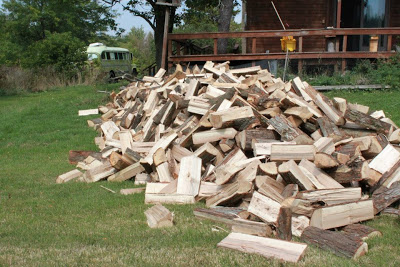
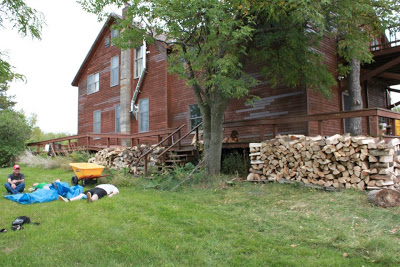
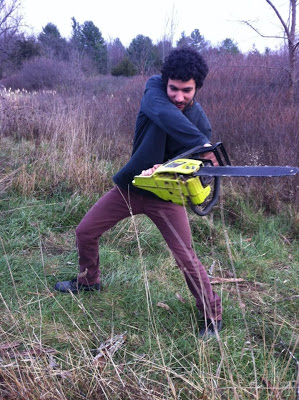
Get a Chainsaw. Next time winds take down trees on your property, save yourself hundreds (likely thousands) of dollars and cut the logs up yourself. Then stack them for use in your fireplace or wood stove (or call a lumber company and offer to sell them your wood—particularly if you've got cherry, oak, black walnut, or other desirable trees).
Grow Your Own Food. Whether you plant a garden out back, install a grow bed over your fish tank, plant a rooftop garden, start a community garden in your neighborhood, or hang a vertical wall in your kitchen, there's simply no reason every household can't grow at least part of its own food. You can search this blog for how to do everything from vertical gardens to companion planting outside. What if every city neighborhood designed a community garden that could feed itself all the basics? What if every building had a living roof? How would this change an emergency situation entirely?
Store Your Own Food. If you overplant in the summer, you will have enough food on-hand to blanch, freeze, and jar food to enjoy all fall, winter, and spring. If you've got a root cellar or well, you have lots of refrigeration power as well.
Get in Shape. If your town or city has disaster strike, power outages, flooding, and debris on the roads may mean you're left with your own man- or woman-power to survive. That means you need to be in good physical condition in order to transport food, water, and supplies, get across town, or maneuver your body through wreckage.
Have an Evacuation Plan. What will you do if all the roads are closed? Do you know all the side streets in your neighborhood? If your main bridge or tunnel is shut down, do you know another way to get out of town? Consider every alternative route, even if it seems silly now. Don't dismiss the power of kayaks or canoes in flood situations (or the common sense of hip waders), or your ability to walk through neighbors' yards or public open spaces to get out of a bad situation. If you've recently moved to a new area, get to know the terrain.
Further Suggested Reading: