Free Arts & Crafts for Kids Sept. 1 in A'Bay

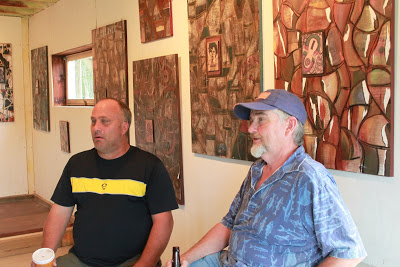
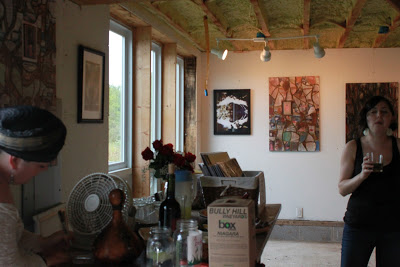
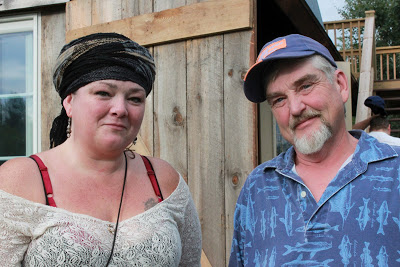
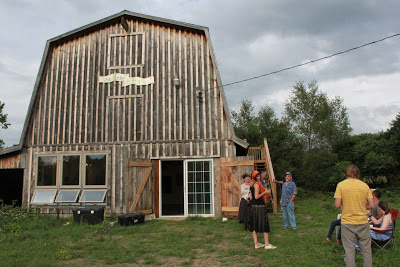
A free instrument-building arts and crafts demonstration for children is slated from 1-4 p.m. Saturday, Sept. 1, on the front lawn of Bay House Artisans at 21A James Street in Alexandria Bay.

The demonstration is being put on by betterArts, a Redwood-based not-for-profit, and is made possible through space provided by Bay House Artisans and a donation by Watertown Evening Rotary.

Youngsters can show up anytime between 1 and 4 to learn how to make a variety of instruments, including kazoos and harmonicas. Children will also have the opportunity to decorate the musical pieces with paint, glitter, and other arts and crafts items.

The event is being put on in conjunction with Alexandria Bay's Blues in the Bay music festival. All attending will get their own instruments to play and take home.

BetterArts is a 501(c)3 non-profit organization dedicated to increasing access to the arts throughout the North Country through the provision of free and low-cost workshops, residencies, private instruction, studio and gallery space, performances, and events. For more information, visit www.betterarts.org or call (315) 482-2536.


Comment

Nicole Caldwell

Nicole Caldwell is a self-taught environmentalist, green-living savant and sustainability educator with more than a decade of professional writing experience. She is also the co-founder of Better Farm and president of betterArts. Nicole’s work has been featured in Mother Earth News, Reader’s Digest, Time Out New York, and many other publications. Her first book, Better: The Everyday Art of Sustainable Living, is due out this July through New Society Publishers.

A Crabapple a Day...

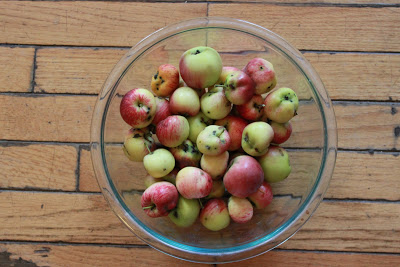
Crabapple trees produce beautiful flowers and provide all kinds of critters with nourishment. But few people have found the fruit appetizing... until now. Check out the following recipes, turning this most bitter of fruits beyond palatable.


Mary Wynne's Crabapple Jelly
from allrecipes.com

Ingredients
  • 8 cups fresh crabapples
  • water as needed
  • 3 cups white sugar
  • 1 (3 inch) cinnamon stick (optional)

Directions

  1. Remove stems and blossom ends from crabapples, and cut into quarters. Place them in a large stainless steel or other non-reactive pot or saucepan. Add enough water to be able to see, but no so much that the crabapples are floating. Bring to a boil, reduce heat to medium, and let simmer for 10 to 15 minutes. The apples should soften and change color.
  2. Strain the apples and juice through 2 or 3 layers of cheese cloth. You should have at least 4 cups of juice. Discard pulp, and pour the juice back into the pan. Bring to a simmer, and let cook for 10 minutes. Skim off any foam that comes to the top. Next, stir in the sugar until completely dissolved. Continue cooking at a low boil until the temperature reaches 220 to 222 degrees F (108 to 110 C). Remove from heat.
  3. Pour the jelly into sterile small decorative jars leaving 1/4 inch headspace. Process in a hot water bath to seal. 

Spicy Pickled Crabapples
from AllRecipes.com
Ingredients
  • 6 quarts fresh crabapples, washed and stems removed
  • 1 cup whole cloves
  • 1/2 cup water
  • 3 pounds brown sugar
  • 1 cup distilled white vinegar
  • 2 tablespoons whole allspice berries
  • 6 cinnamon sticks
  • 1 tablespoon grated lemon zest

Directions

  1. Stick 2 or 3 cloves into each of the crabapples, and set aside.
  2. In a large pot, stir together the water, sugar, and vinegar. Place allspice berries, cinnamon sticks, and lemon zest in cheesecloth, and tie cheesecloth to make a small bag; add to pot. Bring to a boil, then reduce heat and simmer for 5 minutes. Add the crabapples,and simmer until tender, about 20 minutes.
  3. Use a slotted spoon to lift out crabapples and place them into sterile jars. Cover with hot syrup, and seal in a hot water bath for 10 minutes, or until the centers of the lids are depressed. If the syrup seems too thick, add more water. Refrigerate after opening.

Nutritional Information open nutritional information

Amount Per Serving  Calories: 315 | Total Fat: 0.6g | Cholesterol: 0mg
 
Comment

Nicole Caldwell

Nicole Caldwell is a self-taught environmentalist, green-living savant and sustainability educator with more than a decade of professional writing experience. She is also the co-founder of Better Farm and president of betterArts. Nicole’s work has been featured in Mother Earth News, Reader’s Digest, Time Out New York, and many other publications. Her first book, Better: The Everyday Art of Sustainable Living, is due out this July through New Society Publishers.

Starting Tomorrow: Redwood Field Days!


The Redwood Volunteer Fire Department's 54th Annual Redwood Field Days is slated from tomorrow, Aug. 23, through Saturday, Aug. 25. Here's the full run-down of the weekend's festivities (games and rides all day every day!):

THURSDAY
Junk Auction 7 p.m.

FRIDAY
Chicken BBQ 6 p.m.
Band: Bad Husbands Club 8 p.m.

SATURDAY
Kids Parade 12 p.m.
Specials on the rides!
Big Parade 7 p.m. (watch for the Better Farm float!!!)
Band: R19 8 p.m.
Cash Raffle at midnight!
Comment

Nicole Caldwell

Nicole Caldwell is a self-taught environmentalist, green-living savant and sustainability educator with more than a decade of professional writing experience. She is also the co-founder of Better Farm and president of betterArts. Nicole’s work has been featured in Mother Earth News, Reader’s Digest, Time Out New York, and many other publications. Her first book, Better: The Everyday Art of Sustainable Living, is due out this July through New Society Publishers.

Nutritional Benefits of Shopping Local

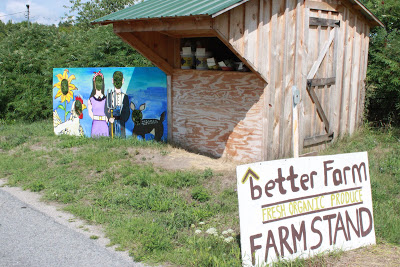
Produce for sale at Better Farm's roadside stand.
On average, the food that lands on our tables from a grocery store travels 1,500 miles. And get this: Only about 10 percent of the fossil fuel energy used in the world’s food system is used for production. The other 90 percent goes into packaging, transportation, and marketing of the food. All this inefficiency creates many environmental problems.

Buying local has obvious benefits: supporting local business, cutting down on fossil fuel consumption for transportation, and food that has been treated with fewer (if any) harmful chemicals. But did you know local food inherently has higher nutritional value, as well?

The length of time that produce stays on the vine, ground, or tree contributes to nutrient content and flavor. The longer foods are able to ripen naturally on the vine, the higher their nutrient content, and usually, the richer their taste.

But to ship long distances (whether organic or generic), produce is picked before it is ripe. In some cases, as in the case of tomatoes, they are picked when green and then ripened with a gas in the states to turn them red. Nutrient content and taste are substantially affected in this process.

It’s a double-edged sword. Global shipping opens our access to fruits and vegetables we might not be able to get in the States, as well as offering us potentially lower prices. It also enables us to enjoy most fruits and veggies year-round, instead of just seasonally. But nutrient loss and a lack of flavor are the obvious trade offs.

Locally grown food is safer because small farmers do not use chemicals as much as large commercial growers use them, according to the Center for a New American Dream. The farmers’ market products may not all be organic, but those foods tend to be healthier than grocery store products—especially if chemicals and pesticides are a concern. Many vendors at farmers’ markets have recognized the need and desire for healthier, chemical and hormone-free foods and tout their organic, pesticide-free grow practices.
Some countries are working to pass laws to promote the selling of in-season fruits and vegetables in the hopes that it will encourage consumers to purchase more local goods (British celebrity chef Gordon Ramsey is working to get such a law passed in the UK). Buying foods that are in season would increase our access to nutrients and better tasting items. Clearly, this is why the “local” movement is growing so rapidly.

Fruits and vegetables you find at farm stands and farmers' markets are picked when perfectly ripened. This enhances the taste, texture, and aroma of the produce. Double bonus: market prices at stands and markets are lower than at grocery stores. Shopping at the Farmers Market benefits the local farmer and strengthens your local community. 

Since the produce is picked at the peak of the season, nutrients and phytochemicals will be more abundant. Hippocrates said, “Let food be your medicine.” The following chart shows many of the health benefits of fresh produce according to color:
Chart from sparkpeople
Comment

Nicole Caldwell

Nicole Caldwell is a self-taught environmentalist, green-living savant and sustainability educator with more than a decade of professional writing experience. She is also the co-founder of Better Farm and president of betterArts. Nicole’s work has been featured in Mother Earth News, Reader’s Digest, Time Out New York, and many other publications. Her first book, Better: The Everyday Art of Sustainable Living, is due out this July through New Society Publishers.

Iron Chef: Zucchini

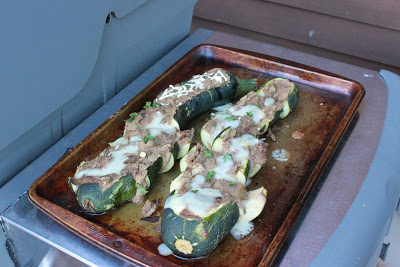
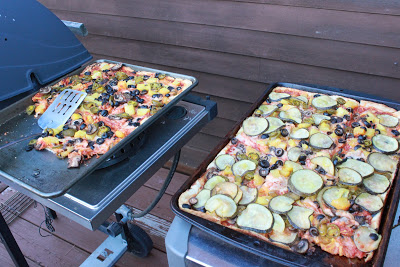
Clockwise from top: Zucchini stuffed with lentil-walnut pate (vegan cheese topper); string beans in vegan cream of mushroom glaze, cucumber-zucchini-corn salad, boca slider, and zucchini-mushroom-olive-jalapeno pizza.
We've canned, frozen, pickled, sold, and eaten fresh hundreds of pounds of food this summer already; but to celebrate our recent abundant harvest of zucchini and other fresh veggies (aquaponic lettuce, anyone?!) we decided to host an "Iron Chef" cookoff Friday at Better Farm.

With zucchini as the secret ingredient, we tasked contestants with coming up with dishes featuring the flavorful vegetable. Here's what they brought to the table:

The Menu
  • Zucchini-Cucumber Salad with Lemon Juice and Corn (Holly Boname)
  • Zucchini Stuffed with Lentil-Walnut Pate (Nicole Caldwell)
  • Sliders featuring Locally Sourced Beef (or Boca burger), Aquaponic Lettuce, Tomatoes, Cucumber, and Zucchini Slices (Nicole Caldwell)
  • Homegrown String Beans in Vegan Cream of Mushroom Glaze (Matt Smith)
  • Zucchini, Jalapeno, Mushroom, and Olive Pizza (Nick Bellman)
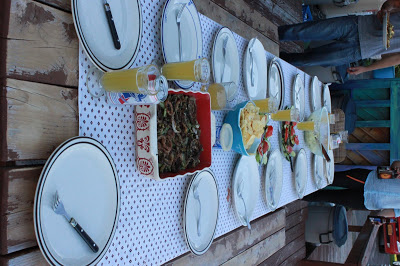
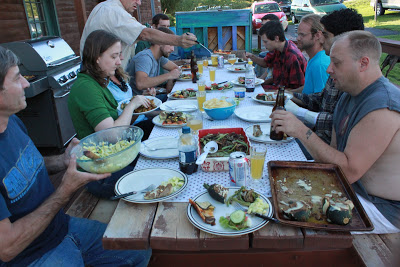
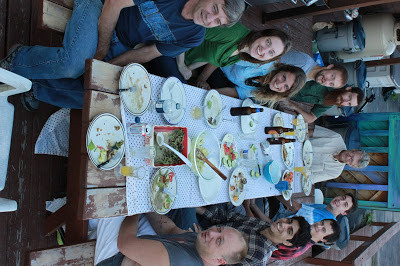
Every ingredient came directly out of Better Farm's gardens (exceptions: lemon juice, lentils, walnuts, mushrooms, soy milk, homemade pizza dough, cheese and olives). Here's the spread:


It was too tricky to pick a winner, so we just ate until we couldn't take another bite. Stay tuned for the next round!

For any of the above-listed recipes, e-mail us at info@betterfarm.org.
Comment

Nicole Caldwell

Nicole Caldwell is a self-taught environmentalist, green-living savant and sustainability educator with more than a decade of professional writing experience. She is also the co-founder of Better Farm and president of betterArts. Nicole’s work has been featured in Mother Earth News, Reader’s Digest, Time Out New York, and many other publications. Her first book, Better: The Everyday Art of Sustainable Living, is due out this July through New Society Publishers.

Your Guide to Fall Planting!

Forget the years of single harvests! Many vegetables are well-adapted to planting in the summer for fall harvest. As you pick your carrots, beets, and salad greens, you can be replacing those veggies with fresh seeds that will extend your gardening season so you can continue to harvest fresh produce after earlier crops have finished. The fall harvest can be extended even further by providing protection from early frosts or by planting in cold frames or hotbeds. Fall and winter gardening, although an old practice, is an excellent solution for keeping the fertility of your garden's soil at its peak levels. At the same time, it yields crops of delicious vegetables throughout the fall and winter that cost a fraction of produce purchased in the supermarket.

Many cool-season vegetable produce their best flavor and quality when they mature during cool weather. Vegetables such as lettuce and spinach tend to bolt or develop bitter flavor when they mature during hot summer weather. Here's a quick reference guide:

 
Late-maturing crops Approximate maturity 90 days. Plant by mid July for fall harvest, later for spring harvest.

ROOTCROPS

  • Beets
  • Carrots
  • Parsnip
  • Rutabaga
  • Globe Onions

LEAFCROPS

  • Brussells Sprouts
  • Cabbages
  • Cauliflower
  • Fava Bean 
Mid-season crops - Approximate maturity 60 days. Plant by mid August. Use any of the dates from above as well as the Best Dates below.

ROOTCROPS

  • Early Carrots
  • Leek
  • Turnip
  • Kohlrabi

LEAFCROPS

  • Early Cabbages
  • Winter Cauliflower
  • Collards
  • Perennial Flowers
  • Perennial Herbs
  • Swiss Chard 
Early maturing crops - Approximate maturity 30 days. Plant by mid September. Use the dates from the previous page as well as the Best Dates below. The latest dates are for warmer climates, later frosts, or protected plantings.

ROOTCROPS

  • Chives
  • Bunching Onions
  • Radishes

LEAFCROPS

  • Broccoli
  • Cover Crops
  • Leaf Lettuces
  • Mustard
  • Spinach
  • Lawn seed
Growing a productive fall vegetable garden requires thoughtful planning and good cultural practices. July and August are the main planting times for the fall garden. Count backwards from the average first-frost date in your area to determine the best time to plant.

Preparing the Site
Before preparing the soil for a fall garden, you must decide what to do with the remains of the spring garden. In most cases, the decision is not difficult because the cool-season crops have already matured and the warm-season vegetables are beginning to look ragged. Remove the previous crop residue and any weed growth. 

Planting the Fall Garden
Direct seeding (planting seeds rather than using transplants) for crops such as broccoli, cabbage, and collards is often used in the fall. However, the success of this planting method depends on having adequate moisture available to keep the young seedlings actively growing after germination. Seeds should be planted deeper in the fall because the moisture level is lower in the soil and the surface temperature is higher. In many cases, the planting depth may be 1 1/2 to 2 times as deep as for spring planting of the same crop.

Watering/Fertilizing Most vegetables require 1 inch of water per week. It's best to make a single watering that penetrates deeply rather than frequent shallow applications. Young seedlings and germinating seeds may need more frequent, light waterings. Do not allow seedlings to dry out excessively. New transplants may also benefit from frequent light waterings until they develop new roots.
Many fall-maturing vegetables benefit from sidedressing with nitrogen just as do spring maturing vegetables. Most leafy vegetables will benefit from an application of nitrogen three and six weeks after planting.

Insects and Diseases
It is not uncommon for insects and diseases to be more abundant in the fall. Most problems from insects and diseases result from a buildup in their populations during the spring and summer. There is hope of keeping these pests at tolerable levels, however, if a few strategies are followed. Strive to keep fall vegetables healthy and actively growing; healthy plants are less susceptible to insects and diseases. Check the plants frequently for insect and disease damage. When sufficient damage is detected, use an approved pesticide. You may decide not to grow vegetables, such as squash, corn, and cucumbers, that are specially insect and disease prone during late summer and fall.

Frost Protection
You can extend the season of tender vegetables by protecting them through the first early frost. Cover growing beds or rows with burlap or a floating row cover supported by stakes or wire to keep the material from directly touching the plants. Individual plants can be protected by using milk jugs, paper caps, or water-holding walls.

Most of the semi-hardy and hardy vegetables will require little or no frost protection. Semi-hardy vegetables should be harvested before a heavy freeze. Root crops such as carrots and radishes should be harvested or mulched heavily before a hard freeze. The harvest of mulched root crops can often be extended will into the winter. During mild winters, harvest may continue till spring.
Comment

Nicole Caldwell

Nicole Caldwell is a self-taught environmentalist, green-living savant and sustainability educator with more than a decade of professional writing experience. She is also the co-founder of Better Farm and president of betterArts. Nicole’s work has been featured in Mother Earth News, Reader’s Digest, Time Out New York, and many other publications. Her first book, Better: The Everyday Art of Sustainable Living, is due out this July through New Society Publishers.

Lettuce Present: Aquaponic harvest

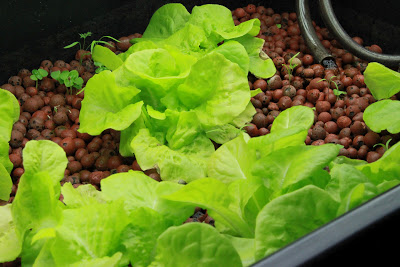
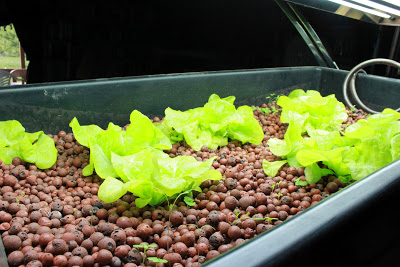
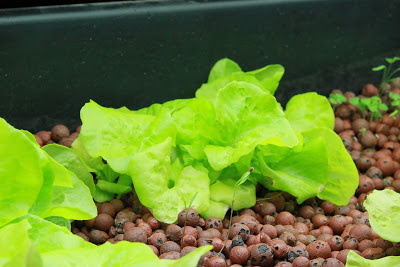
Lettuce and baby herbs in our aquaponic grow bed.
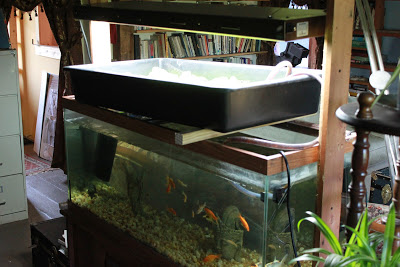
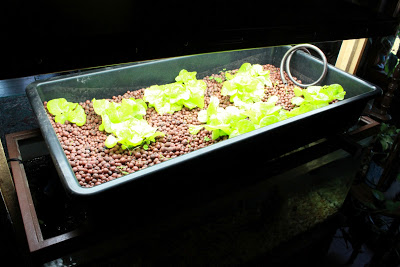
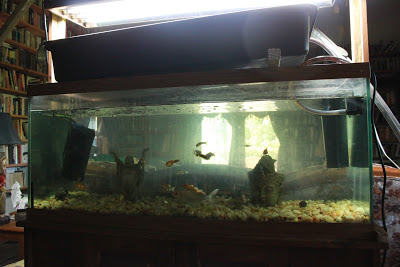
Back in July we finished our aquaponic setup in Better Farm's library, complete with grow light, grow bed, light stand, and 70-gallon fish tank which also served as a home to a dozen or more koi, goldfish, minnows, and one friendly sucker fish.

Just one month later, our crop of organic, loose-leaf lettuce is ready for harvest. That's a full month earlier than most lettuce grown in dirt! The leaves on our aquaponic lettuce are unbelievably delicate and nutritious—be sure to stop by our farm stand and see for yourself! You can read all about the benefits of aquaponic gardening here.

Here are some photos of our setup:


For more information on setting up an aquaponic system in your own home, school, or office, click here.
Comment

Nicole Caldwell

Nicole Caldwell is a self-taught environmentalist, green-living savant and sustainability educator with more than a decade of professional writing experience. She is also the co-founder of Better Farm and president of betterArts. Nicole’s work has been featured in Mother Earth News, Reader’s Digest, Time Out New York, and many other publications. Her first book, Better: The Everyday Art of Sustainable Living, is due out this July through New Society Publishers.

August Produce at Better Farm

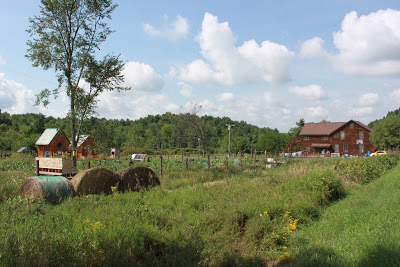
We checked in a couple of weeks ago with a pictorial tour of the Better Farm gardens. Since then, we've had a few more, good washes of rain. Those storms have sent the gardens into overdrive.

At our farm stand this week, we're featuring the following while supplies last:
  • Corn (several varieties)
  • String beans
  • Tomato (several varieties)
  • Zucchini
  • Cantaloupe
  • Peas
  • Broccoli
  • Herbs (several varieties)
  • Potatoes (several varieties)
  • Kale
  • Lettuce
  • Spinach
  • Cicoria
  • Swiss Chard
  • Carrots


We attribute much of our success this summer to our mulch gardening system, which retains moisture and nutrients for the plants even in times of drought. Between the mulch gardening and rainwater catchment setups (and our unbelievable cast of interns) we've had less work and more bounty. That's something we can all feel good about.
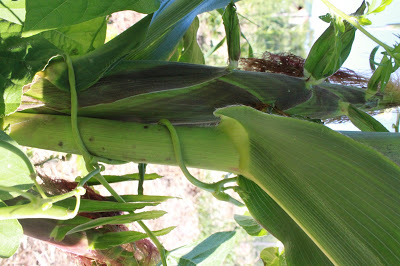
Companion plant: pole beans climb a corn plant.

Scarlet, center, Bernadette and Delores work the grounds for us.
Destiny's Child, far left, and Scooter, far right.
Comment

Nicole Caldwell

Nicole Caldwell is a self-taught environmentalist, green-living savant and sustainability educator with more than a decade of professional writing experience. She is also the co-founder of Better Farm and president of betterArts. Nicole’s work has been featured in Mother Earth News, Reader’s Digest, Time Out New York, and many other publications. Her first book, Better: The Everyday Art of Sustainable Living, is due out this July through New Society Publishers.

Gallery Opening of Kristie Hayes Beaulieu

A gallery show at Better Farm last Friday celebrated the work of visiting betterArts resident Kristie Hayes Beaulieu.

As we discussed in an earlier post, Kristie is a high school art teacher and professional visual artist who visited us for two weeks from Syracuse, N.Y. through the betterArts residency program. Her work has been featured in more than a dozen group and solo exhibitions in galleries as far away as Detroit, and her recent "x-ray art series" has been featured on the cover of Academic Medicine and the American Society of Radiologic Technologists' medical publication.


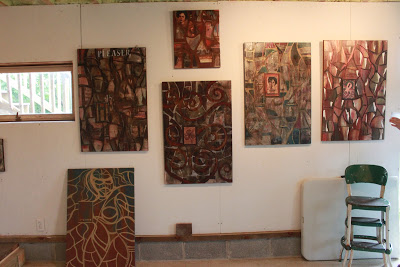
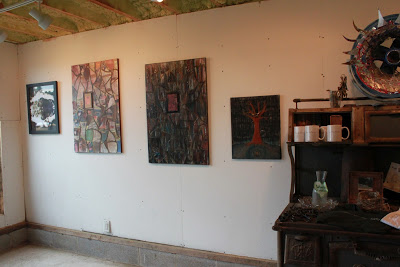
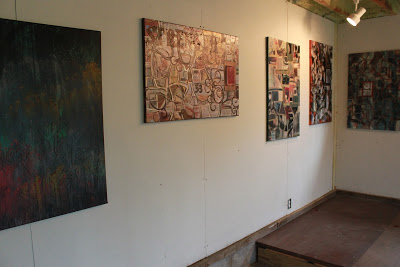
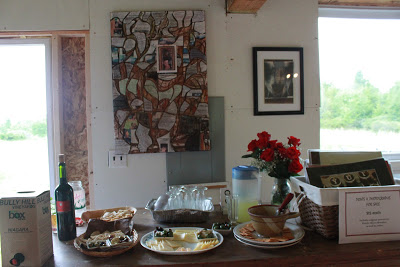
Kristie sold three pieces at her gallery opening, and we had a great turnout—complete with an impromptu, live musical performance by some North Country locals. Here are some photos from the gallery:


To learn more about the betterArts residency program, click here.
Comment

Nicole Caldwell

Nicole Caldwell is a self-taught environmentalist, green-living savant and sustainability educator with more than a decade of professional writing experience. She is also the co-founder of Better Farm and president of betterArts. Nicole’s work has been featured in Mother Earth News, Reader’s Digest, Time Out New York, and many other publications. Her first book, Better: The Everyday Art of Sustainable Living, is due out this July through New Society Publishers.

Spotlight On: Woodhenge Self-Reliance Campus

On Part II of last week's Better Farm field trip, we paid a visit to the Woodhenge Self-Reliance Campus in Adams Center, N.Y.

A so-called "Center for the Study of Things Practical and Not So Practical," Woodhenge is an off-grid, renewable energy, alternative building and sustainable agriculture learning center in Northern NY. Owners Krista and Jim Juczak energy classes in solar, wind and microhydro, as well as sustainable agriculture, building methods, and biofuels.

From his blog, Jim writes: "My wife and I are the founders of this little experiment in sustainable living. We purchased the land about 13 years ago and decided to try to live the ideals that we've shared for so long. I'm a 'shop' teacher with 24 years in public education and my wife, Krista, is a foreign language teacher (mostly German) with 22 years in the business. We've both done a lot of other jobs in a wide variety of locations. 


"We don't believe in mortgages, everything on the 52-acre site is paid for. This includes our 18-sided, 3,000-square-foot cordwood and papercrete home, a recycled home, a 1000 sq.ft. workshop, an underground home, several cabins, outhouses and shower houses. We are NOT connected to the grid. All of the power that is needed is made through a collection of solar panels, wind turbines, firewood, etc.

"We saw and see the need for a place that people can come to learn the basics of living simply. Simply here does NOT mean poorer. We feel that people have been trapped in our society by not having the knowledge available to them that was available in times past. Building homes designed for the area/climate you live, growing and preserving food that is actually good for you, making the energy systems that you need to be comfortable are just some of the things we do here. An undercurrent of reconnecting with people around you is a secondary feature of living the way we do.

"I believe that within a very short amount of time a series of crises will cause most of humanity to live at a considerably lower standard of living. Woodhenge is a place for people to come before this happens, to learn the coping skills that have been lost due to the way most of us live our lives. It takes time to simplify; to learn to garden, to learn to build, to learn to sustain!"

Couldn't say it better myself! Here's a photo tour of all things Woodhenge:

Main House
Canned food to last through winter, cordwood walls, hanging art.


Ceiling featuring tongue-and-groove and reclaimed wood from a bowling alley. Wagon wheel chandelier with mason jar lights.


The Grounds and Outbuildings


Fuel tank that will eventually be an underground house.

Former motel-turned-apartment, foreground, and main house with living roof in background.

Woodhenge is located at 13910 Fuller Road, Adams Center, NY 13606. To learn more, visit http://woodhengeself-reliancecampus.blogspot.com.
1 Comment

Nicole Caldwell

Nicole Caldwell is a self-taught environmentalist, green-living savant and sustainability educator with more than a decade of professional writing experience. She is also the co-founder of Better Farm and president of betterArts. Nicole’s work has been featured in Mother Earth News, Reader’s Digest, Time Out New York, and many other publications. Her first book, Better: The Everyday Art of Sustainable Living, is due out this July through New Society Publishers.

Spotlight On: Kripalu Yoga and Wellness Center

The main meeting space at Kripalu; site of healings, reiki, workshops, and of course yoga classes.
Several people from Better Farm (two betterArts residents, a sustainability intern, and I) yesterday took a field trip to Adams Center, N.Y., to visit two very special places: the Kripalu Yoga and Wellness Center, and Woodhenge Self-Reliance Campus (blog post on the latter to follow!).

Our first stop was at the Kripalu Yoga and Wellness Center, which was founded more than 30 years ago on the belief that all humanity is one family and that the Divine swells within each of us.  The center is a non-profit organization dedicated to promoting the integration of body, mind and spirit. Its members support this philosophy through the teaching and practice of yoga, health related programs, and services to nurture personal growth and community.


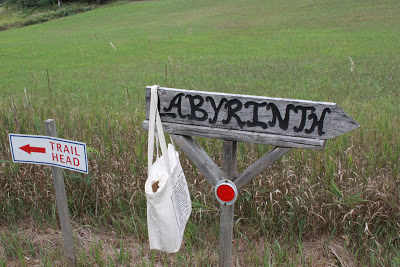
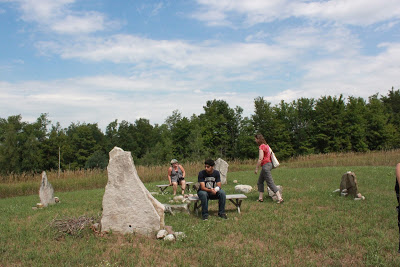
The sprawling property includes a main meeting house for workshops, yoga classes, healings, reiki, and more; a nature trail, stone circle, artwork, and sculpture, and labyrinth.

The center offers the following:

The centerpiece of the center (and highlight for us) is a 70-foot labyrinth installed more than a decade ago by board members and people in the community who volunteered their time and materials for the effort. The center's president, Nancy Pfeil, took time out of her day to show us around and join us on a stroll through the labyrinth and short hike on the property.

The Labyrinth
Nancy explained to us the history of labyrinths; that they're found in many cultures dating back as much as 3,500 years, and that unlike mazes, labyrinths are  unicursal, having a single path leading to the center with no loops, cul-de-sacs or forks. They all share the basic features of an entrance or mouth, a single circuitous path and a center or goal.

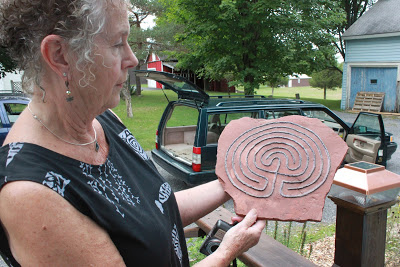
Here's Nancy showing us a finger labyrinth she made ages ago while traveling through the southwest with her husband (she made it out of yarn and nail polish atop a red rock!):

Many community organizations, churches and retreat centers are making labyrinth walks available for public use for prayer, meditation, contemplation or personal growth. The labyrinth walk is popular with a growing number of people  because of it simplicity and the ability to approach its paths on your own terms.

To walk a labyrinth (or run your finger over one) is a right-brain task. It involves intuition, creativity, and imagery. With a maze many choices must be made and an active mind is needed to solve the problem of finding the center. With a labyrinth there is only one choice to be made. The choice is to enter or not. A more passive, receptive mindset is needed. The choice is whether or not to walk a spiritual path.
At its most basic level, the labyrinth is a metaphor for the journey to the center of your deepest self and back out into the world with a broadened understanding of who you are. Labyrinths belong to the family of “Mandalas” (sanskrit for “circle that contain the Essence”). Many people believe that labyrinths guard, activate & amplify the spiritual energies of a place so that people who walk it can experience a feeling of grace, peace or holiness in their heart, soul & spirit.

There is not a "required way" to walk the labyrinth. The beauty of the labyrinth is that people can approach the experience on their own terms. One may enter playfully or purposefully (many people are finding labyrinths therapeutic for children with ADD, who relax by running through the labyrinth); others enjoy taking intentional walks in which they address a specific intention or issue. Many use labyrinths as intercessory walks to offer prayer for others in need, or meditative walks to concentrate on a specific word or passage. Here are some shots from our walk:


 After the labyrinth, we joined Nancy on a nature walk around the property:
Stone circle
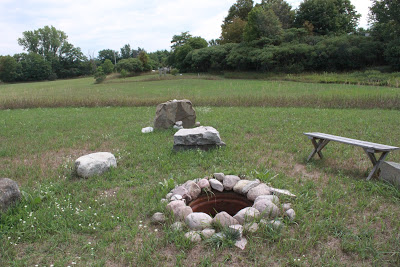
Fire pit and chairs for drumming circles


Many thanks to Nancy for welcoming us so warmly!

Board members of the center include: Nancy M. Pfeil, president; Steve Williams, vice president; Sonya Farmer, secretary/treasurer; B.J. Mosher, labyrinth facilitator; Kim Ward, marketing support; April Williams, Lisa Smith, Donna Smith, Adrienne Rule, and Sueanne Hunter. The Kripalu Yoga and Wellness Center is located at 14029 Route 11, Adams Center, N.Y. For more information, visit www.kripaluyogaandwellnesscenter.org.
1 Comment

Nicole Caldwell

Nicole Caldwell is a self-taught environmentalist, green-living savant and sustainability educator with more than a decade of professional writing experience. She is also the co-founder of Better Farm and president of betterArts. Nicole’s work has been featured in Mother Earth News, Reader’s Digest, Time Out New York, and many other publications. Her first book, Better: The Everyday Art of Sustainable Living, is due out this July through New Society Publishers.

The Delicious Lemon Cucumber

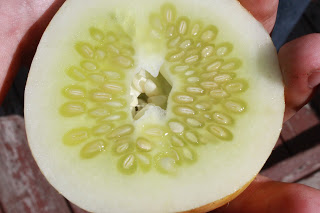
The lemon cucumber is an heirloom plant introduced in 1894. The fruit has is the size and color of a lemon, with great disease resistance and the fresh, crispy flavor of a cucumber. These plants hare hardy, prolific, and great tasting.

We got our non-GMO cucumber lemon seeds at a seed party in Alexandria Bay a few months ago. The seeds themselves came from Baker Creek Heirloom Seeds, a great non-GMO seed purveyor. We found them extremely easy to grow, and less vulnerable to pests than regular varieties of cucumbers.

Unlike the pluot or aprium, which are true cross-bred composites of separate fruits, this apple-cheeked salad stuffer is indeed a cucumber that merely resembles a brightly sour lemon and is actually slightly sweeter than other cucumbers. Like its relatives, the gourd and the squash, the cucumber is classified as a fruit for having enclosed seeds and developing from a flower but is associated with vegetables for its more neutral flavor and use in savory dishes.


Want to taste? Lemon cucumbers are available at our farm stand! Here are some great, simple recipes for these delicious fruits:

Lemon cucumbers with pesto - from White on Rice Couple
Lemon cucumber tofu salad - by Heidi of 101 Cookbooks
Lemon cucumber soup bowls - from Straight from the Farm
Albacore Tuna Salad with Lemon Cucumbers - from Seattle Bon Vivant
Lemon Cucumbers with Toasted Sesame Seeds - from All the Marmalade


Comment

Nicole Caldwell

Nicole Caldwell is a self-taught environmentalist, green-living savant and sustainability educator with more than a decade of professional writing experience. She is also the co-founder of Better Farm and president of betterArts. Nicole’s work has been featured in Mother Earth News, Reader’s Digest, Time Out New York, and many other publications. Her first book, Better: The Everyday Art of Sustainable Living, is due out this July through New Society Publishers.

Preserves

We're entering peak production out in the garden, which means an overabundance of certain foods. Not a problem, if you're willing to spend a little time in the kitchen canning, freezing, blending, cooking, and blanching. The time spent is well worth it, potentially saving you hundreds of dollars at the grocery store over winter months on jarred, canned, and fresh produce.

In the last week, here are the foods we've prepared for freezing and canning:
  • Zucchini Bread (one loaf out on the counter, the rest in the freezer)
  • Basil-Arugula Pesto
  • Dilly Beans (canned)
  • Cucumbers (canned)
  • Zucchinis (blanched and frozen)
  • Zucchini Pancakes
Wherever possible, we used 100 percent ingredients from our own gardens, including dill and garlic. Some of the recipes we used are below!

GARLIC, DILL CUCUMBER PICKLES

from COOKS.COM
5 qt. water
1 qt. vinegar
5 c. sugar
1 c. pickling salt
Sliced cucumbers
Dill heads
Garlic buds
This recipe makes a sweet pickle similar to bread and butter pickles.Boil water, vinegar, sugar and salt; add sliced lengthwise cucumbers 1 quart at a time to boiling solution until cucumbers change color.
Pack in jar. Put 2 garlic and 1 dill head per quart. Cover with boiling solution, seal jars.
Note: Revised canning methods call for processing quart jars 15 minutes in a boiling water bath. Consult your favorite canning reference for more details on proper canning techniques.

PICKLED GREEN BEANS (AKA DILLY BEANS)
adapted from So Easy to Preserve
2 pounds green beans, trimmed to fit your jars (I had to trim mine a bit more after taking the photo you see above)
1 teaspoon cayenne pepper (I used nearly two, but tread carefully here if you’re not a spice person)
4 teaspoons dill seed (not dill weed)
4 cloves garlic
2 1/2 cups white vinegar (5%)
2 1/2 cups water
1/4 cup pickling salt (use a bit more if you’ve only got kosher)
Prep your canning pot by inserting a rack to keep your jars off the bottom of the pot, place pint jars in (wide-mouth pints work best here. A 12 ounce jelly jar is also nice, as it’s a bit taller than a standard pint and makes for less trimming) and fill it with water. Bring to a boil to sterilize while you prepare the rest of your ingredients.
Wash and trim your beans so that they fit in your jar. If you have particularly long beans, your best bet is to cut them in half, although by doing so, you do lose the visual appeal of having all the beans standing at attending.
Combine vinegar, water and salt in a medium saucepan and bring to a boil. While it’s heating up, pack your beans into the jars, leaving 1/2 inch headspace (distance between the tops of the beans and the rim of the jar). To each jar, add 1/4 to 1/2 teaspoon cayenne pepper, 1 clove of garlic and 1 teaspoon dill seeds.
Pour the boiling brine over the beans, making sure to leave that 1/2 inch headspace. Use a plastic knife to remove air bubbles from jar by running it around the interior of the jar. Wipe the rims and apply the lids (which have been sitting in a small saucepan of water at a mere simmer for at least ten minutes in order to soften the sealing compound) and rings.
Process for 5 minutes in a boiling water bath (remember that you don’t start timing until the pot has come to a roiling boil).
These beans want to hang out for a least two weeks before eating, to thoroughly develop their flavor.

BASIL-ARUGULA PESTO
1.5 cups of packed basil leaves, stems removed
1/2 cup packed arugula leaves, stems removed
1/2 cup of shelled walnuts
1/2 cup fresh Parmesan cheese or vegan alternative
1/2 cup extra virgin olive oil
6 garlic cloves, unpeeled
1/2 garlic clove peeled and minced
1/2 teaspoon salt

Brown 6 garlic cloves with their peels on in a skillet over medium-high heat until the garlic is lightly browned in places, about 10 minutes. Remove the garlic from the pan, cool, and remove the skins. Toast the nuts in a pan over medium heat until lightly brown.
Food processor method (the fast way): Combine the basil, arugula, salt, walnuts, roasted and raw garlic into a food processor. Pulse while drizzling the olive oil into the processor. Remove the mixture from the processor and put it into a bowl. Stir in the Parmesan cheese.
Mortar and pestle method: Combine the nuts, salt and garlic in a mortar. With the pestle, grind until smooth. Add the cheese and olive oil, grind again until smooth. Finely chop the arugula and add it to the mortar. Grind up with the other ingredients until smooth.


Comment

Nicole Caldwell

Nicole Caldwell is a self-taught environmentalist, green-living savant and sustainability educator with more than a decade of professional writing experience. She is also the co-founder of Better Farm and president of betterArts. Nicole’s work has been featured in Mother Earth News, Reader’s Digest, Time Out New York, and many other publications. Her first book, Better: The Everyday Art of Sustainable Living, is due out this July through New Society Publishers.