Beyond the Garden Gate: Wild Plant Classification Part I

It was a day as fine as any to bushwhack through the Better Farm wilds in order to classify some native plants! Putting aside their pesky tendency to pop up in the garden rows, wild plants have value that make them well worth knowing. Here is the first installment of the plants I discovered on my romp.

Wild Plant Identification:

Staghorn Sumac
Sumac is native to the Mediterranean, but now grows in abundance throughout the Northern United States. Sumac flowers contain calcium, potassium, magnesium, citric acid and antioxidants; while the bark is useful medicinally as an astringent tea for anti-diarrhea purposes. Staghorn sumac is also antibacterial. Middle Eastern chefs dry the berries, and then grind them up into a spice powder that lasts all year without refrigeration. The spice can be sprinkled on rice, hummus, or kebabs. Sumac tastes slightly sour, tart and citrus-like, very similar to a lemon. Sumac fruit can also be turned into lemonade: Simply put the berries in cold water, rub them to release the juice, and then leave them for several hours to soak and infuse into the water. Strain and drink it. The liquid can also be frozen in ice cube trays and used year-round like lemon juice. (Information from Firstways.com)

Red-Panicled or Grey Dogwood
Historically, American dogwood has been used to treat malaria instead of the drug quinine. American dogwood is still used today as medicine for headaches, fatigue, fever, and ongoing diarrhea. It is also used to increase strength, stimulate appetite, and as a tonic. Some people apply American dogwood directly to the skin for boils and wounds.

Elderberry Tree
Elderberry juice was used to treat a flu epidemic in Panama in 1995, and has historically been widely used for its antioxidant activity, to lower cholesterol, improve vision, boost the immune system, improve heart health, and as a remedy for coughs, colds, flu, bacterial and viral infections, and tonsillitis.  Bioflavonoids and other proteins in the juice destroy the ability of cold and flu viruses to infect a cell. People with the flu who took elderberry juice reported less severe symptoms and felt better much faster than those who did not. Elderberries contain organic pigments, tannin, amino acids, carotenoids, flavonoids, sugar, rutin, viburnic acid, vitaman A and B and a large amount of vitamin C. They are also mildly laxative, a diuretic, and diaphoretic. Flavonoids, including quercetin, are believed to account for the therapeutic actions of the elderberry flowers and berries. According to test tube studies2 these flavonoids include anthocyanins that are powerful antioxidants and protect cells against damage. In Israel, Hasassah's Oncology Lab has determined that elderberry stimulates the body's immune system and they are treating cancer and AIDS patients with it. The wide range of medical benefits (from flu and colds to debilitating asthma, diabetes, and weight loss) is probably due to the enhancement of each individual's immune system.

Butter-and-Eggs
 
Butter-and-Eggs serve as a diuretic, purgative and astringent. Leaf tea can be used as a laxative, strong diuretic for dropsy, jaundice, enteritis with drowsiness, skin diseases, piles, liver and bladder problems. Ointment made from the flowers is used externally for piles, skin eruptions, sores, and ulcers. A β€œtea” made with the plant's milk may also be used as an insecticide. (From MedicinalHerbInfo.)

Jewelweed
Toadflax, Common Toadflax, Yellow Toadflax, Butter-and-Eggs, Wild Snapdragon -
Knapweed

Spotted Touch-Me-Not
Jewelweeld has been used as a treatment for eczema, insect bites, rashes, and spring tonics. It is also an effective cure for poison ivy. Flowers can be rubbed on skin as a natural insect repellent.
Burdock
Burdock Root contains a number of medicinal properties that have been used for hundreds of years. Most traditionally, herbalists use it as a blood purifier. The root also overs relief from abscesses, acne, carbuncles, psoriasis and eczema. The herb increases circulation to the skin by helping to detoxify epidermal tissues. Burdock Root has additionally been reported to destroy bacteria and fungus cultures. It is a popular detoxifying agent that produces a diuretic effect on the body which aids the filtering of impurities from the bloodstream. By promoting perspiration, Burdock Root eliminates toxins through the skin. Burdock Root contains inulin, a carbohydrate that strengthens the liver. The high concentration of inulin and mucilage aids in the soothing effects on the gastrointestinal tract. The high concentration of inulin is helpful for individuals afflicted with diabetes and hypoglycemia as it provides helpful sugar that does not provoke rapid insulin production. Inulin is aromatic, stimulant, expectorant, tonic, stomachic, and antiseptic. Burdock Root can also be used as a mild laxative that aids in the elimination of uric acid or gout.  

Burdock root helps the kidneys to filter out impurities from the blood very quickly. It clears congestion in respiratory, lymphatic, urinary and circulatory systems. Burdock  releases water retention, stimulates digestion, aids kidney, liver and gallbladder function.  It also functions as an aperient, depurative, and antiscorbutic. Decoctions of Burdock have also been historically used for soothing the kidneys, relieving the lymphatic system, rheumatism, gout, GI tract disorders, stomach ailments, constipation, catarrh, fever, infection, fluid retention and skin problems. An article in Chemotherapy identified the chemical arctigenin contained in Burdock as an β€œinhibitor of experimental tumor growth.” European and Chinese herbalists have long considered burdock root's "lightly warming, moistening effect an excellent tonic for the lungs and liver.  It reportedly stimulates toxic waste through the skin and urine, improving digestion and is good for arthritis and rheumatism.
A recent study showed that Burdock blocked dangerous chemicals from causing damage to cells, suggesting to the possibility that burdock may help decrease the risk of developing cancer from toxic chemicals. And finally, despite Burdock’s reputation as a noxious weed, it is the source of several very palatable foods. Edible components of the Burdock plant are its roots, seeds, and its young stems. Young stalks are boiled to be eaten like asparagus, raw stems and young leaves are eaten in salads. Both the root and leaves are used in herbal remedies, but most recipes call for the root which has a sweetish and mucilaginous taste. Fresh burdock root also has a distinct aroma. It has been used, after chopping and roasting, as a coffee substitute. Originally cultivated in China for medicinal purposes, this unique root has become a sought-after specialty in Japan. Flavorful and crunchy, burdock is an excellent source of fiber, along with the vitamins and minerals. Its nutty taste is delicious sautΓ©ed in combination with carrots or just some soy sauce and a bit of sugar, or it can be deep-fried in a tempura batter. Avoid rinsing this brown-skinned vegetable until you're ready to use it.  In markets, it's sold with the dirt still lingering on the roots because it is quick to wilt when washed. The white flesh immediately discolors once peeled. You'll want to soak it in a mild vinegar solution until you're ready to cook it to maintain the color. Its hearty flavor is a little like that of potatoes, although it’s related to artichokes. Mashed roots can also be formed into patties and fried.  The white pith can be added to salads or simmered in syrup to make candy or soaked in vinegar  to make pickles. (Information from Herbal Legacy.)


Chicory
Chicory as a homeopathic remedy is used for sluggish digestion that may lead to headaches. Herbally, chicory is a bitter used to increase appetite and promote digestion. As a culinary herb, young chicory leaves are used in salads. Chicory root is best known as a coffee substitute. (From Holistic Health Careers)

Milkweed 

Milkweeds secrete latex containing cardiac glycosides that are medicinally valuable in the treatment of heart disease. This same latex is an old home remedy for warts. These compounds are also part of a chemical defense that the butterflies deploy against birds who would prey on them, explaining in part their fascination with these plants. Milkweed serves as a major nectar source for butterflies and bees; both of which have been in rapid decline in large part because of herbicides like Roundup, which kills virtually all plants except crops genetically modified to survive it. As a result, millions of acres of native plants, especially milkweed, an important source of nectar for many species, and vital for monarch butterfly larvae, have been wiped out. One study showed that Iowa has lost almost 60 percent of its milkweed, and another found 90 percent was gone. The agricultural landscape has been sterilized. You can help! Become an active participant now. Make a difference today. It all starts with one seed...and you to plant it. (From Annie's Remedy)

To read Part II of this study, click here.

In Retrospect: Sustainability Student Xuan Du


What an amazing two months it has been. When I pulled up to Better Farm’s driveway for the first time, I expected an immersive crash-course in sustainability initiatives. What I didn’t expect was how close I would become with the people and area around Redwood.

Better Farm is a testament to how easily anyone can implement green practices. From indoor aquaponics and hydroponics to rainwater catchment systems, it doesn’t take much to reduce your carbon footprint. Better Farm’s initiatives may be on a small scale, but its impact spreads. Community members and visitors who wouldn’t otherwise care about sustainability are exposed to all of our various initiatives, whether through conversation, workshops, or tours of the grounds. I’ve heard so many guests marvel at the uniqueness of this place and what a lovely respite it is from city life. After staying on the property, it’s hard not to share what you’ve learned with your own friends, family, and community.

I’ve never felt more connected to the land than during my time at the farm. Working in the garden gave me a whole new relationship with my food, and I derived so much satisfaction from harvesting the vegetables. Even though I picked snap peas nearly every day, I was always excited to see a new pea tucked under the stalks and leaves. It was really quite something to witness the growth of a crop every step of the way.

A passage from What We Leave Behind by Derrick Jensen and Aric McBay, one of my assigned readings (and now favorite books), stuck with me: β€œAny working definition of sustainability must emerge from and conform to a particular landbase – to what that landbase can freely give forever – and not be an abstract set of principles, or rationalizations, imposed upon the landbase. The landbase is primary, and what we do to it (or far more appropriately, with and for it) must always follow the landbase’s lead.” The land comes first. Whatever industrialized society we have permitted can only go so far as what the land allows. At Better Farm, we work in tandem with the landbase. Pesticides and fertilizers are never used, and we do everything with the understanding that everything goes back to the land. The food scraps from the kitchen go to the chickens, whose soiled bedding is used to mulch the garden, which provides us with our meals. β€œYou feed me, I feed the soil, the soil feeds everyone, the soil feeds me, I feed you, you feed the soil, and so on” (Jensen and McBay).

Everything about Better Farm seems to come full circle, which is at the root of sustainability. β€œFor an action to be sustainable you must be able to perform it indefinitely” (Jensen and McBay). Better Farm’s goals are fully aligned with this idea. During my internship, I have been hyper aware of the life cycle of everything we use, be it old wood planks repurposed into the exterior of a sauna or the compost used in the garden. Modern society has been trained to throw things out and never think about them again, but life begins with death, decomposition, and decay.

Every day at Better Farm was a new adventure, and I’ll miss every person and animal associated with this place (even Kiwi, the obnoxious rooster). I’ll never forget how lucky I was to be in such a beautiful environment. Every evening when I closed the farm stand, I took my time carrying the unsold produce back to the house, because the splendor of the property at sunset never failed to mesmerize me. No cars were on the road, the chickens roamed freely in the yard, and everything basked in a warm glow. This is what life should be like, and I’m so glad I got to experience it.

I’ll be back, Better Farm.

Canning Frenzy

Canned beats and dilly beans.
Equipped with a borrowed pressure canner, a canning book from the 70's, the Internet, and and a garden overflowing with fresh, organic produce, the crew at Better Farm took off on a canning project that will provide the people here (and some of our very favorite neighbors and CSA members) with delicious, canned meals for months to come.

Here are a few of the recipes we used. Send us yours at info@betterfarm.org!

Elderberry Jam 
From Recipe Wise-UK Edition
Elderberry Jam is a lovely tasting jam with a beautiful colorβ€”but always be sure to use ripe berries to prevent the jam from becoming too tart. We picked wild elderberries along the roadside and spent a week utilizing them in Belgian waffles, scones, and pies. Toward the end of the week when they were perfectly ripened, we froze what we had left after siphoning off some for this jam recipe. To ensure a good set you can use a jam sugar with added pectin, but the lemon juice should help set the jam
Ingredients:
  • Ratio of 1:1 elderberries and sugar
  • 1/2 lemon for every 2 cups of elderberries (juice and zest)
  • 1 tsp. butter (or vegan equivalent) for every 2 cups of elderberries
Instructions

Rinse each elderberry cluster under running water, then drain thoroughly. Work on one small cluster at a time, gently pulling your fingers through and across the clusters to dislodge the berries from the tough stems – only use berries that are completely blue or blue-black, do not use any green berries, or any partially green berries, as they are not ripe and they will spoil the jam. Once you have de-stalked the berries rinse under running water once again. Simmer the elderberries in a dry preserving-pan, slightly bruising them, and stirring them about, with a wooden spoon. When the juice runs put in one-third of the sugar, and let the mixture simmer slowly up to the boiling-point. Break the berries up with the wooden spoon or a masher. When the berries are thoroughly soft and pulpy, take them off the heat and press the sugary pulp through a fine-meshed sieve – no seeds must go through – catching all the juice and pulp in a bowl below. Disclaimer: We let some of the seeds survive for an authentic jam experience! Put the pulp and juice, remaining sugar, lemon juice, butter, and the grated lemon-rind, back into the cleaned preserving pan. Let this simmer for half an hour, stirring and skimming frequently. After 30 minutes, boil for 10 minutes to the setting point. Remove the pan from the heat and skim off any scum and impurities from the surface using a slotted spoon. Leave to cool for 5 minutes. Pour the Elderberry Jam into warmed sterilized jars and seal. Leave the jars to cool completely, then label and store in a cool, dark place.


Pickled Beets
From MyRecipes.com
Ingredients
  • 1 pound small beets (about 7 beets) 
  • 1/2 c. white vinegar
  • 1/4 c. sugar
  • 1/4 tsp. salt
  • 1/2 tsp. black peppercorns
  • 2 bay leaves
Instructions
Rinse out your canner, put the rack in the bottom, and fill it  with hot tap water. Put it on the stove over low heat just to get it heating up for later on. Meanwhile, leave root and 1-inch stem on beets; scrub with a brush. Place in a medium saucepan; cover with water. Bring to a boil. Cover, reduce heat, and simmer 45 minutes or until tender. Drain and rinse with cold water; drain. Cool slightly. Trim off beet roots; rub off skins. Thinly slice beets; place in a large bowl. Combine vinegar and sugar in a small saucepan. Bring to a boil; cook 5 minutes. Remove from heat; stir in salt, peppercorns, and bay leaves. Pour vinegar mixture over beets; then pour into glass Mason jars. Allow for 1/2 inch of headspace in the top of the jar. Put the lids on each jar and seal them by putting a ring on and screwing it down snugly (but not with all your might, just "snug").Put the jars in the canner and the lid on the canner. Using the jar tongs, put the jars on the rack in the canner.  Make sure the tops of the jars are covered by at least 1 inch of water. Process for thirty minutes. You can use either a plain water bath canner OR a pressure canner, since the vinegar adds so much acidity (if you can vegetables other than tomatoes without adding vinegar, you must use a pressure canner).

Dilly Beans
From Simply Canning

Note: As with the pickled beets, using vinegar in the recipe negates the need to use a pressure canner. If you are making these recipes without the vinegar, the food is too acidic to not use a pressure canner. Always keep this in mind in order to ensure food safety!
Ingredients

  • Green Beans - enough to make 4 pints or about 2 pounds
  • 4 sprigs of fresh dill weed or 4 heads of dill.
  • 4 cloves of garlic
  • 1/4 cup canning salt
  • 2 1/2 cups vinegar
  • 2 1/2 cups water
  • 1 tsp cayenne pepper (optional) 
Instructions
Wash beans - snap off ends and snap (break or cut) to jar length. Add sprig of dill weed (or head of dill) (or 1 tsp dill seeds) and 1 garlic clove to each jar. if you like spicy try adding 1/8 tsp cayenne to each jar. Pack each jar with beans length ways. You can also cut your beans short and pack them that way. I just think it looks nice to have them long and lengthways. An easy way to do this is to tip the jar in your hand and fill. This way the beans stack nicely. Combine -vinegar, water and salt to make the pickling solution or brine.  Bring this to a boil. The best way to do this is in a stainless steel tea pot. It makes it so easy to just pour the brine into each jar without having to use  a ladle. Turn the heat off your brine and when bubbling stops, cover beans with pickling solution, leaving 1/4 inch head space. emove air bubbles with a plastic knife or other small tool. Just push the tool gently between the dilly beans moving things around just enough to let the air bubbles rise. There is a tool you can buy specifically for this purpose, but an orange peeler is what I always turn to. It just fits perfectly and is usually hand. Wipe rims clean, you don't want any pickling solution or bean bits on the rim of the jar.  It may interfere with the sealing process.  Then... process for 10 minutes per quart.

Throwing a Zero-Waste Party

One of the obvious hazards of having a bunch of wonderful people over is dealing with everything those wonders leave behind.

So few of us want to spend time with loved ones washing dishes and cleaning, we often opt for what seems easiest: disposable everything.  Yet, we just threw a party with six bands and hundreds of people and ended up with less than one full bag of garbage. How on earth did we pull that off?

First, the problem.

From Styrofoam plates to plastic cups, we are so accustomed to throwaway meal items that we barely give a second thought to utilizing stuff that we only use for minutes (sometimes seconds) before tossing it along on its dead-end course with a landfill. Here are the facts (from reuseit.com):
  • In 2009, the United States generated 13 million tons of plastics waste from containers and packaging, and 7 million tons of nondurable plastic waste (for example plates and cups). The combined total of nondurable disposables exceeded the 11 million tons of plastic durable goods, such as appliances [EPA]. Only 7 percent was recovered for recycling.
  • Plastic cutlery is non-biodegradable, can leach toxic chemicals when handled improperly, and is widely used. Worldcentric.org estimates 40 billion plastic utensils are used every year in just the United States. The majority of these are thrown out after just one use.
  • 3,460,000 tons of tissues and paper towels wound up in landfills in 2008.
  • The Environmental Protection Agency estimates that 780,000 tons of plastic and polystyrene cups and plates were discarded in 2008.
  • Americans produce enough Styrofoam cups every year to circle the earth 436 times. These cups are completely non-biodegradable, deplete the Earth’s ozone layer, waste enormous amounts of landfill, and are deadly to marine life.
  • The Container Recycling Institute claims that 2.81 million juice boxes were sold in the U.S. in 2006, most of which cannot be recycled due to the inseparability of the cardboard, plastic, and aluminum foil used in the product.
  • According to the EPA, Americans discarded about 2.7 million tons of aluminum, the largest source being used beverage and packaging containers. And in the time it takes you to read this sentence, more than 50,000 12-oz. aluminum cans were made. 
  • The Container Recycling Institute estimates that supplying plastic water bottles to American consumers in one year requires more than 47 million gallons of oil, the equivalent of one billion pounds of carbon dioxide that is released into the atmosphere. 
So what's the solution?
At last week's Summerfest, we welcomed hundreds of people to Better Farm to help support betterArts' mission of arts and cultural outreach against a backdrop of responsible environmentalism and practical sustainability.

So what did we do to steer away from such a disposable-obsessed culture?
  • Instead of Styrofoam plates, we went with compostable ones that will turn into dirt by next spring.
  • We opted to invest in real silverware and cutlery, along with heavy-duty plastic tubs for bussing dirty silverware.
  • We utilized real glasses for iced tea, lemonade, water, beer and wine.
  • We ditched all the single-serving bottles. That means no water bottles, no bottles of juice. We filled pitchers and loaded people up with glasses.
  • We put out carefully marked garbage pails: compost, burnable, washable, recyclable. That left cigarette butts and empty bags of ice as the party's only actual trash items.
  • We made our food from actual ingredients, not pre-packaged or store-bought stuff. That meant no cellophane, Styrofoam, or even plastics to contend with. As a bonus, most of the side-dish items came from just a few feet away in Better Farm's garden!
For a party of several hundred people over the course of 12 hours, there were about six trips to the kitchen sink to wash glasses and cutlery. We divided up the responsibilities on this, so no one was stuck doing it more than once. The few minutes it took to clean everything and bring it all back to the party makes the investment more than worthwhileβ€”over the course of several years, betterArts is saving hundreds of dollars by not having to buy disposable items. That's more money that can be spent doing arts outreach in the North Countryβ€”and less junk clogging up the environment. We can all feel good about that.
Got some great ideas for throwing zero-waste parties? Email us at info@betterfarm.org.
Comment

Nicole Caldwell

Nicole Caldwell is a self-taught environmentalist, green-living savant and sustainability educator with more than a decade of professional writing experience. She is also the co-founder of Better Farm and president of betterArts. Nicole’s work has been featured in Mother Earth News, Reader’s Digest, Time Out New York, and many other publications. Her first book, Better: The Everyday Art of Sustainable Living, is due out this July through New Society Publishers.

Zucchini Relish!

Best. Relish. Ever.

The zucchini is coming in hot this week in the Better Farm garden, leading to a rainy-day decision to put it to good use and can up some sweet zucchini relish! Based on what we found in the kitchen cabinets, Xuan and I cooked up a fresh batch, forged from two different recipes we found online.

The recipes came from Food.com and Taste of Home sites.  Borrowing some tips from each, here are the steps Xuan and I took to make the (truly, absolutely delicious) relish.

Ingredients

  • 5 c. finely chopped zucchini
  • 2 medium onions
  • 2 Tbs. pickling salt (we used sea salt)
  • 1 ΒΌ c. granulated sugar
  • ΒΎ c. apple cider vinegar
  • ΒΌ tsp. curry powder
  • 1 tsp. celery seed
  • ΒΌ tsp. black pepper
  • Β½ tsp. turmeric
  • 1 tsp. water
  • 2 tsp. cornstarch

Instructions

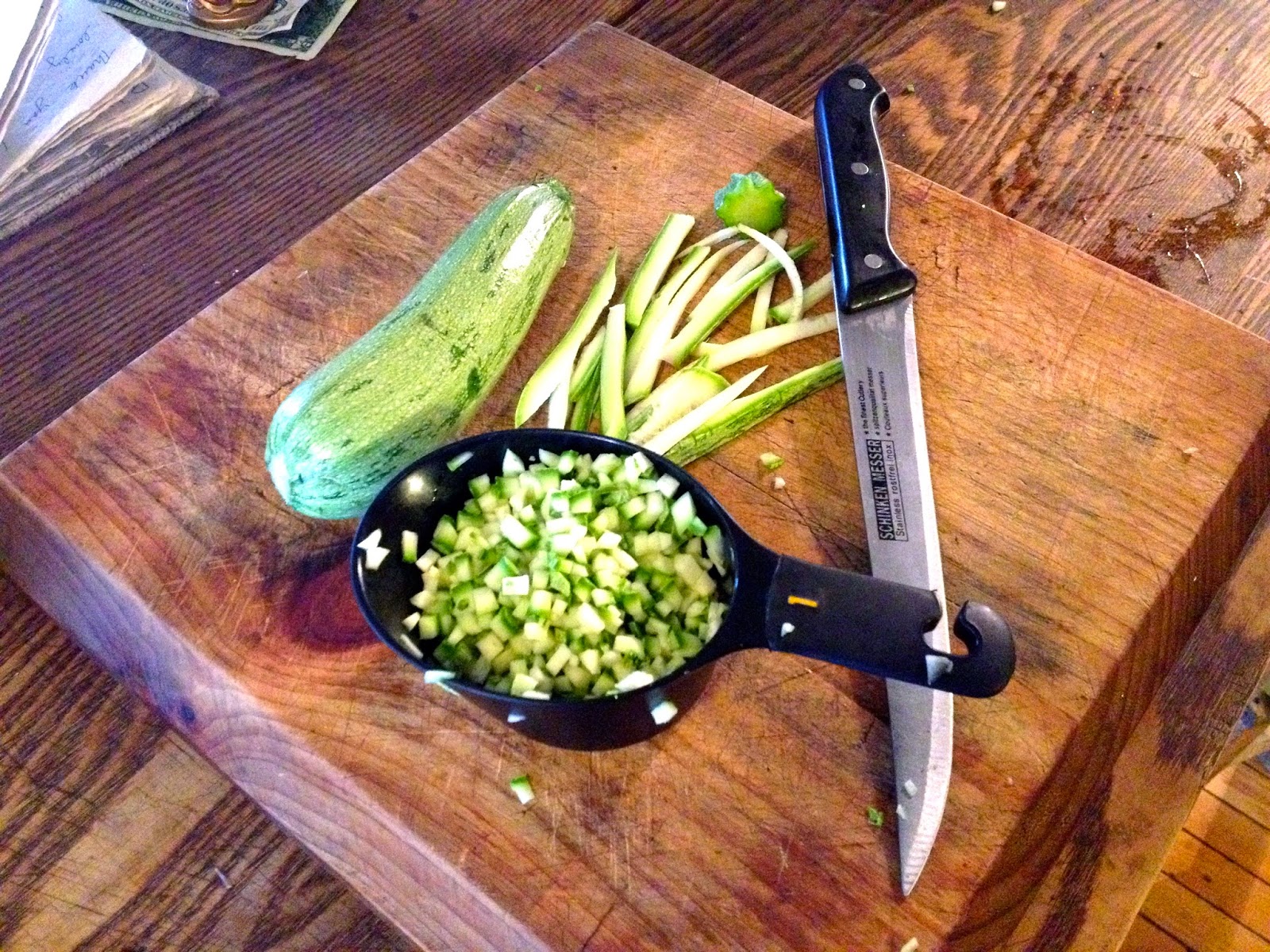
Xuan Du chops up some heirloom zucchinis.

  1. Finely chop the zucchini and onions, and add them to a large bowl.
  2. Stir in the salt and let the mixture sit for one hour.
  3. Drain the mixture through a sieve, rinse, and drain again. Press out as much water as possible.
  4. In a large saucepan, combine mix with granulated sugar, cider vinegar, curry powder, celery seed, black pepper and turmeric.
  5. Bring everything to a boil on high heat, then gently boil for about 15 minutes.
  6. Stir blended water and cornstarch into the pot and cook for another 5 minutes, stirring frequently until the relish thickens and clears. 
  7. Transfer the sweet zucchini relish into a hot, sterilized pint Mason jar (heat the jar and lid in the oven for five minutes).
  8. Wipe the jar clean and seal with the still-hot lid and ring.

Redwood Firemen's Field Days Parade 2014

Better Farm's WINNING float!
The most wonderful time of year has come and gone yet again in Redwood, N.Y.β€”the Redwood Firemen's Field Days.

Three days each August for the last 56 years, Redwood and neighboring hamlets and towns come together to support Redwood's Volunteer Fire Department at the organization's biggest fundraiser of the year. An auction, barbecue, carnival, parade, live bands, and and tons of merriment are among the mainβ€”but not onlyβ€”attractions at the event.

The Redwood Volunteer Fire Department does much, much more in the community than putting out fires. These men and women are pillars of North Country culture; coming out to support other organizations, offering neighborly services to people near and far, and giving their time selflessly at events throughout the region. These folks even helped to hose down the Better Mud Run course back in July.

Better Farm has developed a particular fondness for the Field Days Parade, held during the last evening of Field Days and boasting a cavalcade of antique cars, fire trucks, and floats for organizations, businesses, political candidates, nursery schools, and more. We've been in the parade every year since 2009; and each year, we've inched higher on the totem pole as we scored third place in 2010,  second place in 2012 and 2013. This was our year! But it would take a whole lot of preparation...

Like, about 40 years' worth. Here's the Better Farm float in a parade back in 1974-ish:
We opted to repeat that theme with a stars-and-stripes motif on our float and in our outfits. For half of our float participants, we used striped fabric and stars to make Uncle Sam costumes:


For the ladies on the float, we decided to invoke some Rosie the Riveter spirit:

Here we all are putting the final touches on the float and heading downtown:


...and here's the parade in motion!


Thank you Redwood Volunteer Fire Department for all you do! See Better Farm's full Redwood Field Days album by clicking here.
Comment

Nicole Caldwell

Nicole Caldwell is a self-taught environmentalist, green-living savant and sustainability educator with more than a decade of professional writing experience. She is also the co-founder of Better Farm and president of betterArts. Nicole’s work has been featured in Mother Earth News, Reader’s Digest, Time Out New York, and many other publications. Her first book, Better: The Everyday Art of Sustainable Living, is due out this July through New Society Publishers.

Braiding Isn't Just For Hair

Native to central Asia, garlic is one of the world’s oldest cultivated plants. Throughout history, it has been cherished in many cultures for its culinary and medicinal uses. The sulfur compounds in garlic are especially beneficial, with antioxidant and anti-inflammatory properties. Garlic is also a great source of calcium, copper, manganese, phosphorus, selenium, vitamin B1, vitamin B6, and vitamin C. Its bold, aromatic flavor is guaranteed to transform any meal, and soon, my taste buds will be thanking me, because the garlic from our garden is ready!

Once Mollica and I saw the tops of the bulbs start to emerge, we dug around the sides of the bulbs to loosen them up, avoiding the roots to prevent damage to the garlic.

We brought them to the kitchen and washed off the dirt.

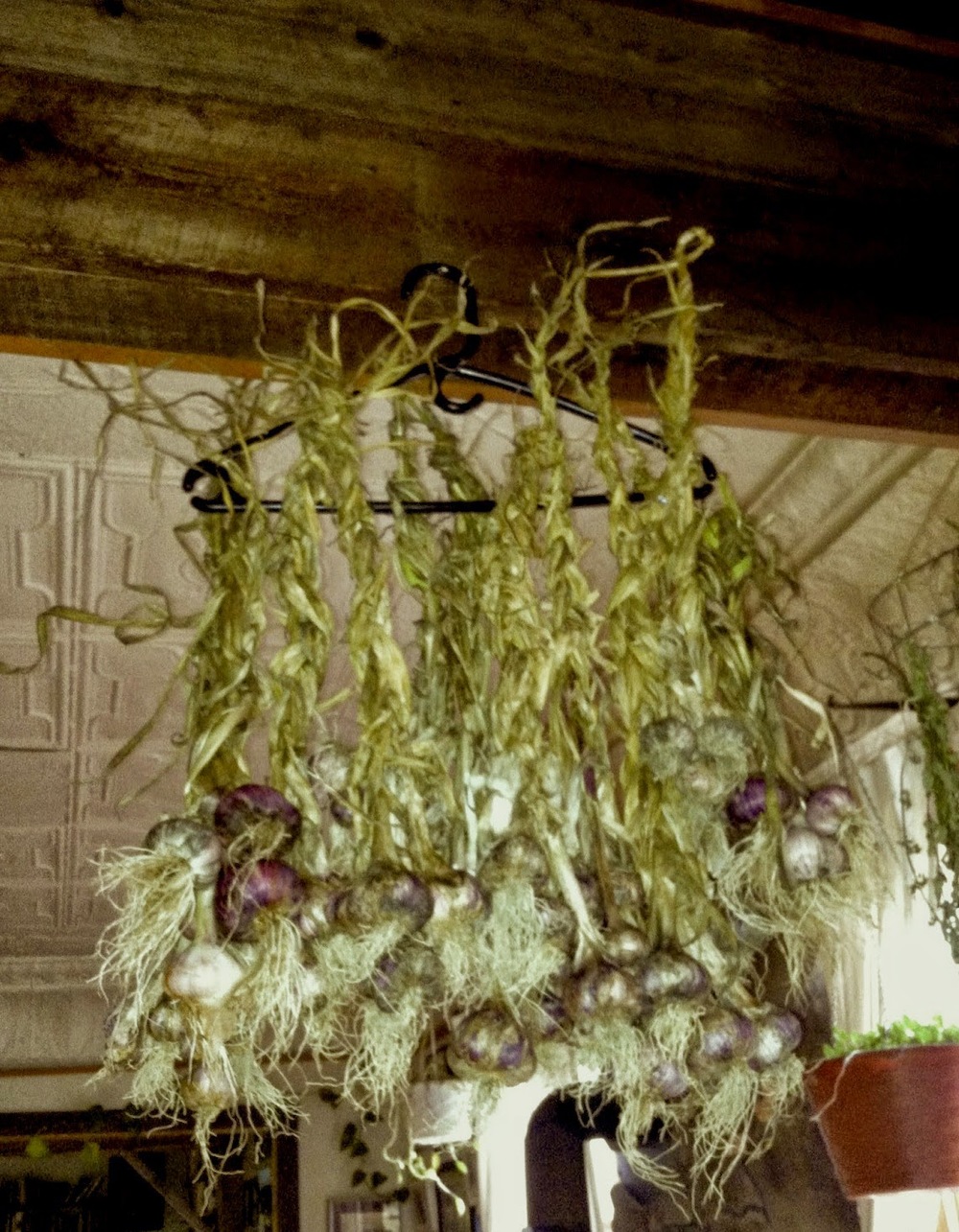
Now onto the fun partβ€”braiding the garlic. Using six at a time, I braided in pairs, starting at the bulbs and making my way down to the ends.

Ever the resourceful person, Mollica attached the braided garlic to a clothes hanger and hung it from the kitchen arch. Once the garlic is dry, I'll try to restrain myself from using it in everything!
 
For further information about Better Farm's Sustainability Education Program, click here.

Children's Weaving Workshop Aug. 23

A children's weaving class hosted by betterArts is slated for 12 p.m. Saturday, Aug. 23, at Better Farm in Redwood.

Children of all ages are invited to this two-hour class to learn different types of weaving. Students will acquire basic weaving knowledge, gain hands-on experience, and discuss basic weaving vocabulary. Students may additionally bring old clothes, fabric, or yarn for their projects if they like.
The class is taught by local artist Alyssa Curley, a fiber-working expert. Curley earned a BA in Art Education from SUNY Potsdam.
Cost for the class is $5.

Email info@betterarts.org for more information or to pre-register. Students (and their parents!) are invited to stay afterward for Summerfest, betterArts' second music, art, and sustainability festival for the summer featuring activities for kids of all ages!

Comment

Nicole Caldwell

Nicole Caldwell is a self-taught environmentalist, green-living savant and sustainability educator with more than a decade of professional writing experience. She is also the co-founder of Better Farm and president of betterArts. Nicole’s work has been featured in Mother Earth News, Reader’s Digest, Time Out New York, and many other publications. Her first book, Better: The Everyday Art of Sustainable Living, is due out this July through New Society Publishers.

Home-Grown Remedies for Bee Stings

The friendly honeybees at Better Farm.
By Allison Bachner

They say "Don’t throw stones if you live in a glass house." Well, perhaps I would recommend "Don’t throw swats if you live in a temple of the bees." One of the many benefits of having an organic farm that doesn’t use harmful pesticides and is surrounded by fields of wild and native plants is a healthy population of bees that help preserve these natural habitats. Bees are absolutely essential to healthy production on a farm. However, not all bees are created equal; and the wasp nest that sprang up at our farmstand was filled with nasty bugs hungry for an easy shot. I was stung under my left eye.


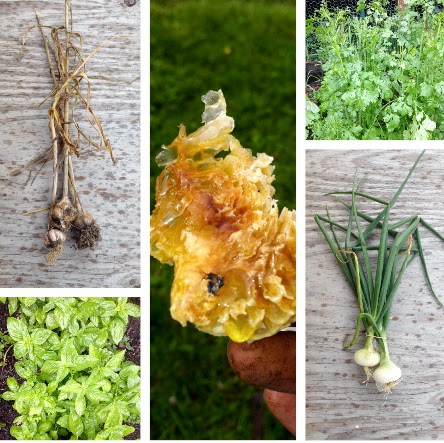
After the initial, painful confusion, my eye was swollen shut to the likes of Popeye the Sailor Man. Thankfully, Better Farm cultivates a number of suggested natural treatments; including honey, garlic, onions, basil, and parsley, to alleviate the symptoms of bee stings. Unfortunately for me, stings near eyes and mouths tend to last for at least three days of varying severity depending on treatment.

After removing the stinger and washing the sting site, you can try these homeopathic remedies to help reduce pain, itching and swelling:
-Honey- Apply honey on the affected site
-Garlic- Apply crushed garlic to the sting site, cover and let it sit for a half hour
-Onion- Cut an onion slice and press on sting site
-Basil- Apply crushed basil to sting to help alleviate pain and swelling
-Parley- Apply crushed parsley
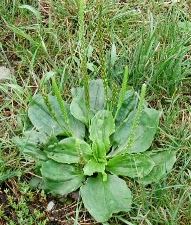
-Plantain- This common weed’s leaves can be crushed up and the juice applied to sting site as an antibacterial and anti-inflammatory (image below)

Along with the remedies found in your garden, these household items also help:

-Ice- Applying ice both helps numb pain and reduce the swelling significantly
-Vinegar- Application of vinegar to affected site can help draw out the sting’s venom
-Baking Soda- Applying a paste of baking soda and water can help neutralize the sting venom

Comment

Nicole Caldwell

Nicole Caldwell is a self-taught environmentalist, green-living savant and sustainability educator with more than a decade of professional writing experience. She is also the co-founder of Better Farm and president of betterArts. Nicole’s work has been featured in Mother Earth News, Reader’s Digest, Time Out New York, and many other publications. Her first book, Better: The Everyday Art of Sustainable Living, is due out this July through New Society Publishers.

New Partnership Brings Fresh Produce to Redwood Food Pantry

The belles of Better Farm transport Redwood's Community Greenhouse to its new home.
A new partnership has turned the Redwood Community Greenhouse into a produce operation that will supply fresh greens and veggies to the Redwood Food Pantry.

Local organizations Hearts for Youth, Redwood Neighborhood Association, and Better Farm have teamed up to provide volunteer hours that will cultivate fresh, organic produce earmarked specifically for use by the Redwood Food Pantry in order to provide local residents with healthy, local food.
Redwood Community Greenhouse.
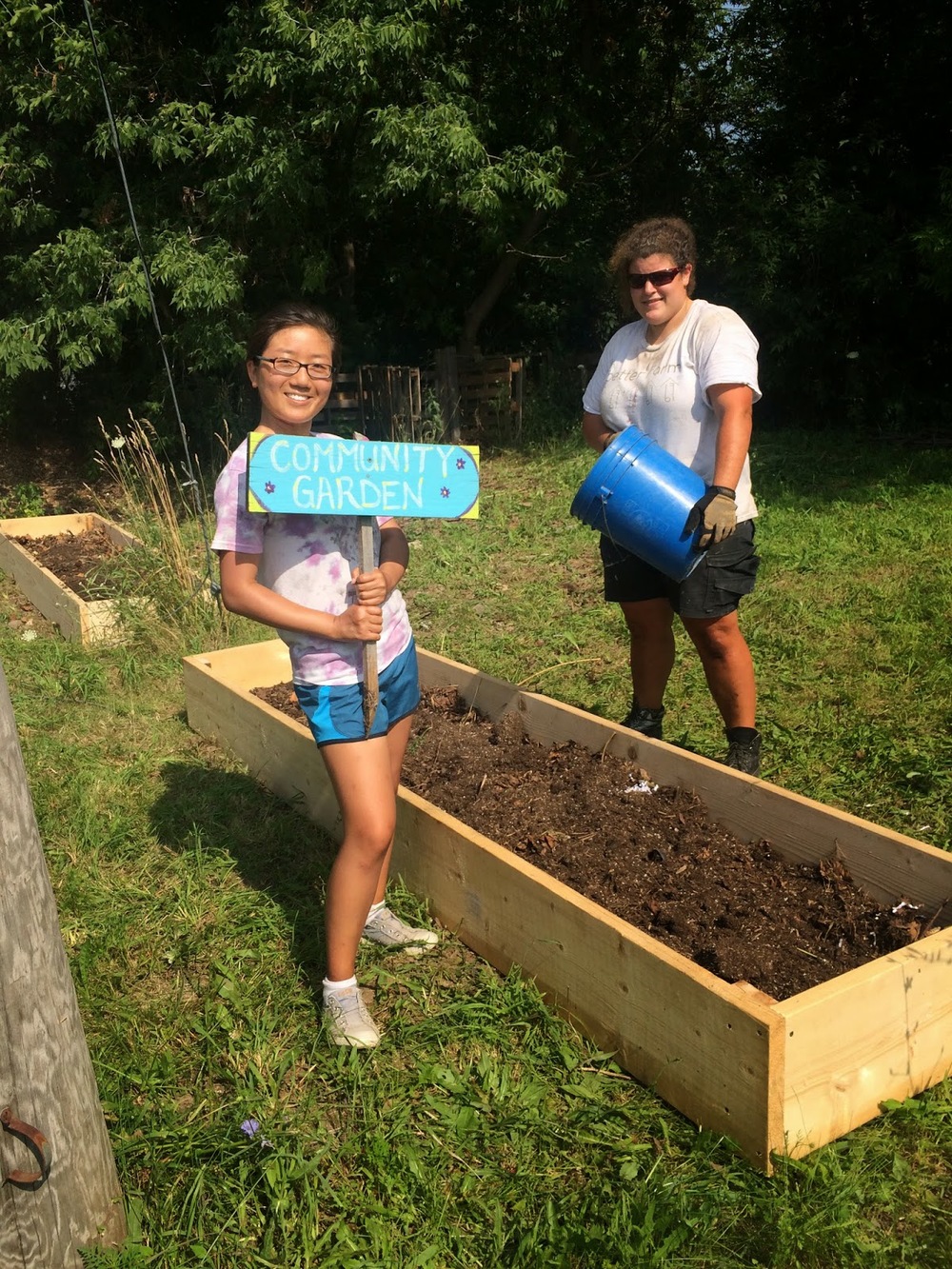
To that end, the Community Greenhouse has been relocated to Better Farm in order to receive the round-the-clock attention and watering a summer greenhouse requires; while also taking advantage of the extended growing season a greenhouse can provide. In the greenhouse's former home along Route 37 in downtown Redwood, raised beds have been constructed for public use. Now a community garden, it is the hope of these partnered organizations that people within the hamlet who do not have access to a garden will take advantage of the Redwood Community Garden to grow veggies from corn to broccoli.
Xuan Du and Kathryn Mollica fill raised beds in Redwood's Community Garden.
For more information or to volunteer at the greenhouse or community garden, call (315) 482-2536 or email info@betterfarm.org.
Comment

Nicole Caldwell

Nicole Caldwell is a self-taught environmentalist, green-living savant and sustainability educator with more than a decade of professional writing experience. She is also the co-founder of Better Farm and president of betterArts. Nicole’s work has been featured in Mother Earth News, Reader’s Digest, Time Out New York, and many other publications. Her first book, Better: The Everyday Art of Sustainable Living, is due out this July through New Society Publishers.

BetterArts Partners with Macomb Historical Association for Old Home Days

BetterArts is partnering with the Macomb Historical Association for Macomb Old Home Days this Saturday, Aug. 9, at the Macomb Historical Society Building in Hammond.

This year's event  additionally marks the 50th anniversary of the Macomb Historical Association.

Bill Berry, president of the Macomb Historical Association, says the event is a chance for people to get together to share their stories and memories of the community (see his interview with 7 News This Morning here).

There will be museum and cemetery tours, a chicken barbecue, a cake walk, old-fashioned games for kids, and a band from 8 to 11 p.m.

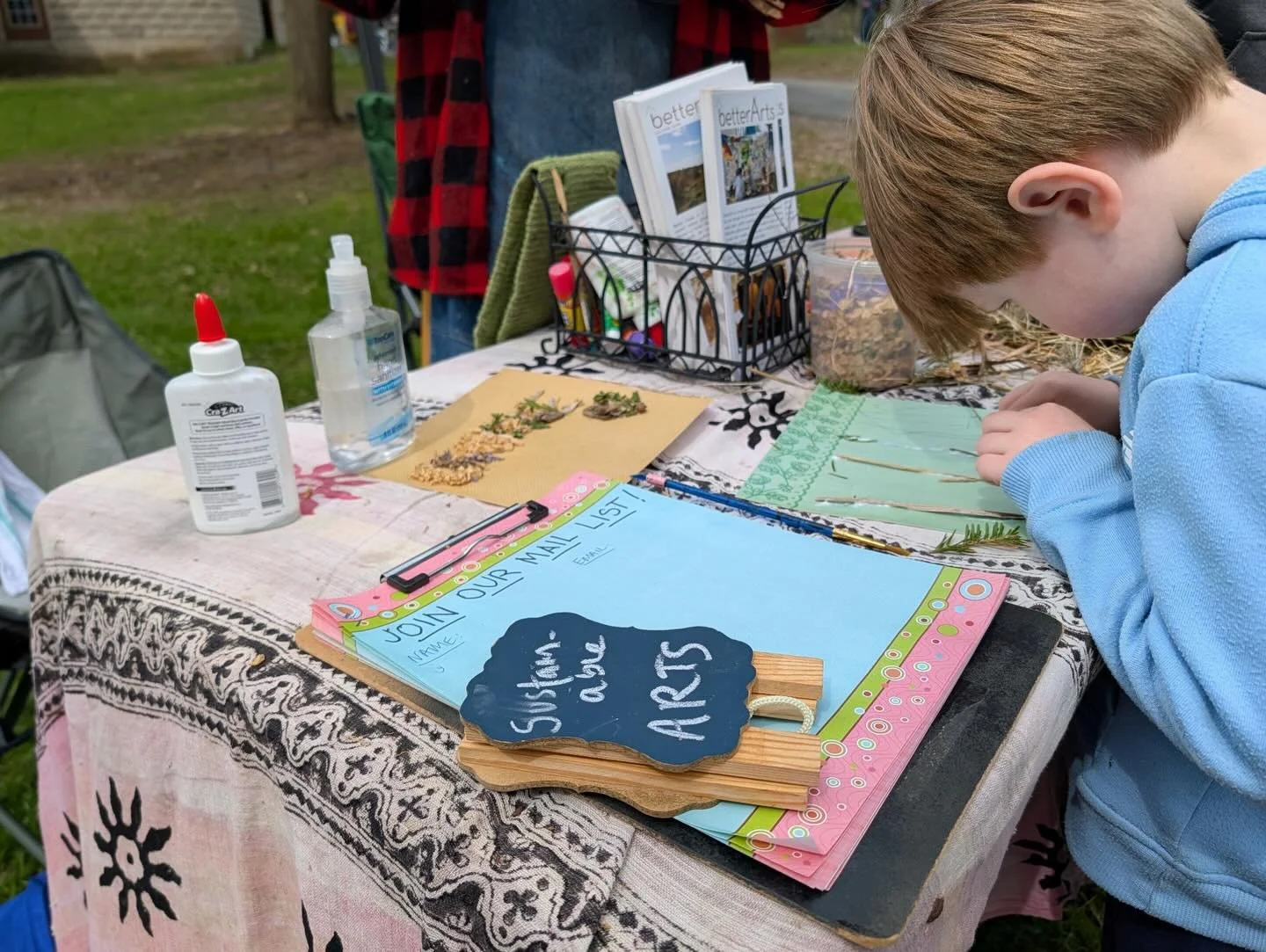
BetterArts will have a table set up with arts and crafts, information about the upcoming Summerfest, a workshop schedule and sign-up sheet, and games for children.

Reps will also have digital recorders to allow revelers to record memories they have of growing up and living in the North Country. These stories will be archived for us on the upcoming Better Radio.

Other events at the Old Home Days include a silent auction, chicken BBQ, dance Saturday night), cemetery tours, demonstrations of old time skills, children's games, a tour of the museum, and the sharing of memories.

Old Home Days will be held at the Macomb Historical Society building at 6766 State Highway 58 in Hammond, NY.

1 Comment

Nicole Caldwell

Nicole Caldwell is a self-taught environmentalist, green-living savant and sustainability educator with more than a decade of professional writing experience. She is also the co-founder of Better Farm and president of betterArts. Nicole’s work has been featured in Mother Earth News, Reader’s Digest, Time Out New York, and many other publications. Her first book, Better: The Everyday Art of Sustainable Living, is due out this July through New Society Publishers.

Troubleshooting At-Home Hydroponics and Aquaponics Kits

Better Farm's aquaponics tanks.
Aquaponics is the method of growing aquatic animals and crops simultaneously in a closed system. Water from the aquaculture component transfers to the hydroponics component, where nitrogen-fixing bacteria break down the byproducts into nitrates and nitrites (which the plants use as nutrients). The clean water then recirculates back into the aquaculture component, and the process starts again.


With Better Farm’s aquaponics system, a bed of lettuce and tomato rests above a fish tank, and pea gravel is used in place of soil. A tube transports water from the fish tank to the bed, and because the bed tilts at an angle, excess water drains back into the tank. Essentially, aquaponics requires no soil, fertilizers, weeding, or direct watering to grow the plantsβ€”and the fish tank gets cleaned out, too. Pretty darn cool.

Here's our first aquaponic tomato:
In any basic hydroponic or aquaponic system, you want to keep a close eye on a few major factors: one, the nutrients getting to your plants; two, the health of your water (and fish in aquaponics); and three, the life cycle of your plants and timing regular clean-outs for your setup.
 
We learned by trial-and-error that in an aquaponics setup, you need to be careful how much food you are feeding your fish. Too much, and you'll be dealing with a disastrously cloudy tank.  We dealt with this last month by doing a thorough cleaning-out of the entire grow bed. Rinsing out the pea gravel and scrubbing the container (and scrubbing the walls of fish tank, and changing the tank's filters) gave us a pristine system in which to continue growing.

Yesterday, we did our annual maintenance of the hydroponic setup, which involves cleaning out the grow bed and water tank, scrubbing the gravel, and refilling the tank with fresh water.


The annual or semi-annual maintenance required for aquaponics and hydroponics makes these methods some of the easiest for growing fresh, organic produce.

Further reading:
Aquaponics at Better Farm
Hydroponics

Blueberry Wine Workshop Aug. 10

BetterArts presents its third annual Art of Winemaking workshop at 2 p.m. Sunday, Aug. 10, at Better Farm in Redwood.

Fermentation expert Paul Jennings will teach attendees basic fermentation principles and discuss various methods for wine- and beer-making. Students will gain hands-on experience creating their own batch of blueberry wine with blueberries picked locally.

Each participant is invited to take a bottle of blueberry wine home for aging (wine may be picked up at Better Farm several weeks after the class, when bottling has occurred).

The cost for this class is $10. Pre-register by emailing info@betterarts.org. If you would like to participate in the picking of local, wild blueberries, please let us know! There will be a picking field trip scheduled several days prior to the workshop.

Better Farm is located at 31060 Cottage Hill Road in Redwood. To see a complete listing of upcoming workshops and events, visit www.betterfarm.org/upcoming-workshops.
Comment

Nicole Caldwell

Nicole Caldwell is a self-taught environmentalist, green-living savant and sustainability educator with more than a decade of professional writing experience. She is also the co-founder of Better Farm and president of betterArts. Nicole’s work has been featured in Mother Earth News, Reader’s Digest, Time Out New York, and many other publications. Her first book, Better: The Everyday Art of Sustainable Living, is due out this July through New Society Publishers.