This Weekend: Bluegrass festival in LaFargeville

Image from Clatskanie Bluegrass Festival site.
The Thousand Islands Bluegrass Preservation Society is holding its 22nd Annual Bluegrass Music Festival tonight, tomorrow, and Sunday at the Stone Mills Agricultural Museum in LaFargeville, N.Y.

Bill Knowlton will be the Master of Ceremonies. Kickin Grass are featured on Saturday and Sunday. Other great bands are Louie Setzer Appalachian Boys, Atkinsons. Bristol Bros., Don’t Quit Your Day Job, Spare Change, Lake Effect and the Foggy River Band. betterArts teacher Brian Purwin will also be performing!


There will be a guitar raffle, workshops in mandolin, bass, fiddle, guitar, banjo, and vocals, and lots of open jams (bring your instrument!). Guests can also enjoy arts and crafts, vendors, food, covered viewing, and lots of field picking! Better Farm will have a table set up tonight and all day Sunday for the public to learn about our summer programming, internships, and betterArts residencies. We'll also have fresh herbs, T-shirts, and soaps for sale.

Tickets at the gate cost $10 Friday, $20 Saturday, and $15 Sunday. Children are admitted free. Hope to see you there!


The Stone Mills Agricultural Museum is located on Route 180 in LaFargeville.
Comment

Nicole Caldwell

Nicole Caldwell is a self-taught environmentalist, green-living savant and sustainability educator with more than a decade of professional writing experience. She is also the co-founder of Better Farm and president of betterArts. Nicole’s work has been featured in Mother Earth News, Reader’s Digest, Time Out New York, and many other publications. Her first book, Better: The Everyday Art of Sustainable Living, is due out this July through New Society Publishers.

T-Shirt Sale to Benefit Redwood Neighborhood Association

"Where in the heck is Redwood, New York?"

The Redwood Neighborhood Association is raising funds for its community outreach efforts through the sale of custom-made T-shirts emblazoned with "whereintheheckisredwoodnewyork?"

This is a cause very close to us at Better Farm—we love to partner with the neighborhood association on all of its outreach efforts in and around Redwood. The shirts are priced at $10 and available for pick-up at Better Farm. For an additional $5, the shirts can be shipped anywhere in the continental United States. Every dollar raised will go directly to the association's volunteer work. Adult sizes only on this run (sorry!), small through extra-large.

The Redwood Neighborhood Association has in the past provided the hamlet of Redwood with a community greenhouse, farmer's market, give the post office a fresh coat of paint, line the basketball courts and T-ball field, oversee Earth Day clean-ups, and more. A Father's Day pancake breakfast is also scheduled for June 17.

To order a T-shirt, e-mail info@betterfarm.org or call (315) 482-2536.
Comment

Nicole Caldwell

Nicole Caldwell is a self-taught environmentalist, green-living savant and sustainability educator with more than a decade of professional writing experience. She is also the co-founder of Better Farm and president of betterArts. Nicole’s work has been featured in Mother Earth News, Reader’s Digest, Time Out New York, and many other publications. Her first book, Better: The Everyday Art of Sustainable Living, is due out this July through New Society Publishers.

Common Garden Pests


Bugs eating your seedlings' leaves? Worried about cucumber beetles? Here's a quick reference guide on some of the most common garden pests. Be sure to send us gardening tips and questions to info@betterfarm.org:


PESTS
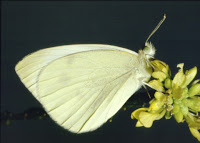
Cabbage White Butterflies
  • Off-white in colour, with one or two grayish-black spots per wing
  • Wing span of two inches across
  • Lay their eggs on plants, usually on the underside of the leaves. The eggs are yellow and oval shaped. Clustered.
  • The larvae, cabbage worms, eat through the plants, such as cabbage, broccoli, brussel sprouts, and cauliflower.
  • Velvety green, inch worm type caterpillars
  • Only attack plants in the “brasica” family: Mustard family: Cabbage, Kale, Cauliflower, Broccoli, etc.
  • Leaves need to be checked regularly for the eggs because a serious infestation can kill the plant
  • Check your plants frequently for worms as well
  • Hand pick and destroy them
  • Take big chunks out of the leaves
  • Not always problematic if the plants have matured. BUT if the plants are young, these critters can kill them.
Recommendations
  • To prevent plants from infestation, protect them with floating row covers.
  • Insert into a nylon stocking


Cucumber Beetles
  • Small, quarter inch in length, yellow and black
  •  Carry Mosaic virus that can spread to plants
  • Attack gourds (pumpkins, squash)
  • Lacy effect on the leaves. The virus eats away at the leaf
Cucumber beetles lay their eggs on the undersides of leaves, and when the larvae hatch, they eat the roots of cucumber, melon, and other plants. The larvae grow to be adults around early July, when they begin to feed on foliage and flowers. There can be up to three generations of these beetles each summer. The beetles winter in piles of leaves and other debris.
Recommendations:
  • Plant radishes or nasturtiums near plants
  • Straw, hay, grass clipping mulch at the base of the plant so that when cucumber beetles fall they can no longer burrow into the ground...
  • Pick them off
  • Clean your garden
  • Cover up your cucumbers
  • Use insecticides (organic: EcoSMART Garden Insect Killer)
  • Cover cucumbers with cheesecloths, cones, or a commercial row cover.

Flea Beetles
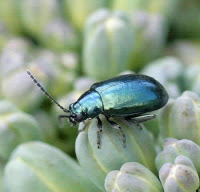
Many flea beetles are attractively coloured; dark, shiny and often metallic colors predominate. Adult flea beetles feed externally on plants, eating the surface of the leaves, stems and petals. Under heavy feeding the small round holes caused by an individual flea beetle's feeding may coalesce into larger areas of damage.
  • They leave tiny holes in leaves
  • They don’t have a uniform appearance (black, brown, green, stripes, spots)
  • Main characteristics: They are small and jump
  • They leave clusters of holes
  • Attack the root systems and make the plants susceptible to other pests
  • Young plants are more susceptible to flea beetles.
  • Difficult to get rid of flea beetles

Preventative measures (pre and post):
  • Thick layer of mulch, inhibit the ability of larvae
  • Weed often (removes food sources for the larvae)

Squash Bug
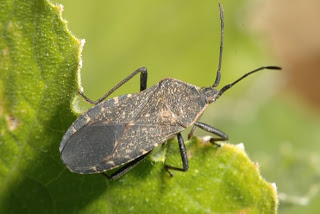
Squash bugs infest squash and pumpkin plants. Adults like to hide down at the base of the plant or underneath the leaves. These bugs go from eggs to nymphs in seven to 10 days, so you should look for eggs about every seven days to catch them from turning into nymphs. The squash bug PRODUCES ONE NEW GENERATION EACH YEAR but of course if each squash bug lays 15 eggs on each leaf they chose to deposit their eggs on, then all those newly hatched nymphs will lay more-but not this year. The nymphs will grow into adults this year but will not lay eggs. They will overwinter and lay their eggs next year.
How to combat:
  • Look regularly for adults, nymphs, and eggs.
  • Take the hose and spray the whole plant and at particularly at the base which is covered in straw. The adults come running up the stems of the leaves to escape the water. Then pick them off with my hand. You can squish them on the ground or put them in a bucket of soapy water where the adults drown, or relocate to some spot far away.
  • Look at EACH LEAF of the plant to see if there are any EGGS ON THE UNDERNEATH SIDE OF THE LEAVES, usually in the “v” where the veins form. If you find them, either tear off the whole leaf (if you have a lot of leaves) or tear out just the section that has the eggs and put them in a bucket of soapy water where they will smother. THE EGGS WILL BE DARK LIKE ROOTBEER WHEN THEY ARE READY TO HATCH, so get them EARLY.
  • Look for GRAY NYMPHS WHICH ARE USUALLY UNDERNEATH THE LEAVES OR ON THE STEMS. If you find a few, squish them or relocate. If you find a lot, take the whole leaf off because they are fast.
  • The key is to be REALLY DILIGENT ABOUT FINDING THEM BEFORE THE EGGS HATCH. After they hatch you can easily be overcome by the nymphs. Most people don’t keep up on the inspections and then the problem magnifies tenfold-so keep up on them. The hunt is on!
  • Cover your plants with row cover to keep them off. This works beautifully but you may have to piece some row covers together to cover some of the larger plants. I use clothes pins to clip them together.
  • Use Neem. It is an organic pesticide (and an added benefit is a fungicide). It must be sprayed very early before the bees come out or at dusk when they aren’t around as it won’t hurt them if it is not a direct hit as they only visit the flowers and it is a contact spray.
  • Plant a crop late in the season if possible. Many areas of the country only have one generation of squash bugs and if you plant later you may miss them.
  • Onion Spray: You can deter squash bugs on pumpkins, winter squash, summer squash and marrows with diluted/strained onion juice. Evidently just grind one or two up, put it in gallon of water and strain the onions out so your sprayer doesn’t clog.
  • Companion Planting: Plant onions bulbs with your squash every year.

Comment

Nicole Caldwell

Nicole Caldwell is a self-taught environmentalist, green-living savant and sustainability educator with more than a decade of professional writing experience. She is also the co-founder of Better Farm and president of betterArts. Nicole’s work has been featured in Mother Earth News, Reader’s Digest, Time Out New York, and many other publications. Her first book, Better: The Everyday Art of Sustainable Living, is due out this July through New Society Publishers.

Thank You

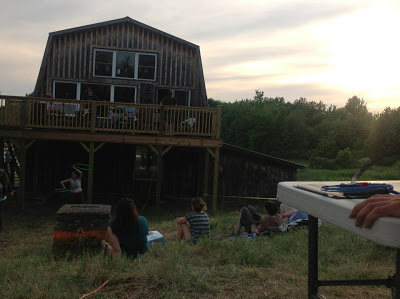
Saturday marked betterArts' first annual Open House and Fundraiser, which welcomed members of the community and visitors from all over to stop in and check out our Art Barn, peruse work by local and visiting artists, listen to music by more than half a dozen acts, and get acquainted with free summer programming funded entirely through donations.

The event, put on in conjunction with the First Annual Artists' Studio Tour in the Thousand Islands region, was a roaring success. More than 200 people visited Better Farm throughout the day and learned about the initiatives being taken on by betterArts.

You can see the full album of the day's festivities by clicking here.

We'd like to offer our most heartfelt thanks to all those who came out to support this worthy cause. Without your support, our endeavors to make music and the arts accessible to all would be impossible. Special thanks also go out to the following:

Our Sponsors
The John Hoover Inn

Our Musical Acts, Especially:
Ben Plante and Friends
Airhead Jordan
The Pistol Whippers
Brian Purwin and Friends
Aaron Horeth

Our Hoopers and Fire Dancers:
Jozette & Seth

Our Volunteers:
Carl Frizzell
Bob Laisdell
AmberLee Clement
Tess Flynn
Ben Paul Plante
Holly Boname
Erin Fulton
Brian Purwin
Jim Mercer
Nick Bellman
Mike Brown
Jon-Michael Passerino
Sue Kerbel
Phil Randazzo

Our Board of Directors:
Nicole Caldwell
Holly Boname
Erin Fulton
Scott Smith
Mike Brown
Sarah Herold
Anet Hammette

Winners of our raffles from the event will be contacted this week about claiming their prizes. For betterArts' summer workshop schedule, click here. For more information about the betterArts residency program, click here.

Great news coverage from the day can be found here:
Watertown Daily Times (front page!)
WWNY TV 7

Herbiculture

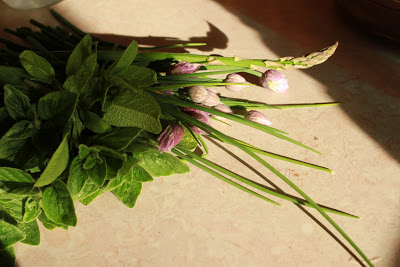
Oregano, sage, garlic chives, and asparagus.
The herb beds at Better Farm provide us with everything we need for spicing our food, flavoring our refreshments, and scenting our homemade products such as soap and candles.


The herb beds are a combination of reclaimed wood, Hugelkultur, and mulch gardening methods. In the last few years we've grown everything from amaranth to asparagus out of these beds. Here's the short list of what you can find out there this year (dried and fresh herbs will be available at the Better Farm Stand throughout the spring, summer, and fall):

Basil
Celery Flakes
Chia Sprouts
Chickory
Cilantro
Dill
Garlic
Garlic Chives
Marjoram
Mint
Oregano
Parsley
Sage
Salad Greens
Scallions
Lavender
Tarragon

Comment

Nicole Caldwell

Nicole Caldwell is a self-taught environmentalist, green-living savant and sustainability educator with more than a decade of professional writing experience. She is also the co-founder of Better Farm and president of betterArts. Nicole’s work has been featured in Mother Earth News, Reader’s Digest, Time Out New York, and many other publications. Her first book, Better: The Everyday Art of Sustainable Living, is due out this July through New Society Publishers.

Movin' to the Country, Gonna Eat a lot of Peaches

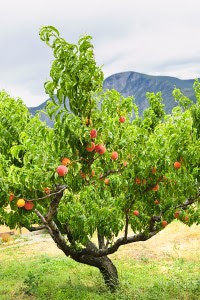
Our shipment from Miller Nurseries arrived this week, which means our (very small) peach orchard was planted yesterday next to Better Farm's main garden.

We went with two Reliance Dwarf Peach Trees,which were developed by plant breeders at the University of New Hampshire and can survive and produce delicious fruit even after temperatures hit -25 degrees below zero. The first actual text of this tree's moxy was in the winter of 1961-62, when the "test tree" was subjected to -25 degrees and then managed to produce a bushel of fruit. The peaches from Reliance Dwarf Peach Trees are medium to large, with round, red cheeks splashed over a yellow skin. The stone will not cling, even in the coldest, driest seasons. And the reliance pit is smaller than any other peach. Fruit ripens in mid-August.

Sounds too good to be true, no?

I soaked the saplings in water for an hour while I dug out the holes (10-12 feet apart) and got the peat moss, hay, and topsoil mixture ready; then planted the trees between the garden and Cottage Hill Road. The mature peach trees will be between 8 and 10 feet.

We also ordered a weeping willow, which I planted at the far end of the pond out back. Now to just keep an eye on the babies, make sure they've got plenty of water, and start researching delicious peach cobbler recipes.

Miller Nurseries is a family-owned and operated company in Canandaigua, N.Y., that's been in business since 1936. For more information, click here.
Comment

Nicole Caldwell

Nicole Caldwell is a self-taught environmentalist, green-living savant and sustainability educator with more than a decade of professional writing experience. She is also the co-founder of Better Farm and president of betterArts. Nicole’s work has been featured in Mother Earth News, Reader’s Digest, Time Out New York, and many other publications. Her first book, Better: The Everyday Art of Sustainable Living, is due out this July through New Society Publishers.

Introducing Artist-in-Residence Maria Wallace

"Love Max", 2011, oil on canvas. By Maria Wallace.
Maria Wallace is an oil painter and drawer who lives in Brooklyn, N.Y., visiting us through the betterArts residency program until May 27.

"Basically I am an artist to be who I am," she told us in her application, "Art to me is a way to access the most incomprehensibly able parts of myself. Drawing represents the ability to use parts of the brain and the self one can’t know through thought. It is easy to feel powerless without creativity since so little of what we do can be fully understood. But I feel like all transcendent human potential really can’t be conceived by the limited mind, yet it is totally necessary. To me, the ability to do things one can’t understand is not only a hallmark of making art but is the approach to apply to all areas in which we seem stuck."


The source of Maria's creativity has always been the natural world, which in the past has been represented by Prospect Park and her own back yard. She grew up next to an apple orchard, and ever since has been especially drawn to apple trees.  She's done a lot of work drawing outside around New York City, and painting inside. "Being out of the city and on a farm, which in addition to being a more natural and harmonizing place, explicitly represents the present and presence, is exactly the cultivation my art and I need."

Here are some samples of her work (more at http://mswallace.net!):

"Like Bunnies", 2011, Oil on Canvas,  31" x 30”. By Maria Wallace.
"Party Girl"
"Stormy Peaches", 2011, Oil on Canvas, 12" x 19”
Be sure to see Maria's works-in-progress and more finished pieces at our open house this Saturday, where she will be our featured artist for the first annual Thousand Islands region Artists' Studio Tour!

For more information about betterArts residencies and to apply, click here.

Masked Ball to Benefit Children's Charities

Watertown Evening Rotary Club

, an organization sponsoring three of

betterArts' summer workshops

this season, has partnered with

Renu'e Spa and Skincare Center

and

Northern New York Community Foundation

to present a

Midsummer's Eve Masked Ball

fundraiser from 6-10 p.m. Saturday, June 16 at the Dulles State Office Building to benefit local and international children's charities.

The event features live music by

The Critics

, catering by

Dominick's Restaurant

of Syracuse (featuring passed and stationary hors d'ouvres, carving stations, Tuscan tureen, a harvest table, desserts, cannolis, Italian cookies, and more), beer, wine, soda, and other refreshments. Don't forget to dress to impress and bring your best mask!

This is a great evening of dinner and dancing, for a very worthy cause—100% of profits from the event go directly to funding children's charities and causes.

Tickets are $70 each and available at Renu'e Spa and Skincare Center (720 Washington St., Watertown) or by calling (315) 221-4089. You can also e-mail us at

info@betterfarm.org

for tickets.

The Dulles State Office Building is located at 317 Washington St. in Watertown, N.Y.

1 Comment

Nicole Caldwell

Nicole Caldwell is a self-taught environmentalist, green-living savant and sustainability educator with more than a decade of professional writing experience. She is also the co-founder of Better Farm and president of betterArts. Nicole’s work has been featured in Mother Earth News, Reader’s Digest, Time Out New York, and many other publications. Her first book, Better: The Everyday Art of Sustainable Living, is due out this July through New Society Publishers.

This Saturday: betterArts Open House at Better Farm


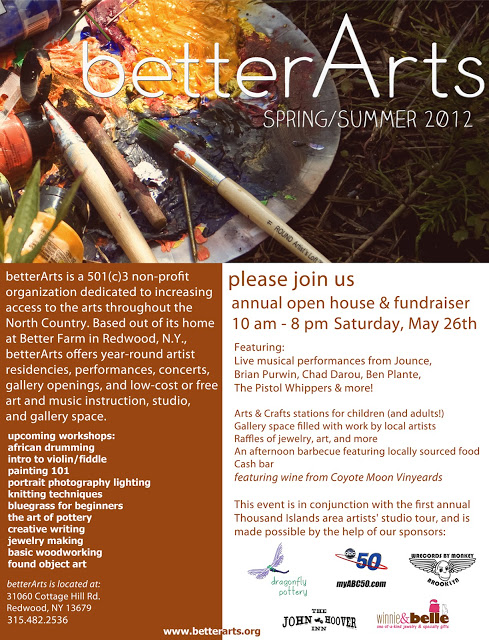
betterArts will host its annual open house and fundraiser from 10 a.m.-8 p.m. Saturday, May 26. This event is in conjunction with the First Annual Artists' Studio Tour, which includes more than 27 artists and 21 studios in the Thousand Islands region.


The betterArts open house will raise funds to allow the organization to offer free music and art workshops throughout the summer to the public. Check out our full workshop listings and dates by clicking here.

At the event, we'll be raffling off wares donated by Dragonfly Pottery, Winnie and Belle (free shipping on all orders through July 1!), and Wrecords by Monkey. Local artists' works will be showcased and available for sale in the gallery space, and the following musicians will be performing (in addition to other cameos and impromptu improv sessions throughout the day): 

GALLERY STAGE
11 a.m.-12 p.m. Nick Bellman
1:30-2:30 p.m. Aaron Horeth
4-5 p.m. Airhead Jordan

MAIN STAGE
12-1:30 Brian Purwin and Friends
2:30-4:00 p.m. The Pistol Whippers
5-6:30 p.m. Ben Plante and Friends
6:30-8:30 p.m. Jounce

And there's more! We'll also have arts 'n' crafts stations for kids, hula hoops for all, fire jugglers, a beer and wine tent, and an outdoor barbecue featuring homemade foods, pizza and wings from the John Hoover Inn, and locally sourced chicken and hot dogs. And, of course, veggie burgers! Click here to RSVP! Hope to see you there!

Better Farm Partners with DEC, Plants 50 Trees


Better Farm this year is participating in the School Seedling Program, an initiative by New York's Department of Environmental Conservation to educate students about the care and conservation of trees.


Most of us recognize the beauty of trees and their many other values. Trees provide food and shelter for wildlife and prevent erosion. They help protect streams and lakes by stabilizing soil and using nutrients that would otherwise wash into waterways. Trees help moderate temperature and muffle noise. They even help improve air quality by absorbing some airborne compounds that could be harmful to us, and by giving off oxygen.

When students plant tree seedlings, they can see for themselves the structure of trees, learn what trees need, and how they grow. Teachers can use the planting process to discuss the benefits trees provide, while incorporating other subjects that their classes are studying. As seedlings mature the young trees
can be a continuing, personalized way of relating to what they’ve learned from books to visible, living examples of what is being taught.

Students become aware that they can play a role in protecting the environment through personal involvement in establishing a grove of trees. Ultimately, it is hoped that the experience will help them make intelligent decisions about conservation and use of natural resources.

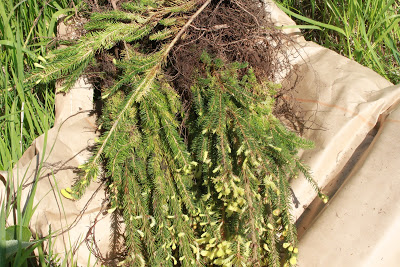
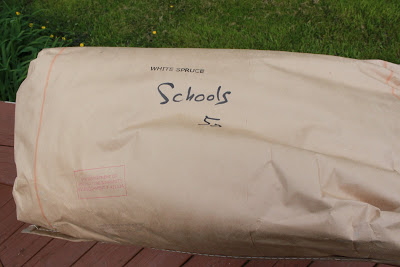
All schools are eligible to participate in the DEC's program, as are any school-sponsored organizations. Though Better Farm isn't officially a school, per say, it does qualify as an educational center and so 50 white spruces were shipped our way this week.


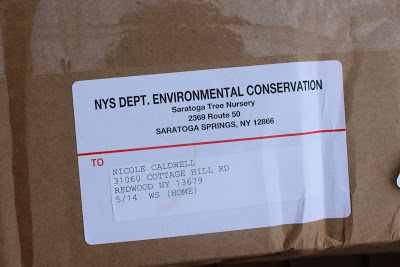
DEC’s Saratoga Tree Nursery provides the trees, which require 1,800 square feet of open space for the 50 seedlings. Each needs a growing space of about 6 feet in diameter. For schools where planting space is limited, an Urban Wildlife Packet is available. This contains 30 seedlings of shrubs that attract different songbirds, as well as a variety of other wildlife.


White Spruces are native, short-needled evergreens. They grows in clay and/or loamy soils and
reach 70 feet at maturity.

The seedlings we received are 2 or 3 years old and approximately 8”-16” tall. Though our interns won't arrive until next week, we had to get the young trees into the ground. The interns will tend to the trees and keep track of their progress.


For more information about this program, click here.

Comment

Nicole Caldwell

Nicole Caldwell is a self-taught environmentalist, green-living savant and sustainability educator with more than a decade of professional writing experience. She is also the co-founder of Better Farm and president of betterArts. Nicole’s work has been featured in Mother Earth News, Reader’s Digest, Time Out New York, and many other publications. Her first book, Better: The Everyday Art of Sustainable Living, is due out this July through New Society Publishers.

Getting a Garden Education: Planters obtain free seeds, advice about growing

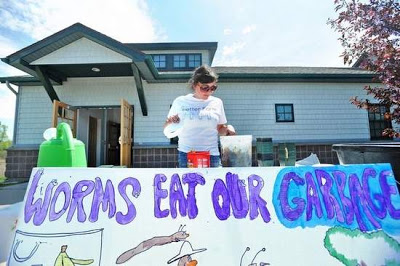
Nicole M. Caldwell of Better Farm, Redwood, cleans up after a worm compost exhibit Saturday at Garden Day in Alexandria Bay. Photo/Justin Sorensen
By REENA SINGH
WATERTOWN DAILY TIMES STAFF WRITER
ALEXANDRIA  BAY  — Garden  aficionados  walked away with the beginnings of lettuce, peas, squash and other produce for free at the MacSherry Library this weekend.

Saturday was the library’s fourth annual Garden Day, and it drew dozens looking for free seeds,  gardening advice and children’s activities.at Garden Day in Alexandria Bay.

“It’s about  educating the community,” said herbalist and library trustee Sue-Ryn Burns.

Several trustees have gardens of their own and dug up sprouting tomatoes to raise money for the  library. As a testament to the gardener’s fever possessed by some of the trustees, an herb garden sat
in the building’s back.

“We’re trying to encourage people to grow things,” said Steven L. Burns. “We were all getting asked a lot about gardening.”

Representatives from Better Farm LLC, a sustainability education center and artists' retreat facility  in Redwood, demonstrated composting to show how produce that normally lands in the trash could be reused. The business uses produce that would normally be tossed away at local grocery stores such as Big M and The Mustard Seed.

“The end result will be organic compost and organic worm casings, which make an excellent fertilizer,” said Matthew K.  Smith, Better Farm agriculturalist.

After a village tree walk led by Cornell Cooperative Extension horticulture educator Susan J.  Gwise, children hunted in the grass for clothespin fairies dressed in silk flower petals.

Several packets of donated pumpkin seeds were placed on a table to encourage locals to plant the
squash for the library’s annual Harvest Festival in the fall. Every year, there is a contest for the village’s biggest pumpkin.

“We wanted to see what seeds they have so we can start our garden,” said Alexandria Bay resident Cathy A. Dickhaut. She held seeds for squash, beets and white watermelon. “I’ve never had good luck with lettuce,” she said.

[Originally published Monday, May 14, 2012, for the Watertown Daily Times]

Comment

Nicole Caldwell

Nicole Caldwell is a self-taught environmentalist, green-living savant and sustainability educator with more than a decade of professional writing experience. She is also the co-founder of Better Farm and president of betterArts. Nicole’s work has been featured in Mother Earth News, Reader’s Digest, Time Out New York, and many other publications. Her first book, Better: The Everyday Art of Sustainable Living, is due out this July through New Society Publishers.

Potato Planting, Part II

 It was finally time last week to get our potatoes planted.

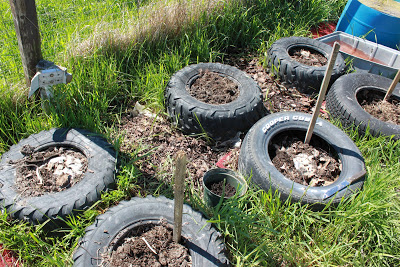
We'd been waiting since February, when we bought our russet, yukon gold, and red potatoes from a local seed-and-feed shop. And though we certainly have the space to grow them the old-fashioned way in a long, viney strand, we opted to grow our potatoes vertically, in tires.

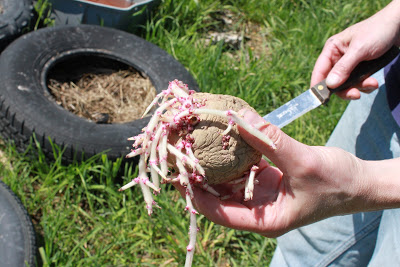
Growing vertically is a great space-saving option for those of us living with little or no yards. Simply cut the potato into chunks that have their eyes (photo above shows a potato covered in eyes; each can be planted separately), eyes facing up.

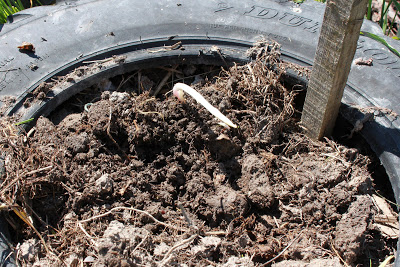
As the root system grows, mound dirt up around your potato plant and, eventually, add another tire. Keep adding tires until you have three tires stacked. Early potatoes are ready to harvest when the flowers have opened or the buds fallen off. Dig a few tubers up and check—they should be about the size of a hen's egg. With maincrop potatoes, wait until the foliage has turned brown, cut off at the stems and wait a few days before lifting. When you carefully unstack your tires and remove the dirt, you'll be left with pounds and pounds of potato (one potato grows six to twelve new potatoes).
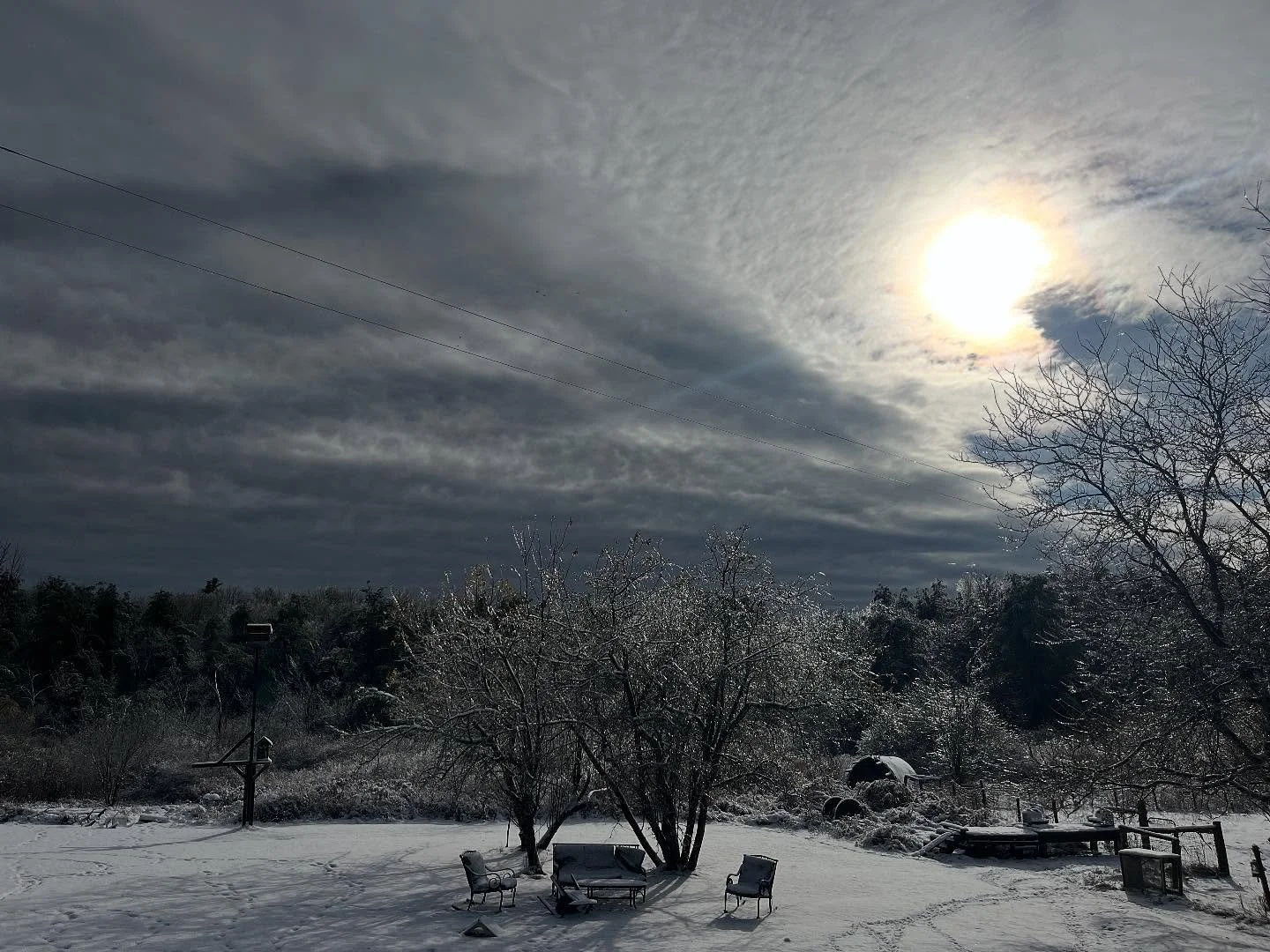


For more information about tire-planted potatoes, see our previous post:
Growing Potatoes in Tires: Feb. 21, 2012
Comment

Nicole Caldwell

Nicole Caldwell is a self-taught environmentalist, green-living savant and sustainability educator with more than a decade of professional writing experience. She is also the co-founder of Better Farm and president of betterArts. Nicole’s work has been featured in Mother Earth News, Reader’s Digest, Time Out New York, and many other publications. Her first book, Better: The Everyday Art of Sustainable Living, is due out this July through New Society Publishers.
betterArts Featured on MyABC50!


By Holly Boname for MyABC50.com 

A local arts organization is working to create free and low cost art and music workshops thanks to a newly obtained not-for-profit status. 
betterArts, located on Cottage Hill Road in Redwood at Better Farm, only received their 501 (c)3 status a month ago, but already have workshops and events scheduled to benefit North Country residents.

Nicole Caldwell, executive director of betterArts and Better Farm, began accepting artist residency applications from across the country nearly three years ago. Strong positive feedback inspired Caldwell to create betterArts and spread music and art across the tri-county region.

betterArts relies strongly on fundraising and donations from local residents and other arts organizations. Currently Caldwell is working with the St. Lawrence Arts Council on two separate grants that will allow for area art and music teachers, who have partnered with betterArts, and artist residents staying at the farm to offer free workshops.

betterArts will on May 26 hold its annual fundraiser and open house event from 10 a.m.-6 p.m.

The event will feature live music and performances, interactive art projects for the public to participate in, information on upcoming workshops and private instruction, arts and crafts stations, a gallery exhibit of work by local and visiting artists, a tour of their studios, an afternoon barbecue at 3 p.m. and more. Admission is free and open to the public.

The event is in conjunction with the First Annual Artists' Studio Tour scheduled for the Thousand Islands Region from 10 a.m. to 5 p.m. May 26th and 27th. 

For more information visit www.betterArts.org.

To hear from Nicole Caldwell on the mission of betterArts and to learn more about the annual open house and fundraiser, watch the complete video story.
Comment

Nicole Caldwell

Nicole Caldwell is a self-taught environmentalist, green-living savant and sustainability educator with more than a decade of professional writing experience. She is also the co-founder of Better Farm and president of betterArts. Nicole’s work has been featured in Mother Earth News, Reader’s Digest, Time Out New York, and many other publications. Her first book, Better: The Everyday Art of Sustainable Living, is due out this July through New Society Publishers.