

Gutter Protection
/Gutters are a no-brainer for most homes—which is why we've been doing
on the outdoor pipes here at Better Farm. We're pretty excited about galvalume gutters, but the price tag for replacing existing systems vs. enhancing what you have is enough to give pause to anyone intent on keeping the water out of his or her basement (and maybe
into
his or her rain catchment system?).
This is mostly a money-crunching issue. The cost effectiveness of cleaning your gutters out as opposed to buying a system promising to remove the need for gutter maintenance varies from home to home.
designed to help you decide what's most appropriate for your needs.
is a big consideration when choosing a system for your house. For one thing, without protection you're looking at hefty bi-yearly bills for gutter cleaning, replacement, and general upkeep. Mold, mildew, fungus, fires, ice, standing water, mosquitoes, clogs, and leaves all count as your enemy when working with gutters—careful planning is in order. What's cheapest up-front isn't always the best long-term decision; and things like location and climate can make all the difference in the world.
Whether you're replacing an old system, adding fresh to a gutterless house (as we are), or tacking a
to what you've already got, it's important to do your research.
While you're shopping around and searching for price comparisons and product reviews, there are a few things to look out for:
Gutters and gutter protection that are fire-resistant and flame-retardant
Systems that are mold-, mildew-, and fungus-free
Filter and guards that encourage fast-flowing water to reduce ice and its inherent damage (and mosquitoes!)
Systems that won't steal the show from your home—gutters should blend!
Easy or low-cost installation
Warranties—some of the best systems and gutter protectors we found have up to 10-year warranties
Systems that will work with rain catchment systems (water your lawn with a clear conscience next summer!)
Rust- and corrosion-free systems
We'd love to hear your thoughts on the issue as we stew over what system to get on Better Farm next year!
Toto I Dont Think I'm in Iowa Anymore!
/ Hello, I'm Chris, one of the new tenants here at Better Farm! I've recently moved to New York from Iowa. I would like to tell all you readers out there about my move and life up here in New York. But, I feel none of that will process correctly unless you get to know me more. So first off, I will tell you about my past.
Although I don't remember much about my life back then (I mean, who really does), I will fill you in on what I can. I was born in Dallas, Texas. I'm guessing we moved to Iowa not long after I was born. When I was around 2, my older brother, sister, and I were put into foster care due to my mom's drinking problem. I don't know much about what all happened, besides stories I've heard from some of my mom's friends. But from what I've heard, we weren't all that bad. Some kids these days are a lot worse off than we were; and no one does anything to save these kids. I guess my mom just had back luck. But the Brindle family--Beth, Gary, and their daughter Erin--welcomed us into their hearts and home. Even after we were able to come back to our mom, the Brindles stayed in touch and showed that we mattered. Although we didn't keep in touch every day or every month, they showed up to my high school graduation 15 years after we lived with them.
My siblings and I lived most of our lives in Iowa, but not all. We also lived in Arkansas for a while; in a salvation army, and with my mom's boyfriend in a trailer that had no door, running water, internal plumbing, or electricity (your typical redneck trailer). Dogs lived under the trailer, we used an outhouse, and bathed in a spring during the summers. It was in Arkansas that I developed a fear of spiders: I was bitten under the arm by a brown recluse. Came near close to dying, and been afraid of spiders since.
After Arkansas, we moved back to Iowa, where we lived the majoritity of my life. But enough about where I lived. How about I tell you about who I lived with. There is my awesome mother Janie, 45, who was born in Iowa City, Iowa:

My older brother Shawn, 29, my only sister Amanda, 26, and my younger brother Robert ,22, were all born in Marshalltown, Iowa. I've never known my father (although I'm working on that now). I've grown up thinking his name is Terry and that I just didn't matter enough to be part of his life. But I've come to find out my sister's father could also be my father; so I may end up trying to get a paternity test to find out.

From the age of 22, reality shifted for me and I felt something wasn't right with my life. I knew something was calling me and it wasn't in Iowa. So at the age of 24, a few months before my 25th birthday, I called my cousin in New York. She said I could move in with her until I found a job and place to live. So with much regret and drive to do better in my life, I moved to Great Bend, N.Y., and got a job at Stewart's. A few weeks later, my cousin informed me that she wanted to move to North Carolina by October. With a rush and fear in my heart that might have made a BIG mistake by moving up here, I started searching for a place to live. I ended up posting an ad on Craigslist saying I needed a place to live, and prayed each night for God to help me out. Not long after I posted it, God answered my prayers and I got an e-mail from Nicole saying that there was a place for me here at the Better Farm!

Better Farm Echoes Green
/ Echoing Green, an organization founded in 1987 that "invests in and supports outstanding emerging social entrepreneurs to launch new organizations that deliver bold, high-impact solutions," is accepting applications for its next round of fellowship recipients.
The two-year fellowship program offers support to social entrepreneurs and their organizations to "solve deeply rooted social, environmental, economic, and political inequities" so all individuals may reach their potential. The organization has to date invested more than $28 million in seed funding to more than 471 social entrepreneurs and their innovative organizations.
Better Farm applied yesterday. Here's a quick recap of some main points we covered in the paperwork:
Q. As specifically as possible, demonstrate the need for your organization.
14.7% of people in Jefferson County are at or below poverty level. Paired with the fact that fewer than 14% of Redwood residents pursue diplomas beyond high school, the area has few alternative education options. An injection into Redwood of affordable or free public resources to expand cultural understanding, push for ecological advances in science and construction, and open people's minds in regard to what education can be, will drive the community forward in ways currently unavailable to local residents. The community [sic] will benefit by bringing artists, writers, thinkers, green builders, and the like into its folds. The surge in residency and visits will invigorate Redwood's economy; and the educational opportunities will drive high school graduation rates and percentages of those pursuing education beyond high school.
Q. Help Echoing Green visualize what your organization will do. Describe the specific programs that your organization will engage in to deliver your long-term outcomes.
A. Residencies: We will offer workshare and residency programs in which college students, high-schoolers, and people of all stripes and persuasions can come together to live communally and work on different projects. In exchange for inexpensive or free rent, an individual will commit to bettering his or herself and the encompassing space—by participating in or teaching a workshop, performing home reparis or maintenance, tending the herb or vegetable garden, or managing the compost.
Workshops: We will hold courses ranging from a few hours, to a day, to a weekend or week in any number of subject matters to bring new ideas to the community-at-large. Whether green building, solar installation, pottery, welding, writing, yoga, or alternative housing structures, Better Farm will hold itself to a strict standard of revolutionary ideas and curriculum to ensure new ideas are the norm.
Events: Through festivals concerts, kids' days, arts & crafts, day camp, and celebrations open to the public, Better Farm will strive to be a community center for all Redwood residents, where eople can gather in a productive setting to share ideas.
Those selected for Phase 2 of Echoing Green's Fellowship Application will be notified by 5 p.m. EST Jan. 8, 2010.
DIY Green Holiday Decorating
/With Halloween just a couple of weeks away and an onslaught of holidays following on its heels, it seems an appropriate and obvious time to discuss some do-it-yourself ideas for making your home all festive-like this season.
One of the nice things about making your own spooky mobiles,
, or
is that in doing so you're likely to reuse items that might otherwise find their way to a landfill. That is to say, many things you might be looking at as junk are actually just a bunch of treasures you didn't even think could be applied in a practical sense. I mean, take a look at the pumpkin, spray-painted twigs, and pieces of cardboard and paper in the photo above. This ain't your kindergarten arts 'n' crafts, people. You
can
make your own decorations without turning your posh pad kitsch. Cross my heart.
Case in point: Here are a few Halloween-related DIY projects you can pretty much get together with items found around your home (click on photos for full, easy-to-follow instructions):
Specimen jars, headless horsemen, fake blood, and ghoulish treats—oh my goodness, the things we could do to scare the locals!
For large Christmas ornaments, Thanksgiving bling, Hanukkah, Kwanzaa, and even Festivus ideas, keep your browser parked here in the coming weeks. We've got the market cornered with all sorts of big imaginings for cornhusk vases, Christmas stockings, and kufi head coverings. Time to dig out those glue guns and empty your junk drawers!
In the meantime, there's nothing saying you can't act lazy and just order a solar-powered corpse or unbelievably large Christmas decorations online. We promise we won't tell.
Testimonials
/
Apologies for the wicked delay in posting these fabulous video clips, taken at the May 2 memorial in Jersey:
"I Knew Steve Caldwell"
By Jon Hawley
"Love Well, Risk Hell"
By Lisa Martin
Video footage courtesy of Robert Vandeweghe
"I Knew Steve Caldwell"
By Jon Hawley
"Love Well, Risk Hell"
By Lisa Martin
Video footage courtesy of Robert Vandeweghe
Now We're Cooking: Chim-chim-inea style
/Gas stoves are so bland. Electric stoves (first introduced at the Chicago World's Fair in 1893) have no style. Out in the country, there are so many fresh ideas for cooking, I'm just all aflutter saving dollars so we can do away with Better Farm’s outdated 1980s-esque kitchen design.
Out here, it seems everybody has a wood-burning stove. Extremely energy efficient, wood ovens heat houses remarkably well; and the smell of them is second-to-none. But once you start looking at alternative cooking and heating styles, you realize the sky's the limit and restricting yourself to one type of oven is just foolhardy.
Cob ovens are easy and cheap to assemble, and will give you some of the best pizza of your life outside of New York City. I don't need to expound any more on the power of a sweet fire pit. And then there's the chiminea; which is sort of the darling of difficult-to-heat outdoor or rustic living spaces.
Mexicans have for hundreds if not thousands of years utilized the quirky chiminea stove for heating, cooking, and baking. The funky little structures—generally cast in clay or iron—keep rainfall from hitting the flames, hold heat exceptionally well, and do a lot with a just a few sticks.
The genius of chimineas is in the design: clay and cast iron are excellent radiators of heat; the tall chimney-like stacks take smoke out of the way of fire-revelers, and spark screens (found on most models today) mean you don't have to worry about errant embers spoiling all the fun.
Nowadays, you can track down chimineas that even sport cooking grids for grilling in old-world style. Suddenly, October in the North Country doesn't seem quite so cold.
Better Renovations: Upstairs kitchen, before
/
A house inhabited by hundreds of people over the course of its life holds many secrets in its walls—or lack thereof.
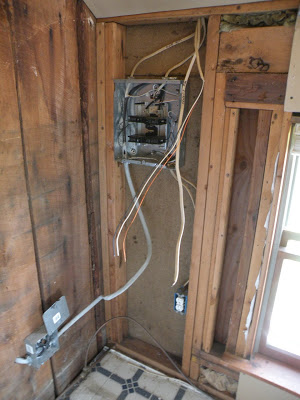
The above photo captures what we discovered upon pulling the upstairs fridge away from the wall. No insulation whatsoever between the room and the outdoors! Not to mention wires in desperate need of grounding and reconnoitering; a wall of windows needing insulation, caulk, and molding; and hundreds of square feet seeking spackle, sanding, and paint.
All that, plus the removal of a space heater we won't be using and a nice, deep clean: Our work is cut out for us. Stay tuned for after pics!
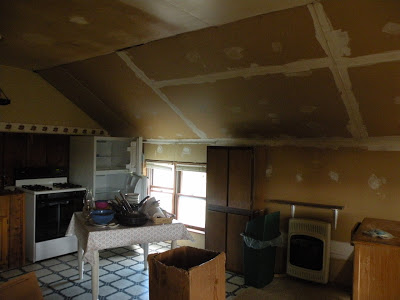
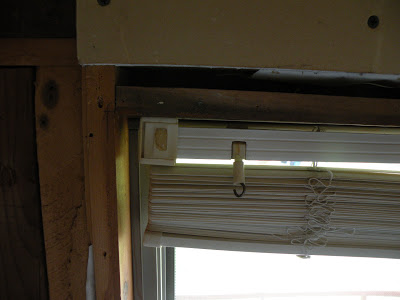
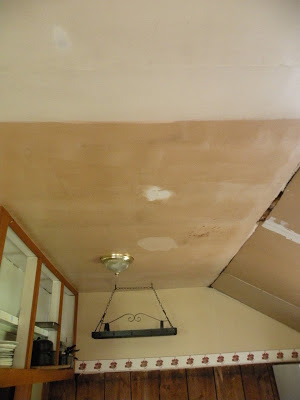
The above photo captures what we discovered upon pulling the upstairs fridge away from the wall. No insulation whatsoever between the room and the outdoors! Not to mention wires in desperate need of grounding and reconnoitering; a wall of windows needing insulation, caulk, and molding; and hundreds of square feet seeking spackle, sanding, and paint.
All that, plus the removal of a space heater we won't be using and a nice, deep clean: Our work is cut out for us. Stay tuned for after pics!
A Place for all that Firewood
/Now that we’ve covered outdoor fire pits, fancy fire pits, and bonfires at length, it’s time to get down to the nitty-gritty.
Where to store all that wood?
A lot of people keep kindling and logs in a heap any old place. But if you don’t tear through wood like we do, then you’re looking at inevitable insect infestation and rot from rainfall and puddles.
When we cleared out the basement a few weeks ago, we found dozens of logs leftover from the days when Better Farm’s heat ran off of a furnace that utilized wood for half its heating. After lugging the logs outside, we proceeded to have night after night of beautiful bonfires. Even some heavy rainfall wasn’t enough to mess with the nice big logs, as they were only outside in a pile for a few days. Some people are more patient than us, however; and would be wise to invest in a firewood rack.
A log rack will save you uncountable man hours over time by keeping you inside and toasty warm instead of outside having to chop wood to replace the wet, rotting logs you scattered willy-nilly on the lawn. Or, if you don’t chop your own wood, a sturdy and weatherproof rack will save you hundreds of dollars by protecting store-bought wood.
The structures don’t have to be eyesores, either. Setting up a nice firewood rackwill de-clutter your property—and your brain. And who couldn't use a little of that?
Intentional Communities: "Living Labs"
/The old saying goes, starting an intentional community is like starting a business and getting married all rolled into one. Living in such close contact with others, 24/7, can really test your comfort levels and bring triggers out into the open you never knew you had. So how do you create a life together with a base stable enough to withstand "Big Brother" style meltdowns?
The most important factors to forming a successful community is to create intimacy/trust within a group through common goals/ideas/worldviews, and to always follow a productive path that is adaptable to change. All the small systems (the people) need to operate smoothly within the larger system (the community) or else everything falls apart. This is not the time for dictatorship, but for "empowered leadership" where each person is acknowledged, encouraged, and included in major decision making meetings.
It may sound like coddling, but after taking a step back and seeing what each persons' taproot (strength) is, specific responsibilities can then be doled out in areas that will make those talents shine, thereby making the entire system run better. Not to mention the load this "leading from behind" will take off your back when you've got a million other things to do by end of day!
So not only do we want involved, happy little campers within the walls of the Better Farmhouse, but forming solid relationships with the outer sphere of Redwood, NY, will also be key, as their full support will be imperative in the success of our ecological adventure. With this strong base of common goals and evenly distributed responsibilities, a long-term commitment to be a more "nature working" community as a whole should run like a well-oiled machine.
The above info is a brief recap from a Permaculture class with
, an expert in regenerative culture, intentional communities and transition towns.
Image from
Center for Community Alternatives
.
Better Bowling (Or, Balls of Fire)
/ Where to begin?
As mentioned earlier, we are deep in the throes of Better Farm's ever-changing shades. And as with any ragtag mash-up of characters, team-building exercises are essential. Family dinners, trust falls, movie night, basement clean-up, bonfires, and general debauchery all fall under this umbrella. And as the days shrink and the cold expands, the great indoors become an essential component of much group exercise.
Thank goodness for the Theresa Bowling Center, where you can get your bowl on for next-to-nothing with a bunch of your new pals. Which is just what we did, as one-part team-building and two-parts celebration of former Better Farm residents Mike and Lana Babcock's birthdays.
See for yourself.
Here are the birthday kids.


Here are the balls.

Here are the latest residents of the Loft, Tracy and Colden:


And our Iowa transplant, Chris:

And of course the troublemakers, all Fear and Loathing style on Theresa Bowling Center:


We've been toying with plans for a league (bolstered by my most amazing bowling purse, see photo at top (thank you Corinne!)). However, we had some mixed opinions regarding our uniforms (onesies, duh) and team name (see title of post); which when combined with conflicting schedules, may delay our great reveal 'til next season. But so what? Gives us more time to practice our form.
Fire Pits Go Posh
/Fire is no elitist. She will burn brightly in any container, whether it be a metal ring, circle of stones, or half-moon of cinder blocks. You can light a match and throw it into a pile of junk, a pyramid of kindling, or a slick of oil, all with the same result. Fire lights where she will, and takes no prisoners. But that doesn’t mean you can’t have a sense of style.
I was recently tipped off to California Outdoor Concepts, an outdoor furniture and fire pit company based out of—you guessed it—Trustin, Calif. These guys hand-craft each high-end piece the company sells. But the coolest feature has got to be the interchangeable table centers. You can make your fire pit rise out of Glo-Fire gas logs, a stainless steel grill, or S/B Arctic Flame Glass. Or you can forget all that and throw an umbrella hole in the middle for hot days when you don’t need a fire. Or—get this—just insert the compatible ice bucket into the middle and start cutting up limes for your Tecates and Modelos.
California Outdoor Concepts also thought to include a counter-sized ring around them so you can lean your elbows on something while roasting ‘mallows or heating up some steamers.
Admittedly, the price tags are a little intimidating. Fire pits range from $1,000 to more than $5,000—significantly more than what we paid for our semi-circle of cement. But California Outdoor Concepts offers other guarantees, such as year-long warranties and rustproof materials. And you can also get away with hosting Gatsby-style backyard parties that will make you the envy of your suburban enclave.
If this all sounds like a touch too much, let these fancy flame enclosures be your muse. Free online instruction abounds on how to create your own miniature tabletop fire pit, full-size and decadent outdoor fire ring, or fancy-schmancy fire pit for your yard. There is no longer any excuse to keep that inner pyro hidden.
Spotlight On: Better Farm's own Staciemae Brown
/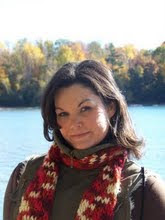 I've underserved our readers in the last few months by not profiling the eclectic bunch we have holed up at Better Farm. Since May, we've seen an engineering intern, biologist, bartender studying to be a nutrition expert, fresh Iowan transplant, 20-year-old vet recently back from repairing helicopters in Japan, and a truck driver pass through this house.
And that's just for starters.
In the coming weeks we excitedly anticipate the arrivals of a former diplomat, logistics expert, and carpenter. And in the months ahead we'll be welcoming a permaculture expert and gardener, writer, and a craftsman.
It's natural for you to envy our family dinners.
As summer draws to a close and that cold fall air starts nipping at our ankles, we're also readying for a bittersweet goodbye as our own Staciemae Brown packs her things and makes arrangements for her move to the Czech Republic. Stacie—who joined us at Better Farm in mid-May—will be working as a missionary overseas and teaching English. She's leaving in early November with a group from Word of Life Church in Watertown, and as of now her return date is unknown.
But I'll let her speak for herself. Staciemae recently launched a blog of her own, aptly titled "Czeching in with Stacie." You can learn all about her background and follow her progress as she applies the Better Theory to her missionary work overseas. We'll miss her (this woman really is a force to be reckoned with), but this is one journey that can't be taken from the sidelines.
To help support Staciemae's endeavors, please contact Better Farm for further information.