The Big Deal About the Big Green Egg

I'm a pretty big fan of barbecues, so summertime at Better Farm is basically rife with grilling activity. If you've got it, we'll throw it down and cook the hell out of it.

It was a sad day when the Babcocks moved out last month and took their grill with them. Our quick solution was to look into buying a new one; but those plans were put on hold when we found an old, defunct grill in one of the sheds across the street and made a few minor repairs to get that baby up and running as good as new. One less big hunk of metal for the landfill, and we've extended our grilling season well into fall.

Then I felt the inevitable pang of regret the second I stumbled upon the gem pictured here, called the Big Green Egg. This ridiculous piece of grilling technology is a smoker barbecue, grill, and oven that comes in four sizes to suit any living situation ...or commune.

In fact, people are so stoked over the Big Green Egg that there's an annual festival dedicated to the thing.

Eggtoberfest draws Big Green Egg enthusiasts from all over for a cookout that'll have your taste buds clicked into high gear, maybe permanently.

So, next spring is another season that'll have Better Farm abuzz with activity from renters and a budding workshop itinerary. Will our repaired grill be enough? Here's to hoping not. See you eggheads in a few months.
Comment

Nicole Caldwell

Nicole Caldwell is a self-taught environmentalist, green-living savant and sustainability educator with more than a decade of professional writing experience. She is also the co-founder of Better Farm and president of betterArts. Nicole’s work has been featured in Mother Earth News, Reader’s Digest, Time Out New York, and many other publications. Her first book, Better: The Everyday Art of Sustainable Living, is due out this July through New Society Publishers.

Dirty Secret Down Under: Better Farm's basement

The basement is the central nervous system of any home. You've got your blood and guts (pipes, wires, and tubes carrying water, sewage, hot air, and electricity), skeleton (foundation), organs (hot water heater, furnace, sump pump), and brain (control box).

Better Farm has, as we all know by now, seen many incarnations. And with each wave of lodgers came varying strengths and weaknesses in regard to keeping the house in tip-top condition. During any given shade of Better Farm, you might have electrical wizardry, carpentry know-how, plumbing prowess, or creative genius.

Or, you might have a bunch of derelicts stringing things together so the house continues breathing and running... just barely. Ah, hippie cob.

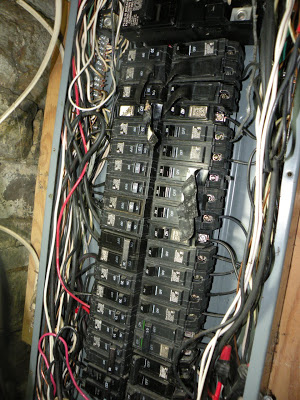
In the midst of working on the second floor (stand by for pics!) in the last few weeks, we discovered the electricity up there isn't grounded. And in the ensuing investigation, we found ourselves in the basement, slack-jawed, eyeing a control panel with wires sticking out every which way except the right way. But that's not all we found...
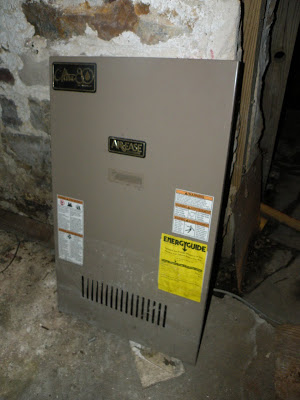
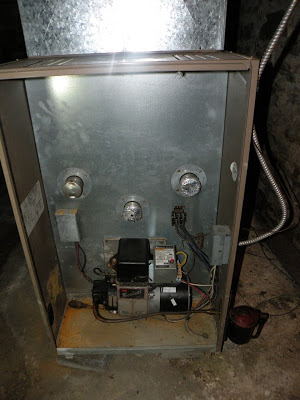
  • The furnace cover seems to have wandered a few feet away and sat down for a long nap. The oil filters are filthy.

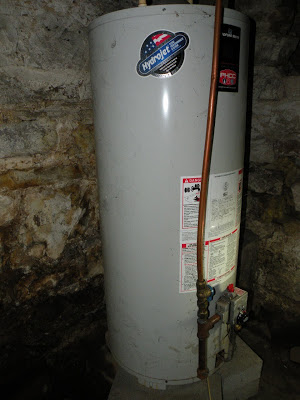
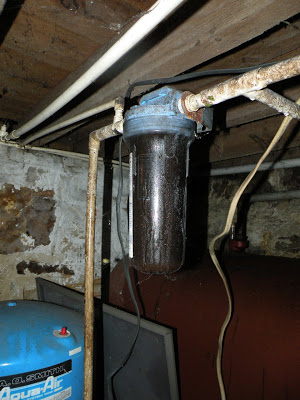
  • The hot water heater is without an insulation skirt and hat. Its levels were also way too high, so we lowered those immediately. The water filter appears to not have been changed in a long time. Old, discarded filters litter the floor.
  • Old window spaces are "sealed" with some pieces of wood, but they're totally uninsulated. That means you can see sunlight between the pieces of wood. That also means any field mice have a year-round, all-access pass to Better Farm.

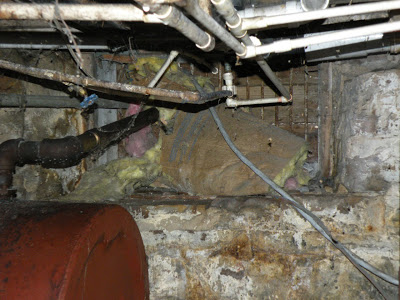
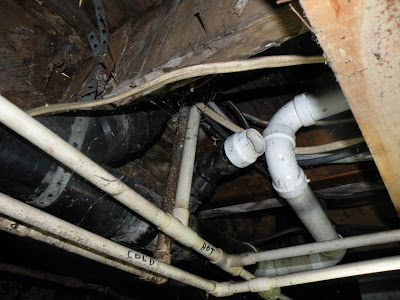
  • Holy septic! What you're seeing in the picture below is an uncapped septic line. To say it stinks is an understatement. We need a female piece to cap that sucker STAT. And speaking of nasty septic gossip, we also discovered a straight-up leak in one of the pipes feeding the septic tank. Gray water (among other substances) is drip-drip-dripping from the pipe directly onto the basement floor. Gross.

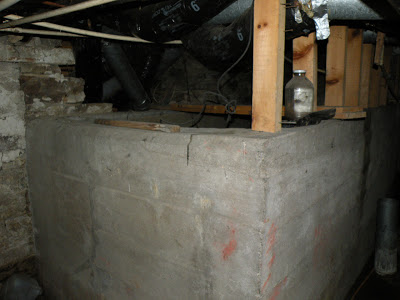
  • In better news, we also discovered this water catchment system used 100 years ago by Better Farm's original tenants. Long-since defunct, we're thinking of turning it into a sauna. Yes, please.


So, to review: Here's what we've got cooking in the basement...
  • Insulate hot water pipes and hot water heater
  • Change water and oil filters
  • Get some duct tape involved on leaky pipes running out of the furnace
  • Seal leaks in septic piping, get a female piece fitted on that open-air pipe
  • Do a deep clean (rubber gloves, a bucket of hot soapy water, a bunch of contractor bags, and a face mask)
  • Haul the trash—years of dirty filters, empty water jugs, mice nests, random articles of clothing, old appliances, broken sump pump—to the junkyard or burn pile
  • Get the cover back on the furnace
  • Reconnoiter the control panel's electrical wire mash-up
  • Seal and insulate the basement windows
  • Install ventilation so we can finally create our basement darkroom
  • Turn the old rainwater catchment system into a sauna

Outdoor Gazebos: Not just for summer fun

At a big farmhouse destined for summer concerts, workshops, parties, and rousing matches of croquet and horseshoes, it makes sense to have a self-standing outdoor structure for dining, dancing, and rocking in hammocks and swings.

While in Asheville, N.C., last month, I visited a community garden with the sweetest gazebo. The structure is open air, with waist-high walls that doubled as flower planters and benches; and a very nice two-person swing hanging from the ceiling. The floor was made of poured concrete.

It is very doable to have some of the Jefferson County Amish swing on over and construct this thing in no time at Better Farm, but it would be a shame to only have access to this amazing space in warm months.

This got me thinking.

Outdoor heaters are popping up in cities all over the world as smoking bans take effect in bars and nightclubs. Ranging in strength and style, they can give you an extra boost on a cool summer night or warm up you and your friends as you sip hot cocoa against a backdrop of fluffy white snow. Best part—most outdoor heaters on the market are infrared, meaning they heat people and objects (you and the seat you're on) and not the air in between.

Buying an outdoor heater will set you back between $200 and $600, plus energy costs. But what you pay for up-front will give you countless more hours of use out of your sweet new gazebo, patio, or deck. And what's better than that?


Comment

Nicole Caldwell

Nicole Caldwell is a self-taught environmentalist, green-living savant and sustainability educator with more than a decade of professional writing experience. She is also the co-founder of Better Farm and president of betterArts. Nicole’s work has been featured in Mother Earth News, Reader’s Digest, Time Out New York, and many other publications. Her first book, Better: The Everyday Art of Sustainable Living, is due out this July through New Society Publishers.

Better Renovations: Kitchen lighting fixture


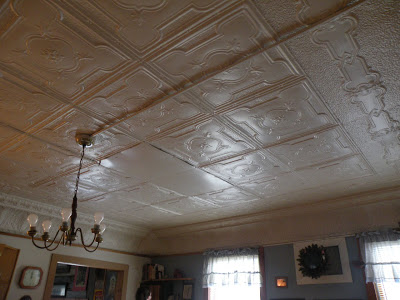
Lighting changes everything. And at Better Farm, there's been an ongoing issue with really ugly lighting fixtures; from exposed bulbs in the front hallway and bathroom to the hideous "chandelier" that's been hanging in the kitchen for who-knows-how-long (see above photo). The aesthetic nastiness of that chandelier was incentive enough for us to start shopping around for something more lovely.

Then, I discovered that the government is offering tax credits for up to 30 percent of the cost of energy-efficient home appliances, insulation, doors, roofs, and windows. Hot damn.

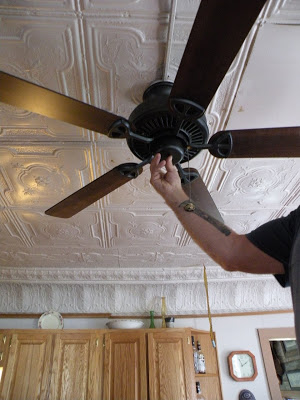
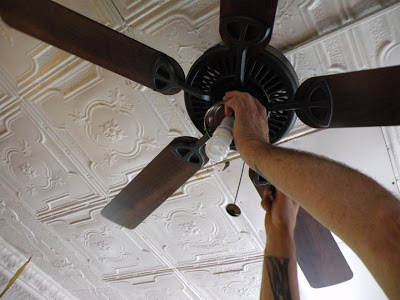
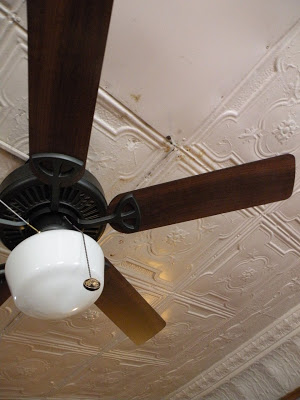
So, off we went to Home Depot to check out the selection. Key factors we sought: reversible directions, various speeds, farmhouse chic, and Energy Star certified. After much browsing, we settled on Hampton Bay's 52-inch ceiling fan. Here's Fred doing the installation:


The whole process was started and finished within an hour. Now we're enjoying late summer breezes in style.

I’m on Fire

Wood ash—that leftover pile of soot in your fireplace—has a myriad of uses you might want to consider before sweeping it up and throwing it in the garbage. One cord of firewood leaves behind up to 50 pounds of ashes, which can be used for everything from repelling slugs and snails from your flowers and produce to de-icing driveways and backyards without damaging cement or dirt underneath.

Here at Better Farm, we’re suckers for bonfires. Any excuse we can dream up to build a blaze, we will—and do. The ash we produce gets mixed in with our compost, and will help give our tomato plantings a boost in the spring. But with the seasons changing every-so-rapidly, we’ve started thinking more about creative and sensible ways to have an outdoor fire pit without the hassle of making our way across the street to our ragtag circle of cinder blocks every time.

Outdoor fire pits may hold the key to year-round blazes of glory for us—and for any of you who don’t have the luxury of starting huge fires willy-nilly on your property. In addition to providing you with plenty of ash for making soap and shining silver, outdoor fire pits offer year-round outdoor cooking options, an alternative to watching television, and a really nice accent for your property. If you decide to buy one new instead of cobbing one together, make sure it’s constructed of a material that is undoubtedly going to stand the test of time, such as wrought iron. As for all that wood ash you’ll be creating—store it in a fireproof container with a strong, airtight seal so you can keep coming back to it.

Comment

Nicole Caldwell

Nicole Caldwell is a self-taught environmentalist, green-living savant and sustainability educator with more than a decade of professional writing experience. She is also the co-founder of Better Farm and president of betterArts. Nicole’s work has been featured in Mother Earth News, Reader’s Digest, Time Out New York, and many other publications. Her first book, Better: The Everyday Art of Sustainable Living, is due out this July through New Society Publishers.

Energy Use at Better Farm Reaches Lowest Levels


Better Farm wants to be as green as possible. As we save our dollars and look to a bright future of turning this unsustainable house green, we bide our time by doing all we can with what we have to get the proverbial ball rolling.

To that end, we've been extremely careful about our energy use here. Back in May we swapped out all the lightbulbs for energy-efficient ones. Then we sold off the two air conditioners on the first floor of the house. Last week I lowered the hot water heater's levels by 10 degrees (the difference is imperceptible, but for every 10 degrees you lower your heater, you're looking at a money savings of 3 to 5 percent). We unplug all appliances and lamps (including the toaster, coffee maker, any lights not being used on a daily basis; even the printer) when not in use (even when something's not on, it still uses energy if it's plugged in). And the other day I picked up some fresh weatherstripping for the doors. We're also utilizing blinds and curtains to maximize or minimize heat and cold entry to the house, depending on what the weather's like.

So you can imagine it was a welcome surprise to learn, on our most recent energy bill from National Grid, that our energy use is at its lowest levels—in spite of the house being full of people on a fairly regular basis. The news has bolstered our commitment to keep going green, and now the synapses are really firing. Next up: insulation for the attic and crawl spaces, sealing off the basement, spackling, patching, and weatherstripping any remaining drafts; and making sure all the ducts coming off the furnace are sealed up tight.

Viva Better, everyone.
1 Comment

Nicole Caldwell

Nicole Caldwell is a self-taught environmentalist, green-living savant and sustainability educator with more than a decade of professional writing experience. She is also the co-founder of Better Farm and president of betterArts. Nicole’s work has been featured in Mother Earth News, Reader’s Digest, Time Out New York, and many other publications. Her first book, Better: The Everyday Art of Sustainable Living, is due out this July through New Society Publishers.

Drink Your Drainwater!

Many people use eco-friendly shampoos and soaps to ensure nothing harmful is being washed into groundwater. But who'd have thought you could take that runoff spiraling down the shower drain, pour it in a glass, and drink it?

By putting plants such as reeds and rushes in the bottom of a shower prototype, designers Jun Yasumoto, Vincent Vandenbrouck, Olivier Pigasse, and Alban Le Henry found the water, passing through the plant filters and other manmade filters, comes out crystal clear and ready-to-drink.

The Daily Mail has a whole feature piece on this contraption, complete with design plans for some ambitious Better Farmers to try their hands at.

1 Comment

Nicole Caldwell

Nicole Caldwell is a self-taught environmentalist, green-living savant and sustainability educator with more than a decade of professional writing experience. She is also the co-founder of Better Farm and president of betterArts. Nicole’s work has been featured in Mother Earth News, Reader’s Digest, Time Out New York, and many other publications. Her first book, Better: The Everyday Art of Sustainable Living, is due out this July through New Society Publishers.

Catching on to Water Catchment

Before I begin: I've been in the process of earning my certificate in Permaculture under the amazing Claudia Joseph, whose intensive knowledge of everything from mulch to maintenance has provided information for posts on this blog as well as on my personal blog on all things green(ish). And this particular knowledge on water catchment came via one of her fascinating guest teachers, Lars Chellberg, who works for the Council on the Environment of NYC and the Water Resources Group. Okay, onward!

As most people have heard by now, the more water we save for reuse, and the less that simply runs straight down our drains, the better. Do you have a roof and storm gutters? Well then you've already started to channel useful rainwater...although having it spill unused onto a random spot on your lawn is not the best finale. Installing a water catchment system may be more complex than placing an open whiskey barrel under the spout...but the construction doesn't have to be hard.

Once the rain comes partway down the downspout, a seasonal plunger (literally a plunger) forces the water into the catchment system's pipes,

There is the issue of leaves and other large debris washing off the roof, which is where the first flush part of the system comes in.

This part essentially forces the particles to accumulate at the bottom of a separate section, so only water eventually makes it into the collection tank. It is important to empty the roof washer area after each major rain to let out all the junk.

And once your collection tank starts to fill up you can hook a hose straight up to it, or transport some of the water to a separate irrigation system, like this bucket kit idea for a veggie garden.

And even after being used to water your veggies (or wash your dog), the excess water can then run naturally downhill to a rain garden:

And if you're worried that a water catchment system on your property will be unsightly, feel free to disguise it with shrubs...or some creative flair like paint!

So there's the majorly abridged version. But lucky lucky, the entire 54-page, in-depth, how-to booklet is available as a free download. So get to it!

Redwood Field Days


The Redwood Volunteer Fire Department this weekend hosted the latest installment of Redwood Field Days, an annual, all-out carnival/beer bash complete with rides, games, concession stands, a junk auction, parade, raffle, and several live bands.


The debauchery kicked off Thursday, Aug. 20, with a junk auction. Here's the scene:


We came away with a stinky, faux bear rug that the doggies truly love (to chew).


That evening was filled with a general sense of merriment and excitement as locals and tourists descended on the fairgrounds.


Redwood has probably never been so packed:


The Better Farm contingency was obviously in full force all three nights:


This participatory gesture on our parts culminated in a "grand finale" when Staciemae and I weaseled our way into the parade Saturday evening. Yes, seriously.


We marched "on behalf of Better Farm for peace, love, and happiness." Awww.


Didn't matter what we told the lady with the clipboard, however: When we passed the judge's booth where they announced each participant, the head judge simply cried out, "You two are lovely, but I have no idea who you are!" So it goes.


Next year we'll come out with a real presence for the 40th anniversary of Better Farm—expect to see the bus in working order, dozens of old communards hanging out of it, beads, candy, and Super Soakers. Let the planning begin—we only have 362 days before the next Field Days starts.


Comment

Nicole Caldwell

Nicole Caldwell is a self-taught environmentalist, green-living savant and sustainability educator with more than a decade of professional writing experience. She is also the co-founder of Better Farm and president of betterArts. Nicole’s work has been featured in Mother Earth News, Reader’s Digest, Time Out New York, and many other publications. Her first book, Better: The Everyday Art of Sustainable Living, is due out this July through New Society Publishers.

The Barn: Before

We have a lot of big ideas here at Better Farm.

Workshops. Artist residencies. Recording studio. Green building. Workshares.

But for these things to happen and be successful, we need to look beyond the walls of the main house on the property. And when we do that, we see something large and looming just across the street: the barn.

Built for animals and hay several decades ago, the barn is in very sound condition; save for a few broken windows, lots of clutter, and a bullet hole in the ceiling. But to turn the barn into a recording studio, lofted sleep space, and workshop (on the second, third, and first floors, respectively), there is much to be done.
  • Clear out the clutter. I'm thinking of having a garage sale in the next few weeks, followed by a nice healthy trip to the dump. Anything that can be salvaged and turned into something else (old shutters into cupboard doors, weird containers into planters, mantel into a bar, wood planks into new flooring for the library), should be assessed and set aside with a cohesive plan.


  • Clear out the hay. After this season, there won't be any more hay stored on the second floor of the barn. And once it's gone, we have to get in there with serious broom activity to ensure the mice and snakes go, too.

  • Patch the holes in the roof. The bullet hole and another mysterious tear need to be plugged ASAP.
  • Insulate the walls and ceiling. There are a few very green ways to do this, including straw bale construction or insulation made from recycled jeans.

  • Drop the ceiling. To create a nice sound space for recording on the second level, we have to drop the vaulted ceilings. Bummer, except that we will use the additional ceiling space for lofted bedspace. We're estimating now that it would be easy to have enough room for eight to 12 musicians and artists to cuddle up.
  • Organize the first floor. Through a series of hooks to hang bikes on, shelves to store things, and zoned out work stations, the plan on the first floor is to accommodate our need for storage and space for a small wood shop, welding studio, pottery wheels, or anything else we dream up.

  • Extend the carport. It would be great to construct an overhang for the darling bus, and extend the carport we already have so two or three vehicles can be stowed away from the elements (and porcupines).

  • Install a firepole. Just imagine the magnificence of cruising downstairs in the barn by firepole instead of a cumbersome ladder. If anyone hears of a firehouse getting rid of an old one, please get in touch with us!

  • Build a bathroom. But we're not talking any old bathroom. Because this would be started from scratch, we can go all the way up-front with a compost toilet, rainwater shower, moss floormat, the works.
  • Go green. And lastly, let's throw some solar panels on the roof so all the energy we'll be using for amplifiers and lights comes direct from the sun. Or, let's run the barn off biodiesel. Or wind. Or anything else we can come up with (suggestions welcome).
We've already hit the ground running, but it's going to take a lot of help to get this place ready for next spring's influx of Better dwellers. So don't be shy! All worker bees are welcome.
Comment

Nicole Caldwell

Nicole Caldwell is a self-taught environmentalist, green-living savant and sustainability educator with more than a decade of professional writing experience. She is also the co-founder of Better Farm and president of betterArts. Nicole’s work has been featured in Mother Earth News, Reader’s Digest, Time Out New York, and many other publications. Her first book, Better: The Everyday Art of Sustainable Living, is due out this July through New Society Publishers.

No Aching Backs Here: Mulch gardening, care of the wise and wonderful Ruth Stout

In her book How to Have a Green Thumb Without an Aching Back, Ruth Stout expounds on the virtues of mulch gardening instead of all the nasty tilling, weeding, composting, and exhaustion involved with most gardening advice.

Here at Better Farm, one of the biggest deterrents to agricultural pursuits is the extremely high level of sand and clay in the dirt (I broke a trowel in half yesterday trying to move a small shovelful). So Stout's perspective—that instead of killing your sweet self to convert your soil, you can throw a bunch of stuff on top of it that will give you better results—resonates. Thank goodness for Corinne, who tipped me off to this lady.

Basically, Stout advises plotting out a square of land where you'll be planting. I did this yesterday, starting small with a plot 20 feet long and 24 feet deep at the edge of our lawn and just inside one of the fields that gets plowed once or twice a year. This is a lot of hard soil and stiff, tall grass. Here I am hard at work, in totally inappropriate farming gear (including flip-flops):


Photos/Eric Drasin

Once you've staked out your plot, it's time to start treating the soil. This can start now, and will continue even long after crops are planted. The idea here is to avoid the cost of buying fresh mulch, and the maintenance of a compost bin that needs regular attention, turning, and so on. What Stout recommends is essentially turning your plot of land into an ongoing compost/mulch pit. That means raked leaves, grass clippings, a little wood ash from a fire, and food scraps can all get dumped directly on the soil and left alone. So long as you don't throw stuff like meat scraps into this ongoing mulch situation, you can rest fairly assured that you won't have too many critters contending for these scraps. I'll keep you posted on that. But for now, we started with some beet scraps, garlic and egg shells.


Now, we also have a small compost bin that we keep stocked with worms. This is great for making topsoil for houseplants, and will be a fabulous, nutrient-rich supplement for our crops next spring. Yesterday I sifted some fresh compost and added that to the mix as well.


If you keep adding to your plot until the first frost, by springtime you will have some serious mulching/decomposition to celebrate. Rule of thumb at that point is to head outside with your seeds in hand and turn some of that rich mash-up over. And, Stout promises, you'll be presented with unbelievably healthy, wonderful soil that will send your plants soaring sunward. You can also choose at that point to bring in some additional topsoil if needed. As the plants begin to grow, Stout advises continuing with the mulching process (adding lime and other supplements to plants requiring a little extra kick). If you feel like leftover noodles and apple skins are unsightly spread around the base of your tomato plant, go ahead and put a light cover of soil over your pile.

Stay tuned to see how we do...
2 Comments

Nicole Caldwell

Nicole Caldwell is a self-taught environmentalist, green-living savant and sustainability educator with more than a decade of professional writing experience. She is also the co-founder of Better Farm and president of betterArts. Nicole’s work has been featured in Mother Earth News, Reader’s Digest, Time Out New York, and many other publications. Her first book, Better: The Everyday Art of Sustainable Living, is due out this July through New Society Publishers.

And it Begins: Barn repair

We have a lot of big ideas for the barn at Better Farm: recording studio, lofted sleeping quarters, shop space on the first floor for potters, welders, carpenters, and the like; car ports, and maybe even a fire pole.

But first things first.

There are a few minor quirks with the barn, such as a door that's been broken for years. There are also broken windows on the first floor, a bullet hole in the roof (still a mystery), a second floor full of hay (some good, some rotten), a first floor full of debris and junk, and a structure that requires sealing, insulation, soundproofing, and more. But hey—the folks at Better Farm have never balked at a challenge.

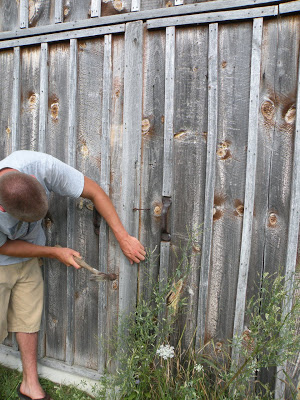
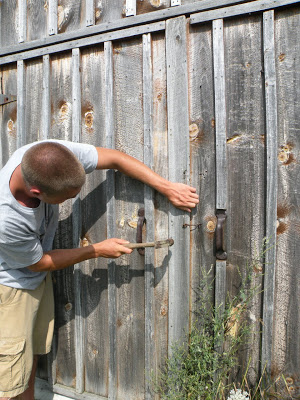
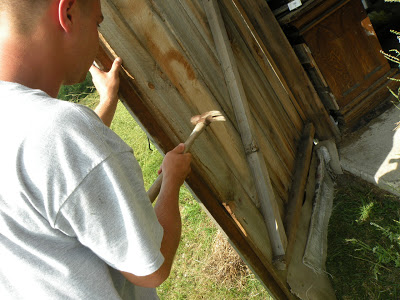
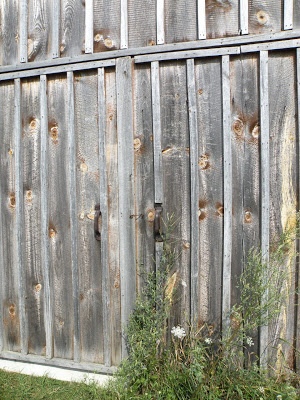
It seemed appropriate that for our first foray into getting the barn in tip-top shape, we'd tackle the issue with the front door and main entrance. Hunter Ciliberti headed out there yesterday with a hammer, a few reclaimed nails (he hammered some bent nails into straightness, and we found a little container of old nails once used for something else), a beer, and some brut strength; and in about five minutes undid five years of disrepair.


And, behold:

Comment

Nicole Caldwell

Nicole Caldwell is a self-taught environmentalist, green-living savant and sustainability educator with more than a decade of professional writing experience. She is also the co-founder of Better Farm and president of betterArts. Nicole’s work has been featured in Mother Earth News, Reader’s Digest, Time Out New York, and many other publications. Her first book, Better: The Everyday Art of Sustainable Living, is due out this July through New Society Publishers.

Inspiration Station: Railings

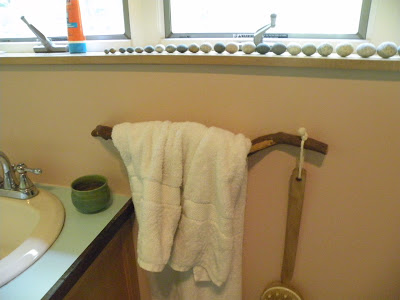
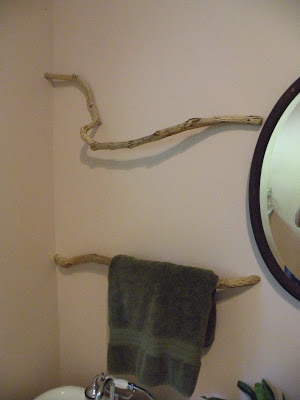
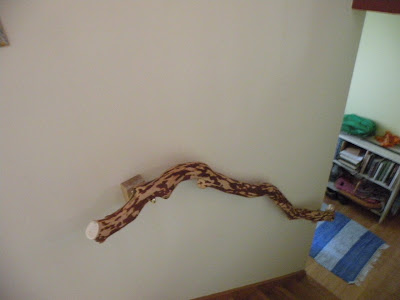
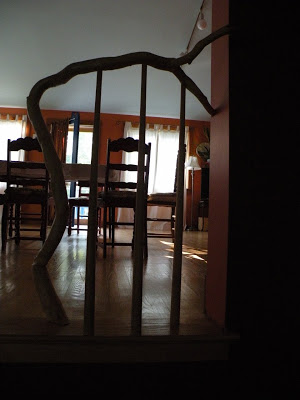
While in Western Massachusetts last week, I finally took the time to document the Enzer-Mahlers' gorgeous stairwell railings and towel racks, made from local trees (they live in Montague, Mass.).

The bark is stripped from the tree, which can then be treated—or not, as the Enzer-Mahlers demonstrate with these towel racks and railing leading downstairs:


Totally amazing and beautiful, no? Better Farm's staircase to the second floor would look particularly lovely with a nice black cherry tree or big maple tree branch.

Comment

Nicole Caldwell

Nicole Caldwell is a self-taught environmentalist, green-living savant and sustainability educator with more than a decade of professional writing experience. She is also the co-founder of Better Farm and president of betterArts. Nicole’s work has been featured in Mother Earth News, Reader’s Digest, Time Out New York, and many other publications. Her first book, Better: The Everyday Art of Sustainable Living, is due out this July through New Society Publishers.