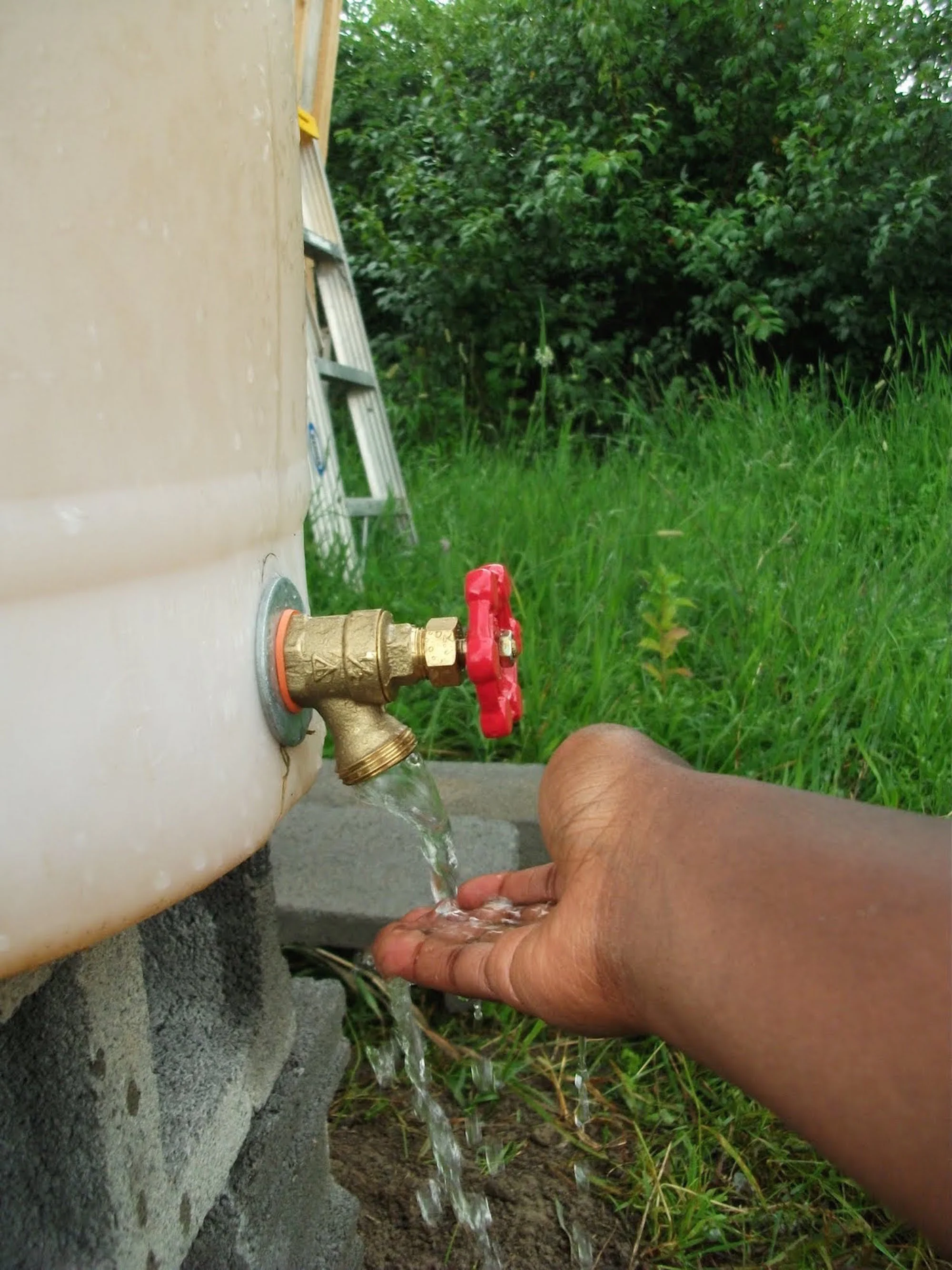
Harvesting Rain: How to Collect Gallons of Water for Your Garden

Harvesting Rain: How to Collect Gallons of Water for Your Garden

Originally published by Martha Stewart Living

With just a few basic materials and a roofline, you can collect rainwater for garden irrigation. This gravity-fed system uses no pumps or electricity and can be installed in minutes. Dress up your rain barrel however you like for a real conversation piece!

Read More

June 2015 Newsletter

Better Farm News - June 2015:

• Better Festival this Saturday!
• News: All the Latest Buzz Around the Farm
• This Month's Cast of Characters
• Upcoming Events


Hello, Friends of Better Farm!


May and June are easily the busiest two months at Better Farm, as we get the grounds ready for summer, plant and deeply mulch the gardens, expand our landscape design, and this year prepare for Saturday's Better Festival—followed the next weekend by a wedding!

This has been a landmark year for Better Farm; fitting, since it was 45 years ago that our founder Steve Caldwell signed paperwork turning a quiet, unassuming farm along the Canadian border into a technicolor dreamscape that would push boundaries, facilitate change, question authority and reinvent the world with each person who crossed its threshold.

Numbers at the farm have climbed as we welcome students in the Sustainability Education Program, betterArts residents, overnight guests, WWOOFers, volunteers and visitors. This newsletter will outline the projects we've undertaken and the outreach we've done and are continuing to do in the North Country.

Chronicles of Better Farm adventures, along with crafty DIY projects to make you more self sufficient, green and creative—along with practical environmental theory and a little nudge to get you living more sustainably, are all jam-packed into my book, Better: The Everyday Art of Sustainable Living. It hits bookshelves at the end of July; in the meantime, click here to  pre-order your copy at Amazon now! Stay tuned for information on an impending book tour!

I encourage you to check in at our blog to follow all of Better Farm's daily adventures. And do join us this Saturday at the Better Festival to see all we have to offer.

Until next time, better be.

Nicole Caldwell
Executive Director and Co-Founder
Better Farm

Read the full newsletter here.

Comment

Nicole Caldwell

Nicole Caldwell is a self-taught environmentalist, green-living savant and sustainability educator with more than a decade of professional writing experience. She is also the co-founder of Better Farm and president of betterArts. Nicole’s work has been featured in Mother Earth News, Reader’s Digest, Time Out New York, and many other publications. Her first book, Better: The Everyday Art of Sustainable Living, is due out this July through New Society Publishers.

All-Ages Paper Bag Notebook Workshop with Alyssa Curley This Saturday!

Instructor Alyssa Curley of AlternARTive will kick off this year's Better Festival at 12 p.m. this Saturday, June 20, with an all-ages workshop (5+) that will walk students through the creation of a notebook made entirely out of paper products.

Participants may bring any special paper they may have to make the project more personal. The workshop is held at Better Farm, 31060 Cottage Hill Road, Redwood. To pre-register, email info@betterarts.org.

 12 p.m. Free. All Ages (5+). Hosted by betterArts. For more information about the ensuing festival, click here. Better Farm is located at 31060 Cottage Hill Road, Redwood.

Comment

Nicole Caldwell

Nicole Caldwell is a self-taught environmentalist, green-living savant and sustainability educator with more than a decade of professional writing experience. She is also the co-founder of Better Farm and president of betterArts. Nicole’s work has been featured in Mother Earth News, Reader’s Digest, Time Out New York, and many other publications. Her first book, Better: The Everyday Art of Sustainable Living, is due out this July through New Society Publishers.

betterArts to Host Group Mural at Mare's Wares Arts Fest

betterArts will host a group mural at the eighth annual Mare's Wares Arts Fest from 12-8 p.m. Wednesday, July 1, in Morristown.

Mare's Wares Arts Fest is dedicated to celebrating quality, creativity and artistry in all its forms. The annual event brings together the North Country's premier artisans, musicians, authors (and SO much more) every July 1st. It is easy to make a day of the celebration, so  bring your friends!

betterArts will have a canvas out for everyone to pain on; as well as information about upcoming events, workshops and more.

For a full listing of upcoming events, click here.

Comment

Nicole Caldwell

Nicole Caldwell is a self-taught environmentalist, green-living savant and sustainability educator with more than a decade of professional writing experience. She is also the co-founder of Better Farm and president of betterArts. Nicole’s work has been featured in Mother Earth News, Reader’s Digest, Time Out New York, and many other publications. Her first book, Better: The Everyday Art of Sustainable Living, is due out this July through New Society Publishers.

Beginner's Guide to Growing Tomatoes

Photo by Pixabay

By Jane Blanchard

Gardeners often hear tales of woe regarding how fickle and hard to grow tomatoes can be. It’s no wonder that many beginners steer clear, often missing out on a delightful harvest of one of earth’s most versatile fruits. Growing tomatoes takes time and care, but they can grow almost anywhere. Don’t let the rumors about tomato gardening scare you away, these tips will help you gather a bountiful harvest year after year.

Beginners should plant seedlings instead of trying to start the plant from seed. When choosing your seedling, don’t be fooled by a lush green plant. Always check the root system and look for strong, healthy roots. Choose seedlings without flowers on them and pinch off any flowers that you may see. Don’t try to plant tomato seedlings until the soil has reached 50 degrees fahrenheit, consistently. This thermometer is just $8.99 and will help you get an accurate reading and know when it’s safe to plant.

Plant your seedlings deep into the ground, “up to their necks” as midwestern farmers would say. This means burying the stems all the way up to the first full leaves. You’ll find allowing them to grow strong deep roots is invaluable to their growth. You may have noticed tomato plants’ tell-tale growing stakes. This is to support the weight of the plant should it grow 3 or 4 feet high. Place the stake a few inches from your seedling on the north side of your sprout. It will prevent the stake from shading your plant. The pole should be around 4 feet taller than the seedling and don’t worry about attaching it with ties until you see the first flowers. When you do see flowers, use rope to tie the stem to the stake and keep it upright and supported.

One expert tip is to use epsom salt as a natural fertilizer. Just dissolve 2 tablespoons into each gallon of water and use the solution at least once a month. When it comes to waterings, you should water your plants deeply but not often. Once every week should be good, or every five days at the height of summer. When your first fruit is ripening, add compost or mulch to your plant’s base to encourage more growth. Prune off any non-flowering branches.

Try to water your tomato plants from above the plant. You want to avoid the stems being soaked in water. When the stems become damp, disease and mold has the opportunity to attack your plant. If you do discover a stem mold, commonly referred to as blight, you can use an organic fungicide to be more environmentally friendly. 

Harvesting your tomatoes at just the right time is essential to having a satisfying crop. Most tomatoes will be ready for picking about 60-85 days after the seedling was planted. You may continue to enjoy a crop from your garden all the way until frost. You will know that your tomato is ripe when the fruit has turned one solid color. For example, for a red varietal, if you notice that the fruit is all red except one shaded spot is still yellow, it’s not ready. It should be just a little bit soft when squeezed. Once you notice these identifying traits, go ahead and pluck your tomatoes. Once pulled off the vine, tomatoes no longer have a source of oxygen, so you may only have a week or so before they go bad. Contrary to popular belief fresh tomatoes are not well stored in the fridge. If you need to keep your tomatoes for any period of time, core them and store them in a freezer. Thaw them out when you’re ready and turn them into an amazing sauce or bloody mary mix.

For more tips and tricks, head to Modernize.com.

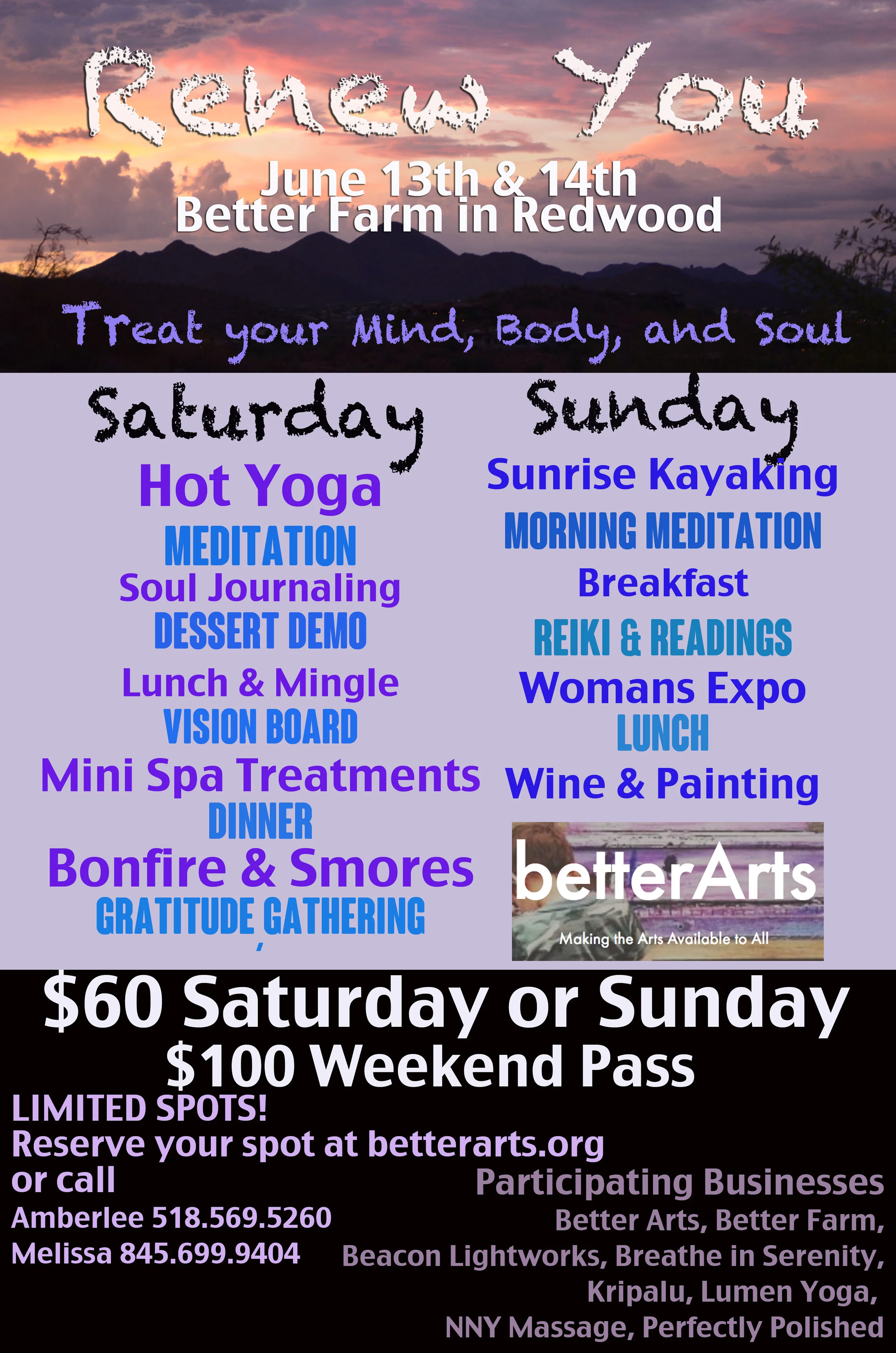
Reminder: Renew You Event this Weekend!

Reminder: Renew You Event this Weekend!

A "Renew You" weekend is being held this weekend at Better Farm, put on by betterArts board members Melissa Aulet and AmberLee Clement. Participants will enjoy two days of mini spa treatments, reiki, meditations, wine and painting, and much much more. There are still a few spots available—email info@betterarts.org to register!

Read More

New Partnership with Jefferson Rehabilitation Center Offers Job-Training at Better Farm

Shawn from JRC works alongside the belles of Better Farm on groundswork Tuesdays and Thursdays.

Shawn from JRC works alongside the belles of Better Farm on groundswork Tuesdays and Thursdays.

A new partnership between Better Farm and the Jefferson Rehabilitation Center is offering job training to individuals in order to maximize their potential for job placement in the future.

Founded in Watertown in 1954, the Jefferson Rehabilitation Center (JRC) has provided programs and services to hundreds of children and adults in Jefferson County who are developmentally disabled. Today, JRC is an independent, not-for-profit corporation employing more than 650 staff members and serving more than 1,000 individuals and their families each year. JRC provides a wide range of services designed to enhance the quality of life and maximize the potential of individuals with disabilities through education, vocational opportunities, training, residential services, inclusion and advocacy in a community-based setting. A dedicated staff of medical, educational and therapeutic professionals, and specially trained direct care personnel provide the necessary support and training to the individuals they serve.

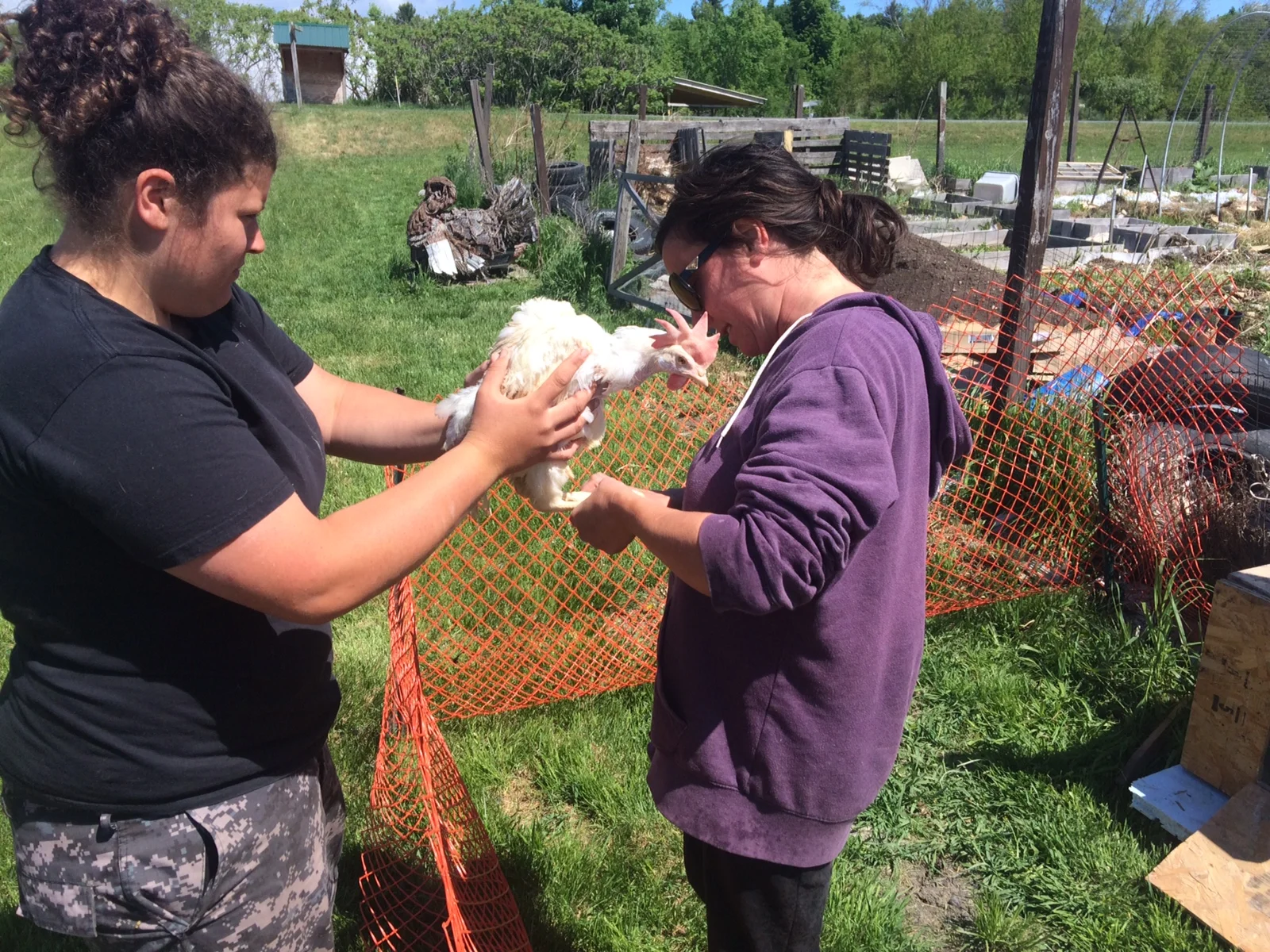
The JRC contacted Better Farm last month asking if we had any opportunities available that would provide on-the-job training for a few people who had expressed interest in groundswork, general maintenance, landscaping and other outdoor work. We were absolutely thrilled to offer up a list of ideas, and yesterday our first worker, Shawn, arrived. In a few short hours he'd begun work on a stone wall, raked up wood chips for the garden, landscaped a raised flower bed, and planted almost a dozen apple trees.

This partnership with the JRC will continue at least throughout the summer, with other workers joining Shawn during the season. To learn more about this essential program, click here.

Comment

Nicole Caldwell

Nicole Caldwell is a self-taught environmentalist, green-living savant and sustainability educator with more than a decade of professional writing experience. She is also the co-founder of Better Farm and president of betterArts. Nicole’s work has been featured in Mother Earth News, Reader’s Digest, Time Out New York, and many other publications. Her first book, Better: The Everyday Art of Sustainable Living, is due out this July through New Society Publishers.

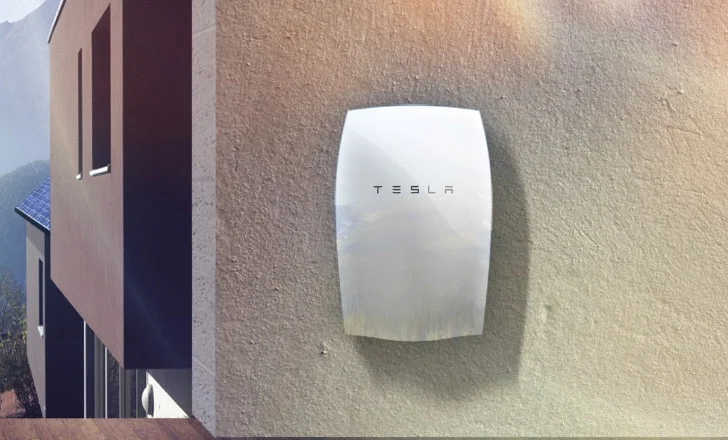
Spotlight On: Tesla's New Home Battery System

Spotlight On: Tesla's New Home Battery System

The world currently consumes 20 trillion kWh of energy annually—enough to power a single family home for 1.8 billion years or supply energy to a nuclear power plant for 2,300 years (or launch the Falcon 9 rocket seventeen million times). 

To begin the march away from these staggering numbers, Tesla has reinvented itself in order to change the way we look at consumption—and shepherd in a new era of renewable energy at home and businesses.

Read More