Reimagined Entranceway

Before: Old sheet rock sagged away from the ceiling, making for a decidedly undramatic entrance.
We "broke ground" about a month ago on a project that would revamp Better Farm's entranceway and give guests a strong first impression.

At the start, we were up against old sheetrock, visible lines, exposed electrical wiring, inadequate insulation, inefficient storage, and a boring color scheme:
Visible sheet rock lines, electric installed outside the wall, boring light fixture, and plain white walls and ceiling? No thanks.

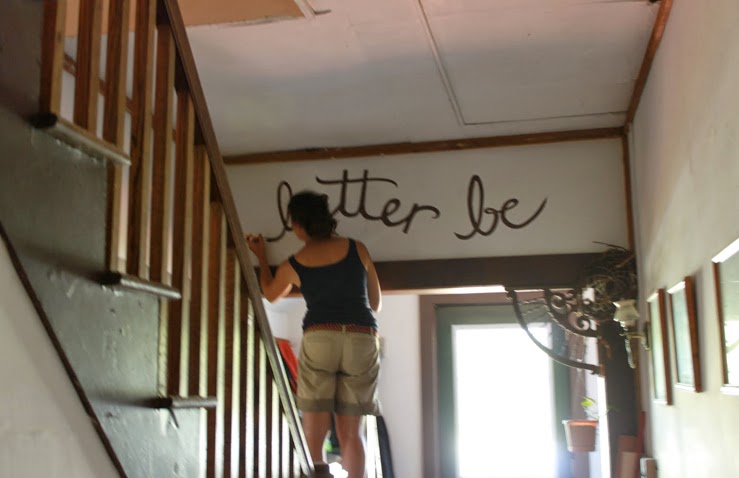
There were a few elements worth saving: one, the "better be" tag former artist-in-residence Erica Hauser painted a couple of years ago over the entranceway:
And two, a chimney section we discovered when we started taking down the old sheetrock:

Three, the stunning custom staircase Gary Stephenson built back in 2011:

Local contractor North Country YDIY got started reinsulating, replacing sheetrock, and reclaiming old barn wood across the street to use as trim throughout the space.

Here are some photos of the process:

Nate Serafine, a painter and contractor out of Rochester with property and a camp in Rossie (Paintinate), came by to teach me how to mud and tape the sheet rock so it would appear literally seamless.
Though the idea was to simplify and clean up the space, there were certain embellishments added as well. I knew I wanted a bold chandelier to put in the center of the foyer, and found a beautiful one at Lowe's:

I'd thought a lot about putting a bold wallpaper in the immediate entranceway to offset the muted walls throughout the front hall; but when I found this amazing woodblock on Etsy, I had a change of heart:
Giant paisley stamp from DelhiDaze on Etsy.
Paint colors: Benjamin Moore's Sandy Hook Gray and Sherwin Williams' Wild Wild West.

On the ceiling, I decided to install some faux tin in a bronze color to create a formal entranceway. I thought the copper would contrast nicely with the barnwood trim gleaned from this property.
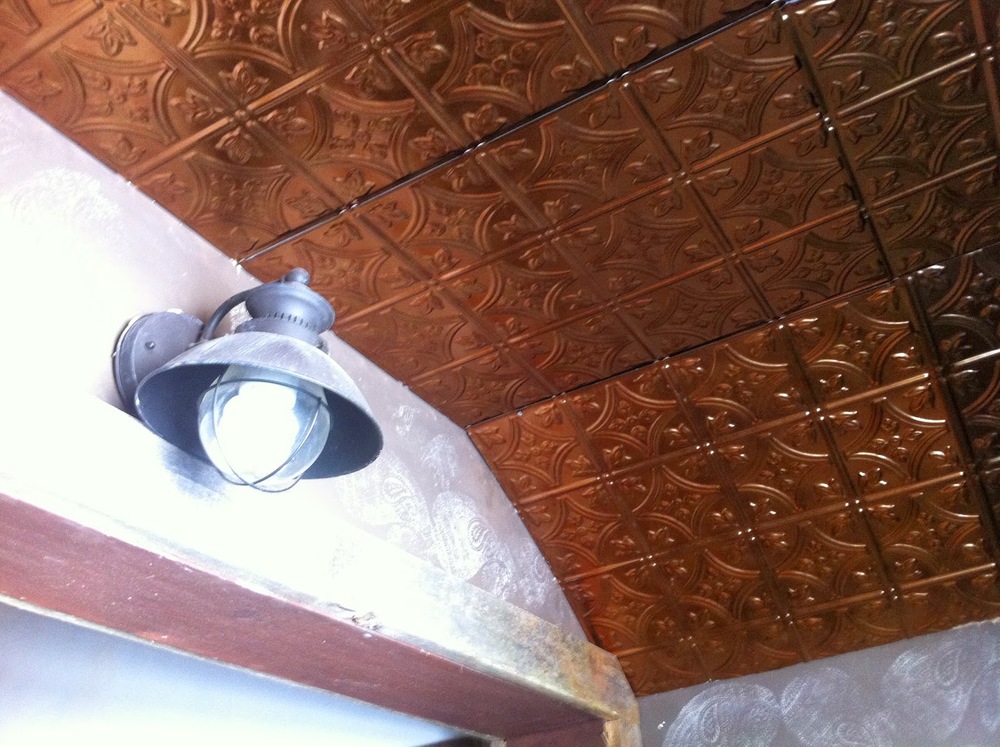
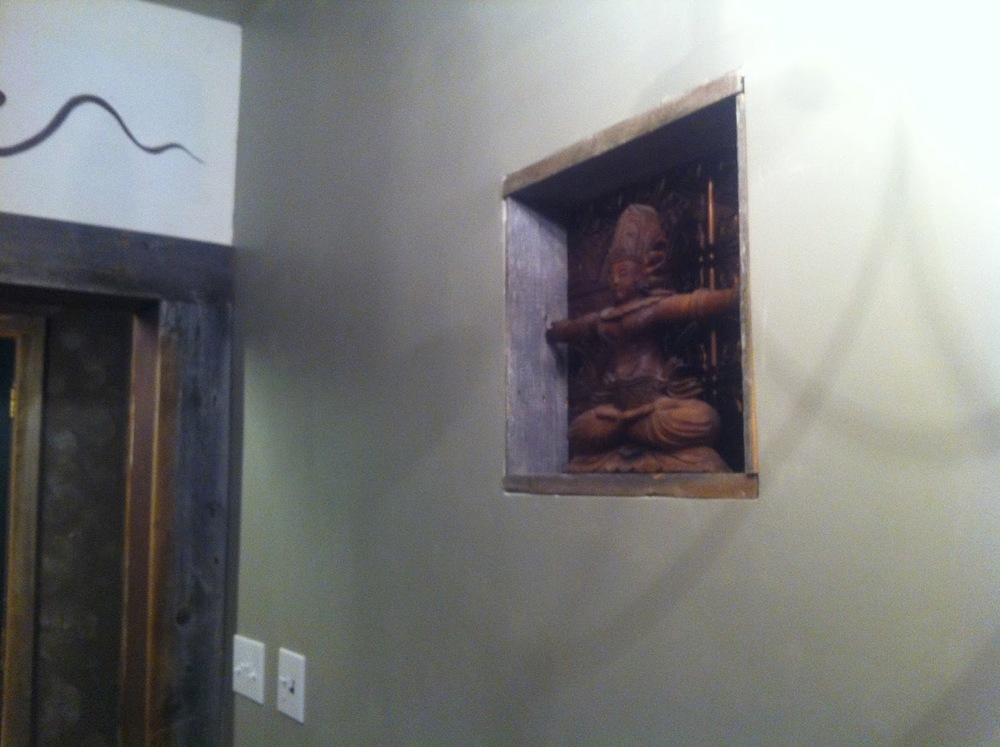
Creating a small alcove in the long hall allowed for visual highlights like the wooden carving and copper backsplash.

All the elements started coming together in a beautiful way:


To finish off the space, we added a holy water font from an old church as a key holder and an antique shelf found at another construction site that I screwed hooks onto for a coatrack:


Here's a side-by-side comparison:

This spring a project will be to make a bench with hinged lid for shoe storage in the front hall. Photos to come on that! If you've got a DIY home project you'd like to share, email us at info@betterfarm.org.
Comment

Nicole Caldwell

Nicole Caldwell is a self-taught environmentalist, green-living savant and sustainability educator with more than a decade of professional writing experience. She is also the co-founder of Better Farm and president of betterArts. Nicole’s work has been featured in Mother Earth News, Reader’s Digest, Time Out New York, and many other publications. Her first book, Better: The Everyday Art of Sustainable Living, is due out this July through New Society Publishers.

Irish Fest's 'Better' Kids Room a Success!

betterArts for the second year in a row hosted a fun-filled crafts and games room for children of all ages to enjoy at this year's North Country Goes Green Irish Festival.

Volunteers offered arts 'n' crafts stations where kids could make leprechaun planters, caterpillars, leprechaun ears, and rainbows made from recycled items; game booths where children could try their luck at bean bag tosses and fishing games, a face-painting station, jewelry making, and more.

betterArts is a 501(c)3 non-profit organization whose mission is to increase access to the arts in the North Country and beyond through the procurement of an artist residency program, radio station, art galleries, performances, festivals, workshops, and extensive community outreach work centered around creativity and sustainability. The organization is housed at Better Farm, a sustainability campus in Redwood, N.Y.

Many thanks go out to North Country Goes Green Irish Festival for inviting betterArts back this year, betterArts board members Amberlee Clement and Holly Boname for doing the lion's share of organizing the kids' room, all our volunteers for braving the crowds Saturday and Sunday to make this a reality, and all of you who came out to enjoy the space and show your support for arts in the North Country.

For downloadable photos from the kids' room, please click here.
Comment

Nicole Caldwell

Nicole Caldwell is a self-taught environmentalist, green-living savant and sustainability educator with more than a decade of professional writing experience. She is also the co-founder of Better Farm and president of betterArts. Nicole’s work has been featured in Mother Earth News, Reader’s Digest, Time Out New York, and many other publications. Her first book, Better: The Everyday Art of Sustainable Living, is due out this July through New Society Publishers.

Remembering Steve, One-Half Decade Later

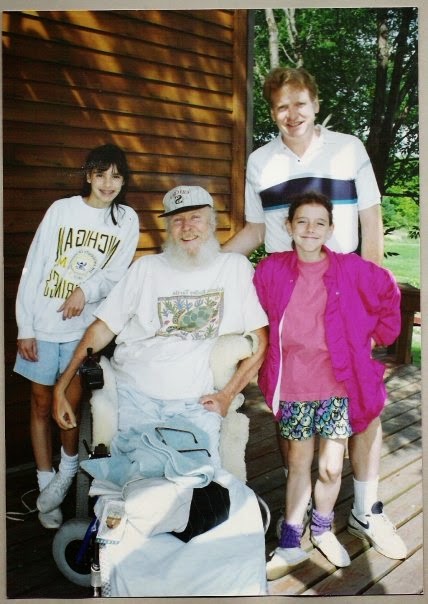
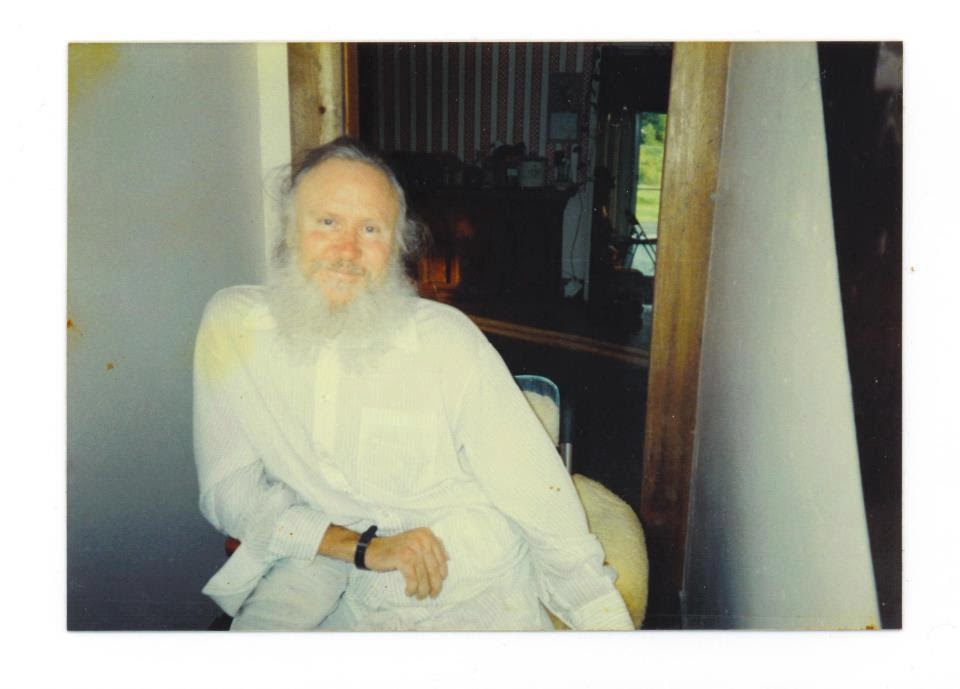
Today we commemorate the five-year anniversary of our founder Steve Caldwell's death. His perspectives on loving well, suspending disbelief, and the Better Theory have changed the lives of all who knew him. His legacy has further laid the groundwork for Better Farm and betterArts, two initiatives designed to be the realization of Steve's highest hopes for this space.

Stephen F. Caldwell was born Sept. 10, 1941, to Bob and Mary Caldwell, a couple who met while working as reporters at the Bergen Record in Hackensack, N. J., and married in 1934. Steve was one of four children; an older sister, Cath, and two younger brothers, Bob and Dan. All four children went through the Ridgewood school system. 

Steve graduated from Columbia University in 1963. He planned to begin working as a reporter in the fall. Instead, three months after Columbia, he broke his neck in a car accident and was paralyzed from the chest down.

He moved in June of 1964 from rehab at Columbia Presbyterian Hospital in New York City to his parents’ Victorian home in Ridgewood; and until October 1970 he lived in the two large rooms comprising half the ground floor of 226 Prospect St. He used a manual wheelchair he could barely push, slept in a hospital bed and, except for upwards of a dozen trips to and from and stays in one hospital or another, was out of doors fewer than six times a year.

When in his wheelchair, Steve sometimes sat in front of his Selectric typewriter. He read and wrote extensively, and got hundreds of reviews published in The Record, The New York Times, Psychology Today, and The Saturday Review of Literature. Many of Steve’s poems were published in various literary magazines.

In 1965 Steve started playing poker in a game that usually included his mother and brother Dan. Steve’s other brother, Bob, also played infrequently and most of the other players were friends and acquaintances of Bob’s and Dan’s. On most Friday nights a group met in Steve’s room to smoke, drink, and, most important, talk. Other participants were his aunt and uncle (William A. Caldwell would receive a Pulitzer Prize in 1971 for Simeon Stylites, a 6-day-a-week column he had been writing since the 1930s in The Record), and their daughter Toni. The talk was very good, but the Friday-night gatherings eventually waned and by 1970 had ended.

The conversation, however, did not.

When Steve received money through insurance for his car accident, he decided to buy property where he and his friends could live communally. And so in 1970, he, his friends, and family started Better Farm in Redwood, N.Y. Before he moved in, the people around him spent a summer in Redwood convert it into a space appropriate for Steve; complete with indoor plumbing, ramps, and rewiring. The name was borne of "The Better Theory", a way of thinking Steve and his friends dreamt up that took life's greatest hardships and translated them into humanity's greatest opportunities. The Better Theory offers each of us the chance to make our lives our greatest artistic achievement.


Steve moved there in October, thinking he would live there permanently. It proved otherwise, and he was back and forth between Ridgewood and Redwood until, in 1973, he first wintered in Tucson, Ariz. Thereafter he split his time, except for six months in Santa Cruz, Calif., in 1984, between Redwood and Tucson. While he was away, Better Farm stay occupied with people committed to his vision of intentional and shared living.

Steve considered himself radically agnostic, saying: “For me, suspension of disbelief is a useful, even necessary, exercise.” He used that suspension of disbelief to propel himself into an extremely active lifestyle; including daily bird-watching trips in his wheelchair totaling up to 17 miles at a clip. His independence awed the medical profession; and his repeated brushes with illness and death seemed to only embolden and inspire him. He wrote once that his family and friends were “invigorated by my perverse joy of life.” He was right.

Steve has written two novels, both unpublished, and a collection of poems called Instead of Shooting Reagan, which was published by a vanity press in 1984. In 2008, he began making plans to convert Better Farm to run on renewable energies such as geothermal and solar; and discussed at length his vision for reviving the commune he started.

He died on March 17, 2009, while wintering in Tucson due to complications from pneumonia. Better Farm was entrusted to his niece, Nicole Caldwell.

Better be.
Comment

Nicole Caldwell

Nicole Caldwell is a self-taught environmentalist, green-living savant and sustainability educator with more than a decade of professional writing experience. She is also the co-founder of Better Farm and president of betterArts. Nicole’s work has been featured in Mother Earth News, Reader’s Digest, Time Out New York, and many other publications. Her first book, Better: The Everyday Art of Sustainable Living, is due out this July through New Society Publishers.

Better Mud Run Signups Now Available!

Sign-ups are now open for the First Annual Better Mud Run July 12 in Redwood, N.Y.!

The Better Mud Run will be held at 12 p.m. Saturday, July 12, at Better Farm. Money raised at the event will fund sustainability and wellness outreach in the North Country, with a portion of proceeds donated to USO-Fort Drum to benefit service members and veterans.

Featuring more than 20 obstacles, the Better Mud Run invites the fiercest  athletes and thrill-seekers to the Better Farm campus for agility obstacles, wall-climbs, scaling mountains, and—of course—getting really, really muddy. Here's a preview of a few obstacles planned for that day:
  • Warrior Carry
  • Pond Crawl
  • Mud Slide
  • Tire Toss
  • Hay Bale Jump
  • Trench Warfare
  • High Stepper
Get all the event details—and the sign-up form—at www.betterfarm.org/better-mudder.

Everyone who signs up to participate in the Better Mud Run will get an event shirt. All who finish the course will get a headband and free drink! Following the course, visitors are encouraged to stay for some food and refreshments that will be available for sale next to the Art Barn, where we will have live music and entertainment to enjoy.

Better Farm is located at 31060 Cottage Hill Road, Redwood. If you would like to sign on as a volunteer to construct the course or help out day-of, please contact us at info@betterfarm.org.
Comment

Nicole Caldwell

Nicole Caldwell is a self-taught environmentalist, green-living savant and sustainability educator with more than a decade of professional writing experience. She is also the co-founder of Better Farm and president of betterArts. Nicole’s work has been featured in Mother Earth News, Reader’s Digest, Time Out New York, and many other publications. Her first book, Better: The Everyday Art of Sustainable Living, is due out this July through New Society Publishers.

Green Printing

Image from Pixabay
An Update On Green Printing 
Guest Blog

As much of an effort businesses and individuals make to become paper-free, there are inevitable needs for print products.


A special event requires invitation printing and custom envelopes to send them out. For these particular needs, there have been some green printing developments. Not only regarding recycle paper, but also eco-friendly ink to help the process.

Eco-friendly ink is alcohol-free, based from vegetable oil,—and mixed with other oil sources like soy, canola and flax. Soy ink has had a lot of success being marketed as the best solution. And even though it produces great results, it is worth noticing that it is not 100-percent soy; it also contains chinawood and linseed oil to meet printing standards.

Environmentally friendly custom envelopes aren't as hard to find as they used to be. Organic materials, recycled paper, vegetable inks, and other non-polluting techniques offer various valid options. Even professional printing companies have created eco-friendly product ranges prove that green printing is more than a fad, but an alternative option for printing projects.

Volatile Organic Compounds (VOC) are the main concern of green printing. Vegetable inks produce smaller quantities of VOC than regular ink. But unfortunately, they still contain some amounts of petroleum oil to function properly. The reason is that removing it entirely requires more heat to dry the ink; in the end requiring more energy, thereby negating all eco-friendly efforts.

Contrary to popular belief, eco-friendly inks do not mean lower ink quality. Invitation printing with soy or any other vegetable ink comes out with great quality, with the advantage of easing the paper recycling process and the fact that it washes off easier from the presses.

Other green-printing techniques include mixing minerals and organic pigments to create luxury products, instead of using highly processed material. Recycle solvents and water-soluble coating are also common practices.

Make sure to ask for green printing option before ordering any invitation printing or custom envelopes. Professional printing companies have available options but they are not always highly advertised. Is there any environmentally friendly product or practice you would like to recommend? Use the comment section to spread the word.
Comment

Nicole Caldwell

Nicole Caldwell is a self-taught environmentalist, green-living savant and sustainability educator with more than a decade of professional writing experience. She is also the co-founder of Better Farm and president of betterArts. Nicole’s work has been featured in Mother Earth News, Reader’s Digest, Time Out New York, and many other publications. Her first book, Better: The Everyday Art of Sustainable Living, is due out this July through New Society Publishers.

Northern Blend Chorus to Perform at Better Festival June 21

Northern Blend Chorus, a ladies a cappella singing group based out of Watertown, N.Y., has confirmed their participation in Better Festival Saturday, June 21, at Better Farm in Redwood.


The women of Northern Blend Chorus specialize in the barbershop style. They have placed in the top five internationally since 2000, and are known for their "mighty sound" for such a small group. They won top honors in Harmony Inc. in 2010 as International Chorus Champions. They were silver medalists for the 2012-2013 year, and were recently awarded the Area 3 Championship in Palmyra, NY with a score of 946 (Avg. 78.8!).
 
The singing group will perform at 4 p.m. at the Better Festival, an annual open house, fundraiser, and alumni weekend for Better Farm and betterArts slated from 12-8 p.m. Saturday, June 21, 2014. All money raised at the annual music, sustainability, and arts festival will directly fund art- and sustainability-related community outreach initiatives in and around Redwood.
One of group's quartets, "For Heaven's Sake"
Northern Blend Chorus boasts between 30-35 members and they are an incredibly talented group of ladies from all walks of life. They meet to rehearse every Monday evening at the All Souls Church on outer Gotham St. in Watertown, NY, and are always welcoming guests to come sing with them and experience their fun and exciting style of singing!

Members of that group this summer are helping to host an a cappella workshop for people 23 and younger:
To learn more about the Northern Blend Chorus, follow these links:
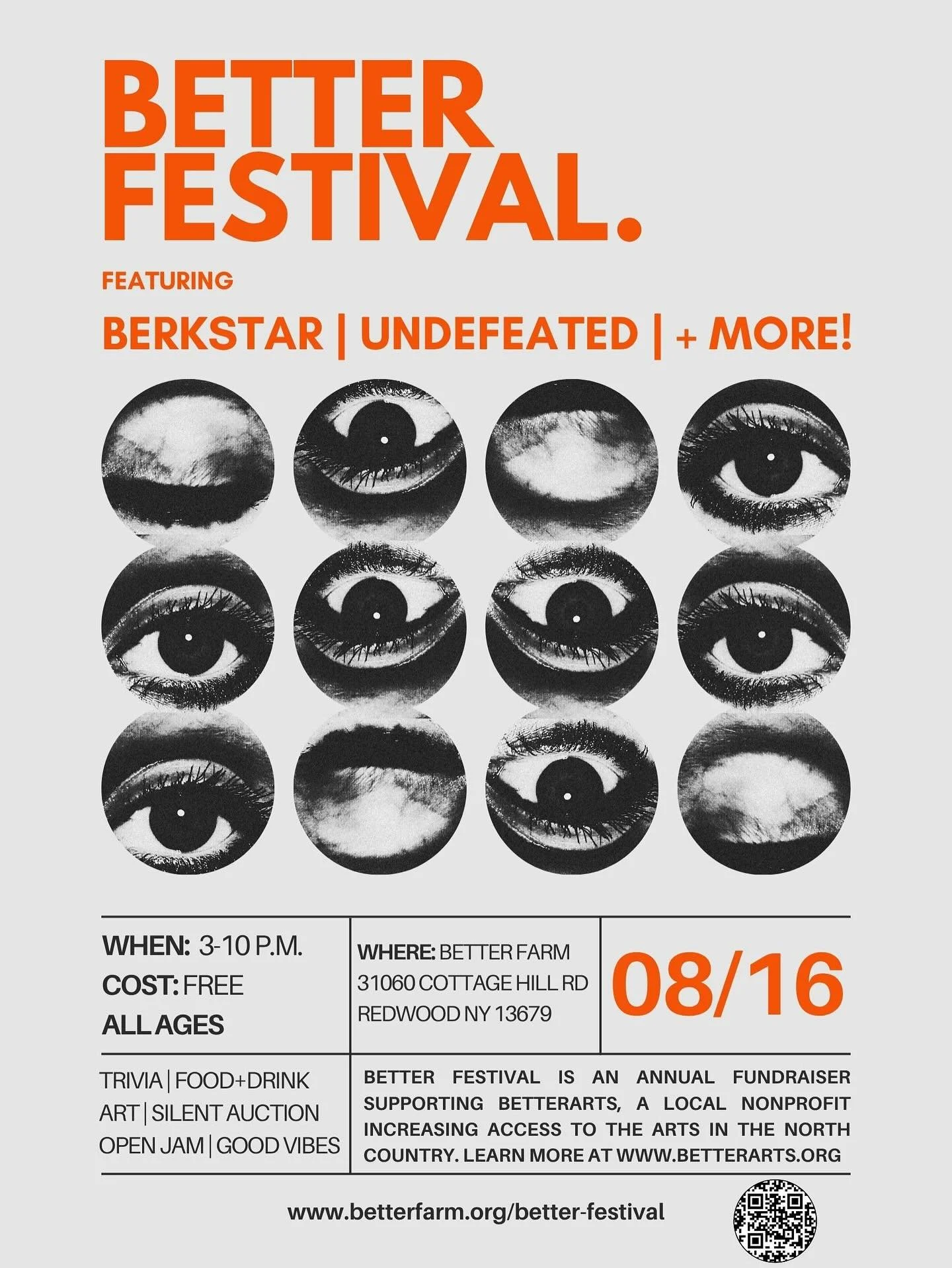
There is no cover charge to attend the Better Festival, but donations are encouraged! Camping is available for $10/person/night. Visit www.betterarts.org/better-festival to learn more.
Comment

Nicole Caldwell

Nicole Caldwell is a self-taught environmentalist, green-living savant and sustainability educator with more than a decade of professional writing experience. She is also the co-founder of Better Farm and president of betterArts. Nicole’s work has been featured in Mother Earth News, Reader’s Digest, Time Out New York, and many other publications. Her first book, Better: The Everyday Art of Sustainable Living, is due out this July through New Society Publishers.

Better Radio's Newest Hosts

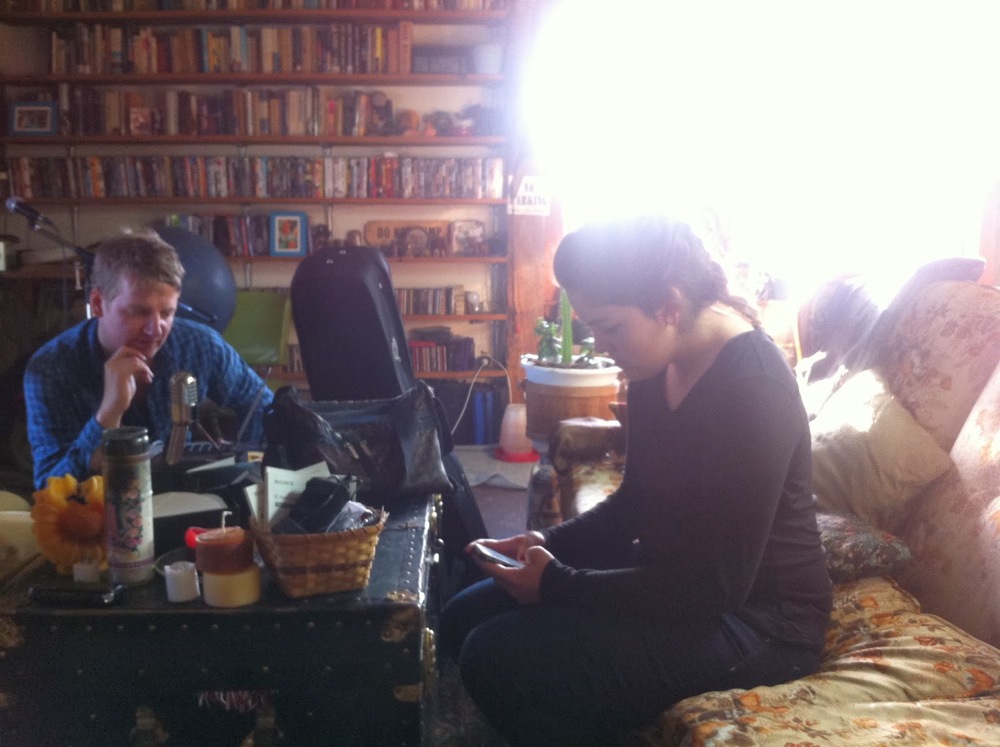
John Dunsö, far right, teaches Sovanndary Sok (left) and Brian Elliott principles of sound engineering.
The latest cast of characters to join the Better Radio family are Sackets Harbor Central School seniors Sovanndary Sok and Brian Elliott. The two will be co-hosting a radio program for betterArts starting this summer.

Sovanndary is interested in pursuing a career in broadcast journalism, while Brian is a guitarist and singer excited to record and edit his own music. The two will produce programming for Better Radio that will include in-studio recording sessions with Brian, interviews with local bands and musicians, and news about the North Country music scene including concerts listings.

To kick things off, the pair visited Better Farm yesterday for a crash-course in digital recording and editing. Our visiting artist-in-residence John Dunsö volunteered his time to teach the two fundamentals of sound engineering. This included basic recording, uploading sound files, and introductory editing strategies. Sovanndary and Brian practiced conversing into the microphones, and Brian even recorded a few songs.


Sovanndary and Brian will be visiting Better Farm regularly to begin stockpiling content for podcasts and broadcasts. Artists interested in being featured on their show can contact them via betterArts at info@betterarts.org.

For more information about Better Radio and how you can get involved, visit www.betterarts.org/better-radio.
1 Comment

Nicole Caldwell

Nicole Caldwell is a self-taught environmentalist, green-living savant and sustainability educator with more than a decade of professional writing experience. She is also the co-founder of Better Farm and president of betterArts. Nicole’s work has been featured in Mother Earth News, Reader’s Digest, Time Out New York, and many other publications. Her first book, Better: The Everyday Art of Sustainable Living, is due out this July through New Society Publishers.

Garden Guide: How Much to Plant, and When

It's already the second week of March! That means all you gardeners are getting geared up to start some of your plants indoors, get your peas going outside, turn your compost, and plot out your grow beds. But where to begin?

We're here to help you with your timing, seed selection, compost, and everything else involved in growing your own food.

Your spring-planting calendar will vary according to your planting zone. At the

Farmer's Almanac website you can plug in your zip code

to see exactly when you should be planting what in accordance with your plant-hardiness zone.

Click here to give it a try

. Knowing when to start your seeds is a major game-changer for home gardeners. Gardening smarter, not necessarily harder, will save you a bunch of time in the long run and increase your success rate exponentially.

For loads of information for you to access year-round, click on the "gardening" tab on the right of this page. If you'd like a more personalized approach, get in touch with us about a private garden consultation. We will come to you and go over garden mapping, seed selection, landscape design, compost, and answer all your specific questions.

But how much should you plant? Well, it depends. How much food do you want to produce? Enough to garnish your dishes? Enough to feed your whole family? And for how long? Here's a basic guide to figuring out how much you should grow to feed yourself for a year, gleaned from the classic homesteading book,

Reader’s Digest: Back to Basics

:

Asparagus: about 10-15 plants per person

Beans (Bush): about 15 plants per person

Beans (Pole): 2-4 poles of beans per person (each pole with the four strongest seedlings growing)

Beets: about 36 plants per person.

Broccoli: 3-5 plants per person

Cabbage: 2-3 plants per person

Cantaloupe: figure on about 4 fruits per plant (estimate how much your family would eat)

Carrots: about 100 seeds per person (1/4 oz would be plenty for a family of six)

Cauliflower: 2-3 plants per person

Collards: about 5 plants per person

Corn: start out with 1/2 lb. seeds for the family and adjust as needed

Cucumbers: 3-6 plants per family

Eggplant: 3-6 plants per family

Lettuce: 4-5 plants per person

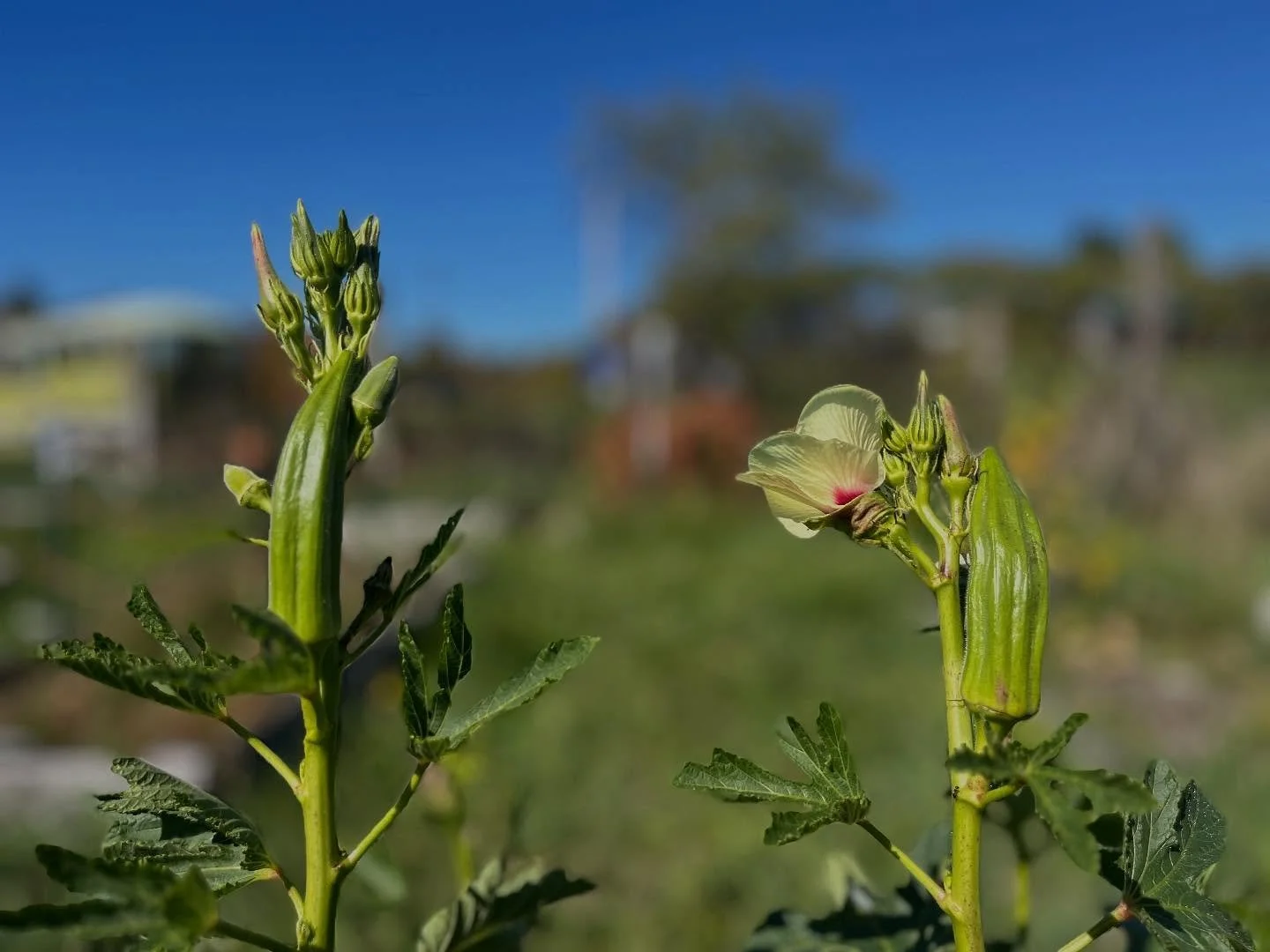
Okra: 3-4 plants per person

Onions: 12-15 plants per person

Parsnips: 12-15 plants per person

Peas: about 120 plants per person

Peppers: 3-5 plants per person

Spinach: about 15 plants per person

Squash (including Zucchini): about 10 per family

Sweet Potatoes: about 75 plants per family

Tomatoes: about 20 plants per family

Turnips: about 1/4 lb seeds per family

Watermelon: about 1/2 oz. seeds per family

For more help planning your garden,

contact us

—or check out

this great resource at Farmer's Almanac

.

Comment

Nicole Caldwell

Nicole Caldwell is a self-taught environmentalist, green-living savant and sustainability educator with more than a decade of professional writing experience. She is also the co-founder of Better Farm and president of betterArts. Nicole’s work has been featured in Mother Earth News, Reader’s Digest, Time Out New York, and many other publications. Her first book, Better: The Everyday Art of Sustainable Living, is due out this July through New Society Publishers.

DIY Sustainability Center

A sustainable act is one you can repeat forever in the same way. That's it. For all the new schools of sustainability springing up, workshops, and even events, the concept itself is so simple and obvious, it's amazing the practice eludes even our most educated politicians and world leaders.

Sustainability is literally to lend oneself to infinity.

Turning away from unsustainable practices globally is going to take a long time. But incorporating change on your own can be a piece of cake when done right. Here's a quick and easy DIY guide to making your home, workplace, and backyard a little more sustainable. Doing so promises to create a ripple effect that, with enough momentum, will spread and inspire the large-scale change we all so desperately need.

By clicking on the sustainability projects below, you'll be redirected to complete instructions for creating your own rainwater catchment system, simple garden designs, and green decorating tips so you can bring elements of sustainability into your daily life without an engineering degree or expensive home overhaul. Contact us with your questions or tips at

info@betterfarm.org

.

For the Green Thumb:

Building and Construction Projects:

Green Home:

Comment

Nicole Caldwell

Nicole Caldwell is a self-taught environmentalist, green-living savant and sustainability educator with more than a decade of professional writing experience. She is also the co-founder of Better Farm and president of betterArts. Nicole’s work has been featured in Mother Earth News, Reader’s Digest, Time Out New York, and many other publications. Her first book, Better: The Everyday Art of Sustainable Living, is due out this July through New Society Publishers.

About Us

Better Farm, 1970
Better Farm, Inc. is a sustainability education center, artists' colony, and organic farm founded in 1970 on the principles of the Better Theory—a belief that every experience brings with it an opportunity for exponential personal growth. Its incorporation in 2009 as a for-profit LLC ushered in a new era for Better Farm, which now offers year-round educational workshops, artist residencies, work-shares, space for events and conferences, and an ongoing commitment to sustainable living and community outreach. At Better Farm we strive to apply the Better Theory to all our endeavors while offering the curious an opportunity to expand, grow, and flourish.

Better Farm is located in Redwood, N.Y., a hamlet of just 584 people located 23 miles north of Watertown, 10 miles from Alexandria Bay and the Thousand Islands, and just 20 minutes from the Canadian border. The area—known for its pristine lakes, outdoor activities, and open spaces—is perfect for a country retreat or escape from the hustle and bustle of daily life.

For more information about lodging and to make a reservation to visit, please click here.


 31060 Cottage Hill Road
Redwood, NY 13679
info@betterfarm.org
(315) 482-2536
Comment

Nicole Caldwell

Nicole Caldwell is a self-taught environmentalist, green-living savant and sustainability educator with more than a decade of professional writing experience. She is also the co-founder of Better Farm and president of betterArts. Nicole’s work has been featured in Mother Earth News, Reader’s Digest, Time Out New York, and many other publications. Her first book, Better: The Everyday Art of Sustainable Living, is due out this July through New Society Publishers.

Our Projects

Here is a list of current projects we're working on at Better Farm. E-mail us at info@betterfarm.org or call (315) 482-2536 with any questions or to get involved.

betterArts
betterArts is a nonprofit, 501(c)3 organization dedicated to increasing access to arts and culture to Redwood, N.Y., and outlying areas.The organization currently hosts artist residencies, workshops, performances, and gallery openings at Better Farm. BetterArts is also in the process of starting a radio station called Better Radio. BetterArts is made possible through the support of people like you who believe in our mission of offering free and low-cost art and music education, New Media training, concerts, events, gallery openings, exhibits, and art supplies to the public. Donations to betterArts are completely tax-deductible. Contact info@betterarts.org to make a contribution or volunteer.


Better Radio
Better Radio is a low-power FM station run and managed by betterArts, being broadcast in the near future out of its location at Better Farm in Redwood. That station, in conjunction with betterArts' website, will provide content to individuals living locally (via FM) and worldwide (via podcasts, live streaming, and sound files). In addition to this recent news, betterArts has received a community grant from Best Buy; the funds of which have been designated for New Media training for teenagers in the North Country. Funds from this grant are used to purchase recording equipment and train young adults in a variety of disciplines. In this community, there are few resources for students interested in the pursuit of New Media and production careers. Better Radio programming educates students on principles of recording, uploading, syncing, mixing, digitally editing, creating podcasts, and producing content in a way that draws attention to our community. Content will be transmitted via the web and FM radio. To become a sponsor, partner, or volunteer, contact us at info@betterarts.org.
Comment

Nicole Caldwell

Nicole Caldwell is a self-taught environmentalist, green-living savant and sustainability educator with more than a decade of professional writing experience. She is also the co-founder of Better Farm and president of betterArts. Nicole’s work has been featured in Mother Earth News, Reader’s Digest, Time Out New York, and many other publications. Her first book, Better: The Everyday Art of Sustainable Living, is due out this July through New Society Publishers.

Spotlight On: Grassroots Seed Network

Whether you're looking to get seeds or share seeds you saved from your garden last year, a new start-up called the Grassroots Seed Network is a great resource for the radicals among you with a vested interest in spreading the open-pollinated love.


Many fruits and vegetables sold today in supermarkets are hybrid varieties that will either not reproduce from seed, or will revert back to an earlier variety of that plant. Open pollination refers to plants that are pollinated by insects, birds, wind, or other natural mechanisms—in other words, the opposite of controlled hybrids, self-pollinators, or chemically treated plants that can not reproduce at all. Open pollination is great because it increases biodiversity and produces new generations of plants—however, open pollination may produce offspring that varies greatly in size, quality, and coloration breeding is uncontrolled.

As you can probably already guess, the crew at Better Farm is in serious favor of open pollination. Who needs generic peppers or tomatoes that all look the same? We'd rather have an eclectic assortment that promotes diversity among plants. That diversity is what allows you to not lose all your plants to one pest or disease; and what allows for a greater variety of plants in the future. Good all-around for the environment, animals, and plants. For information on how to save your own seeds, be sure to visit the Vegetable Seed-Saving Handbook.

The mission of the Grassroots Seed Network is to provide a participatory, member-governed, democratic network through which those who preserve and maintain the treasured heritage of open-pollinated vegetable seeds can share those seeds with each other and can encourage and help educate the next generation of seed savers.

Here's the skinny on how the Grassroots Seed Network functions:

Grassroots Seed Network is a member-governed organization, and its vitality will grow from the participation of all those dedicated to the preservation of open-pollinated seeds. Here are several ways you can become involved: 

Lister: Listers offer seeds and may request seeds from other Listers through our Source List. Listers have voting rights in all Board of Directors elections if they have offered seed in two of the preceding three years. Listers are also eligible to run for a seat on the Board of Directors. Annual dues for Listers are $15. 

Sustainer: Many of you will not yet have seed to offer, but will want to support the organization by making a contribution toward our daily operating expenses. As a Sustainer you will have access to and be able to request seed from the Source List, but you will not have voting rights. Annual dues for Sustainers are $25. 

Donations: Like any new organization, we have start-up costs, therefore we welcome and are very grateful for donations in any amount that will help us with a
smooth launch and with meeting our financial obligations right from the beginning. 

Hardship Exemption: We want to encourage participation in the Grassroots Seed Network, especially among young gardeners or anyone dedicated to
seed saving, but who may be on a fixed or limited income and for whom the membership dues present a challenge. To those we are offering a hardship exemption. You are, of course, welcome to make any small contribution commensurate with your ability. 

To join, please send a check, made out to Grassroots Seed Network, to 

Yaicha Cowell-Sarofeen 
 2470 Industry Road 
 Starks, ME 04911 
 207-491-4259 

Be sure to indicate your level of membership, and include your full address, phone number, and email address if you have one. Please let us know if you have no internet access at home. As soon as it is feasible, we plan to generate a printed version of the Source List. In future years a printed version of the Source List will be published annually. If you are joining as a Lister or Sustainer you will be given a member number and be assigned/choose a password for access to Lister contact information and guidelines for requesting seed. If you are joining as a Lister, you will find guidelines for submitting seed listings on the How to List and Request Seed page. 
Grassroots Seed Network will be applying for nonprofit 501(c)(3) status as soon as they have an elected Board of Directors. The group's preliminary draft by-laws can be read here. These will be voted on for approval by the Board and the Membership. In order for donations to be tax-deductible, the Maine Organic Farmers and Gardeners Association has agreed to act as financial umbrella organization.

Visit the Source List page to view the seed listings. The Source List is available to the general public for reading. If you are a Lister or a Sustainer you will need your password to access the Lister Profile page or to see guidelines for offering or requesting seed.
Comment

Nicole Caldwell

Nicole Caldwell is a self-taught environmentalist, green-living savant and sustainability educator with more than a decade of professional writing experience. She is also the co-founder of Better Farm and president of betterArts. Nicole’s work has been featured in Mother Earth News, Reader’s Digest, Time Out New York, and many other publications. Her first book, Better: The Everyday Art of Sustainable Living, is due out this July through New Society Publishers.

Thinking Differently About Demolition

Salvaging windows.
By outsourcing a lot of renovation and demolition work, a person will often miss the opportunity to salvage perfectly good materials that can be saved for other projects, donated, recycled, or even cashed in at redemption centers for money.

In New York City alone, 19,000 tons of demolition and construction materials are discarded daily. That's a huge amount of garbage being added to landfills that doesn't have to be. Organizations like Build it Green! NYC salvage materials such as furniture, wood, and windows from construction sites for resale at a shop in Brooklyn.


Each of us at some point or another will come across a renovation project that provides a wonderful opportunity for salvage if you're willing to take the time to be a little green. My chance came with the recent purchase of a small cottage around the corner from Better Farm that is being totally renovated and rebuilt for year-round use.

Instead of having a crew demolish the structure for rebuild, an unbelievably wonderful group of friends joined me in a salvage project that kept almost all of the original structure from a landfill.
Here's the salvage list from a 24x27 seasonal cottage structure, gleaned from 3 full days of demolition work:
  • 600 square feet of tongue-and-groove pine
  • 200 square feet of facing stones (to be used for raising the chimney)
  • three bed frames
  • three double-hung, insulated windows
  • 1,000 feet of electrical wiring less than 1 year old
  • two antique exterior lanterns
  • four interior lighting fixtures
  • 1,000 pounds of scrap metal for redemption
  • lamps, ceiling fans (2), and kitchen supplies for donation
  • six sound-system speakers
  • six 4x4 posts
  • metal corrugated roofing (80 square feet)
  • wood stove
  • 15 feet of double-wall, insulated metal chimney pipe
  • exterior walls
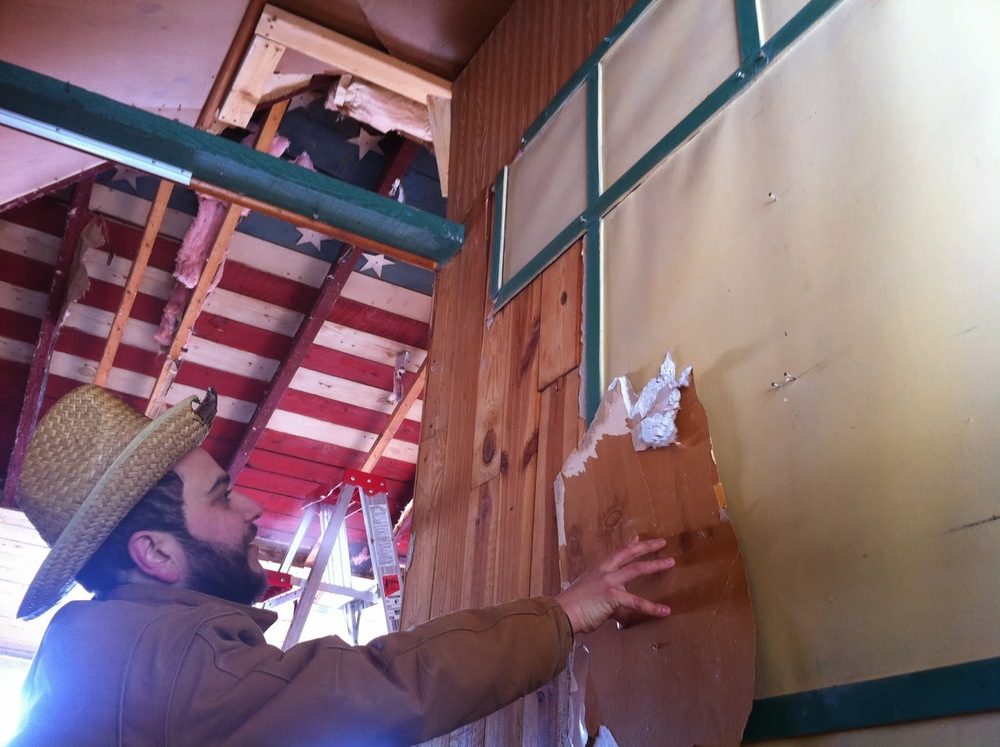
In addition to salvage materials, there are inevitable treasures to be found in each renovation project. At the cottage, we discovered an American flag painted across the entire ceiling:
Treasure!
New construction for this house starts in mid-April—but demo in winter allows us to get materials off the island while we still have tons of ice. For your own renovation/demolition projects, check with your local thrift shop, Habitat for Humanity, and other organizations to see how the materials from your project can benefit people in your community—and keep some waste out of landfills.

You can check out the full island-renovation album here.
Comment

Nicole Caldwell

Nicole Caldwell is a self-taught environmentalist, green-living savant and sustainability educator with more than a decade of professional writing experience. She is also the co-founder of Better Farm and president of betterArts. Nicole’s work has been featured in Mother Earth News, Reader’s Digest, Time Out New York, and many other publications. Her first book, Better: The Everyday Art of Sustainable Living, is due out this July through New Society Publishers.