'A Time of Holiday Remembrance' Outreach Project Recap

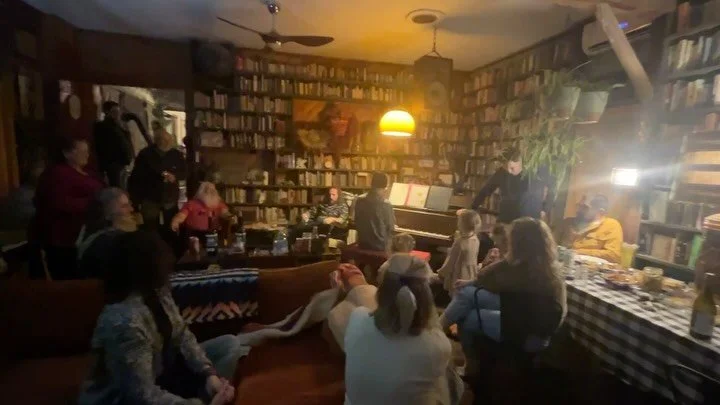
BetterArts on Saturday partnered with Survivor Outreach Services of Fort Drum and Hospice of Jefferson County to present "A Time of Holiday Remembrance" for children who have lost a loved one.

The event, held at Hospice of Jefferson Country's offices on Gotham Street in Watertown, featured arts 'n' crafts, lunch and cookies, a gifts giveaway, and a project hosted by betterArts that included decorating flower pots and planting poinsettas. Here are some photos from the event:

 
Here's the clip from Channel 7:  
Many thanks to Joyce Combs for putting this event together; and Amberlee Clement, betterArts director of programming, for initiating this partnership. Poinsettas were generously donated by Home Depot in Watertown. An abundance of toys given out to the children in attendance were donated by Church of Christ in Syracuse.

Comment

Nicole Caldwell

Nicole Caldwell is a self-taught environmentalist, green-living savant and sustainability educator with more than a decade of professional writing experience. She is also the co-founder of Better Farm and president of betterArts. Nicole’s work has been featured in Mother Earth News, Reader’s Digest, Time Out New York, and many other publications. Her first book, Better: The Everyday Art of Sustainable Living, is due out this July through New Society Publishers.

BetterArts Partners with Hospice for Kids' Craft Event

Better Arts board members Holly Boname (far left) and Amberlee Clement work with children at last year's event.
For the second year in a row, betterArts has partnered with Survivor Outreach Services of Fort Drum and Hospice of Jefferson County to present "A Time of Holiday Remembrance" from 10 a.m.-1:30 p.m. at Hospice of Jefferson County in Watertown for children who have lost a loved one.

The holiday crafts, lunch, and cookie-decorating party will culminate at 12:45 in the decorating of flower pots with the assistance of betterArts members utilizing collage materials, photos, and more to commemorate someone the children love who passed away. This event is free and for children between the ages of 6 and 12. Those attending are encouraged to bring photographs for this project. Poinsettas donated by Home Depot in Watertown will be put into the pots at the project's completion for youngsters to take home and nurture.

To RSVP or for more information, call Joyce Combs at (315) 788-7323. Hospice of Jefferson County is located at 1398 Gotham St. in Watertown.

Read about last year's event here.
1 Comment

Nicole Caldwell

Nicole Caldwell is a self-taught environmentalist, green-living savant and sustainability educator with more than a decade of professional writing experience. She is also the co-founder of Better Farm and president of betterArts. Nicole’s work has been featured in Mother Earth News, Reader’s Digest, Time Out New York, and many other publications. Her first book, Better: The Everyday Art of Sustainable Living, is due out this July through New Society Publishers.

Your Better Farm Holiday Shopping Guide

Holiday shopping is upon us; and there's no shortage of

horrific Black Friday videos

,

cyber Monday scams

, and jacked-up consumerist sensibilities. But while there are inevitably going to be items each holiday season you're compelled to buy—like that video game your kid's

dying

to have, or a new flatscreen for the home, or a certain tie/dress/sweater/coat/fill-in-the-blanks that your spouse/cousin/parent/etc. has specifically asked for—there are also plenty of other gifts you're going to buy this season. You've got stocking stuffers, little gifts for people you love, the obligatory gift for your boss, co-workers, mailperson, dry cleaner, sanitation worker, and child's teacher. So why not do something different this year? How about, instead of buying mass-produced

stuff

, you use your money to make a difference?

There are millions of ways to make real change with your money this holiday season. Whether you want to support artisans, shop local, or buy from organizations that will use your money to help people (

or animals

) in need, gifts this year run the gamut from sending young women to school to purchasing handwoven baskets from an underpriveleged person in Nepal. You can donate to a non-profit you believe in on behalf of someone you care about or in memory of a loved one; or simply buy a from a company you believe has ethical business practices. Here's a short list of some of my favorites this year (full disclosure: shameless plug for

Better Farm gear

to support sustainability outreach is of course included in the roundup):

  • Better FarmAll sales support sustainability and arts outreach

  • EtsyHand-crafted items supporting artisans of every ilk

  • The Gentle BarnThis group rescues, rehabilitates, and gives sanctuary to severely abused animals; then supports interaction between them and children who have suffered similar traumas. Animal and child share an extraordinary healing process

  • Gifts With HumanityThis is the retail component of Global Fair Trade Crafts, a web-based business designed to support individual artisans around the world

  • Global GirlfriendThis online shop helps women worldwide gain economic security. The fair-trade products are made by women around the world suffering from disadvantages that can be turned around by an income stream

  • Global Goods PartnersThis non-profit works with almost 40 artisan groups employing more than 3,000 women in close to 20 countries

  • The Shop for ChangeAn online marketplace enabling disadvantaged sellers around the world to sell online and sustainably grow their livelihoods

  • Ten Thousand VillagesThe founding organization of the Global Fair Trade Movement, this store has got tons of amazing gifts for everyone on your list

  • World VisionThis Christian humanitarian organization provides support to individuals and families worldwide regardless of their religion, race, ethnicity, or gender. From their website you can purchase goats or chickens for families in need, supply a village with seeds for gardens or money to dig wells, or furnish a school with supplies

Any individual retailers and/or artisans are encouraged to leave their own website/store information as a comment below for holiday shoppers.

Comment

Nicole Caldwell

Nicole Caldwell is a self-taught environmentalist, green-living savant and sustainability educator with more than a decade of professional writing experience. She is also the co-founder of Better Farm and president of betterArts. Nicole’s work has been featured in Mother Earth News, Reader’s Digest, Time Out New York, and many other publications. Her first book, Better: The Everyday Art of Sustainable Living, is due out this July through New Society Publishers.

Enrollment Open for Sustainability Education Program this Winter

Photo by Kristen Harker
Better Farm's Sustainability Education Program offers a premier education in organic farming, alternative building, permaculture, and green living—and the program isn't limited to just the summer months.

Winter at Better Farm is a surreal experience: nestled in the foothills of the Adirondacks and just 10 miles from the stunning Thousand Islands along the St. Lawrence Seaway, the natural landscape is wonderful for exploring year-round. Cross-country skiing, snowshoeing, ice fishing, and more are all available to the avid outdoorsmen and women. At the farm, students will study indoor farming methods including hydroponics, aquaponics, vertical gardening, container gardening, and vermiculture. The winter also brings with it the necessity of mapping out the outdoor gardens for the upcoming spring, selecting and ordering seeds, harvesting wood on the property, tending to the flock of Better Farm chickens, and mulching all winter long in the outdoor gardens.


While summertime includes outdoor constructing projects, winter dictates a need for weatherproofing, insulating, and making indoor repairs; as well as calculating heat loss in the home, figuring out clever methods for better energy efficiency that will help to educate students in the future at their own homes and farms. Reading and writing assignments round out the hands-on education; while discussion-based classroom sessions will encourage students to think critically.

Better Farm's Sustainability Education Program runs in one- to three-month intervals. Those attending will receive daily assignments and chores all related to sustainability initiatives and organic farming, as well as the opportunity to design and implement projects on their own. Upon completion of all units and responsibilities, participants will receive a certificate from Better Farm. College students may additionally receive course credit for completion of Better Farm's Sustainability Education Program (pursuant to agreement by that individual's school).

Individuals are immersed from day one in the local culture while working alongside other residents at Better Farm and in the Redwood community. Students are expected to do their share in maintaining the condition of Better Farm as well as its peaceful environment. Those accepted for Better Farm's Sustainability Education Program are expected to work seriously—and to conduct themselves in a manner that aids fellow residents in their endeavors.

Many sustainability specialists visit Better Farm throughout the year to offer mentoring and guidance to students interested in coming here to work and gain valuable experience. Additionally, individuals have the option of taking any workshops and participating in any excursions or field trips scheduled during their time at Better Farm.

Students live on-site and communally on the Better Farm campus in shared rooms. A flat fee of $500/month is required to cover educational fees, supplies, lodging, field trips, wireless Internet, use of the laundry machine, all linens and towels, on-site parking, and use of the communal kitchen (stocked weekly with food).

Email internship@betterfarm.org for application materials, or visit www.betterfarm.org/sustainability-internship. Applicants will be notified of their status within one month of submission.


Comment

Nicole Caldwell

Nicole Caldwell is a self-taught environmentalist, green-living savant and sustainability educator with more than a decade of professional writing experience. She is also the co-founder of Better Farm and president of betterArts. Nicole’s work has been featured in Mother Earth News, Reader’s Digest, Time Out New York, and many other publications. Her first book, Better: The Everyday Art of Sustainable Living, is due out this July through New Society Publishers.

Winterizing the Farm

Are you cold yet?

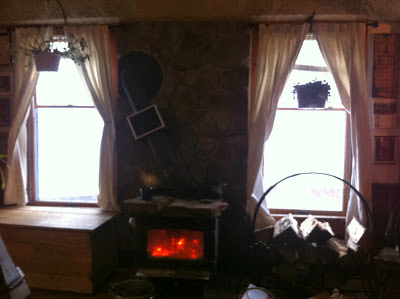
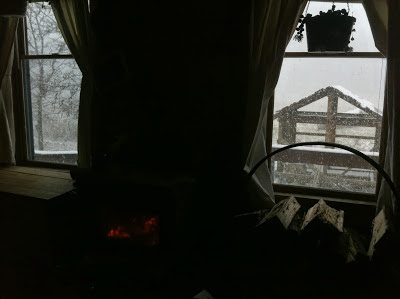
Up here in Northern New York the temperatures have started dropping. I have had the pleasure of spending the last few days living at Better Farm to learn about sustainability and daily farming tasks. The first day I was here it was actually still in 40's, though it was a little drizzly and dreary. The next day the snow started to fall. While I have fallen in love with the wood-burning stove, I can't spend all day huddled in front of it.

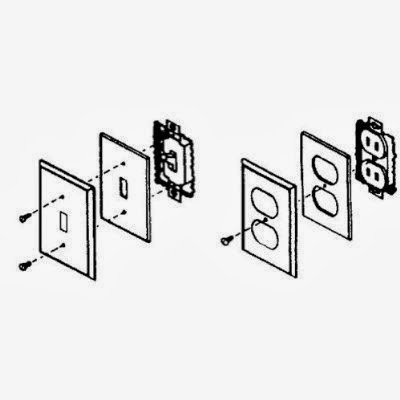
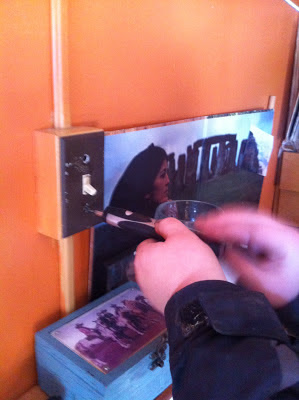
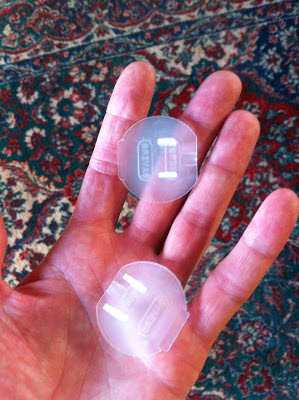
With a large, older house, keeping the heat inside can sometimes be a challenge. Even in newer buildings, there are usually small gaps in insulation that can let in a cold draft. One surprising source of these drafts is the "dead space" behind electrical outlets and switch plates. While the amount of heat lost from a poorly insulated outlet is small, consider the number of outlets and light switches the average home has. When added together, the amount of heat loss adds up—statistics suggest each outlet or switchplate accounts for 2 percent of energy loss. One of my (thankfully indoor) tasks was to install pre-cut foam outlets in the farmhouse. It was really simple, and didn't take much time at all.
Removing lightswitch covers to insert foam insulation takes only a couple of seconds.
Outlet covers.
I could really feel a difference, especially with the outlets located on the exterior walls of the house. I also covered a window with insulating plastic sheeting. The plastic sheet shrank when heated with a hair dryer to seal all the way around the window. The plastic film can even be taken off later and reused if stored properly. There are many window and outlet insulation kits available on the market, and they don't appear do be very expensive. The most important thing to remember when trying to insulate against the cold is that the heat will try to find a way out. It is best to try and insulate every possible avenue of escape, even the little ones like outlet covers.

Other winterization activities around Better Farm included turning off the water to outside hoses, installing draft guards on infrequently used doors to the outside, hanging insulating curtains in front of windows in bedrooms, bathrooms and the kitchen, changing directions of the ceiling fans in the house, and sealing off rooms that won't be used this winter.

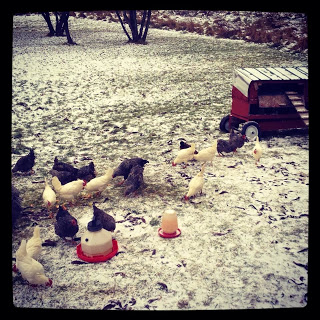
Speaking of winterizing, we also moved the chicken coops closer to the house yesterday in order to make cleaning them and feeding the chickens easier once the snow really starts to fall.

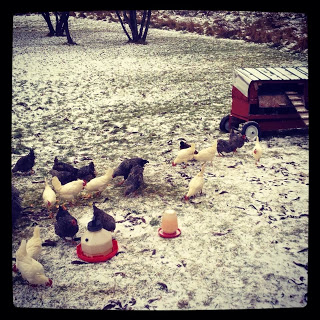
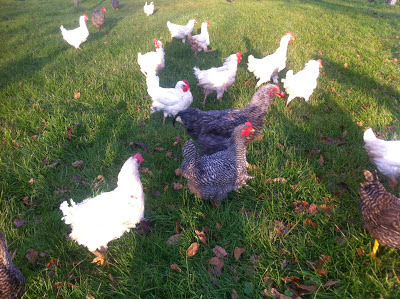
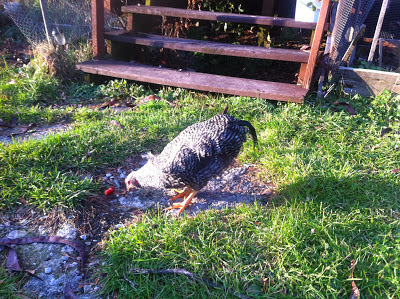
We didn't move the coops very far, but apparently the chickens didn't get the memo. I had been warned that the chickens might not be able to find their way home, but I don't think I was entirely prepared for it. There they sat, huddled together in the empty space where the coops used to be, while the newly cleaned coops sat empty. We actually had to go outside and try to catch them up, one by one, and place them in the coop. And they weren't keen on going quietly. We had three of us out there trying to herd the chickens home. It was a riot! It was so absurd it was hilarious. I haven't had a lot of experience with chickens, but I do want my own flock eventually. This was definitely a great bit of practice. Luckily for us, this is a sharp group of birds—by the next day, all 31 of them had adjusted to their reassignment:

As for me, I think I am going to spend a little time by the fire before heading back out into the tundra. Stay warm, everyone!

DIY Herb-Drying Hanger

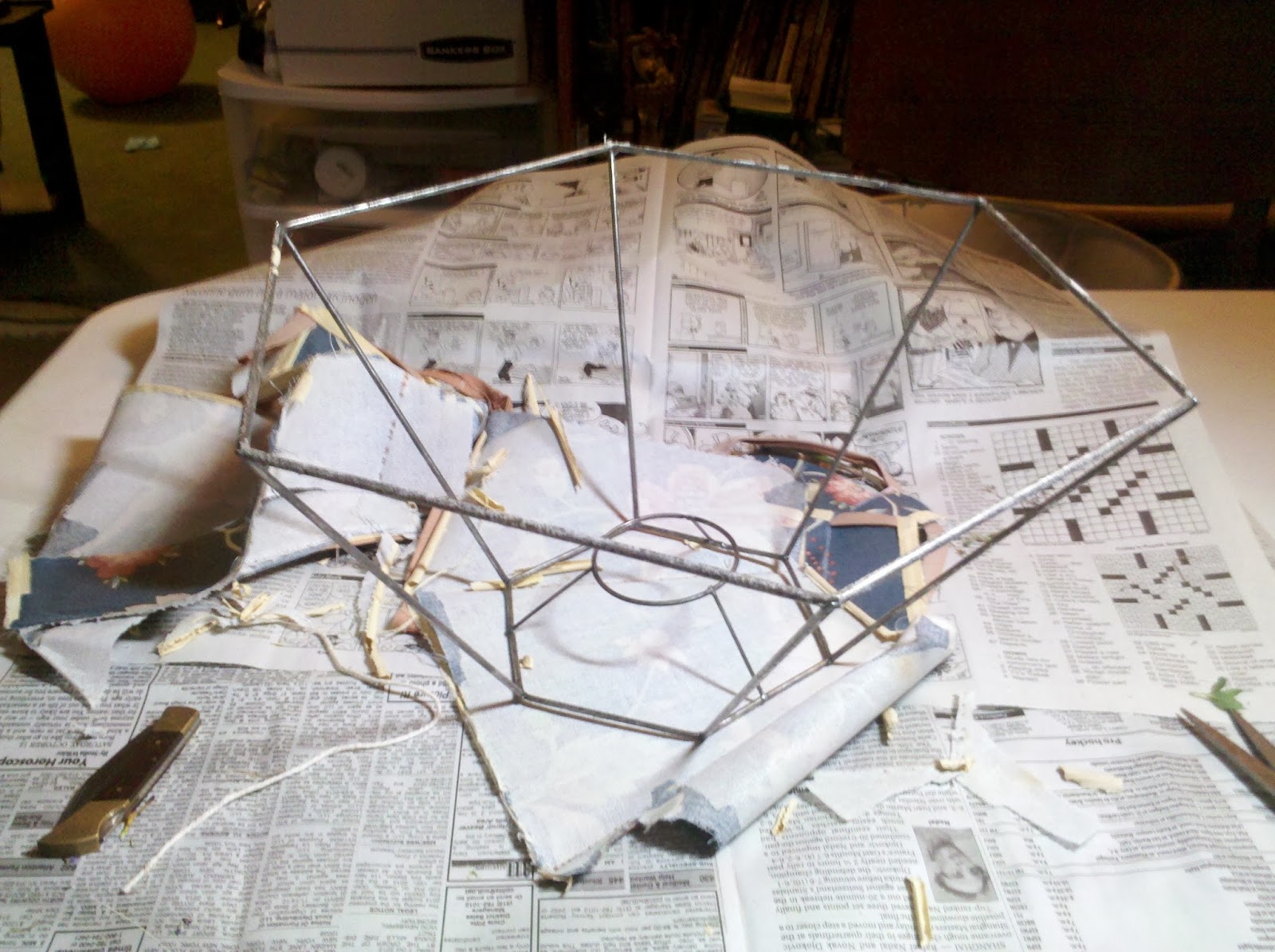
Now that the winter holidays are just around the corner, many of you may be preparing elaborate meals for your friends and family. Fresh herbs from your own garden are a great way to pep up any meal, but as it gets colder it may be more practical to use crushed dried herbs instead. You can easily dry your own herbs in your house. Simply tie them up and hand them somewhere out of the way, where it's not too cold or moist. I didn't have a good place to hang them, so I decided to try and make a hanger out of an old lampshade. I chose lampshades since they could provide two levels of hanging space with a small footprint. I picked up two interesting lamp shades at a thrift store for fifty cents each. I looked for ones with unique "skeletons" since the fabric would be removed.

Before I started mutilating—I mean

modifying—

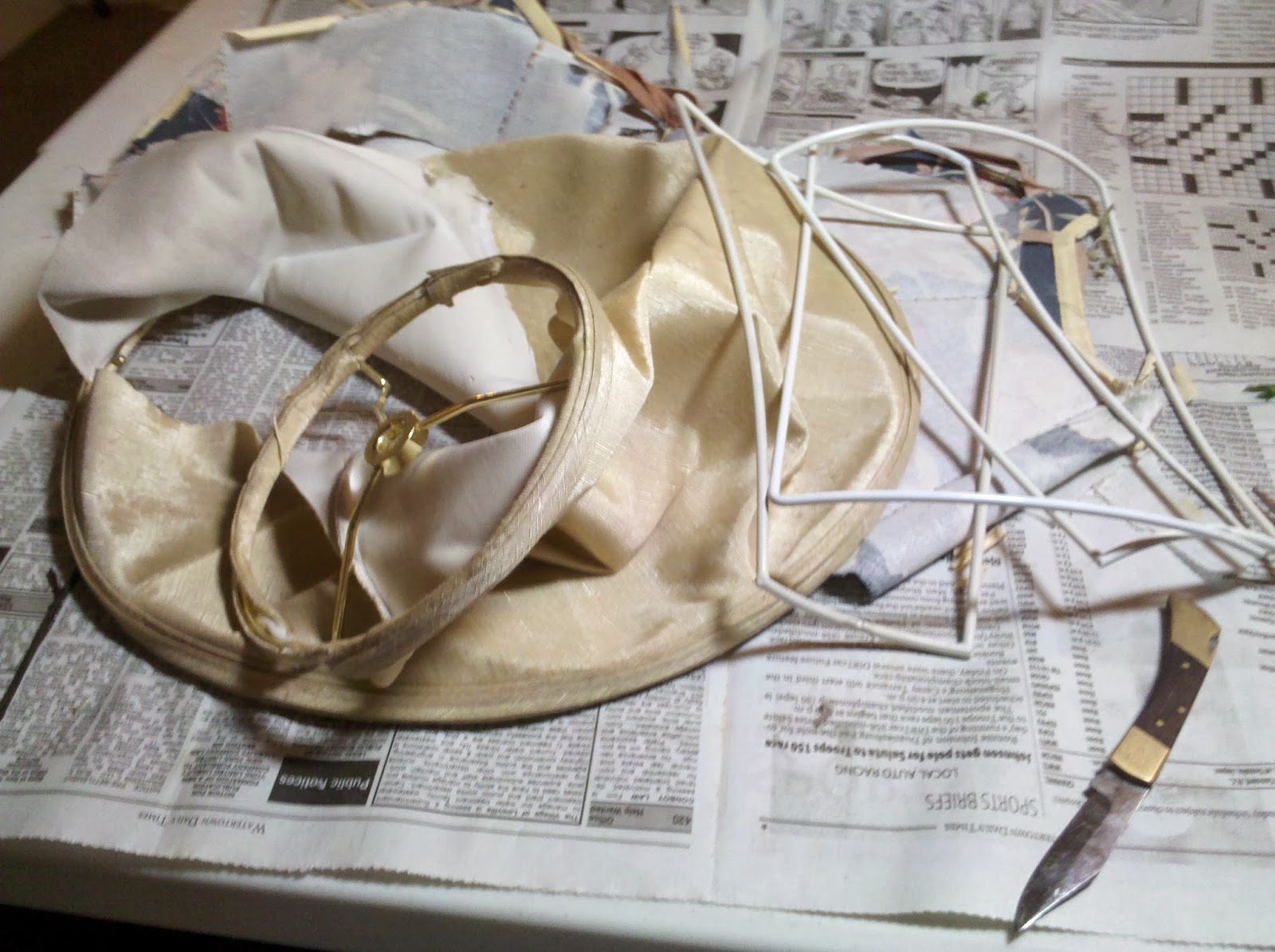
my two lampshades, I gathered my supplies and prepped a flat work space. You will need your shade, butcher's twine or string, scissors and a strong knife (some of the fabric was pretty tough), and what ever it is you want to hang. I had some fresh herbs harvested from the farm earlier that day, along with a small fall bouquet that I wanted to preserve.I separated the flowers into little bouquets and the herbs into small bunches. I wrapped the butcher's twine a few times around the stems and tied a simple knot, leaving about a four inch tail. Once all the bunches were tied, I set them off to the side.

Now it was time for the lampshades! These are the two that I picked. If you want the shape of the shade to be preserved once the fabric is removed, pay attention to the structure of the wire skeleton. The newer shade that I picked basically collapsed with out the fabric to hold it together. The older shade was made of a single solid piece, so it held its shape nicely. There was quite a bit of glue stuck to the wire, so I soaked all of the wire pieces in hot soapy water and scrubbed them down.

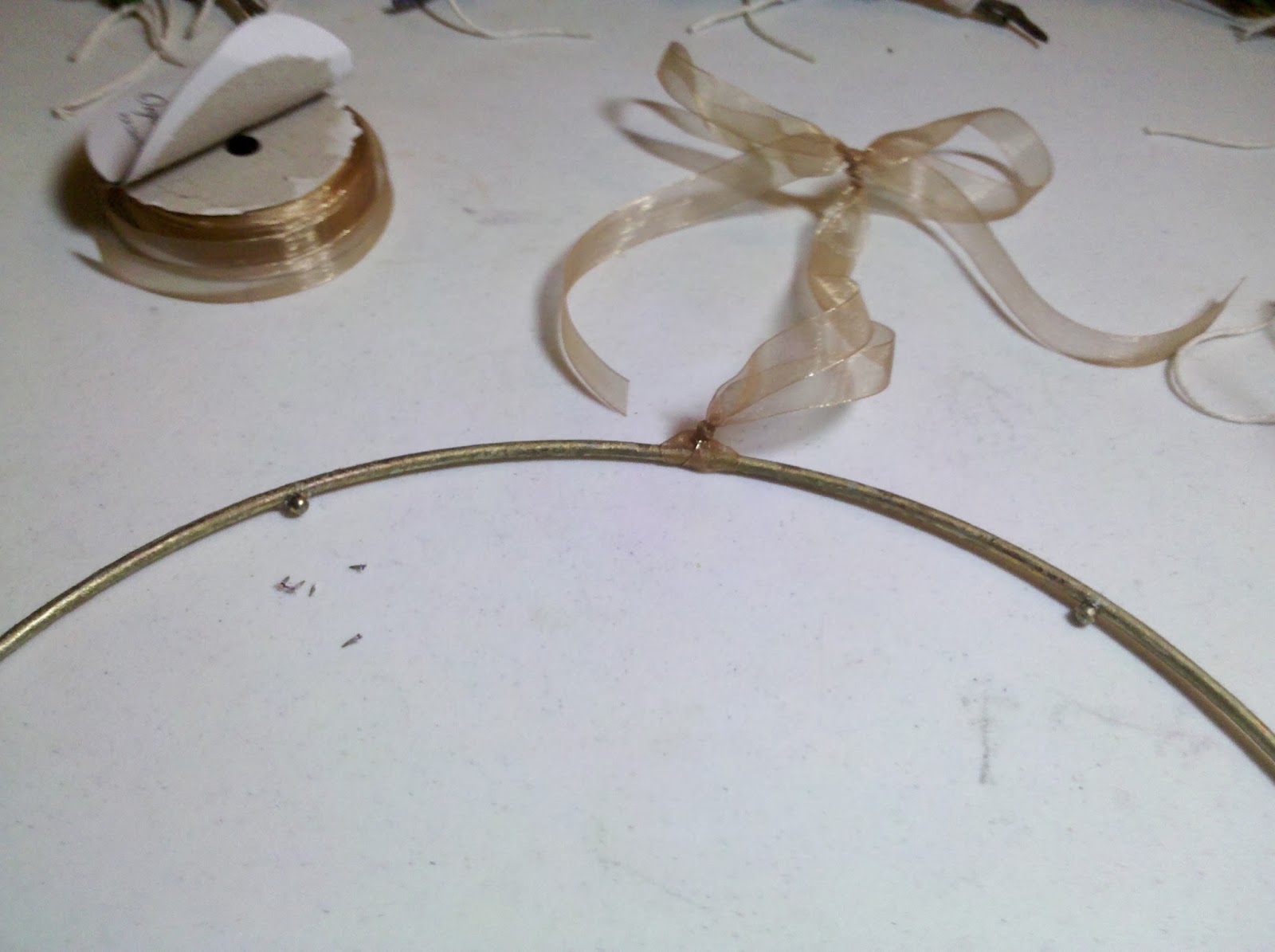
The newer shade wasn't a total loss. The large bottom ring had small nobs evenly spaced around it, so that I could still tie the herb bunches around it with out them slipping to the bottom. I used some gold ribbon to make a hanger, and tied on the herbs. I could have also tied the ring horizontally, but I didn't have enough ribbon. It would also have been a pain to make sure the ribbons were all the same so that the ring was parallel to the floor. I really liked the end result, though. Great option if you don't have a lot of space.

The older shade really turned out great. It has a great shape and has lots of space to tie herbs too. I was just going to hang it from some butcher's twine, but I found a chain for a hanging planter that worked perfectly. The whole project only took about an hour. Honestly, the part that took the longest was deciding which herb bunches to hang where. The middle looked a little bare, so I added a small pumpkin for color. Now it looks like a pretty harvest decoration that is also practical. Take that, Pinterest!

Once the herbs have dried, you can chop or crush them and put them in air-tight containers to use throughout the winter. Mine dried long ago, but I admit I haven't taken them down yet. I just love the way the project turned out. I hope you all have as much luck with your own DIY attempts!

Using Fans in Winter

Fans: They're not just for summer anymore.

While fans can be great for dispersing cool air during summer months, it's important to realize they can also spread heat through a home all winter long. Most ceiling fans use about the

same amount of electricity as a 100-watt light bulb

; making fans a cheap, effective way to supplement temperature control in your home.

Keep in mind that fans should only be on when people are in the room to benefit from the air movement—fans do take up energy, and they even produce a little heat—a 1996 study in Florida (

not

Redwood!) determined that using ceiling fans appropriately could allow people to

raise the temperature inside

by 2°F, resulting in about a 14-percent annual cooling energy savings. However, the same study found that most people do not adjust their thermostats when using ceiling fans, actually increasing their energy use rather than reducing it. Something to keep in mind throughout the year!

We'll go over ceiling fans below; but also remember that smaller box fans and

doorway fans

can really help to distribute heat throughout your h

ouse. If you've got a fireplace

, wood stove or pellet stove—or if your forced-air furn

ace

vents aren't spread e

ven

ly throughout your house—these

small fans can make a huge

difference in distributing warmer a

ir (and returning cool air) in your ho

me.

Ceiling Fan Direction in Summer and Winter

The below information is gleaned from the

Ceiling Fan website

.

Ceiling Fan Direction in Summer – Forward / Counter Clockwise

ceiling fan direction for summer

image via Emerson

A ceiling fan’s direction in the summer should be rotating counter clockwise or forward to produce a

Wind Chill

effect by the downward airflow. The thermostat won’t actually change but the room will seem several degrees cooler due to the wind chill factor. You can save on air conditioning bills by placing ceiling fans throughout your home.  According to

Casablanca Fan Company

when you are using a ceiling fan you can then “raise the thermostat setting, resulting in reduced air conditioning energy consumption of 40 percent or more” while still keeping your room cool.

Ceiling Fan Direction in Winter – Reverse / Clockwise

ceiling fan direction for Winter

image via Emerson

The ceiling fan direction in winter should be rotating clockwise or reverse. Warm air rises and gets trapped near the ceiling so when the ceiling fan direction is in reverse mode it circulates the warm air from the ceiling to the floor helping take the chill out of the air. Without a ceiling Fan the warm air would continue to be trapped near the ceiling and the floor level would continue to stay cold. The reverse mode only works if the fan is on low. If you have the fan on a higher speed you will create a wind chill effect that you don’t want since it is already cold. Some ceiling fans now come with a wall or remote control that has a forward/reverse option so you can change the direction of the Fan with a push of a button.

Exceptions for Ceiling Fan Directions

There are some exceptions that you should keep in mind when it comes to ceiling fan direction.  If your ceiling fan is installed in a room with a high ceiling you still put the ceiling fan direction on clockwise or reverse motion in the winter although you should put the speed on medium or high. With higher ceilings it takes more than low speed to help re-circulate the warm air down to floor level.

Also if you have a ceiling fan directly over a dining room table or a desk you should have the ceiling fan direction rotating clockwise/reverse on a higher speed. By having the ceiling fan direction in reverse on a higher speed you will still get the wind chill effect that helps cool you off but will save you from a cold dinner or papers flying all over the place.

Check out

Energy Star’s Ceiling Fan Usage Tips

on how to help save energy with ceiling fans.

Comment

Nicole Caldwell

Nicole Caldwell is a self-taught environmentalist, green-living savant and sustainability educator with more than a decade of professional writing experience. She is also the co-founder of Better Farm and president of betterArts. Nicole’s work has been featured in Mother Earth News, Reader’s Digest, Time Out New York, and many other publications. Her first book, Better: The Everyday Art of Sustainable Living, is due out this July through New Society Publishers.

Shoppers 'R' Us

Kids in a new Toys 'R' Us ad go wild with joy when they learn they're going to a Toys 'R' Us store instead of going on a nature hike.
 Read this, and then take your kids outside.

With a shopping season coming up speckled with uncertainties—fewer days between Thanksgiving and Christmas, an anticipated 2-percent drop in spending, and so on—retailers are doing all they can to bring potential customers into malls and stores. Instead of getting bent out of shape debating the finer points of capitalism, consumerism, and materialism, I'd like to simply draw your attention to one call to arms that I find offensive in particular.

I get that people who own businesses want to sell stuff, and people working at those businesses want to continue to have work. So, I expect the usual marketing ploys like commercials designed to get people into stores and shelling out cash.

But does it have to be done like this?


Toys 'R' Us, which incidentally has on its website a stunningly blank sustainability page, has a new ad campaign called "Make all their wishes come true." According to Toys “R” Us, the story is about how the company “surprises some lucky kids by letting them pick any toy in the store. Toys 'R' Us is making wishes come true this holiday season.”

Basically (and as you can see in the above video) Toys 'R' Us takes some kids on a bus with the promise that they're going on an outdoor excursion to a forest. The kids are portrayed as underwhelmed as some Toys 'R' Us rep invites the kids to shout out names of leaves. Then—surprise!—they're actually all taken to a Toys 'R' Us store and invited to pick out any packaged, plastic schlock they like. The kids react like those ladies on Oprah when they all get new cars (okay, maybe not that bad). And the Christmas spirit is saved.

Awesome. Ho, ho, ho. Stuff! Lots and lots of STUFF! The message in this ad is so obnoxious not only because it glorifies consumerism at its worst (that is, when it's targeted to unsuspecting children), but because it's being done at the cost of demonizing natural, healthy activities that are actually 100-percent great for children. So here's what the toy store has told the world with this ad:
  1. Interacting with the environment is super lame
  2. Getting toys is super cool
  3. Stuff is awesome
  4. What kids really want are toys over experiences
  5. Buy more stuff for your kids
Happy early holiday season, everyone. Can't wait to see how the next four or five weeks shake out.
Comment

Nicole Caldwell

Nicole Caldwell is a self-taught environmentalist, green-living savant and sustainability educator with more than a decade of professional writing experience. She is also the co-founder of Better Farm and president of betterArts. Nicole’s work has been featured in Mother Earth News, Reader’s Digest, Time Out New York, and many other publications. Her first book, Better: The Everyday Art of Sustainable Living, is due out this July through New Society Publishers.

Lean-To Greenhouses

The attached, or "lean-to" greenhouse is perhaps the most practical of all greenhouses in that it actuallybecomes part of your house. Construction is easier and the structure is better braced because one wall of the greenhouse is actually your home.

Lean-to greenhouses can contribute greatly to heating your home in the winter with their passive-solar capabilities—just vent the top into your second-floor, or open up a slider or window into the space for warm air all day long.

Over at

Hobby Greenhouse

, they've got really simple and free plans to download basic lean-to greenhouse designs for a simple 8' x 12' lean-to greenhouse framed with 2' x 4' redwood or cedar and covered with rigid Lexan polycarbonate panels. Once the foundation is complete and all the supplies are on hand, two people can complete this lean-to greenhouse in a weekend. For energy efficiency it should be constructed around a door or window and insulated.

Backwoods Home Magazine

features a first-person account of constructing a lean-to greenhouse with tips on finding inexpensive glass and troubleshooting advice.

And

Live Science

offers information on a home that, with solar collectors working in tandem with a lean-to greenhouse, went 25 years without a heating bill.

The main components of lean-to greenhouses are pretty straightforward. A lean-to greenhouse is a half greenhouse, split along the peak of the roof, or ridge line. Lean-tos are useful where space is limited to a width of approximately seven to twelve feet, and they are the least expensive structures. The ridge of the lean-to is attached to a building using one side and an existing doorway, if available. Lean-tos are close to available electricity, water and heat. The disadvantages include some limitations on space, sunlight, ventilation, and temperature control. The height of the supporting wall limits the potential size of the lean-to. The wider the lean-to, the higher the supporting wall must be.

Temperature control is more difficult because the wall that the greenhouse is built on may collect the sun's heat while the translucent cover of the greenhouse may lose heat rapidly. The lean-to should face the best direction for adequate sun exposure. Finally, consider the location of windows and doors on the supporting structure and remember that snow, ice, or heavy rain might slide off the roof or the house onto the structure.

  • Location: South-facing windows will obviously get the most sun, but morning sunlight on the east side is sufficient for most plants. Morning sunlight is most desirable because it allows the plant's food production process to begin early and maximizes growth. An east side location captures the most November to February sunlight. The next best sites are southwest and west of major structures, where plants receive sunlight later in the day. North of major structures is the least desirable location and is good only for plants that require little light.

  • Glass: Glass is the highest-quality, highest-price option for greenhouses. It is the heaviest material and so can be the most difficult to install, but if installed properly and protected from shattering, glass will outlast any other plastic option in terms of useful life. It is important to have some windows that open for cross vintilation because plants can cook literally if it gets too hot! you will need to decide what transparent material will be best suited for the walls and roof or your greenhouse. Depending on your application, you may need to consider various types of glass, polycarbonate, greenhouse plastic, or other materials. Every material will have its own set of price, strength, durability, maintenance, and aesthetic considerations. Not all materials are practical in all climates or for all styles of greenhouse construction.Visit Two Green Thumbs for a great guide on figuring out what kind of glass to use.

  • Drainage: If flooding is an issue where you live, build your greenhouse above surrounding ground so rainwater and irrigation water will drain away. 

  • Size: An attached greenhouse can be a half greenhouse, a full-size structure, or an extended window structure. There are advantages and disadvantages to each type.

  • Foundations and Floors: Permanent foundations should be provided for glass, fiberglass, or the double-layer rigid-plastic sheet materials. The manufacturer should provide plans for the foundation construction. Most home greenhouses require a poured concrete foundation similar to those in residential houses. Quonset greenhouses with pipe frames and a plastic cover use posts driven into the ground. Permanent flooring is not recommended because it may stay wet and slippery from soil mix media. A concrete, gravel, or stone walkway 24 to 36 inches wide can be built for easy access to the plants. The rest of the floor should be covered by several inches of gravel for drainage of excess water. Water also can be sprayed on the gravel to produce humidity in the greenhouse.

Comment

Nicole Caldwell

Nicole Caldwell is a self-taught environmentalist, green-living savant and sustainability educator with more than a decade of professional writing experience. She is also the co-founder of Better Farm and president of betterArts. Nicole’s work has been featured in Mother Earth News, Reader’s Digest, Time Out New York, and many other publications. Her first book, Better: The Everyday Art of Sustainable Living, is due out this July through New Society Publishers.

Telltale Signs Your Chicken is a Rooster

It has come to our attention that one of our new hatchlings from the summer is, in fact, a rooster. While each breed has certain characteristics you can look for (and some generalizations true across the board), sometimes it's a little tricky to tell who's who when you're dealing with offspring of interracial chickens. Our latest brood includes eight birds of mixed descent: barred rock, Americauna, and leghorn.

The babies

hatched back in July

, and are now just about full-grown. The rooster in the bunch let his colors show one day last week when his tail feathers became more pronounced, he had (yet another) growth spurt causing him to tower over his siblings, and he jumped up on the garden fence and attempted to crow (so far unsuccessfully). Ladies and gentlemen, introducing our rooster

Judge Roy Bean

:

Got a flock of young chickens you're tending to? Here are some easy cues you can use to determine who among them is on the road to roosterdom.

From

My Pet Chicken

:

When sexing most juveniles

, the best, most fail-safe method is to look at the saddle feathers in front of the tail when the bird is about 3 months old. By that age, cockerels will have long and pointy saddle feathers, while a hen's will be rounded. This will indicate for sure whether you have a cockerel or a pullet in every breed but Silkies and Sebrights. You will also be able to see long, curving sickle feathers in the tail of the rooster as he gets a little older.

Crowing is a fairly good indicator, but isn't fail-safe, either. Plus, generally speaking, you will be able to tell by feathers much earlier since roosters don't usually begin to crow until they are 4 or 5 months old. However, we have had roosters wait until a little later, and begin a little sooner, too. Plus, hens will occasionally crow, so even crowing doesn't tell you for sure. To reiterate, the BEST way to tell for sure is by looking at physical characteristics that cannot be mistaken, so check feather shape when your birds are about 3 months old, as other indications are not reliable.

For sebrights

, the cockerels are "hen-feathered," meaning the males have the same shape feathers as females. For sebrights, comb size and wattle size are about the only easy way to tell. (Campines are hen feathered in other countries, but not usually so in the US.)

Sexing juvenile silkies

is complicated, because you can't easily see the shape of the feathers, the comb is often hidden under the crest, and wattles are not evident in most bearded silkies. Experts vent sex (with 90% accuracy) when the babies are a day old, but for the rest of us—and even for silkie breeders—juvenile silkies are especially hard to sex. However, there are a few telltale signs that may help you discern what you have:

  • Generally the puffy crests on the hens' heads are rounder, while the roosters may have long streamers coming from theirs.

  • Sometimes males will have slightly shinier feathers.

  • If they are non-bearded Silkies, the wattles will be larger in males. (Bearded Silkies of both sexes are lacking substantial wattles.)

  • In both types of silkies, the males' comb will be larger. (A silkie's comb is called a "walnut" comb for its shape. Instead of being red like most chicken combs, it is usually a color described as "mulberry.")

  • Roosters will generally be bolder in their behavior, and often friendlier to humans when they are young. (Hens generally "catch up" in the friendliness category after they begin laying, while roosters usually get more stand-offish as they get older.)

  • If you have more than one rooster, they may "chest bump" and assert themselves with each other. However, hens will do this, too--just not as often.

  • If you have mixed hens and roosters, the roosters usually begin to grow larger more quickly than the hens, so hens may be slightly smaller after a few weeks 

  • Watch for spurs! When these ankle-area spikes come in varies widely from breed to breed, but most develop between three and eight months.

Comment

Nicole Caldwell

Nicole Caldwell is a self-taught environmentalist, green-living savant and sustainability educator with more than a decade of professional writing experience. She is also the co-founder of Better Farm and president of betterArts. Nicole’s work has been featured in Mother Earth News, Reader’s Digest, Time Out New York, and many other publications. Her first book, Better: The Everyday Art of Sustainable Living, is due out this July through New Society Publishers.

Space Heater that Uses Zero Energy

In many older homes, supplemental heat is an ongoing issue. While you work to retroactively replace insulation, upgrade wood stoves, pellet stoves, or furnaces and make your place more efficient, a

space heater

is a great way to boost heat where you need it most. The only problem? A lot of them are energy hogs, driving up electric costs quick. So it was a great surprise to stumble on

this video outlining how four tea lights can warm an entire room

in your house!

If you're set on going electric, please be sure to check out

this list of the most energy-efficient space heaters on the market

.

Comment

Nicole Caldwell

Nicole Caldwell is a self-taught environmentalist, green-living savant and sustainability educator with more than a decade of professional writing experience. She is also the co-founder of Better Farm and president of betterArts. Nicole’s work has been featured in Mother Earth News, Reader’s Digest, Time Out New York, and many other publications. Her first book, Better: The Everyday Art of Sustainable Living, is due out this July through New Society Publishers.

Breadmaking 101: French Baguettes


BREAD! What can I say, we all love it—and making it is not that hard. I have never really made bread because the whole process seemed a little daunting. But since I've started doing it, I've learned to love the procedure of it (and, of course, the finished product).

 
Did you know yeast is alive? I certainly didn't realize that at first. But in breadmaking, you rely on your living yeast to help make your dough rise. Throughout the process you bring the yeast back to life—pretty biblical and awesome if you ask me. Working in a bakery at Whole Foods, I eat a good amount of bread. But to make your own bread is an act that's deeply satisfying. The first time really made bread was during last summer's Sustainability Education Program at Better Farm. Greg taught us how to make bread and that was when I realized how much I loved it. Once I came back home I started to really work on my skills of baking so I been starting out easy with a French baguette and I just keep make same thing. Here are some easy instructions on making your own. Trust me, each time you do it, it will get easier!

Making French Baguettes
All you need to make a baguette are four simple ingredients: yeast, flour, salt, and water. Here are step-by-step instructions:

Ingredients 
2 1/4 tsp. (1 packet) instant yeast
3 1/2 c. all-purpose flour
2 1/4 tsp. salt
1 1/2 c. warm water (120º - 130º)   

Directions
  1.  Put 3.5 cups of all-purpose flour (not bread flour) into a bowl.
  2. Add 2.25 teaspoons of salt in the bowl with the flour it mix it in.
  3. Take 1.5 cups of warm water and add the yeast to the water. Let sit for about a minute.
  4. Slowly add the water with the yeast in to the bowl of flour and salt and mix for 5 minutes. I have a bread hook on my mixer but if you don't, just do this step by hand.
  5. After five minutes, take the bread out of the bowl and let sit for about two minutes. 
  6. Clean the bowl, then coat the bottom of the bowl with a teaspoon of olive oil so the dough does not stick. Return the dough to the bowl and let it sit, covered with a clean dish towl, for 3.5 hours.
  7. Deflate the dough by folding it over. Put the dough back in the bowl for another 2 hours.
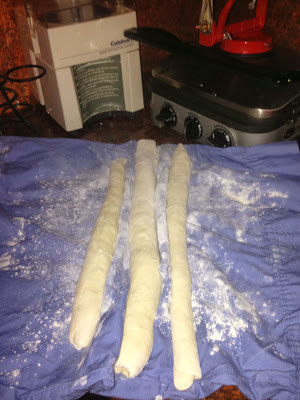
  8. Take the dough out and cut into three loafs. Let sit for five minutes.
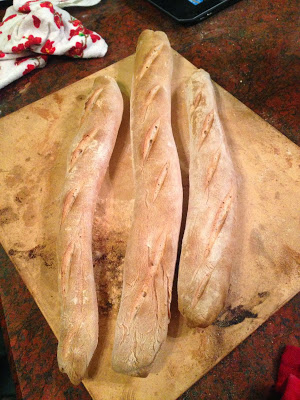
  9. Now you get to shape the loaves—my favorite part! I watched a video of JuliaChild making a French baguette to learn some techniques and would recommend you do the same if you're new to all this. Don't forget to put three or four slices into your shaped loaves!
  10. Put your shaped loaves on a lightly floured baking sheet and let sit for other two hours.
  11. Slide your loaves onto the bottom rack of a 450-degree oven and bake for 25, spritzing the loaves with water (in a spray bottle) every two minutes for the first six minutes. After the sixth minute, move the bread to the top rack of the oven for the remaining time.
Photos of my bread-making process over time:


first time making it
second time
third time

One the questions people always ask me is, What's the key to baking bread? I think the answer love. If you put your heart into making it, it shows.

Delivery CSA Coming to the North Country?

Better Farm

is in the process of outlining a grant that would provide the sustainability campus with start-up funding from SARE to create a network of farms providing a delivery CSA to residents living in the region, and is looking for local farms interested in participating in the proposed programming.

The Northeast Chapter of the

Sustainable Agriculture Research and Education Pr

ogram

(SARE) is offering partnership grants to agricultural agencies, organizations, businesses, or local governments working directly with farmers to address issues that affect the farm community. Farmers must be partners in the planning process and the proposal. SARE funds production, marketing, on-farm demonstrations, and community development efforts that address key themes in sustainable agriculture. Sustainable agriculture is understood to be agriculture that is profitable, environmentally sound, provides a good quality of life for farmers, and is beneficial to the community.

To that end, Better Farm is seeking local farms to partner with for the following proposal:

Better Farm plans to increase access to fresh, locally produced foods for community residents in and

around Redwood, N.Y., while strengthening farmer-consumer relationships and supporting local agriculture by creating a delivery CSA service to people living locally. Community-Supported Agriculture programs provide weekly stipends of fresh food to a community; Better Farm enhances this programming by bringing fresh fruits, vegetables, jams, syrup, meats, cheeses, eggs, and milk from a variety of local farms directly to neighbors' doors. Better Farm would act as liaison between individuals, families, and farmers; creating the network of farmers necessary to provide people with a diverse assortment of weekly groceries for a low rate. Redwood is a small community of 500 people with limited access to food. Shopping at a grocery store in Alexandria Bay is a 20-mile round trip; Watertown a 50-mile round trip. Funding would allow Better Farm to coordinate with local farms and families, create inventory lists and price sheets, convert a diesel truck to run off refined vegetable oil thereby eliminating gas costs, and put the program into its first year of production. With EBT cards now accepted at farmers' markets and farm stands, this programming encourages even those with the lowest incomes to purchase local food at a premium rate. 

How It Works

This is a buy-in program. In its first phase, Better Farm partners with local farmers interested in selling their goods at a bulk rate to individuals and families living locally. 

<!-- @page { margin: 0.79in } P { margin-bottom: 0.08in }

Those farms provide Better Farm with available products and bulk rates, along with seasonal information. Then, Better Farm will disseminate information via radio, print, online, and mailers to homes in the community alerting them to this available program. Signing people up will involve educational workshops, greeting people at their homes, calling campaigns, and public seminars. Individual and family seasonal rates will be available, as well as tiers:

  • Vegetarian (with or without packaged goods, checking all that apply: maple syrup, jams/jellies, lotions/salves, fibers/yarns, dairy products, eggs)

  • Omnivorous (with or without packaged goods, checking all that apply: maple syrup, jams/jellies, lotions/salves, fibers/yarns, dairy products, eggs)

Rates will include fees to cover all-inclusive delivery fee (driver rate, basic maintenance of delivery vehicle, fees due to participating farms, and overhead costs for future marketing efforts) and will be payable via EBT card, check, credit card, or through monthly or weekly installments.

Interested participants will be given a survey at the beginning of each season to go over their expectations, what products they would be interested in purchasing, and their budgets. A similar survey will be distributed at the end of each season to gauge customer satisfaction with products received, chances of having return customers, and suggestions for improvements.

What

It Does

<!-- @page { margin: 0.79in } P { margin-bottom: 0.08in }

-->

Better CSA solves the problem of a

food desert

in several ways. One, it creates a network of local farmers offering a variety of goods at competitive rates. Two, it creates a network of buyers that can then purchase food at a bulk rate. Three, it uses a “green” vehicle (a diesel pickup truck converted to run on spent vegetable oil) to deliver the food to people's doorsteps, reducing their fuel costs and amount of time spent grocery shopping.

This project enhances sustainability in the following ways:

  • Reducing pollution from vehicles going to and from several supermarkets to get groceries

  • Reducing pollution associated with the import-export of produce, meat, dairy products, and eggs

  • Shifting demand from large-scale agricultural practices to more sustainable, family operations

  • Encouraging local farmers to employ sustainable, organic practices

  • Encouraging consumers to eat more nutritious food that sustains healthy lifestyles in the long-term

  • Educating children (and adults!) in the community to make healthier food choices and to enjoy a larger diversity of products in their diets

Farmers interested in partnering with Better Farm on this project should email

nicole.caldwell@betterfarm.org

.

Comment

Nicole Caldwell

Nicole Caldwell is a self-taught environmentalist, green-living savant and sustainability educator with more than a decade of professional writing experience. She is also the co-founder of Better Farm and president of betterArts. Nicole’s work has been featured in Mother Earth News, Reader’s Digest, Time Out New York, and many other publications. Her first book, Better: The Everyday Art of Sustainable Living, is due out this July through New Society Publishers.