Green Tech Files: Will Future Roadways Glow in the Dark?

There's been a lot of buzz around environmentally friendly street and path lighting, with solar energy leading the way for  energy-efficient streetlamps, stop sign illumination, and more; but now there's a new buzz about glow-in-the-dark pavement providing light that won't mess with wildlife, uses zero energy, and looks really cool while it's working.

Here's all the information, gleaned from

Take Part

.

Editor's note: For more information and video footage, be sure to visit

Take Part's fully story

.

Keeping parks well lit at night can be a costly means to ensure pedestrian and cyclist safety. But a British-based company has come up with a way to turn park paths into glow-in-the-dark thoroughfares that double as energy-efficient works of art.

Created by 

Pro-Teq

, Starpath is a sprayable coating of light-absorbing particles that harvests ultra-violet rays from the sun during the day and dramatically lights up like a starry sky at night. The veneer is non-reflective, anti-slip and waterproof, and can be applied to cement, wood, tarmac or other solid surfaces.

Earlier this month, Starpath was tested on all 1,600 square-feet of the paths at Christ’s Pieces Park, in the university town of Cambridge. The park is well trafficked late into the evening by cyclist and pedestrians alike.

"Our surface works best over tarmac or concrete, predominantly tarmac, which is the main bulk of the U.K. path network," says Pro-Teq’s Neil Blackmore, in a sales video. "When it's coming to the end of its useful life, we can rejuvenate it with our system, creating not only a practical, but a decorative finish."

Seeing that local city councils were increasingly shutting off park lights at night to save money, Pro-Teq developed Starpath to maintain public safety without the financial and environmental costs of overhead lighting. It's a common problem; in the U.S. for instance, cities generally count streetlights as their first or second biggest energy drains.

But the glow-in-the-dark spray also comes with additional benefits: Its non-reflective surface doesn't seem to contribute to light pollution, which not only inhibits views of the nighttime sky, but can have dire consequences for local wildlife due to the constant illumination.

Overhead street lighting does provide one important benefit to urban parks, however, and that's the deterrence of crime. It's not yet known if Starpath would provide enough light to do the same.

Pro-Teq's Neil Blackmore says that for larger urban parks where the possibility of crime is higher, his technology could be used in conjunction with overhead lighting, if not replacing street lights completely, then cutting down on the number of them necessary to illuminate darkened areas.

"I was in London today looking at a large park for Starpath," he says. "And there's lights down by the river, but in the back of the park, there's no lighting at all. So having our product there, in the complete darkness, would only benefit the user."

Pro-Teq’s demonstration project in Cambridge is tiny, though, compared to a glow-in-the-dark technology being rolled out across the English Channel.

The Netherlands began its

"smart highway"

redesign this year with the promise of using super-charged glow-in-the-dark paint to illuminate highways during the country's long, dark winters. Not only will the paint light up to define the road and its lanes, but when the temperature drops below freezing, a bright snowflake design appears on the asphalt, warning drivers about the possibility of black ice.

As innovative and environmentally-friendly as the Netherlands' design is, though, Pro-Teq's Starpath may have bested it in terms of pure aesthetics. The starry spray is dramatic and not only lights up to a brilliant blue (as seen in the video above), but is also available in other sparkling colors, like red, gold and green.

Whether its application could extend to some roadways remains to be seen, but at least for now, Starpath looks like an energy-efficient way to light up parks while simultaneously turning them into eye-catching art displays.

Comment

Nicole Caldwell

Nicole Caldwell is a self-taught environmentalist, green-living savant and sustainability educator with more than a decade of professional writing experience. She is also the co-founder of Better Farm and president of betterArts. Nicole’s work has been featured in Mother Earth News, Reader’s Digest, Time Out New York, and many other publications. Her first book, Better: The Everyday Art of Sustainable Living, is due out this July through New Society Publishers.

Greetings from the new 'Wintern'

Hi everyone, I'm Elena!

I am going to be popping in occasionally to Better Farm as part of my college coursework. I recently graduated from JCC with an Associate’s degree in Animal Management (now called Zoo Technology). I am currently working toward my Bachelor’s in Zoo Program Management from Empire State College while working part-time at the New York State Zoo at Thompson Park in Watertown, NY.  Nicole has been kind enough to teach me a course in sustainability. Since I am not technically a full-time intern, I only get to spend a short amount of time at the farm. But I know that there is still a lot to learn and I am very excited.

I hope to get my hands dirty and learn how to live green, even when the farm is covered in a blanket of white. Since most of the harvesting is coming to an end, I look forward to learning how to preserve food and work on indoor projects like hydroponics and vermiculture.  Personally, I have plenty of experience with animal care but when it comes to plants….well, I’m a little "green". On my first visit to the farm, I helped harvest, dry, and chop herbs. I even decided to try my hand at making my own herb-drying rack at home. I love to be crafty and make my own things whenever I can. I think it turned out pretty well, and I hope to have the finished project and DIY instructions up on the blog soon!

To learn more about Better Farm's education program, visit www.betterfarm.org/sustainability-internship.

Why 'Better Radio' Matters

a giant from Free Press's Media Giants infographic

We announced a couple of weeks ago that Better Radio is on its way! And thanks to a community grant from Best Buy, we have the necessary funds to offer New Media training to young people in the North Country. That, along with the pending station confirmation, website and blogs to broadcast podcasts from for a larger reach, and our commitment to showcase local news, personalities, and music, really make Better Radio all about the people it serves. BetterArts board member and grant-writing powerhouse Sarah Herold last week found a great NPR piece that articulates this point exactly and goes a little more in-depth about how low-power FM stations are providing the public with unfettered information now so rare in mainstream media. Below is that piece reposted in its entirety, written by Betty Yu:

Roots, Radio and Social Change: Why Low Power FM Radio is about YOU

October 24, 2013

by Betty Yu for

Moyers & Company

Media watchdog group Free Press’s recent

infographic

reveals how media corporations are using shell companies to evade the Federal Communications Commission’s (FCC) ownership rules and gobble up local TV stations across the US. It’s another sobering reminder that we are facing some of the biggest threats to media democracy and free speech in our country’s history. The

acceleration of media consolidation

and unfair restrictions on community radio and TV have narrowed already limited access to the airwaves for local voices, especially women and communities of color. People of color make up over 36 percent of the US population, but own just over seven percent of radio licenses and three percent of TV licenses.

In an environment in which corporations and the government increasingly control the airwaves, where can social justice movements and marginalized communities go to have their voices heard?  Enter low power FM radio (LPFM). Two years ago, President Obama signed the Local Community Radio Act after a 15-year organizing campaign led by

Prometheus Radio Project

and

Common Frequency

, two grassroots groups supporting community radio. The law marks the largest expansion of community radio in US history. It was a tremendous victory for social change and media justice movements. Local communities now have the power to transform the corporate-driven media landscape.

People of color make up over 36 percent of the US population, but own just over seven percent of radio licenses and three percent of TV licenses.

This expansion of LPFM stations means that hundreds of nonprofit organizations, schools, unions and other community groups have a unique and low-cost opportunity to develop programming to meet their local and issue-based needs. “With new community radio stations preparing to claim a spot on the airwaves, we’re looking forward to hearing truly local news, neighbors speaking to each other about the topics that concern them, and local culture and music programming,” says Julia Wierski of Prometheus Radio Project.

There are many inspiring stories about the profound impact that LPFM stations have had on local communities, not to mention on issues of self-determination, cultural sovereignty and social justice. One such story is the Coalition of Immokalee Workers’

Radio Conciencia

, a station in Immokalee, Fla., run by its members. The coalition is made up of mainly Latino, Maya Indian and Haitian immigrants, working in low-wage jobs throughout the state. They started Radio Conciencia WCIW- LP (107.9 FM) in 2003, a 100-watt station that features news of its members’ labor fights, campaigns and other local issues; music; and cultural and educational programming in several languages, including indigenous dialects. Most coalition members lack access to the Internet, relying on the station for basic news, local information and entertainment.

Two broadcasters at the Coalition of Immokalee Workers’ Radio Conciencia, a worker-run radio station in Immokalee, Florida.

Broadcasters at the Coalition of Immokalee Workers’ Radio Conciencia, a worker-run radio station in Immokalee, Fla.

“When Hurricane Wilma hit Immokalee in 2005, we realized the deep value of Radio Conciencia. All local radio stations were transmitting alerts on the impending hurricane, but Radio Conciencia was the only radio that was transmitting information on where to go and what to do in Spanish and in the indigenous languages spoken in our community,” said Gerardo Reyes-Chavez, an organizer with the coalition and Radio Conciencia.

Another great example of a thriving LPFM station is in Opelousas that is home to zydeco music, a Cajun-Creole tradition in southwest Louisiana that dates back centuries. Zydeco was missing on the airwaves in the city, so in 2003 a local group started KOCZ(LP) and started playing the music along with local news, jazz, R&B and other music. It’s had an influence on other radio stations in the area, which now play music in the zydeco tradition.

Members of

Media Action Grassroots Network (MAG-Net)

, a national media justice network of 170 organizations are taking advantage of the FCC’s LPFM application window. They understand that radio can be a powerful tool for amplifying the voices of grassroots leaders and local communities fighting for social change.

“Community radio stations represent the last bastions of airwaves that are representative of the communities they come from and put the control of whose voices get heard and which stories get distributed in the hands of the community. The potential of the FCC’s LPFM application window is tremendous when we consider that up to 1,000 new radio stations could come on the air in the next few years. Those are 1,000 new voices that are currently not being heard in rural and urban cities across the country,” says Steven Renderos of

Center for Media Justice

.

Comment

Nicole Caldwell

Nicole Caldwell is a self-taught environmentalist, green-living savant and sustainability educator with more than a decade of professional writing experience. She is also the co-founder of Better Farm and president of betterArts. Nicole’s work has been featured in Mother Earth News, Reader’s Digest, Time Out New York, and many other publications. Her first book, Better: The Everyday Art of Sustainable Living, is due out this July through New Society Publishers.

Winterizing Your Strawberry Plants

Strawberry plants will come back annually to provide you with beautiful, yummy fruit for years. But if you live in a northern climate, it's imperative that you protect these plants from the elements. If a strawberry plant's root system freezes solid, the plant you nurtured will die and you'll have to replant the following year. Thankfully, prepping your strawberries for the winter months couldn't be easier.

In-Ground Strawberries

If your strawberries live in garden beds, simply cover them up with a few inches of straw or leaves for the winter. Wait until the ground is fully cooled off and your plants are done growing for the year. Then give them a nice, thick layer of mulch. This does double duty; protecting the fruits from frigid winters, and providing great compost material for your soil. Be sure to check on the plants a few times over the winter to make sure freezing and thawing hasn't forced them up. If so, tamp them back down, water, and add more straw or leaves.

Container Strawberries

Strawberries that are growing in pots should be placed somewhere cold but not frozen. An unheated garage is a great place to store the fruits for the winter, but you'll need some sort of insulation to ensure your strawberry plants don't freeze solid. Don't worry about the lack of light, as the strawberry plants will be dormant and won't need any light. Just be sure to add water every few weeks to ensure the roots don't dry out. You can also plant your strawberries in the ground for the winter, utilizing the straw-as-insulation approach outlined above.

One of the best ways is to over-winter container strawberries is to put the pot in a larger container and insulate the space between with leaves or straw. Or, place the container on the ground next to a heated wall and ideally out of the winter wind. Insulate the exposed sides of the container with mulch, leaves or straw. Or just bury the container. The surrounding soil will insulate the roots over winter. Then dig up and hose down the container next spring.

Please don't try taking your strawberries inside to continue growing as houseplants! Strawberries need a dormant season in order to trigger a new round of growth in the spring for fruiting.

1 Comment

Nicole Caldwell

Nicole Caldwell is a self-taught environmentalist, green-living savant and sustainability educator with more than a decade of professional writing experience. She is also the co-founder of Better Farm and president of betterArts. Nicole’s work has been featured in Mother Earth News, Reader’s Digest, Time Out New York, and many other publications. Her first book, Better: The Everyday Art of Sustainable Living, is due out this July through New Society Publishers.

Pumpkin Carving

It’s that time of year again: Halloween and pumpkin carving! We all know it’s really messy to carve pumpkins... but I think that's the fun of it and kids love to get dirty. Here's a little guidance on carving your own lovely pumpkin to give your home a ghostly glow.

The first thing you need is, well, a pumpkin (I got a beautiful, organic one from

Better Farm

over the weekend—email info@betterfarm.org if you'd like one of theirs!) and the right tools for carving. You can get a pumpkin-carving kit or use knives you already have in your kitchen. One knife needs to be serrated and you'll definitely need a big spoon and maybe a fork to scoop out the guts of the pumpkin. You will need a toothpick or a marker to drew out your picture.

And if you're going to get real adventurous, you might need a

power drill

.

The cool thing about scooping the guts out is that you can keep the seeds and either cook them or dry them out and plant them next year (or for those of you with backyard chickens: The birds absolutely ADORE pumpkin seeds raw). Here are some tips you can do to make it safe and fun for the kids.

1.

Safety first

—Kids should always carve pumpkins with an adult present. Pumpkin carving can be a slippery business, so it is important to have an adult grip helping with this process. There are some great carving kits out there with safety knives for kids, like these from Pumpkin Masters.

2.

Keep it simple

Don't try to carve out President Obama on your first (or even 20th) pumpkin. Instead, try an easy carving pattern. The Internet is full of ideas. Google search away!

3.

Accept imperfections—

There will be uneven lines, bumpy circles and faces with one big eye. It's a learning process and many pumpkins will be sacrificed for the cause.

4.

Be a Picasso

—Let your children paint pumpkins instead of you carving them. They'll be able to create the pumpkins of their dreams and you can all enjoy it longer than a cut-up pumpkin.

5.

Take pictures

After all the time and effort you have put into this, make sure that you take plenty of pictures of your creations.

6.

Compost

—Pumpkins are filled with great elements for your compost pile. Don't let all that gooey goodness go to waste!

7.

Have fun!

betterArts Receives First Grant, 'Better Radio' Becomes Reality

BetterArts

has received its first grant, which will allow the local non-profit to serve teens and t

he local community through the

creati

on of

Better Radio: A New Media Project.

The Best Buy Children's Foundation

donates up to $2 million annually in community grants to local and regional nonprofit organizations that provide teens with places and opportunities to develop 21st-century technology skills that will inspire future education and career choices

.

The foundation has awarded

b

etterArts $6,000 to support Better Radio: A New Media Project by betterArts. That program seeks to serve teenagers interested in New Media, journalism, broadcasting, and recording (voice, music). In this community, there are few resources for students interested in pursuing careers in New Media and production. We are

in the process of creating a radio station

(the

application deadline was delayed due to the recent government shutdown). That station, in tandem with our already established

website

and

blog

, will allow for programming that educates students about recording, uploading, syncing, mixing, digitally editing, creating podcasts, and producing content to flourish in a way that draws attention to our community.

BetterArts' radio station and websites will allow the organization to train individuals to create podcasts, upload music, record and broadcast sound, use editing software, create programming, and record and mix music. Children served in this program are defined as teenagers interested in these skills who have not traditionally had the means to pursue them.

As technology becomes more ingrained in our society, we know it is increasingly necessary for youth to develop the 21st-century skills that will set them up for future career success. Yet, we also know that a participation gap exists. Too many teens have little or no access to technology and, as a result, they fall behind their peers. Meanwhile, teens who do have access can benefit greatly by moving beyond mere consumption and toward engaging in the learning opportunities technology can offer.

Goals of Better Radio include:

  • Invigorating the community by offering students hands-on experience focusing on local stories, musicians, individuals, and businesses while honing broadcast journalism and New Media skills

  • Training students to use technology related to New Media, thereby helping them "keep up" with this ever-changing landscape

  • Providing individuals with skills that will make them attractive to future employers and/or schools

  • Exciting students with new information that will reinvigorate their interests in their educations

  • Offering an alternative educational environment that is hands-on and creative

  • Initiating a residency program for high school students that allows them to access a premier New Media education at no monetary cost to them

Expected impacts of the program

are:

  • To call attention to this unique community, comprised of generations of farm families and a new influx of a soldier community from Fort Drum

  • To increase students' confidence in their abilities and to show them ways they can apply their natural creativity to technical work

  • To foster a pilot radio station program that will flourish in years to come and provide entertainment and thought-provoking commentary to the community

  • To create a stable of podcasts which can be streamed over the Internet, thereby reaching an even larger audience

  • To initiate a residency program for years to come that will invite young adults to visit our campus and receive top-notch training in New Media

Redwood and its surrounding communities are largely low-income pockets where decreased funding has meant cuts to arts and extended learning programs throughout the county. BetterArts seeks to combat this by filling the void with free programming related to sustainability and the arts. This geographic area is also unique in that it is comprised of older farms that have closed or reinvented themselves (either by becoming organic, switching their crops, or changing their distribution methods).

We are creating a radio program to invigorate this hamlet and surrounding areas; to entertain, to inform. Our broadcasts will include feature news reporting, storytelling, music sets, and live musical performances. We will provide teens with a huge amount of education resources: to produce programming, practice reporting, editing files, uploading podcasts to the Internet, producing radio shows, and more.

We will accomplish our goals by:

  • Implementing the creation of a new radio station (already pending)

  • Reaching out to students throughout Jefferson County (via presentations at high schools, partnerships with extracurricular programs and activities, after-school clubs, and at events where we will set up a broadcast booth open for teens to try out the equipment and sign up to participate in our program).

  • Utilizing our already-established website and blog to transmit new media productions created by young adults through our program.

Our implementation plan is threefold:

1. We work with the state to be assigned our radio station frequency (already pending). The radio signal will reach Redwood and surrounding communities. We will simultaneously redesign our website (

www.betterarts.org

, already existing) to include our radio station for live-streaming, podcasts, and previously recorded interviews, stories, and sets.

2. We use allocated Best Buy funding ($6,000) to purchase the equipment necessary to train teens. This will include recording equipment (digital dictophones, mics, mixers, editing software, etc.). Funding will also go toward promoting the program in local schools.

Our timeline is as follows:

JULY 1, 2013: Deadline for Best Buy Grant

FALL 2013: Distribution of funds, radio program deadline

SPRING 2014: Purchasing of equipment, setting up of radio station, restructuring websites and blog

SUMMER 2014: Recruitment for fall and spring programming

FALL 2014: Initiation of "Better Radio" program

We anticipate selling advertising on the radio station and websites to sustain the program going forward. Once the equipment is bought, actual costs are quite low. Volunteers and students will run the bulk of the programming, ad sales will drive the program forward, and our donation-based events throughout the year will help to raise moneys necessary for future upgrades and contracting.

The proposed activities will benefit the community in a number of ways:

  • By fostering a sense of community between individuals living and working here and the youth reporting

  • By drawing attention to the unique community we live in

  • By educating our teenagers, thereby encouraging their success as adults

Stay tuned for more information!

Like what you see here? Contact us at info@betterarts.org to donate to the

cause, volunteer, or sign up

!

1 Comment

Nicole Caldwell

Nicole Caldwell is a self-taught environmentalist, green-living savant and sustainability educator with more than a decade of professional writing experience. She is also the co-founder of Better Farm and president of betterArts. Nicole’s work has been featured in Mother Earth News, Reader’s Digest, Time Out New York, and many other publications. Her first book, Better: The Everyday Art of Sustainable Living, is due out this July through New Society Publishers.

Veggie-Heavy Diet Reverses Signs of Aging

By Nicole Caldwell

For

JuJu Good News

A new study published last week in the

Lancet medical journal

found that a diet rich in fruits and vegetables can help to reduce cellular aging.

The findings, which were published by

Bloomberg

Sept. 16 in an article called “Veggie-Heavy Stress Reduction Regimen Shown to Modify Cell Aging”, suggest diets rich in unprocessed foods, fruits, and vegetables can actually reverse signs of aging cells when combined with stress management. Subjects were encouraged to eat largely whole foods, few refined carbohydrates and a lot of fruits and vegetables.

Organic food advocate

Colle Farmers Market

confirmed the study’s findings. “While many people do understand the benefits of eating

organic food

,” said

one representative from Colle Farmers Market

, “his research is solid research that proves eating organic, unprocessed, natural food actually helps you age slower.  That could not only be a huge selling point for the organic food industry, but it could also be a huge development for doctors and physicians who implement anti-aging regimens.”

Instead of medications, people could simply start early with an organic diet and decrease the signs of aging throughout their lifetimes.

Research was led by

Dean Ornish

, founder of the Preventive Medicine Research Institute. Ornish has been leading research of this kind for years; with his 1998 Lifestyle Heart Trial demonstrating a reversal of coronary

heart disease

over five years. In the Lancet journal piece this month, researchers found a diet rich in fruits and vegetables can increase the lifetime of telomeres, the “ends of chromosomes linked to aging.”

Comment

Nicole Caldwell

Nicole Caldwell is a self-taught environmentalist, green-living savant and sustainability educator with more than a decade of professional writing experience. She is also the co-founder of Better Farm and president of betterArts. Nicole’s work has been featured in Mother Earth News, Reader’s Digest, Time Out New York, and many other publications. Her first book, Better: The Everyday Art of Sustainable Living, is due out this July through New Society Publishers.

Setting up Simple Hydroponics

We decided to raise the bar this year from our aquaponics system, which provides us with fresh herbs and salad greens year-round, to include a hydroponic garden that will grow tomatoes all winter long.

Here's our already established aquaponics setup (

freshly cleaned and replanted

!):

Hydroponic gardening works just like aquaculture; but instead of getting nutrients from fish waste, hydroponics relies on added organic fertilizers to keep plants healthy. We got our setup from a neighbor, which utilizes a

Hydrofarm fluorescent grow system

and individual planters for our tomatoes.

Water will run out of the lower chamber and up over the individual pots, filled with pea gravel, and run back into the lower tank. We ordered a new grow light today for the system, and will be fully set up next week. Perfect timing, since the tomato seeds we saved are in the process of drying out for a few more days.
Comment

Nicole Caldwell

Nicole Caldwell is a self-taught environmentalist, green-living savant and sustainability educator with more than a decade of professional writing experience. She is also the co-founder of Better Farm and president of betterArts. Nicole’s work has been featured in Mother Earth News, Reader’s Digest, Time Out New York, and many other publications. Her first book, Better: The Everyday Art of Sustainable Living, is due out this July through New Society Publishers.

Hydroponic Tomatoes

In addition to the

aquaponics

setup at Better Farm, we're installing a hydroponics system this year in order to grow tomatoes all winter long. While researching the best methods for a prolific crop, I came across a great tutorial at

Vertical Hydroponic

that walks you through the whole process. Those instructions are below.

Tomatoes are one of the most popular species of plants to grow hydroponically. Although many types of plants exhibit faster growth rates and accelerated fruit development in hydroponic systems, soft-tissue plants like tomatoes do especially well.

<!-- @page { margin: 0.79in } P { margin-bottom: 0.08in }

-->

Tomato Seeds or Starts

Since tomato seeds germinate relatively rapidly, most growers will begin their tomato plants from seed. Tomatoes seeds take approximately 10 to 14 days to germinate. A tomato plant will become fully mature in about two months. There are hundreds of different cultivars of tomatoes, including determinate and indeterminate varieties. Cherry, Roma, and Beefsteak are just some of the many popular tomato cultivars. Determinate varieties produce a large crop of tomatoes all at once and may also top off at a specific height. Indeterminate varieties produce multiple crops that grow in overlapping stages. Most heirloom varieties of tomatoes are indeterminate. It’s a good idea to research the different cultivars to find out which variety works best for your gardening situation. After about two weeks, your tomato plants should be ready to transplant into your hydroponic system.

After inserting the strongest plant starts into your hydroponic system, your tomato plants will begin to produce fruit within 60 days. Make sure you plan ahead and have an appropriate support system for your tomato plants. Tomatoes are a soft-tissue vining plant that requires a lot of support. Without a trellis or support stakes, the stems of your plants will most likely break under the weight of the tomato fruits.
Although spacing will depend on the particular variety that you are growing, typically tomato plants should be spaced about 18 to 24 inches apart. However, you can place the plants closer together if you train the vines appropriately to allow enough room for the fruits to develop. Vertical hydroponic systems such as the Bio-Tower are especially well suited to growing vining plants like tomatoes since the vines can easily hang off the sides of the growing containers.

Like many other fruiting plants, tomatoes require pollination in order to develop fruits. This will naturally occur in an outdoor environment from wind movement or bee activity. If you are growing indoors, you can either manually pollinate your flowers by touching different flowers with a small brush, or you can use alternating wind currents to induce cross-pollination.

Light

Tomatoes like a lot of light but can thrive with as little as seven hours of sunlight per day. However, tomatoes in too much strong direct sunlight may eventually show signs of heat stress.

Temperature

Ideally the temperature for tomatoes should remain between 65 to 80 degrees Fahrenheit during the day and between 55 to 65 degrees during the nighttime.

Nutrients

As a fruit-producing plant, most tomato varieties require relatively high levels of phosphorous and potassium. A typical hydroponic nutrient solution for tomatoes has a pH between 5.5 and 6.5. Tomatoes may also require a calcium supplement since the creation of fruit uses significant amounts of this secondary nutrient. However, make sure to follow the instructions for your particular brand of nutrients before adding any supplements to your reservoir.

Harvesting

After approximately 60 days, you should begin to have tomatoes that are large enough to harvest. Although there are many different varieties, most tomatoes turn red when they become ripe. You can pick off immature fruits and blossoms to maximize the size of the remaining fruits. You can also increase your harvest by “suckering” your tomato plants. “Suckering” is simply removing internodal branches that are not producing fruit. This encourages the plant to devote more nutrients to the branches that are producing fruit.

Pests and Diseases

Tomatoes are susceptible to a variety of plant diseases; including tobacco mosaic virus, fusarium wilt, and various other mildews and fungi. Tomato plants require significant amounts of calcium for fruit development so blossom end rot is another common problem that growers encounter. Common pests include the cutworm, aphids, and the tomato hornworm. Check with your local garden supplier to find the best pest prevention treatments for your particular environment. Remember, birds, squirrels, and deer will also eat tomatoes if they can get access.

2 Comments

Nicole Caldwell

Nicole Caldwell is a self-taught environmentalist, green-living savant and sustainability educator with more than a decade of professional writing experience. She is also the co-founder of Better Farm and president of betterArts. Nicole’s work has been featured in Mother Earth News, Reader’s Digest, Time Out New York, and many other publications. Her first book, Better: The Everyday Art of Sustainable Living, is due out this July through New Society Publishers.

Dirty Jobs: Aquaponics in Autumn

Yesterday I cleaned out the aquaponics setup at Better Farm to ready the grow bed for autumn, winter, and spring growing of salad greens and herbs. It's important to clean out your aquaponics setup regularly to keep it operating at top efficiency, and to ensure the health and well-being of your fish.

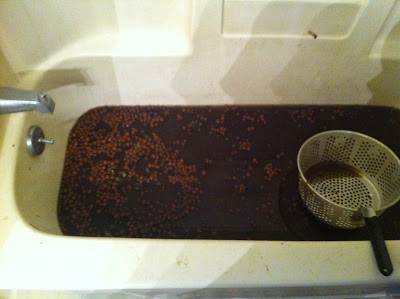
We have two corner filters running 24/7 to keep the tank fresh, which work in tandem with the pea gravel in our aquaponic grow bed to filter water. I find it easiest to clean out the grow bed and filters every six months (normal fish tanks require monthly cleanings; but our bottom feeder fish, living plants, and pea gravel do such an amazing job keeping everything clean, we have to do a deep cleanse very infrequently). The simplest way to do this is to rinse the pea gravel in colanders on the driveway or in one of the bathtubs in the house. The latter makes it easy to hang onto the dirty water and reuse it on your houseplants. It's like steroids for plants, which absolutely love fish poop.

Aquaponics maintenance is definitely one of the dirtier, least unpleasant farm jobs we have here. But, as they say, someone's got to do it...
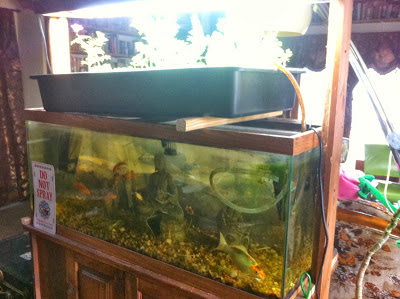
The work is worth it to have a great fish tank setup and yummy greens year-round:
Comment

Nicole Caldwell

Nicole Caldwell is a self-taught environmentalist, green-living savant and sustainability educator with more than a decade of professional writing experience. She is also the co-founder of Better Farm and president of betterArts. Nicole’s work has been featured in Mother Earth News, Reader’s Digest, Time Out New York, and many other publications. Her first book, Better: The Everyday Art of Sustainable Living, is due out this July through New Society Publishers.

Enjoy the Benefits and Security Provided by the Most Advanced Padlocks

With schools comprising one of the largest segments of green buildings nowadays, high-quality

school locks

for doors and lockers is a chief concern. Most schools now use high technology-based advanced locks with security codes. Some of the locks are also equipped with electronic keys. This advanced system has facilitated the modern school administration to a great extent. Now, the students and teachers can easily and safely use their individual school lockers without any hazards. These modern locks have successfully replaced the traditional forms of locks.

With the emergence of new technology, most of the schools have adopted the installation of the most advanced type of locks. Nowadays, most of the schools are highly using

bulk padlocks

as these kinds of locks are quite protective in nature. Therefore, if you want to know more about these advanced locks, then you need to take the help of internet for making thorough research regarding the same. You can follow different online articles, blogs, links or websites on these kinds of specialized locks. Most of the green buildings of the current era are using these padlocks for enhancing the level of security and protection. These kinds of locks are mostly used for providing protection against vandalism or robbery.

These padlocks are quite flexible in nature and are highly portable as well. If you want to purchase bulk padlocks, then you need to look into your nearest lock store. If you are not interested in moving from one store to another, then you can opt for the online purchase of these locks from the online lock stores. These online stores provide you the facility of placing online order at any point of time from anywhere just with the help of internet as these stores have no fixed business or working hours like physical stores.

Autumnal Harvest

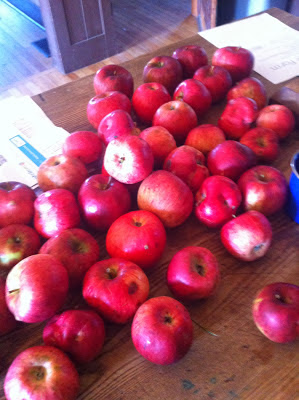
Better apples.
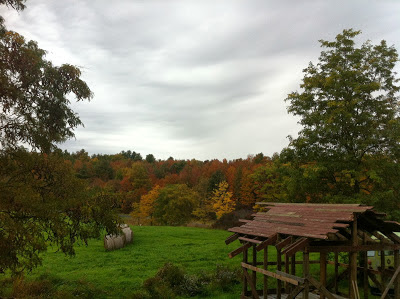
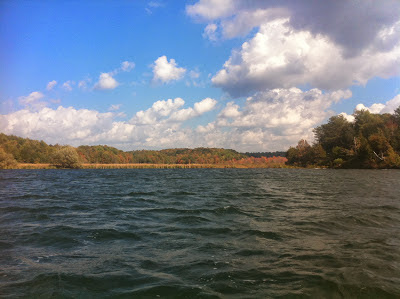
It's Autumn in the North Country! Colors are bolder, fruit and veggies are coming out our ears, and all the tourists have left the lakes, streams, and rivers empty for the locals' enjoyment. Look at all this beauty:


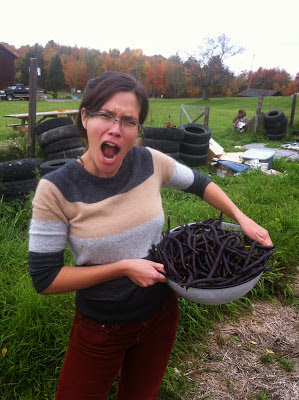
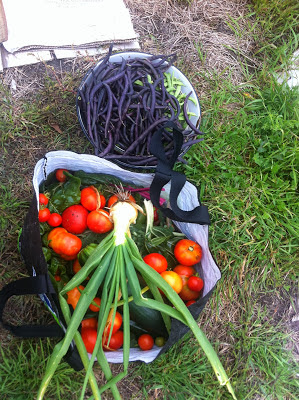
Better Farm's gardens are virtually overrun with more zucchini, cucumber, string bean, pumpkin, lettuce, kale, artichoke, onion, you-name-it than we can shake the proverbial stick at. Kristen and I picked 50-plus-pounds of veggies in about 20 minutes the other day:
Kristen shows off the string bean harvest.
String beans, zukes, tomatoes, leeks, broccoli, tomatoes, Swiss chard, and kale.
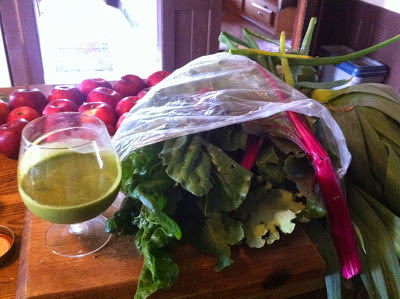
We've kept the farm stand open later than ever, and we're taken custom orders and even doing low-scale CSAs with those living locally who would like a weekly share of fresh produce. And I've been juicing like a mad woman! Here's one of the smoothies I made the other day:
Smoothie made from apples, raspberries, Swiss chard, kale, wheat grass, peaches, and cantaloupe.
No need to start buying produce from the grocery store just yet! Swing on over or give us a call at (315) 482-2536 to place an order or pick your own.

Contact Better Farm at info@betterfarm.org to schedule a pick-up, tour, or set up a CSA program until the snow starts to fly!
Comment

Nicole Caldwell

Nicole Caldwell is a self-taught environmentalist, green-living savant and sustainability educator with more than a decade of professional writing experience. She is also the co-founder of Better Farm and president of betterArts. Nicole’s work has been featured in Mother Earth News, Reader’s Digest, Time Out New York, and many other publications. Her first book, Better: The Everyday Art of Sustainable Living, is due out this July through New Society Publishers.

Network Installation of Green Buildings

The

network installation

of green building is quite a risky, hectic, and challenging work altogether which can be only undertaken by expert installers. These skilled installers are quite efficient in conducting the safest means of installing the computer networks within the green buildings. 

But before going for the network installation, these installers need to check the current condition of the electrical panels and wiring of those buildings. This is because of the fact that the installation of network in green buildings is highly dependent on the electrical condition of those buildings. They must be well-aware of all the useful techniques of installation which bring energy and cost efficiency.

Those green buildings that are consuming natural source of energy can have the advantage of saving more and more power. The installation of network in green buildings is highly inter-connected with

voice and data services

. This kind of service helps in the effective installation of the network connectivity in green buildings. In fact, the speed of the internet connectivity also depends on the concerned type of services.

The data cabling of the network installation mostly depends on few common factors which need to be essentially considered. These essential factors include need of current bandwidth, network environment, future requirements of bandwidth, and the customers’ budget. If you want to install data networking cabling in your green building, then you need to strictly follow these factors on the basis of which your internet speed will be dependent. You must hire proper and most efficient cable installers who have a very thorough knowledge and training on the installation of the network cables in green buildings.

These installers must be well-aware of all the safety rules and codes of their respective states which need to be strictly abided by at the time of network installation at clients’ places. These installers also must have proper installation license for conducting the concerned work.

2 Comments

Nicole Caldwell

Nicole Caldwell is a self-taught environmentalist, green-living savant and sustainability educator with more than a decade of professional writing experience. She is also the co-founder of Better Farm and president of betterArts. Nicole’s work has been featured in Mother Earth News, Reader’s Digest, Time Out New York, and many other publications. Her first book, Better: The Everyday Art of Sustainable Living, is due out this July through New Society Publishers.