Introducing betterArts Resident Kevin Carr

 
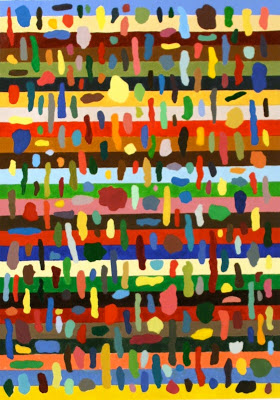
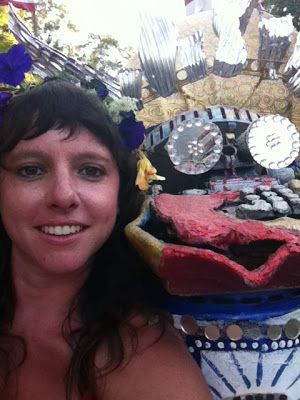
Kevin Carr is a 22-year-old artist from Canandaigua, N.Y., who has joined us for the month of September through a betterArts residency.

He attended Alfred University's School of Art and Design to receive a bachelor of fine arts with a minor in women's studies. He has also served as director of Alfred University's Robert C. Turner Student Gallery, and as a teaching assistant at his school's painting department. His work has appeared in several galleries and in print.
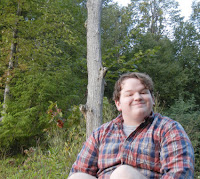

Kevin Carr.
"A lot of my work is about collections of objects that are often overlooked because they appear insignificant," Kevin told us, "but when displayed in large masses they become significant and make people think about what the object really is, what it does, and why it is so small.

"For a while, I have wanted to create works involving recycled items, things that would normally be thrown away or tossed somewhere to sit forever. Imagine thousands of beer bottle caps, bread clips, plastic grocery bags, or discarded receipts shown or displayed together in a systematic way. This would draw the viewer's attention to how throwing away something small like a rubber band or a toilet paper tube can actually cause a large amount of waste when 15 million other people also just threw away one of these objects.

"I aim to bring my creative and systematic way of lying out and creating work to prove a point about waste with a project about recycling. I would collect things like the above from households and businesses that would be willing to collect the items. I would reuse them to make new and exciting sculptures and paintings that promote recycling and sustainability."

Check out these bright samples of Kevin's work:
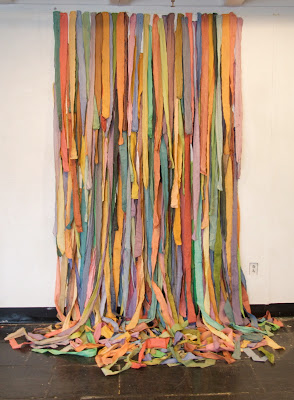


You can see Kevin's installation at Better Farm from 10 a.m.-4 p.m. Saturday, Sept. 29, and 12-4 p.m. Sunday, Sept. 30, in conjunction with Jefferson County's First Annual Harvest Tour Weekend.
Better Farm is located at 31060 Cottage Hill Road, Redwood NY, 13679. Those locals who would like to donate items for his sculptures can contact us at (315) 482-2536 or info@betterarts.org.


Comment

Nicole Caldwell

Nicole Caldwell is a self-taught environmentalist, green-living savant and sustainability educator with more than a decade of professional writing experience. She is also the co-founder of Better Farm and president of betterArts. Nicole’s work has been featured in Mother Earth News, Reader’s Digest, Time Out New York, and many other publications. Her first book, Better: The Everyday Art of Sustainable Living, is due out this July through New Society Publishers.

Spotlight On: Personal Energy Meter

National Geographic's new initiative, The Great Energy Challenge, seeks to educate the masses about energy use, carbon emissions, and environmental issues relating to fresh water, air, and the ocean. As part of this outreach effort, the organization is offering an interactive tool called a "Personal Energy Meter" that measures an individual's energy use and subsequent contribution to carbon emissions. (Click here to use that tool.)

The tool will compare your energy use to others', and inform you on how choices you make at home and in the way you travel could help to protect the atmosphere.

Here's our score at Better Farm:

Your Final Tally—3.79 tons of CO2 per year

You have completed all the questions.

42

 people have taken the Challenge. The average score is

51

.

You scored

54 percent lower

than the regional average and

62 percent lower

than the national average.

This meter measures your personal energy score based on the decisions you make in your home and in travel. It's different from some per-person calculations you may have seen, which factor in each nation's total carbon dioxide (CO

2

) emissions, including those from industrial and commercial activities. To see what those total per-capita emissions look like in the United States and around the world, see our

global carbon map

.

See Personal Energy Meter sources »

Click on any question again to change your values.

Your Individual Tallies

  • In the Home: 1.774Tip: A programmable thermostat can help you easily turn down energy use when you are away or asleep.

  • For ideas on how to reduce your impact at home, visit the Great Energy Challenge Mini Calculators.

  • On the Road: 2.219Tip: Use mass transit, ride sharing or a bicycle at least a couple days a week to cut down energy while commuting.

  • For a month-by-month plan to slim down your carbon emissions on the road, in the home, and for everyday living, visit our Energy Diet.

  • Renewable Energy: 29%Tip: See if your utility allows you to purchase solar or wind energy for a portion of your electricity use.

  • In the Air: 1.349Tip: Consider taking a train instead of a plane for shorter trips.

Comment

Nicole Caldwell

Nicole Caldwell is a self-taught environmentalist, green-living savant and sustainability educator with more than a decade of professional writing experience. She is also the co-founder of Better Farm and president of betterArts. Nicole’s work has been featured in Mother Earth News, Reader’s Digest, Time Out New York, and many other publications. Her first book, Better: The Everyday Art of Sustainable Living, is due out this July through New Society Publishers.

Nice Melons!

We've been foraying into fruit at Better Farm this year, with two new peach trees, a bunch of raspberries and blueberries, an attempt at strawberries (thwarted by small creatures, unfortunately!), and these: delicious, juicy, cantaloupes and watermelons.

Personal Watermelon
Watermelon is 92 percent water by weight, mildly diuretic, and contains large amounts of beta carotene. There are nutrients in the rind, as well. Miniature, or "personal" watermelon fruits reach only 5 to 8 inches in diameter. These smaller melons already require less space than full-size watermelon varieties, making them a good choice in gardens with limited space, but even though the melons are small, the plants still take up more room than many other garden plants. Combining a personal melon variety with space-saving planting systems frees up the most space in the garden bed. We tried growing these tiny fruits with mixed results—but the ones that grew to fruition are absolutely delicious.

Personal watermelons are an efficient way to enjoy this juicy fruit—beyond whole, seedless icebox varieties, which weigh 10 to 25 pounds, and pale pre-cut pieces that come shrink-wrapped or in plastic tubs. Ick. Personal watermelons typically grow on vines that sprawl over a large swath of garden bed, similar to how standard-size melons grow. If you're short on space, these small melons also do very well grown vertically on trellises. Some personal melons are hybridized to grow on bushy, more-upright plants. These varieties don't grow melons on the bushy part of the plant, but instead produce fruit on 2- to 3-foot-long vines. Growing one of these varieties in conjunction with a space-saving planting method uses the least amount of space possible. Bush Baby, Stone Mountain and Sugar Baby are three bush varieties. 

Cantaloupes

North Country breakfast: backyard egg omelet with homegrown tomato, broccoli, and squash; homemade zucchini bread, and fresh-picked cantaloupe.
Cantaloupes are the most popular variety of melon in the United States. Packed with vitamin C, this fruit is 90 percent water—making it ideal for hot summer days. Protein and fat content make up only around 1 percent of the cantaloupe. Cantaloupe's orange flesh shows the presence of beta-carotene, the same substance that gives carrots their distinctive color. Your body can convert beta-carotene into vitamin A, an important vitamin for cell growth and repair, eyesight and healthy skin. The vitamin C provides power to fight infection and inflammation—a large wedge of cantaloupe provides 37 mg of vitamin C, a significant percentage of the recommended daily dose of 90 mg for adult males and 75 mg for adult females.Cantaloupes contain particularly high concentrations of potassium, with around 273 mg in a large slice. This mineral has a vital role in the human body. It acts as an electrolyte, which means it helps to conduct biological electricity through the body. The helps keep your heart pumping, your digestive tract moving and allows your muscles to expand and contract. Cantaloupe also contains smaller amounts of sodium, phosphorus, magnesium and other minerals in lower quantities. 

But for many home gardeners, the space these fruits require makes growing cantaloupe an unrealistic. But with a few simple modifications, almost any home garden can produce this delicious fruit. Trust us—when you taste the difference between a store-bought cantaloupe and one that's been homegrown, you'll make it a priority to get some seeds in your backyard, pronto.

Here's how you can grow your own even if you're short on space. Instead of planting in hills as suggested, plant a single row along a length of fence or trellis. As the seeds germinate and the plants begin to grow, tie them to the fence and train them to climb up their trellis. As the plants continue to grow, check on the fruits daily to make sure the plants keep from  flopping down to the ground. Unlike their field-grown counterparts, cantaloupe grown upright doesn't get any shade and water will evaporate off faster. Keep up with your watering and mulching! When the plants start to set fruit, more support will be necessary to keep the fruit from snapping off the vines. Nylon stockings work GREAT for this! As each cantaloupe gets to be the size of a golf ball, cut a generous length of nylon pantyhose and make a hammock to support each one. Daily checking and periodic adjustment of the support will be necessary. As the fruits near maturity, make additional supports with old fabric fashioned into slings.
Comment

Nicole Caldwell

Nicole Caldwell is a self-taught environmentalist, green-living savant and sustainability educator with more than a decade of professional writing experience. She is also the co-founder of Better Farm and president of betterArts. Nicole’s work has been featured in Mother Earth News, Reader’s Digest, Time Out New York, and many other publications. Her first book, Better: The Everyday Art of Sustainable Living, is due out this July through New Society Publishers.

Cold Frames: So Hot Right Now


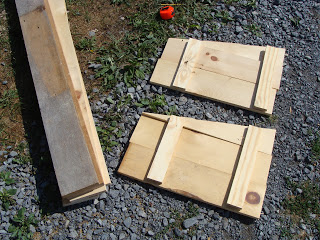
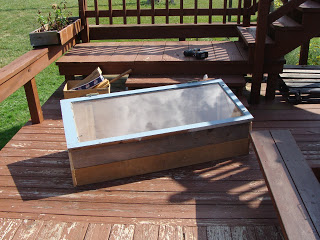
On a hot, lazy September day, what better activity to do than build a cold frame out of some extra pieces of wood lying around the tool shed?

A cold frame is a boxed enclosure with a transparent roof. Essentially, it's a mini green house. It allows folks like us to grow plants year-round—our plans with this cold frame will probably have to do with planting and growing kale, as well as other types of lettuce. But of course, cold frames can be used to grow just about anything so long as they're kept sealed during the cooler seasons and don't allow heat to escape into the atmosphere.


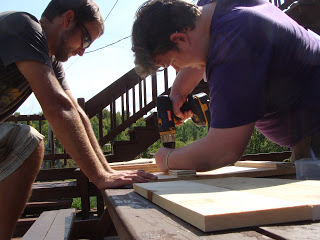
Matt and Kevin nailing together the boards.


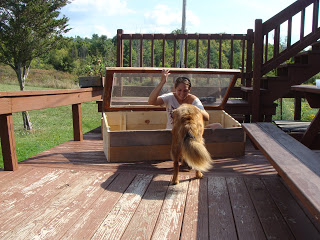
Preparing to photosynthesize.
Don't forget to make sure the cold frame works properly and that the transparent piece of the structure completely covers the box before thinking you're finished!
Easy to make, cold frame construction requires only a few pieces of wood, an old window, some nails, hinges, and a few power tools. It also helps to be in good company; some parts of the procedure would have been difficult to accomplish without a few extra hands to help out. Speaking of which, we would like to thank the dogs for providing excellent moral support.
The finished product! 

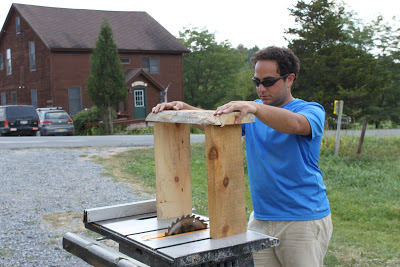
Slab Wood Furniture

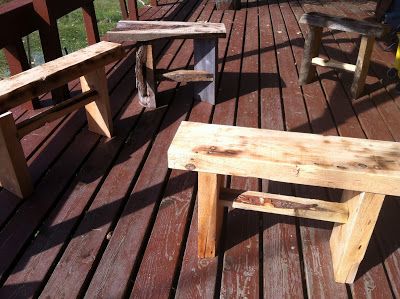
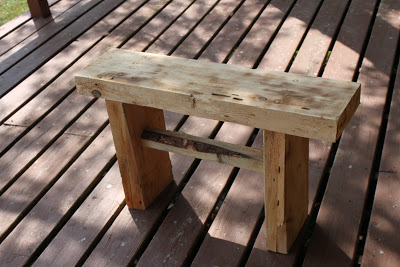
Benches and end tables made from slab wood.
Whether you're short on cash and in need of some indoor/outdoor furniture or you just love the way rustic building looks, here's a simple and free way to deck out your patios, decks and interiors: slab wood.

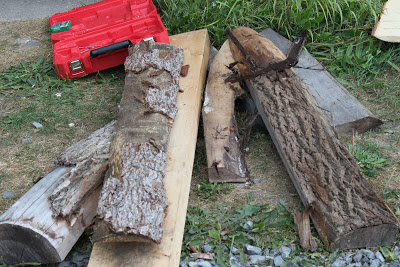
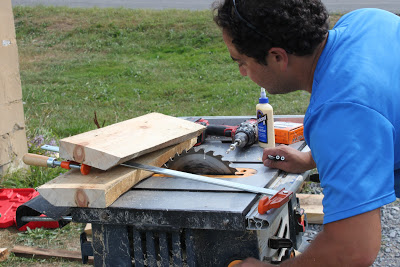
With a table saw, some slab wood from your local lumber mill (often discarded by them, free for you!), a few wooden dowels, some screws, wood glue, and a little help from your friends, you'll have your guests guessing what boutique you went to in order to find this one-of-a-kind furniture.
Slab wood donated by Grisanti over at Redwood Lumber

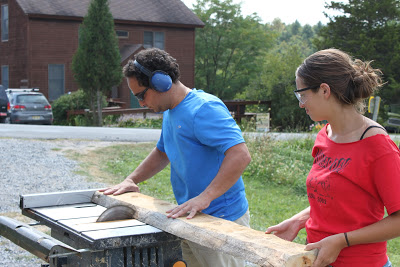
Because all pieces of slab wood are different, and because your needs will be different, there's no sense in us offering sizes for cuts of wood. Just make sure your legs are even lengths, your seat or table top is wide enough, and you offer appropriate support for weight. We used a table saw to make all our cuts and trimmings.


Here are Greg and Elyna cutting down the boards:

And visualizing the finished product:

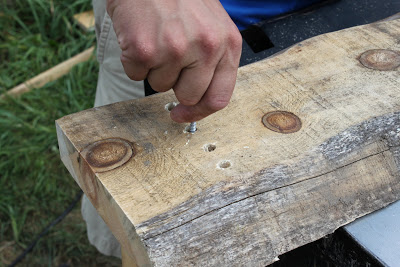
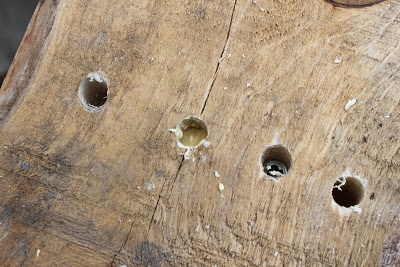
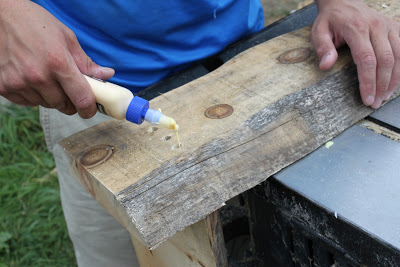
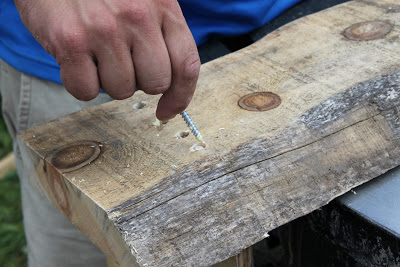
 Pre-drilled holes get screws, a dollop of wood glue, and some dowels:


 And voila:


Got a great DIY project to share? Itching to volunteer your time and expertise at Better Farm? E-mail us at info@betterfarm.org or call (315) 482-2536.
Comment

Nicole Caldwell

Nicole Caldwell is a self-taught environmentalist, green-living savant and sustainability educator with more than a decade of professional writing experience. She is also the co-founder of Better Farm and president of betterArts. Nicole’s work has been featured in Mother Earth News, Reader’s Digest, Time Out New York, and many other publications. Her first book, Better: The Everyday Art of Sustainable Living, is due out this July through New Society Publishers.

Heirloom Tomatoes at Better Farm

Say goodbye to your store-bought tomatoes. You haven't tasted anything like Better Farm's heirloom tomato plants.

In the last several decades, we've lost about 75 percent of the genetic diversity in our seeds. Through GMO programs by bigwhigs like Monsanto, smaller family farms that supported heirloom varieties have disappeared; and the multitude of heirlooms that had adapted to survive well for hundreds of years were lost or replaced by fewer hybrid tomatoes, bred for their commercially attractive characteristics. (Click here to learn all about how we sacrificed flavor for irrelevant, tasteless color.)


In the process, we have also lost much of the ownership of foods typically grown by family gardeners and small farms, and we are loosing the genetic diversity at an accelerating and alarming rate.
Every heirloom variety is genetically unique and inherent in this uniqueness is an evolved resistance to pests and diseases and an adaptation to specific growing conditions and climates. With the reduction in genetic diversity, food production is drastically at risk from plant epidemics and infestation by pests. Call this genetic erosion.

As genetic diversityerodes, our capacity to maintainand enhance crop forest andlivestock productivity decreasesalong with the ability to respond tochanging conditions. Geneticresources hold the key to increasingfood security and improving thehuman condition.

The late Jack Harlan, world-renowned plant collector who wrote the classic Crops and Man while Professor of Plant Genetics at University of Illinois at Urbana, wrote, "These resources stand between us and catastrophic starvation on a scale we cannot imagine. In a very real sense, the future of the human race rides on these materials. The line between abundance and disaster is becoming thinner and thinner, and the public is unaware and unconcerned. Must we wait for disaster to be real before we are heard? Will people listen only after it is too late."

It is up to us as gardeners and responsible stewards of the earth to assure that we sustain the diversity afforded us through heirloom varieties.

Here's a quick cheat sheet about heirloom plants:
  1. Commercial Heirlooms: Open-pollinated varieties introduced before 1940, or tomato varieties more than 50 years in circulation.
  2. Family Heirlooms: Seeds that have been passed down for several generations through a family.
  3. Created Heirlooms: Crossing two known parents (either two heirlooms or an heirloom and a hybrid) and dehybridizing the resulting seeds for how ever many years/generations it takes to eliminate the undesirable characteristics and stabilize the desired characteristics, perhaps as many as 8 years or more.
  4. Mystery Heirlooms: Varieties that are a product of natural cross-pollination of other heirloom varieties.
(Note: All heirloom varieties are open-pollinated but not all open-pollinated varieties are heirloom varieties.)

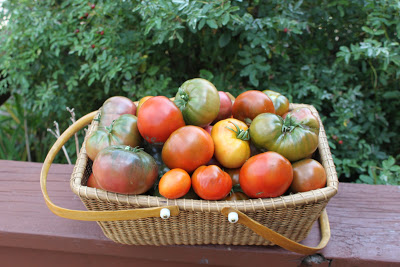
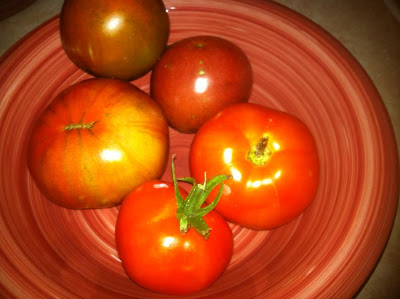
At Better Farm, we got a bunch of different heirloom tomato seeds this year from Baker Creek Heirloom Seeds. Here's some information about the varieties of striped, green, and red tomatoes we have for sale at our farm stand :
(Lycopersicon lycopersicum) This crop, native to the Americas, has become the most popular garden crop over the last 200 years. We offer an amazing selection of many of the finest old varieties in lots of delicious colors! A few heirloom varieties have plants that don't get quite so large. Called "determinate" varieties, these get to a certain size and then set all their fruit more or less at once. Determinates may be a better choice where tomatoes are grown in a very small garden, or in containers. All varieties are believed to be 'indeterminate' (long vines), unless specified 'determinate' (short vines). The best tasting varieties tend to be indeterminate, as most of ours are unless otherwise noted. 
Everyone at the farm attests to the fullness of flavor on these tomatoes; like your classic beefsteak or roma on steroids. The various sizes make them universally great for stews, sauces, or sandwiches.

Organic heirloom tomatoes available at farm stand, varying prices according to size. Special bulk orders can be called in: (315) 482-2536.
Comment

Nicole Caldwell

Nicole Caldwell is a self-taught environmentalist, green-living savant and sustainability educator with more than a decade of professional writing experience. She is also the co-founder of Better Farm and president of betterArts. Nicole’s work has been featured in Mother Earth News, Reader’s Digest, Time Out New York, and many other publications. Her first book, Better: The Everyday Art of Sustainable Living, is due out this July through New Society Publishers.

Kids Make Their Own Blues Instruments with betterArts

Elyna Grapstein, far left, Kevin Carr, center, and Matt Smith, right, help local children create harmonicas and tambourines at Blues in the Bay Festival on Saturday in Alexandria Bay, N.Y.
betterArts on Saturday offered a free arts and crafts station for children to make blues instruments on the front lawn of Bay House Artisans in Alexandria Bay, N.Y.

The local non-profit, based out of Better Farm in Redwood, received funding from Watertown Evening Rotary to provide children with free arts supplies and instruction to create tambourines and harmonicas out of popsicle sticks, rubber bands, paper plates, and bells.

Children also had the opportunity to decorate the musical instruments with paint and crayons. The event was put on in conjunction with Alexandria Bay's Blues in the Bay music festival.  Here are some photographs from the afternoon:


BetterArts is a 501(c)3 non-profit organization dedicated to increasing access to the arts throughout the North Country through the provision of free and low-cost workshops, residencies, private instruction, studio and gallery space, performances, and events. For more information, visit www.betterarts.org or call (315) 482-2536.
Comment

Nicole Caldwell

Nicole Caldwell is a self-taught environmentalist, green-living savant and sustainability educator with more than a decade of professional writing experience. She is also the co-founder of Better Farm and president of betterArts. Nicole’s work has been featured in Mother Earth News, Reader’s Digest, Time Out New York, and many other publications. Her first book, Better: The Everyday Art of Sustainable Living, is due out this July through New Society Publishers.

Spent Hens, One Week Later

It was just a week ago when we rescued 20 "spent hens" from a local egg farm and brought them back to Better Farm to live out their retirement. The mission was daunting; seeing birds so beaten down was difficult to bear. We washed them, clipped their toenails, and introduced them to their new surroundings. Then we waited for them to start acting like chickens.

The first day at Better Farm, these girls just sat there, looking stunned. But a mere week later, we're blessed with 20 feisty, organic egg-laying hens whose crowns are getting their color back, bellies are being filled with fresh fruits, veggies, bugs, and greens, and bodies are getting all the thrills of fresh air, soft breezes, snuggly hay, dirt, and grass to scratch and peck in. Click here to take a look at where we started; and look below (and at the video, above) to see these girls being the birds they were born to be. Feathers are growing back in, they're running (running!), jumping and flapping their wings, and just having the best time:


Want to sponsor a spent hen? $5/month covers all the costs of one bird! Donate by clicking here.
Comment

Nicole Caldwell

Nicole Caldwell is a self-taught environmentalist, green-living savant and sustainability educator with more than a decade of professional writing experience. She is also the co-founder of Better Farm and president of betterArts. Nicole’s work has been featured in Mother Earth News, Reader’s Digest, Time Out New York, and many other publications. Her first book, Better: The Everyday Art of Sustainable Living, is due out this July through New Society Publishers.

Condy Rouses Education Debate—And What of the Arts?

Former Secretary of State Condoleeza Rice addresses the Republican National Convention in Tampa, Fla., on August 29, 2012. (AP Photo)

In her speech last night at the Republican National Convention, Dr. Condoleezza Rice called failing schools "the civil rights issue of our day."

"We need to give parents greater choice; particularly poor parents, whose kids—most often minorities—are trapped in failing neighborhood schools," she said from her podium in Tampa, Florida. "This is the civil rights struggle of our day."

She continued: "If we do anything less, we will condemn generations to joblessness, hopelessness and dependence on the government dole. To do anything less is to endanger our global economic competitiveness. To do anything less is to tear apart the fabric of who we are and cement a turn toward grievance and entitlement."

Bold!

Rice's apparent commitment to improving public education, and her belief that by paying attention to our children and their ability to think on their own they will go on to contribute to society instead of relying on help, resonate. For two reasons: One, because the connection between a good education and an ability to be successful as an adult is obvious; and two, because in creating

betterArts

I've found myself paying a whole lot more attention to educational funding (and, by extension, arts education funding).

Despite the No Child Left Behind Act of 2002,

public education and the arts continue to suffer in American schools

, especially in poor and minority communities. One-quarter of all school principals report decreased instructional time for the arts, with only 8 percent reporting an increase, according to the

Council for Basic Education

. The percentage of students involved in music is now at its lowest point in 20 years, declining from 18.5 percent of the total student population to just 10 percent.

So here's some information specifically on the power of arts education. Maybe this is something our leaders on every level should consider when redrafting budgets:

  • Studies have shown students who study the arts are more likely to be recognized for academic achievement, be elected to class office, and score higher on the SAT. 

  • Students who study art are less likely to be involved with drugs; and students who were in band or orchestra reported the lowest lifetime and current use of all substances

  • In 2010, there were 20 million visits from every corner of Toronto to city-supported arts events. Every dollar Toronto invests in arts organizations attracts $17 more from private and public sources. Arts and culture funding has a great return on investment

  • In the United States, every few cents the government puts toward arts education gets an estimated 7-cent return.

  • Students who are educated in the arts are three times as likely to graduate high school

This is one area of federal funding where we actually see returns

on the investment—which additionally means lower costs in welfare, food stamps, and more. Lots and lots of returns. Food for thought as the deficit continues to soar and we debate where to cut the fat.

“When Winston Churchill was Prime Minister and he was told that there were going to be major cuts in arts and culture because of the mounting costs of World War II, he responded with a simple reply, ‘Then what are we fighting for?’”

For more information, check out these sites:

Comment

Nicole Caldwell

Nicole Caldwell is a self-taught environmentalist, green-living savant and sustainability educator with more than a decade of professional writing experience. She is also the co-founder of Better Farm and president of betterArts. Nicole’s work has been featured in Mother Earth News, Reader’s Digest, Time Out New York, and many other publications. Her first book, Better: The Everyday Art of Sustainable Living, is due out this July through New Society Publishers.

DIY Musical Instruments

With the Blues in the Bay festival coming up Labor Day Weekend, the betterArts brigade is planning a public arts and crafts demo for kids from 1-4 p.m. Saturday, Sept. 1. The free workshop will be held outside of Bay House Artisans in downtown Alexandria Bay, and is made possible through a generous donation from the Watertown Evening Rotary.

That free workshop will show children how to make their own instruments out of simple supplies. While researchig what to make next Saturday, we ran into a plethora of great ideas for kids of all ages. A few of our top picks below!
Join us from 1-4 p.m. next Saturday, Sept. 1, on the lawn in front of Bay House Artisans, ttkk, Alexandria Bay, N.Y. Contact us at (315) 482-2536 or info@betterarts.org with any questions. For more information about betterArts, please visit www.betterarts.org.

For any of these activities, you can leave the items plain or decorate them. If you need ideas for decorating these projects, try any of the following items. We are sure this list will help you think of even more items you can use. Combine different things such as buttons and glitter or sequins and yarn. Let the children's creativity surprise you!

Note: Keeping items such as these in a large plastic storage container makes for easy access and quick clean up:

  • sequins, buttons, yarn, ribbon, masking tape, beads, glitter, sand, cellophane, construction paper, magazines, photos, crayons, markers, colored pencils, paint, nail polish
TAMBOURINE
2 paper plates
stapler or glue
hole punch
string
jingle bells
crayons

Staple or glue two paper plates together, facing each other. Using a hole punch, make holes around the plates and tie jingle bells to the holes with string. Decorate the tambourine with crayons.
Shake to play.
Note: Heavy duty paper plates may be more durable for this craft.
Safety note: If using a stapler, an adult should do this. When finished be sure to cover the staples with scotch tape.

DRUM empty oatmeal box with cover
yarn
pen
2 pencils
2 spools
construction paper
crayons
Before beginning, you can decorate the oatmeal box with construction paper and/or crayons for a colorful effect.
Place the cover on the box. Use a pen to make a hole in the center of the cover and in the center of the bottom of the box. Through these holes, pull a piece of yarn long enough to hang around child's neck and down to their waist.
For the drumsticks, place the spools at the ends of the pencils, secure with glue if necessary.
Beat to play.

CHIMES
ruler or stick
washers
nail polish
string
mixing spoon
Hang the washers from the ruler or stick with pieces of string by wrapping the string around the ruler or stick and securing. Strike the washers with the mixing spoon to play.
Note: You can make this craft colorful by painting the washers first with different color nail polishes, such as red, gold, glittery, etc. Parents should supervise this part of the activity closely.

HORN
paper towel roll
waxed paper
rubber band
pen
Cover one end of the paper towel roll with waxed paper, secure it with a rubber band. Punch a row of holes along one side of the roll with the tip of a pen.
To play, sing a tune into the open end of the horn.

CYMBALS
two matching pot covers
yarn or ribbon
Tie the ribbon or yarn around the handles of the pot covers. To play, strike together.

XYLOPHONE
tall glasses or jars
water
mixing spoon
Fill the glasses or jars with different amounts of water. The more water in the glass, the lower the pitch will be. Having less water in the glass or jar will raise the pitch.
To play, gently strike the glasses with a mixing spoon.
Note: This instrument should probably be played by older children in "the band" because of the use of glass.

COMB BUZZER
pocket comb
tissue paper
Fold a piece of tissue paper over the tooth edge of a comb. To play, hum through the tissue paper.

GUITAR
empty shoe box
rubber bands
ruler or stick
Remove the cover from the box. Stretch the rubber bands around the box. Attach the ruler or stick to the back of the box on one end to act as the arm of the guitar.
To play, strum or pluck the rubber bands.

HAND BELLS
2 paper towel rolls
hole punch
4 jingle bells
string or yarn
Punch a hole in each end of the paper towel rolls. Tie two jingle bells to each side of the paper towel rolls by running string or yarn through the holes and carefully tying off.
Shake to play.
Have fun and let creativity and imagination run wild! Record the band's first song and play back for some great giggle time. Enjoy!


DIY instructions from Family Corner,
1 Comment

Nicole Caldwell

Nicole Caldwell is a self-taught environmentalist, green-living savant and sustainability educator with more than a decade of professional writing experience. She is also the co-founder of Better Farm and president of betterArts. Nicole’s work has been featured in Mother Earth News, Reader’s Digest, Time Out New York, and many other publications. Her first book, Better: The Everyday Art of Sustainable Living, is due out this July through New Society Publishers.

Redwood Field Days 2012

 
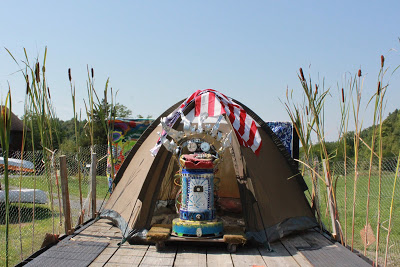
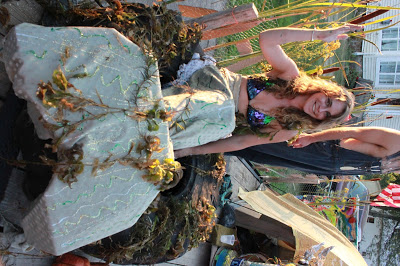
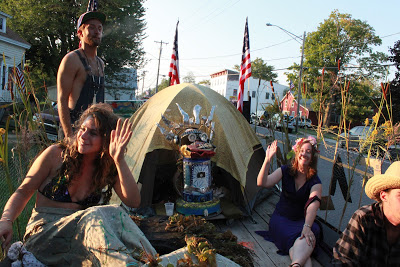
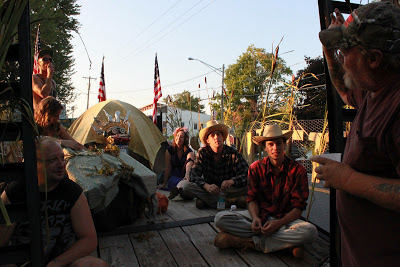
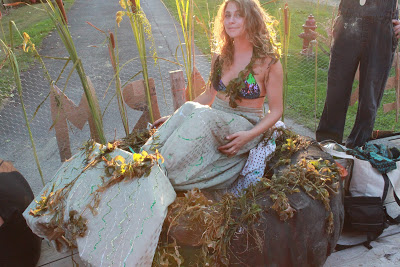
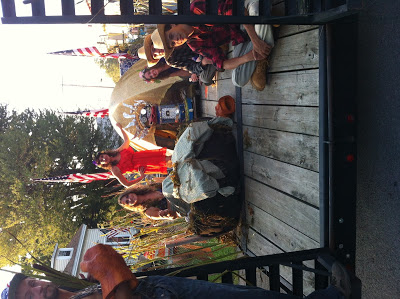
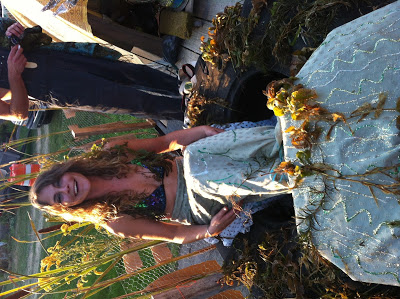
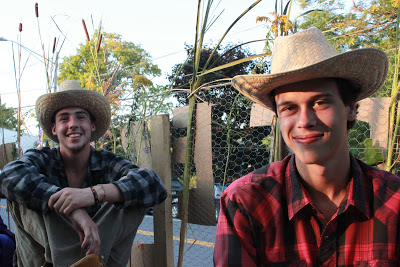
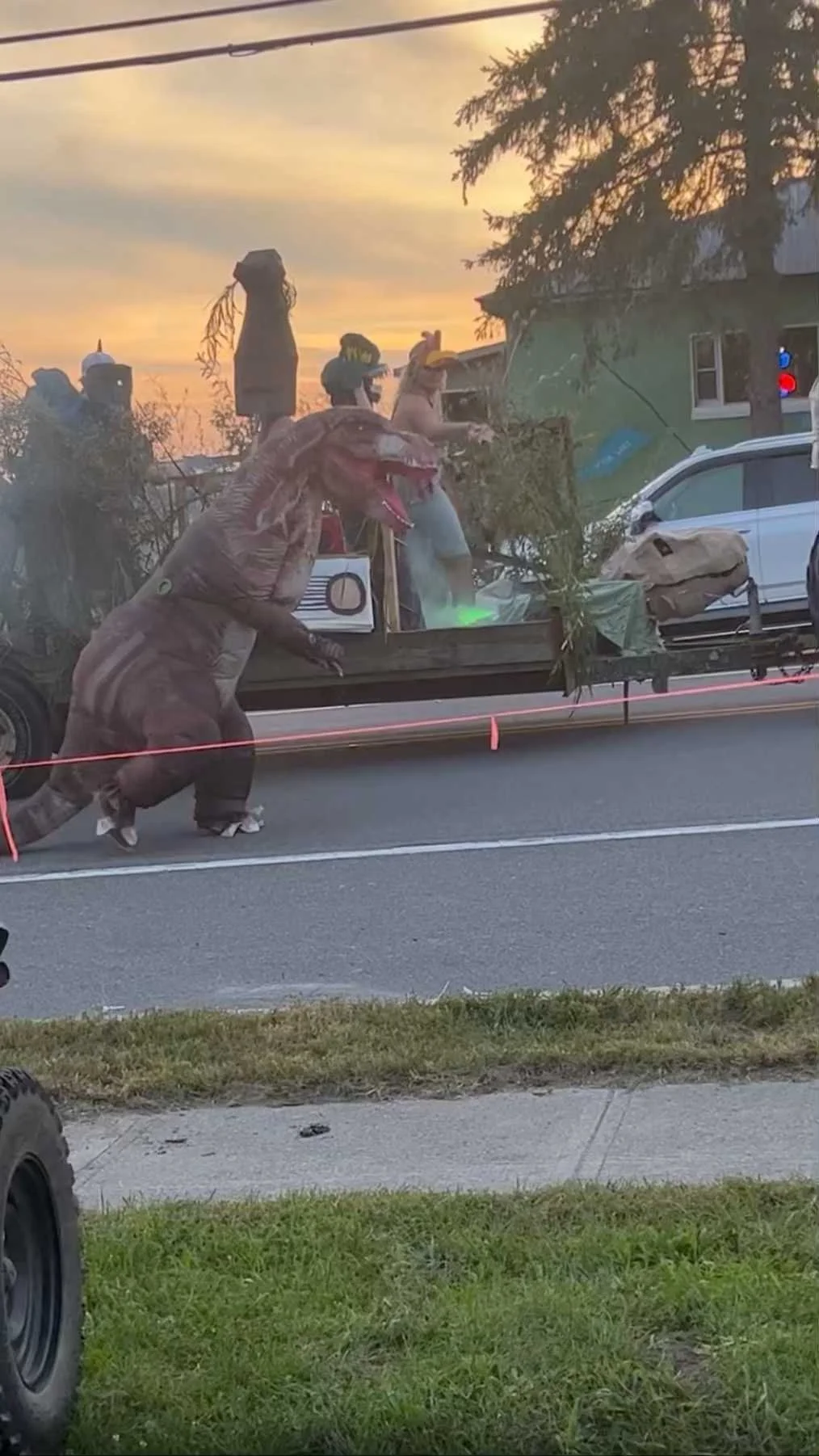
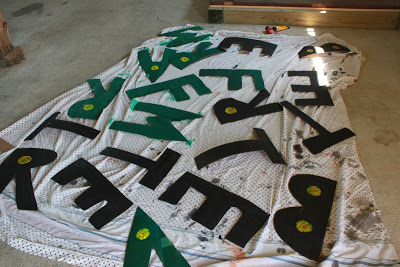
The Redwood Volunteer Fire Department's Firemen's Field Days is always a big event in Redwood. This year's festivities featured live music Friday and Saturday night, lots of rides for kids, performances by the Original Yangs Drum and Bugle Corps, a junk auction, chicken barbecue, cash raffle, and all the fried dough you could stomach. The weekend's events culminated Saturday night with a parade, in which we were determined to shine.

We've been kicking around ideas for our float for months; but it was in the last week that we put the whole thing together. Here are some shots of the construction:


 Here's footage of our ride to the parade:


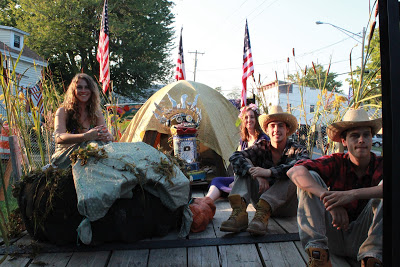
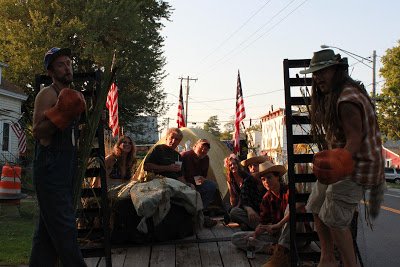
Here we are at the parade:


We cranked Canned Heat's "Going Up The Country", threw bags of organic string beans into the crowd, and cheered our way through downtown Redwood. And, we scored second place!

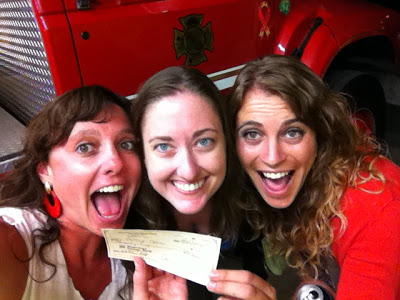
Here's Holly, Sally Jane, and I with our second-place check:

See you all next year!

Click here to see the full album.
Comment

Nicole Caldwell

Nicole Caldwell is a self-taught environmentalist, green-living savant and sustainability educator with more than a decade of professional writing experience. She is also the co-founder of Better Farm and president of betterArts. Nicole’s work has been featured in Mother Earth News, Reader’s Digest, Time Out New York, and many other publications. Her first book, Better: The Everyday Art of Sustainable Living, is due out this July through New Society Publishers.

Spent Hens Rescue Mission Complete!

There are roughly

280 million egg-laying hens in the United States confined to battery cages

.

Scratch that—279,999,980. Better Farm's team yesterday

rescued 20 such hens

from a local egg farm.

Commercial, egg-laying birds are stuffed into small wire cages stacked in tiers and lined up in rows inside warehouses. In accordance with the USDA's recommendation to give each hen four inches of 'feeder space,' hens are commonly packed four to a cage measuring 16 inches wide.

Because egg-laying chicken breeds have been genetically selected exclusively for maximum egg production, they don't grow fast or large enough to be raised profitably for meat. Therefore, male chicks of egg-laying breeds are of no economic value, and they are discarded on the day they hatch.

The female birds' confined space doesn't allow the ladies to stretch their wings or legs, and they cannot fulfill normal behavioral patterns or social needs like scratching in the dirt, chasing bugs, and taking dust baths.

As you can imagine, constantly rubbing against the wire cages means these birds lose a lot of feathers; and it's not uncommon for the ladies to have lots of bruises and abrasions. In order to reduce injuries resulting from excessive pecking—a behavior that occurs when confined hens are bored, stressed, or frustrated—the front of most laying hens' beaks are cut off.

Laying more than 250 eggs in one year, a laying hen's body is severely taxed (whose wouldn't be?!). They suffer from "

fatty liver syndrome

" and "

cage layer fatigue

"; and, percentage-wise, after about a year most hens in the egg industry are considered "spent" and sent to slaughter. The hens who did nothing but lay eggs usually end up in soups, pot pies, dog food, or similar low-grade chicken meat products.

But the truth is, these hens don't have to be spent! They can still make loving pets, wondrous mini-tillers, voracious composters, initmidating bug-eaters, and (if you're into this sort of thing), lovely egg-layers. And besides—doesn't someone who's worked so intensely day after day deserve a nice retirement?

We drove out to pick up the birds yesterday. The farm we adopted the hens from is a small, family farm that by all accounts is considered a hygienic, high-quality operation. Even so, the birds were kept indoors in very cramped conditions. They had never been outside, never walked on the ground, never known a breeze, or a floor that wasn't a mesh cage.

Standing outside the large barn where the birds were kept, we heard screeching and yelling coming from the chickens inside. And we just weren't prepared for the sight of these birds when they came out. Their beaks had all been clipped, rendering their mouths into a puckered shape uncharacteristic of any bird. Their toenails were so long they had trouble getting around (a few couldn't walk at all). Many had open wounds, all were filthy. They were all missing feathers on their bellies and butts and backs from rubbing up against the cage and each other, and their undercarriages were horribly swollen.

Our hens were looking pretty shabby when we picked them up (that chicken in the bottom left can't walk because of her toenails, leaving her subject to the trampling of the others):

But, enough of the sadness! Here we are unloading the ladies from the truck, about to be introduced to the outdoors for the first time:

...their new digs:

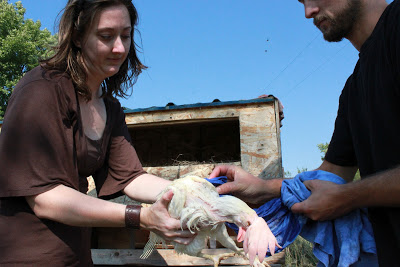
Before setting the birds free, we had to get them good and primped like proper ladies. Pedicures, massages, bubble baths, and fresh water were all musts (watch video at top to see that process). And, drum roll please, here are the birds (mostly cleaned up, it's a process!) seeing grass, bugs, and sunshine for the very first time:

Two short clips of them checking out their new surroundings:

They got a great night's sleep last night, and this morning were making normal chicken noises, scratching and pecking in the dirt, preening themselves, and stretching out those glorious wings. We couldn't love these ladies any more, or be happier to see them get that retirement they so well deserve.