Art Barn's Grand Opening Showcases Work of Jennifer Elizabeth Crone

Jennifer Elizabeth Crone showed up at Better Farm to begin her betterArts residency program in February amidst subzero temperatures, overcast skies, and more hours of darkness than daylight. A San Diego native who's lately called New York City home, this was Jennifer's first foray into country living.

She bundled up, set up a studio space in Better Farm's loft, and got to work. Her process is layered; utilizing found books and objects (including some found canvases already painted on), oil paints, and collage.

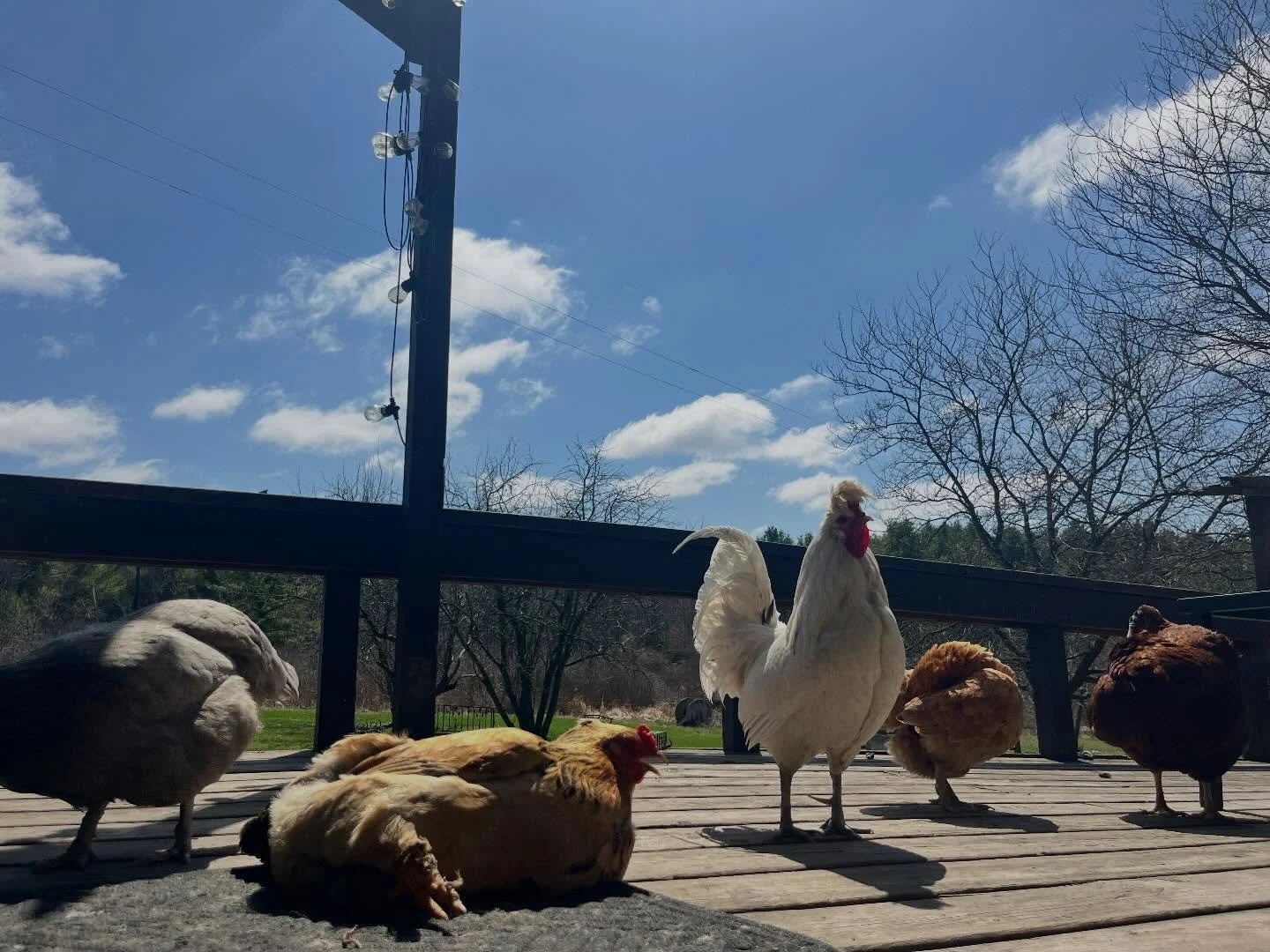
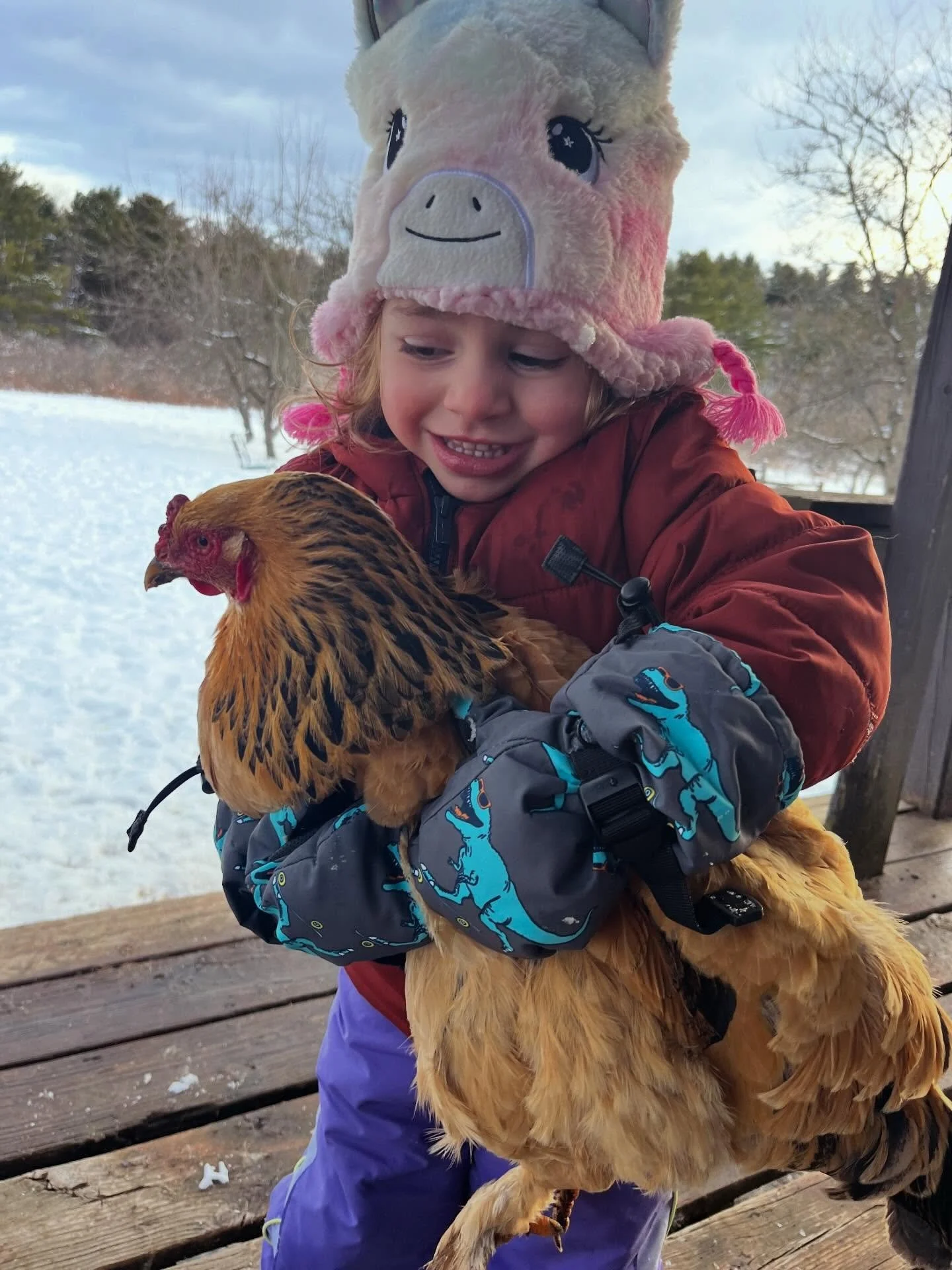
Jennifer also became an integral part of the day-to-day operations at Better Farm. She was Mother Hen to our chickens Sissy, Scarlet, and Henrietta, ran our composting system, and even helped to plant all the seeds now growing like crazy in our greenhouse.

She became part of the Better Farm family, and will be leaving her mark in a more literal way than most: with her art. There's a big tree painted on an upstairs bedroom wall, a ceiling fan with vines and flowers painted on it, a collaged doorway, and a paper mobile hanging from some rafters.

We were able to celebrate Jennifer's hard work, as well as the grand opening of the newly renovated Art Barn, April 30. Here are photos of Jennifer's wonderful projects from that event:


...and her admirers:


Stay in touch with Jennifer by following her blog. For pricing and purchasing information, please e-mail jennifereliz@gmail.com. And for information on the betterArts residency or to apply, click here.

Floating Gallery Lifts Off May 3

Calling all artists!

"Floating Gallery", the North Country Arts Council's public art initiative, is accepting work starting at 10 a.m. Tuesday, May 3 at Bistro 108 on Court Street in Watertown.

Art is currently on display at Samaritan Medical Center, Cafe Mira, Bistro 108, Paddock Coffee House, and the Black River Valley Club. On May 3, new work will be put on exhibit and currently displayed work will be rotated throughout the aforementioned locations.

All artists are welcome to become a member of the North Country Arts Council in order to exhibit and sell work. Membership is $25 per individual per year. You can sign up online, via check or cash when you bring your work to Bistro 108, or by visiting Arts on the Square at 52 Public Square.

The North Country Arts Council is an all-volunteer, non-profit organization working to promote growth in and through all art forms. For more information or to share ideas, e-mail president Laura Oakes.
Comment

Nicole Caldwell

Nicole Caldwell is a self-taught environmentalist, green-living savant and sustainability educator with more than a decade of professional writing experience. She is also the co-founder of Better Farm and president of betterArts. Nicole’s work has been featured in Mother Earth News, Reader’s Digest, Time Out New York, and many other publications. Her first book, Better: The Everyday Art of Sustainable Living, is due out this July through New Society Publishers.

Picture Perfect

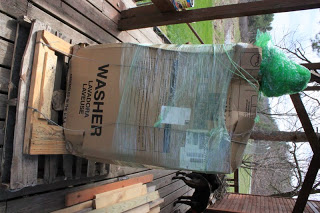
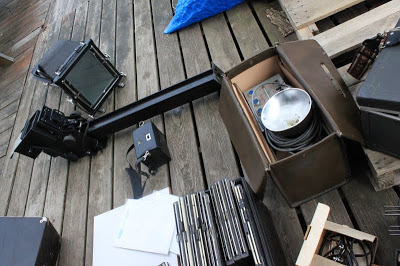
When Tracey Hicks contacted us to say she'd like to donate some photography equipment to betterArts that once belonged to her late brother, an extremely talented photographer and teacher, we were thrilled. The Better Farm crew and its visitors for years have expressed interest in an on-site darkroom—a dream we've realized layer by layer as we empty the basement, clean it, install vents and dehumidifiers, and build tables for enlargers and trays.


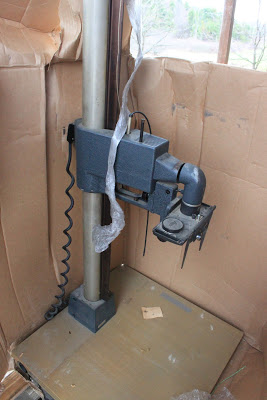
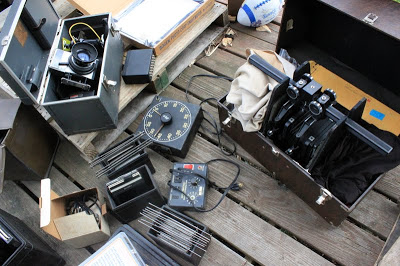
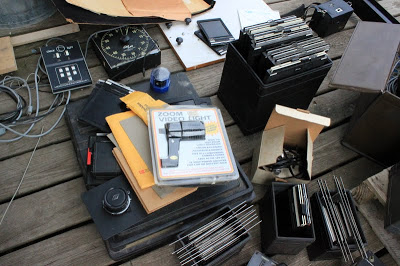
When the 300-plus pound washer box arrived yesterday packed to the gills with photography equipment, we couldn't wait to see what we were in store for. Inside we discovered a huge enlarger, several cameras including a 4x5 and 8x10, light boxes, timers, paper, flashes, and more. The equipment will all be available for rental by anyone in the community; and our darkroom (when finished) will be up for grabs by our artists-in-residence, community students and teachers, or anyone who'd like to learn the classic art of film photography.

Here's what Tracey had to say about her unbelievably generous donation:  
I think my brother would be very happy to know that students of life, photography, school, whatever will be using it and learning and enjoying what they are doing especially since he loved photography and was a teacher. I truly believe that he would have loved to have visited the farm and... I couldn't think of a better place for the equipment to be. I hope it all works and works out for you.

Heartfelt thanks to Tracey for giving us all we need to get this darkroom off the ground! Contact us if you're interested in renting some photography equipment, and check back here for updates on the renovation.


1 Comment

Nicole Caldwell

Nicole Caldwell is a self-taught environmentalist, green-living savant and sustainability educator with more than a decade of professional writing experience. She is also the co-founder of Better Farm and president of betterArts. Nicole’s work has been featured in Mother Earth News, Reader’s Digest, Time Out New York, and many other publications. Her first book, Better: The Everyday Art of Sustainable Living, is due out this July through New Society Publishers.

Ruby's Amanze-ing Week of Work


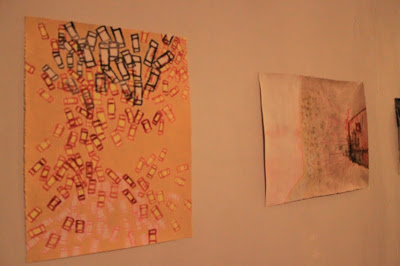
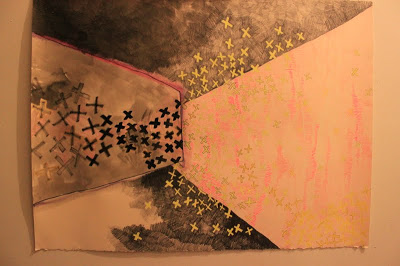
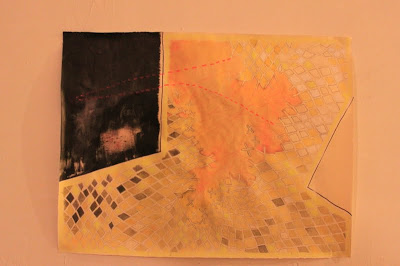
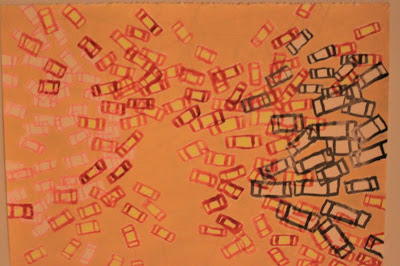
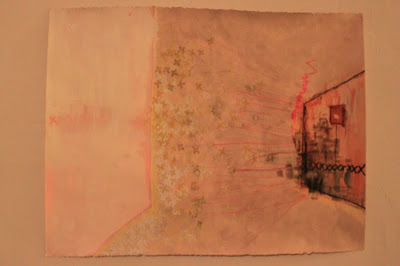
Ruby Amanze was only at Better Farm for one week as a betterArts resident, but managed to produce as much art she said as might normally take her a month or more. On Saturday, her last night here, she put her work up on display for us to take a peek at.

Her process is layered, she explained. First she does a color wash on the paper, then works with any combination of inks and pencils for detail. Her geometric shapes and styles lend a continuity to her pieces that we all love.

It was a busy week for Ruby. In spite of the inclement weather, she managed to squeeze in daily jogs, asparagus-planting in Better Farm's raised beds, puttings seeds of peas, lima beans, and onion bulbs into the ground in the main garden area, catching a Dawg Brothers concert at the Dancing Dog last Friday night, sunset-watching on Butterfield Lake Saturday, helping to host a Supper Club dinner party last Tuesday, and oh yeah, completing four huge pieces of art. Best of luck to Ruby on all her endeavors. She will be missed!


To keep up with Ruby, follow her website. To learn more about the betterArts residency program and to apply, click here.

Comment

Nicole Caldwell

Nicole Caldwell is a self-taught environmentalist, green-living savant and sustainability educator with more than a decade of professional writing experience. She is also the co-founder of Better Farm and president of betterArts. Nicole’s work has been featured in Mother Earth News, Reader’s Digest, Time Out New York, and many other publications. Her first book, Better: The Everyday Art of Sustainable Living, is due out this July through New Society Publishers.

Direct Planting Hardy, Cold-Weather Seeds

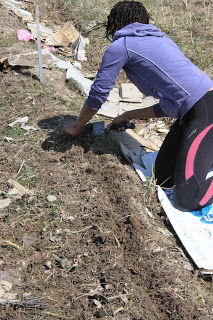
With the North Country growing season not really starting until June and frosty nights lasting well into May, it's best to start most seeds indoors around here. Our cauliflower, broccoli, lentils, carrots, tomatoes, and more are all busy establishing root systems in the greenhouse; while other veggies such as peas are extremely hardy and can be put right into the thick of things by April. With that in mind, Ruby Amanze and I hit the Better Farm garden last week to get lima and roma beans, onion bulbs, and sugar and snap peas planted.

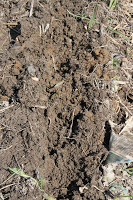
Luckily for us, mulch gardening has worked wonders on the formerly hard soil in Better Farm's garden. Layers of cardboard, fresh compost, wood ash, and dead leaves have yielded super-soft, rich, dark soil that is a breeze to plant in. Soil that last year broke two shovels this year didn't require so much as a hand trowel to get into.

Dirt!
We set to work getting the seeds 2 inches deep and several inches apart. The onions we planted a little deeper and spaced further from each other, on account of their anticipated growth.

All the activity naturally attracted the attention of Better Farm's chickens. Here are Henrietta and Sissy stopping over to see what all the fuss was about, and to scratch in some fresh compost.


The girls stayed out of the way long enough for Ruby and I to get all the seeds in and watered. While we were out there, I was pleased to discover the kale from last year making a comeback.

Very exciting. Next week we'll start in on putting fresh seeds in the greenhouse and adding some compost manure to our garden beds. Only a month to go until we're in the full swing of things!
Comment

Nicole Caldwell

Nicole Caldwell is a self-taught environmentalist, green-living savant and sustainability educator with more than a decade of professional writing experience. She is also the co-founder of Better Farm and president of betterArts. Nicole’s work has been featured in Mother Earth News, Reader’s Digest, Time Out New York, and many other publications. Her first book, Better: The Everyday Art of Sustainable Living, is due out this July through New Society Publishers.

Worm Dirt: Taking topsoil to the next level

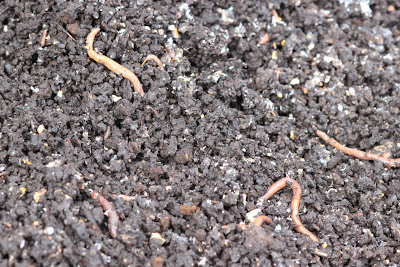
Worm dirt from the 1000 Islands Bait Store in Alexandria Bay, N.Y.
Using Better Farm's no-till, no-weed method of gardening means piling cardboard, dead leaves, compost, and fresh soil on top of each other in our raised beds and gardens. This technique yields an intimidating harvest of huge veggies and fruits that feed us (and visitors to our farm stand and the Redwood Farmers Market) all summer and fall. As important a presence as any of those ingredients, however, is the worm.

Worms are more than fish bait! They  help water flow through soil, break down organic matter into plant food, and excrete castings that are like fertilizers on steroids. They turn soil over better than any rototiller and are one of the coolest organisms around. Worm- and castings-rich soil is considered "Black Gold" among green thumbs and compost enthusiasts.

You can buy worm castings online or at specialty gardening stores, or you can do like us a pay your local bait shop a visit. The stuff you get from bait stores is a little rougher around the edges (you can see chunks of cornmeal in the dirt, for example), but it's also cheaper and local. Weigh your options!

The 1000 Islands Bait Store in Alexandria Bay, N.Y., sells nice-size bags of worm dirt for $3.50/bag, which is slightly cheaper than what you'd pay for a bag of soil that's not chock-full of awesome little worms. It took about four bags to fill each of the raised herb beds at the farm. The rest will be sprinkled in and around our seedlings when we transplant them outside.
1 Comment

Nicole Caldwell

Nicole Caldwell is a self-taught environmentalist, green-living savant and sustainability educator with more than a decade of professional writing experience. She is also the co-founder of Better Farm and president of betterArts. Nicole’s work has been featured in Mother Earth News, Reader’s Digest, Time Out New York, and many other publications. Her first book, Better: The Everyday Art of Sustainable Living, is due out this July through New Society Publishers.

DIY Asparagus

Imagine spending the next 15 to 25 years of your life with the ability to walk outside and pull shoots of asparagus to your heart's content. Yum.

The mental hurdle between that vision and the actual bounty of having at-home asparagus plants is the planning: From seed, you'll have to wait two and one-half years to enjoy your yield; from root, that number dwindles to one. But the truth is, once they're started asparagus plants are very easy to grow. And your initial investment (we spent $15 on two bundles of roots/two dozen plants and simply added homemade compost and a little worm dirt from the bait store) is totally worth it when you consider most supermarkets sell a single pesticide- and chemical-riddled bunch of asparagus for $3.99.

Here's a handy guide for growing your own lovely asparagus plants from 1-year-old roots. We promise they're worth the wait!

Starting Your Asparagus Plants

Asparagus crowns look like little octopuses. When planting, you have to fan the "tentacles" out under the soil to promote the best growth.

Track down healthy crowns from a trusted grower that are at least 1 year old.  A crown is the root system of an asparagus plant grown from seed. Each crown yields one-half pound of spears per year when fully established. Better Farm picked up two bundles of crowns from the

Agway in LaFargeville, N.Y.

(Note: You can certainly start from seed if you wish, but expect added work as you have to transplant the seedlings when they take root; thereby losing a year in the growing process.)

Asparagus loves most soil equally; just be sure you've got good internal drainage and a soil pH of 6.5-7.5. For those of you in the same boat as us and working with the clay-rich soil of the North Country, be sure to have plenty compost-rich soil at hand to mix in with the hard earth. Asparagus also grows best in patches of ground receiving 7 to 8 hours of sunlight a day. We decided to put our crowns into raised beds off the back deck which face due south.

Dig a trench six inches deep, fan the roots out (less disruption and crimps in your roots mean bigger yields), and plant your asparagus crowns 12 to 18 inches apart. Lots of spacing is important because as the asparagus "ferns" grow, you'll find your space shrink. Well-spaced asparagus also means ferns will dry quicker after watering, thereby preventing fungus diseases.

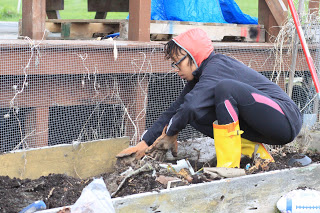
Ruby Amanze spaces Better Farm's asparagus crowns along raised beds.

Wide between-row spacing is necessary because the vigorously growing fern will fill in the space quickly. Wide spacing also promotes rapid drying of the fern to help prevent the onset of fungus diseases.

Once you've got your asparagus in the rows, fill the trench in with soil so just one inch of the crown shows through. Don't tamp the dirt down too much—asparagus shoots love low resistance as they grow! Spears should begin within about a week of planting.

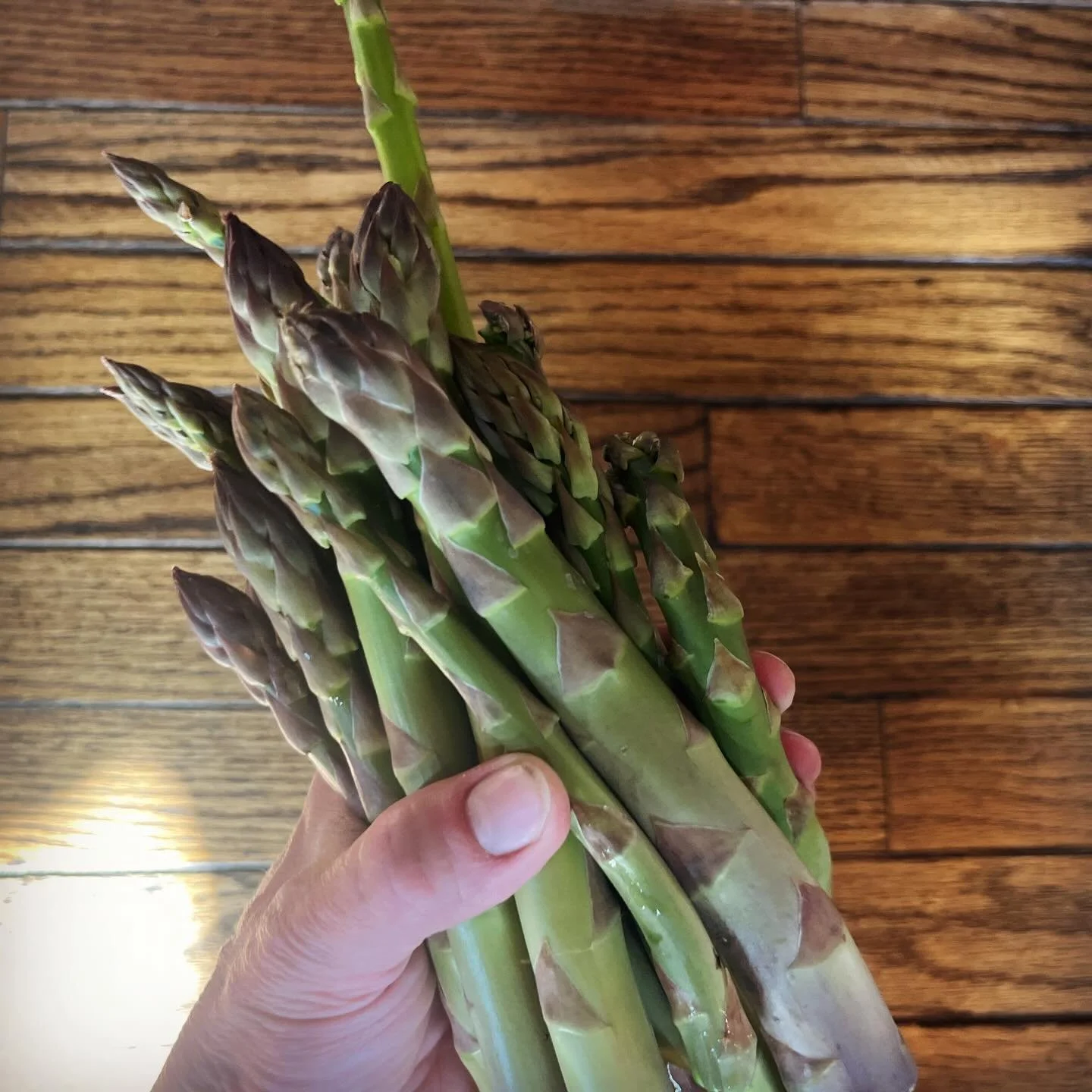
Here are our shoots:

As the shoots appear, sprinkle more dirt around the base of the plants. Tips will open as the spears stretch skyward (usually around 8 or 9 inches of height). Those small branchlets will become ferns. In the first year, it's important you don't pick any of your asparagus, as the ferns will be producing food for the plant and then moving that food down into the crown for next year's spear production.

Asparagus ferns.

Do watch for weeds (we recommend laying cardboard around your stalks). Be sure not to trim your plants back at the end of the growing season! Dead fern growth catches snow for extra soil moisture and keeps the ground cooler into the spring, which helps to delay premature asparagus growth in the spring. That next spring, you can trim back old fern growth by cutting as low as possible after the last frost has past.

Harvesting Your Asparagus

After you've been growing your crowns for a year, it's okay to harvest some asparagus (use caution, as over-picking in the second year can permanently reduce your yields in the long run). Pick asparagus by manually snapping 7- to 9 inch spears with tight tips. Don't cut spears with a knife at soil level or below—this can hurt other crowns and buds. The stub you leave behind after snapping a spear will quickly dry up and disintegrate. It's best to pick asparagus early in the morning before outside air heats up. Put your spears in ice water to remove all heat from them, drain the water, and put the spears in plastic bags in the refrigerator. Asparagus can keep one to two weeks like this, not that you'll be able to resist eating them on the same day you pick them.

For more tips on planting asparagus,

click here

.

Comment

Nicole Caldwell

Nicole Caldwell is a self-taught environmentalist, green-living savant and sustainability educator with more than a decade of professional writing experience. She is also the co-founder of Better Farm and president of betterArts. Nicole’s work has been featured in Mother Earth News, Reader’s Digest, Time Out New York, and many other publications. Her first book, Better: The Everyday Art of Sustainable Living, is due out this July through New Society Publishers.

The Re-Education of America: Book signing tonight!

A book signing for World Class: The Re-Education of America, penned by Mary Ellen Shevalier and Francoise Piron, is slated from 6-8 p.m. tonight, April 21, at Arts on the Square, 52 Public Square in Watertown.

World Class documents a new teaching technique employed for the last two years by a French teacher and art teacher from South Jefferson Central High School. That method focuses on taking the strongest parts of each student and combining them all together in a group setting, With students working in teams, their unique strengths are extracted to produce answers and creative methods of problem-solving.

Piron and Shevalier's hope is that World Class' focus on educational philosophies and strategies for propelling those ideas forward will change certain approaches of the education system.

The course outlined in World Class was designed to foster an ability to critically perceive media, analyze, evaluate and produce messages about what individuals have learned. It helps to initiate a universal educational format where all abilities and learning styles are honored, diversity among students is valued, and contribution is celebrated.

For more information on the book and upcoming signings, click here.
Comment

Nicole Caldwell

Nicole Caldwell is a self-taught environmentalist, green-living savant and sustainability educator with more than a decade of professional writing experience. She is also the co-founder of Better Farm and president of betterArts. Nicole’s work has been featured in Mother Earth News, Reader’s Digest, Time Out New York, and many other publications. Her first book, Better: The Everyday Art of Sustainable Living, is due out this July through New Society Publishers.

Inspiration: Wood Storage

Whether you've scored a pre-war studio in Manhattan with original fireplace intact or have recently installed a woodstove in your 19th-century farmhouse-turned-hippie-commune-turned-sustainability-education-center in the middle of nowhere,  you might be brainstorming about creative, clean ways to store wood on your property and/or in your home.

(Yes, it's spring; but to get properly seasoned wood for next winter, wood-cutting season is just about here and those logs have to go somewhere...)

Here are some great ideas gleaned online and found locally in Jefferson County, N.Y. Please contact us at info@betterfarm.org to share your own ideas!

Comment

Nicole Caldwell

Nicole Caldwell is a self-taught environmentalist, green-living savant and sustainability educator with more than a decade of professional writing experience. She is also the co-founder of Better Farm and president of betterArts. Nicole’s work has been featured in Mother Earth News, Reader’s Digest, Time Out New York, and many other publications. Her first book, Better: The Everyday Art of Sustainable Living, is due out this July through New Society Publishers.

Ones to Watch: The Urban Farming Guys

And you thought you'd made a real sacrifice when you started carrying a refillable travel mug instead of using and throwing away Styrofoam coffee cups.


The Urban Farming Guys are a band of about 20 families who consciously traded their peaceful suburban homesteads for one of Kansas City's worst neighborhoods. The tribe scooped up homes within five blocks of one another and recently acquired nine adjacent, vacant lots (with more on the horizon) onto which they're imposing crops for organic gardening designed to feed the community.

Like the sound of all that? These guys are definitely worth following and getting involved with. Learn more about their projects and how you can lend a hand here.

Many thanks to Pablo Patino for this news tip.
Comment

Nicole Caldwell

Nicole Caldwell is a self-taught environmentalist, green-living savant and sustainability educator with more than a decade of professional writing experience. She is also the co-founder of Better Farm and president of betterArts. Nicole’s work has been featured in Mother Earth News, Reader’s Digest, Time Out New York, and many other publications. Her first book, Better: The Everyday Art of Sustainable Living, is due out this July through New Society Publishers.

Introducing betterArts Resident Ruby Amanze

"I want to make art and live in peace... even if it is just for a short amount of time," Ruby Amanze wrote in her letter of intent to betterArts. "As many artists who work full-time jobs (non-studio employment) will testify, studio time is 'in-between' time. After work, on the weekends, whenever I can make the time to work on a drawing. Those who are passionate, will make the work no matter what."

For the next week, Ruby will be living, breathing, and working on her art right here at Better Farm as the latest artist-in-resident to pay us a visit.

Ruby, who serves as directory of education at the Museum of Contemporary African Diasporan Arts in Brooklyn, N.Y., holds a bachelors of fine art (Summa Cum Laude, no less) from the Tyler School of Art, a masters of fine art from Cranbrook Academy, and has been featured in more than a dozen juried and group exhibitions since 2004. She's been a teaching artist at the Fabric Workshop and Museum Education and Department in Philadelphia, Penn., a lecturer of photography at Ursinus College, and a lecturer of design at the Drexel University's Department of Art and Art History.

"Being in a quiet environment surrounded by nature would be a welcomed change to my Brooklyn, N.Y., daily routine," she told us. "I'm a very simple girl and I believe in, and aspire to, a simple and clean life. My father grew up in a village in Imo State, Nigeria. Learning to farm and cultivate the earth had been, and is, the way of life for generations before and after him. Likewise, my mother grew up on the coast in Port-Harcourt, Nigeria, a major fishing port. Many aspects of their upbringing have been instilled in me and I have since taken an interest in finding ways to live a more ecologically friendly life from the food I eat, the types of businesses I support, and the products I use in my house and on my person. Better Farm sounds like the perfect combination of space to step back for a minute and dedicate myself to making art and living in a healthy environment amongst like-minded individuals."

In her time here, we're going to have Ruby working on the grounds, in the greenhouse and gardens, and involved in daily "family dinner" parties. Stay tuned for pics of her progress here! 

See more images of her work after the jump!


For more information about betterArts' residency program, click here. To learn more about Ruby and her work, click here.

Earth Day Cleanup a Total Wash in the Very Best of Ways

Photo/Harley McConnell
Redwood residents brave last Saturday's heavy rainfall to participate in an Earth Day cleanup along Route 37 sponsored by Better Farm. From left are Chuck Kendall, Nicole Caldwell, Fran Farren, Rick Lopez, Mike Brown, Lowell Ciliberti, and Fred Ciliberti. Not pictured: Lauren Evans
Comment

Nicole Caldwell

Nicole Caldwell is a self-taught environmentalist, green-living savant and sustainability educator with more than a decade of professional writing experience. She is also the co-founder of Better Farm and president of betterArts. Nicole’s work has been featured in Mother Earth News, Reader’s Digest, Time Out New York, and many other publications. Her first book, Better: The Everyday Art of Sustainable Living, is due out this July through New Society Publishers.
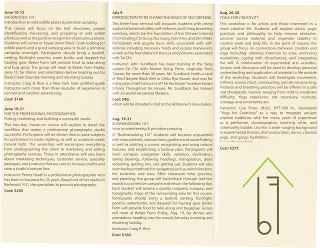
Better Farm's 2011 Workshop Catalogue

Please visit www.betterfarm.org/upcoming-workshops for further information and a complete listing. Click on images for a larger viewing size.


Logo design by Corinne Rochelle.
Comment

Nicole Caldwell

Nicole Caldwell is a self-taught environmentalist, green-living savant and sustainability educator with more than a decade of professional writing experience. She is also the co-founder of Better Farm and president of betterArts. Nicole’s work has been featured in Mother Earth News, Reader’s Digest, Time Out New York, and many other publications. Her first book, Better: The Everyday Art of Sustainable Living, is due out this July through New Society Publishers.