
Smart Farming: Driving Sustainable Agriculture in Modern Communities
/
Agriculture has always evolved alongside human ingenuity, but today’s pace of change is unlike anything previous generations experienced. Farmers who once relied solely on rainfall patterns and generational knowledge now manage operations through dashboards, satellites, and sensor networks that span thousands of acres.
The pressure to feed a growing global population while managing shrinking resources and unpredictable climate conditions has made innovation necessary. Understanding how digital tools are reshaping food production gives you a clearer picture of where the industry is heading and why it affects everyone, not just those working the land.
From Soil to Software: The New Face of Modern Farming
Traditional farming model still has value, but it's no longer sufficient on its own. Smart farming integrates real-time data, automation, and connectivity to help growers make faster, more accurate decisions across every stage of production. The system doesn't just react to problems but anticipates them.
This shift belongs to a broader wave of agricultural revolutions driven by computers rather than farm equipment alone. Where earlier breakthroughs introduced tractors and chemical fertilizers, today's advances center on information. Farmers now gather insights about their land that would have taken weeks to observe manually, delivered in seconds through sensors, satellites, and software.
Sensors, Weather Data, and the Intelligence Behind the Fields
Modern farmers deploy Internet of Things or IoT sensors across the field. These small devices continuously monitor conditions like soil moisture, nutrient levels, and air temperature. The information gets transmitted directly to a farmer's device or management platform. Farmers aren't just collecting information but acting on it strategically.
Weather stations placed throughout a field track variables like wind speed, humidity, and rainfall patterns that directly influence planting schedules and irrigation decisions. When this data feeds into a farm management system, it becomes possible to model outcomes, schedule tasks automatically, and reduce waste.
Cloud-based irrigation systems tap soil moisture sensors to provide targeted solutions. When sensors detect dry conditions below a specific threshold, the system triggers irrigation automatically, targeting only the affected area. This approach reduces water usage and protects crop yields without requiring someone to walk every row.
Getting More from Every Acre
Large-scale farmers struggle to coordinate operations across wide, uneven terrain. Equipment operators cover hundreds of acres daily, making it difficult to track performance, identify inefficiencies, or respond quickly when something breaks down.
Mobility solutions for enterprises connect field equipment, operators, and farm management teams through a unified digital layer. A telemetry solution installed on farm machinery transmits location, speed, fuel consumption, and operational status back to a central dashboard. This lets a farm manager spot an underperforming machine, reroute an operator, or flag a maintenance issue without ever leaving the office.
The same connected framework supports irrigation scheduling, livestock monitoring, and crop condition reporting. Such capabilities give farm managers a single view of operations that would otherwise require multiple systems or constant physical oversight. These systems track equipment and enable proactive maintenance and precise resource allocation.
Artificial Intelligence and the Rise of Data-Driven Decisions
Digital agriculture technologies have opened the door to predictive modeling that wasn't feasible decades ago. Artificial intelligence (AI) processes historical yield data, soil profiles, and climate patterns to generate recommendations that go well beyond what any single farmer could calculate manually.
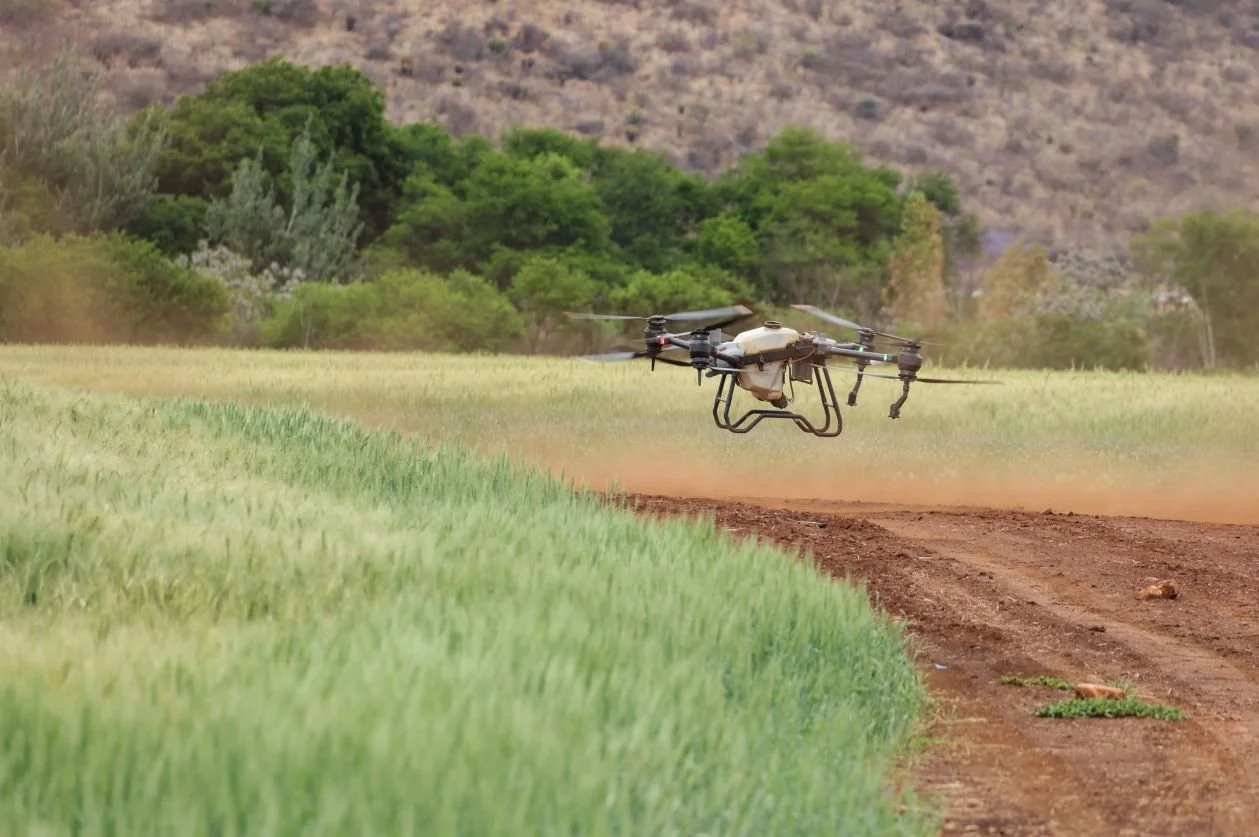
Pest management is one area where AI-driven tools show clear results. Such systems detect early signs of crop diseases by analyzing imagery from drones or satellite feeds. Prompt intervention means lower losses and reduced reliance on chemical applications, benefiting both the agricultural economy and the environment. The application rate of pesticides can be calibrated precisely through data-based models rather than applied uniformly across a field.
Precision farming brings this logic to nearly every decision on the farm. Platforms that aggregate field data from multiple sources are improving workflows in farm areas by automating routine tasks. Variable-rate seeding, targeted fertilization, and field mapping are precision agriculture technologies that are becoming standard tools in high-output operations.
The Global Shift Toward Connected Farming
Smart agriculture is gaining ground across continents. In Southeast Asia and some parts of Africa, mobile phones have become critical tools for smallholder farmers accessing weather forecasts, market pricing through e-commerce platforms, and digital payments for inputs.
The agricultural sector is leapfrogging older technologies entirely, moving straight into connected systems with far lower upfront investment than traditional approaches required. Agricultural subsidies in many regions increasingly prioritize service providers that offer digital tools, signaling a long-term policy shift toward connected farming.
The United States is the world’s leader in precision agriculture implementation with its robust digital infrastructure and institutional support through agencies like the U.S. Department of Agriculture. European countries are investing heavily in digital technologies tied to carbon reduction and water conservation goals.
Farming Forward
Smart agriculture facilitates resilience through technology adoption. Production improves when growers have the right data at the right moment. Farmers who integrate connected tools into their operations are better positioned to handle climate variability, supply chain disruptions, and increasing demand.
The transition won't happen overnight, and it won't look the same for dairy farms in Australia as it does for grain operations in Nigeria. But the direction is clear. Digital tools are no longer optional accessories but the foundation of sustainable farming for the decades ahead.