Autumnal Harvest

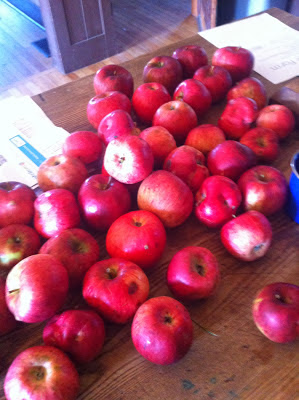
Better apples.
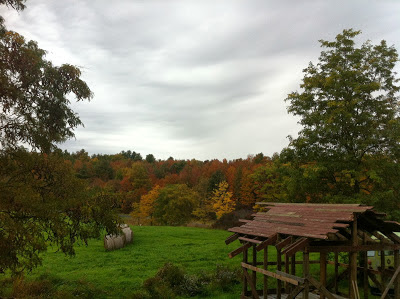
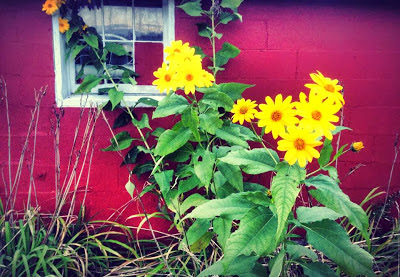
It's Autumn in the North Country! Colors are bolder, fruit and veggies are coming out our ears, and all the tourists have left the lakes, streams, and rivers empty for the locals' enjoyment. Look at all this beauty:


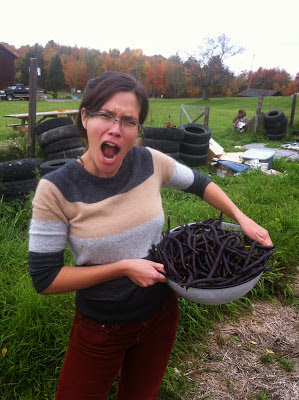
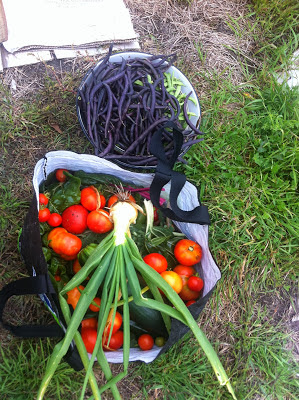
Better Farm's gardens are virtually overrun with more zucchini, cucumber, string bean, pumpkin, lettuce, kale, artichoke, onion, you-name-it than we can shake the proverbial stick at. Kristen and I picked 50-plus-pounds of veggies in about 20 minutes the other day:
Kristen shows off the string bean harvest.
String beans, zukes, tomatoes, leeks, broccoli, tomatoes, Swiss chard, and kale.
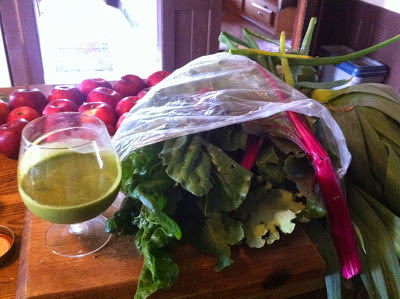
We've kept the farm stand open later than ever, and we're taken custom orders and even doing low-scale CSAs with those living locally who would like a weekly share of fresh produce. And I've been juicing like a mad woman! Here's one of the smoothies I made the other day:
Smoothie made from apples, raspberries, Swiss chard, kale, wheat grass, peaches, and cantaloupe.
No need to start buying produce from the grocery store just yet! Swing on over or give us a call at (315) 482-2536 to place an order or pick your own.

Contact Better Farm at info@betterfarm.org to schedule a pick-up, tour, or set up a CSA program until the snow starts to fly!
Comment

Nicole Caldwell

Nicole Caldwell is a self-taught environmentalist, green-living savant and sustainability educator with more than a decade of professional writing experience. She is also the co-founder of Better Farm and president of betterArts. Nicole’s work has been featured in Mother Earth News, Reader’s Digest, Time Out New York, and many other publications. Her first book, Better: The Everyday Art of Sustainable Living, is due out this July through New Society Publishers.

Network Installation of Green Buildings

The

network installation

of green building is quite a risky, hectic, and challenging work altogether which can be only undertaken by expert installers. These skilled installers are quite efficient in conducting the safest means of installing the computer networks within the green buildings. 

But before going for the network installation, these installers need to check the current condition of the electrical panels and wiring of those buildings. This is because of the fact that the installation of network in green buildings is highly dependent on the electrical condition of those buildings. They must be well-aware of all the useful techniques of installation which bring energy and cost efficiency.

Those green buildings that are consuming natural source of energy can have the advantage of saving more and more power. The installation of network in green buildings is highly inter-connected with

voice and data services

. This kind of service helps in the effective installation of the network connectivity in green buildings. In fact, the speed of the internet connectivity also depends on the concerned type of services.

The data cabling of the network installation mostly depends on few common factors which need to be essentially considered. These essential factors include need of current bandwidth, network environment, future requirements of bandwidth, and the customers’ budget. If you want to install data networking cabling in your green building, then you need to strictly follow these factors on the basis of which your internet speed will be dependent. You must hire proper and most efficient cable installers who have a very thorough knowledge and training on the installation of the network cables in green buildings.

These installers must be well-aware of all the safety rules and codes of their respective states which need to be strictly abided by at the time of network installation at clients’ places. These installers also must have proper installation license for conducting the concerned work.

2 Comments

Nicole Caldwell

Nicole Caldwell is a self-taught environmentalist, green-living savant and sustainability educator with more than a decade of professional writing experience. She is also the co-founder of Better Farm and president of betterArts. Nicole’s work has been featured in Mother Earth News, Reader’s Digest, Time Out New York, and many other publications. Her first book, Better: The Everyday Art of Sustainable Living, is due out this July through New Society Publishers.

Better Farm October Newsletter


Better Farm News - October 2013:


• Summer Recap: Festivals, Showcases, and Community Outreach

• How Does Your Garden Grow?

• Workshop Roundup

• Summer Sustainability Education Program

• Recent Visiting Artists


Hello, Friends of Better Farm!


It's been another record-setting year at Better Farm. We've put on more events for the community, provided more sustainability outreach, welcomed more visitors, students and artists to Redwood, showcased more art, initiated more projects, and raised more chickens this year than any year before—and we're heading into Autumn with lots to accomplish on the horizon.

The last four years have been a truly wonderful journey. The investment of our visiting artists and students, and the ongoing support of you, Better Farm's most ardent supporters, have molded this space and turned it into a premier destination for sustainability education, artist residencies, and cultural events. Stay tuned to our blog to follow all of these adventures and continued successes—and be sure to visit www.betterfarm.org regularly to stay up-to-date on all things Better. If you know of anyone interested in gaining some hands-on experience with sustainability issues or an artist in search of a creative, open space in which to work on their projects, please send them our way! BetterArts residencies and farm programming in sustainability education are year-round endeavors for us.

May you enjoy a lovely autumn filled with brave new frontiers and a plethora of possibility.

Until next time, better be.

Nicole Caldwell
Executive Director and Co-Founder
Better Farm
 
---

Summer Series: Festivals, Community Outreach, and Showcases

Better Farm was home to many Spring and Summer events; and its residents made a concerted effort to have a strong presence in the community with many service activities. Here's a quick rundown of what we've been up to:
  • Better Festival—Thanks to a wonderful crowd braving frigid late-May temperatures, a cast and crew of diligent, hard-working volunteers, dozens of intimidatingly talented performers, artists, and musicians, and loving and generous sponsors, this year's Better Festival was our largest—and most successful—yet. We broke through the ceiling on our fundraising goals, which made it possible for us to offer a very full season of programming, community outreach, workshops, and events to the public.
  • Backyard Science Day—We were invited by Cornell Cooperative Extension to participate in Backyard Science Day June 10 at Lyme Central School in Chaumont. For our presentation, we built a solar oven to show kids how they could heat up food with the sun alone.
  • Pay it Forward Projects—We believe it's not enough to learn and practice sustainability and art—we believe in paying what we learn forward. To that end, folks at Better Farm make it a regular mission to go out into the community to help neighbors with their own gardens and home revitalization projects, work with kids, and provide support to other organizations. In the last few months, we put two gardens in, painted a house, volunteered at several schools, beautified downtown centers, and brought our show on the road in the Redwood Field Days Parade.
  • Open Mic Poetry Night—Through a partnership between Line Assembly Poetry Group and betterArts, Better Farm on July 2 hosted an open-mic poetry night. Individuals from Line Assembly, betterArts resident Bradley Harrison, and local residents gathered at the Art Barn to read their latest creations.
  • Summerfest—Aug. 17 marked our second annual Summerfest. The free event, featuring local vendors selling handmade goods, a gallery filled with art to enjoy and purchase, and half a dozen musical acts (plus a late-night jam session for anyone who cared to participate) is put on every year by betterArts in order to increase access to cultural opportunities in the North Country. Click here for the full rundown, photos, and information about all the wonderful artists and musicians who participated.
  • Exceptional Family Arts and Wellness Expo —We showcased in August the artwork and performance pieces of some amazing children. The Exceptional Family Arts and Wellness Expo, a partnered event between Fort Drum and betterArts, featured art and performance pieces by children enrolled in Fort Drum's Exceptional Family Members Program. Among the activities were dance performances from Amy Earle School of Dance, upcycling projects, a gallery of artwork by local students, arts 'n' crafts, tours of Better Farm's gardens and buildings, and locally produced food fired up on the grill along with organic, locally grown side dishes.
  • Better Radio —Better Radio is a step closer to becoming a reality. The Senate in 2010 approved the Local Community Radio Act, a bill that expanded radio stations for Low Power FM and which mandated the Federal Communications Commission (FCC) to license virtually thousands of new stations. Since then, betterArts achieved its 501(c)3 status as a non-profit educational organization. This characterization allows the arts outreach group to apply for grants and conduct fundraising efforts that fuel free and low-cost arts education, outreach, events, and much much more. The group's latest effort is "Better Radio"; a radio station and educational program based out of Better Farm that works in multiple ways to increase access to the arts for all while simultaneously providing the community's youth with New Media education. Better Radio will advance betterArts' mission of increasing access to the arts and culture in the North Country and beyond by offering the many different broadcasts; and will provide educational outreach to high school students in and around the North Country region with an interest in New Media, Journalism, Production, Editing Software, Music Mixing, and Broadcast.
  • Farm-to-Table Dinner Party—Better Farm's first-ever Farm-to-Table Dinner Party was held Sept. 26 and featured a menu of local cheeses, breaded zucchini medallions, salads, butternut squash soup, bacon-wrapped, wild-caught goose, and much much more. Stay tuned for future farm-to-table events here and locally!
---

How Does Your Garden Grow?


We doubled the size of our gardens again this year, and added eight new chickens to our flock (we're up to 32 feathered friends!). The combined output of eggs, compost decomposition, production of fruits, vegetables, and herbs, and the installation of a small orchard have contributed greatly to a sustainable, closed-loop system in which nutrients pass from compost to dirt to produce to people and chickens and back again. The North Country saw a late start to gardening season this year, with a ridiculously wet spring and cool start to summer. Once things settled down, however, we were left with a food crop that's stocked the local co-op and natural market, neighborhood bar and grill, our farm stand, and kept all the bellies at Better Farm full. Here are a few highlights from the summer: ---

Summer Workshop Series Review

Whether making wine or constructing an insect hotel, here's our short list of workshops offered in recent months:
  • Beneficial Bugs and Insect Hotels — Tidy gardens, chemically fertilized lawns, and a lack of dead wood in suburban/urban areas mean less and less habitat for wild bees, spiders, and ladybugs. You can combat this issue by creating an "insect hotel" to attract beneficial insects (read: pollinators and pest controllers) to your yard and garden. At this workshop, people were taught how to construct an insect hotel out of scraps found around work rooms, forests, and trash.
  • The Art of Beer and Wine: Intro to Brewing and Fermentation — This summer, Master Brewer Paul Jennings taught a a three-part brewing series that educated the public about making beer and wine. Groups created oatmeal stout and two varieties of blueberry wine.
  • Sauna Construction — We broke ground this summer on a sauna constructed entirely out of recycled materials like pallets and old tree stumps. The hands-on class examined materials, ways to refurbish discarded materials, and basic tool tutorials; culminating in the construction of a sauna on-site at Better Farm. Expected completion date for this project is November 2013. Stay tuned for updates!
  • The Humanure Compost System — Whether you 're hosting an event and need a few extra porta-potties, in need of a toilet out by your work room or garage, re-doing your camp on the lake and lack a bathroom, or if you're ready to transition from a water-based septic or sewer system, the "humanure" compost toilet is a simple, cheap, ecologically responsible way to deal with human waste. This workshop explored the basic concepts of compost toilets and the ways our culture deals with waste, and culminated in a step-by-step project to create a simple compost toilet.
  • Creative Upcycling and the Art of Transforming JunkIn this owrkshop, each student brought an old, tired piece of furniture or clothing to transform into something functional. From sketches to the final product, wonderful instructor Stephanie DeJoseph of La Mia Designs helped students visualize, create, transform, and finalize an upcycled piece.
---

Summer Sustainability Education Program
This year brought with it an amazing group of students eager to learn all they could about sustainability issues, green living, and organic farming. Whether out in the garden cooking up organic pest deterrents, building structures with alternative or upcycled materials, or foraging for edible wild plants, this group's enthusiasm was contagious and their willingness to utilize creative problem solving and non-traditional methods was downright inspiring. Here's the crew we were lucky enough to work with for the last several months:
  • Kara Colarusso, a graduate of Eckerd College in St. Petersburg, Fla., who majored in environmental studies and is pursuing a career as a yoga instructor. Her interests in sustainability and local farming—paired with a passion for working with local communities to help educate them about local agriculture—inspired her to pursue an education at Better Farm;
  • Jesse Coyle, a student at SUNY College of Environmental Science and Forestry working on a bachelors of science in conservation. She hails from Syracuse, and was raised on a small cattle farm in Central New York. She chose Better Farm because she wanted to broaden her knowledge of alternative building, green gardening, and wilderness survival;
  • Jacob Firman, an environmental studies major at Oberlin College in Ohio, who was passionate about food justice, addressing climate change, and working to create a more sustainable and just world;
  • Rebekah Kosier, a student at Wells College in Aurora, N.Y., grew up in a rural area in Alabama. She had the opportunity to witness the process of farming and to know many farmers; but she came to Better Farm in order to connect sustainable farming practices to her interest in food sovereignty;
  • Kathryn Mollica, a student at Fairleigh Dickinson University in Teaneck, N.J., whose employment at Whole Foods opened her eyes to the benefits of organic farming and changed her world.
For more information about Better Farm's Sustainability Education Program, click here.

---

Recent Visiting Artists
We had an amazing group of visiting artists who provided much inspiration and beauty to all the goings-on at the Better Farm campus. These artists immersed themselves in the local community; helping to construct our float in the Redwood Field Days Parade, providing workshops to the public, and lending a hand in ongoing projects in and around Better Farm. Here are all the wonderful artists who have come to Better Farm since May:
  • Bradley Harrison graduated in May with an MFA in Creative Writing from the University of Texas. The Colfax, Iowa, native recently completed his first full-length poetry collection, which is pending publication, and has published a chapbook of poems called "Diorama of a People, Burning" through Ricochet Editions at the University of Southern California. He worked during his residency on new poems he seeks to develop into a second, full-length collection.
  • Vivian Hyelim Kim is a visual artist from Elmhurst, N.Y., who makes installations, paintings, photographs and art books. She has her MFA from Pratt Institute in Brooklyn, N.Y., and her BFA from Herberger College of Fine Arts at Arizona State University in Tempe, Ariz. While at Better Farm, Vivian is keeping a visual diary that took its form of a wall installation. She took walks in outdoor surroundings, picked one element of nature every day, and brought it into the studio. To see samples of Vivian's work, visit www.vivianhyelimkim.com
  • Ashley Jones is a visual artist with a BFA in printmaking from California College of the Arts. She attended Clayworks on Columbia in Brooklyn, N.Y., and Diablo Valley College in Pleasonton, Calif. Her work has been shown extensively at galleries from coast to coast and she has been the recipient of several scholarships and awards for her art. Ashley lives in Brooklyn, N.Y. See more of her work here.
  • Natalie Collette Wood is an artist living in New York City who  joined us to experiment with sculpture and collage using found objects, spray paint, foam, and metal to create abstract pieces that hang from the ceiling or wall. Click here for images of her work.
For more information about the betterArts Residency Program, click here.

Connect with us:
Learn 
MailChimp on iTunesWebsite
Follow us on Facebook! Facebook
Read the MailChimp blog Blog
Merch

Share this email:

Contact Us:

Better Farm
31060 Cottage Hill Road
Redwood, NY 13679
315-482-2536
info@betterfarm.org
1 Comment

Nicole Caldwell

Nicole Caldwell is a self-taught environmentalist, green-living savant and sustainability educator with more than a decade of professional writing experience. She is also the co-founder of Better Farm and president of betterArts. Nicole’s work has been featured in Mother Earth News, Reader’s Digest, Time Out New York, and many other publications. Her first book, Better: The Everyday Art of Sustainable Living, is due out this July through New Society Publishers.

Relational Database: DIY Culture's Greatest Achievement

The concept of relational database has successfully emerged as a result of the advanced technology of the DIY culture. This kind of database is highly useful in storing different sets of data in a categorized manner. This kind of stored data is later on processed to provide valuable information to the information seekers.

The relational database design is quite simple and it is mostly found as two-dimensional in nature. This kind of database design mostly helps in the effective organizing of all the data in an organized manner under specific tables or categories. It also helps in minimizing duplication, reduction of data anomalies, and reinforcement of data integration. This particular method of organizing data is popularly known as normalization.

The stored data of relational database is highly manipulated by a particular programming language which is known as structured Query Language or SQL. In fact, the data-storing performance of this kind of database mostly depends on the

SQL performance tuning.

This kind of tuning adjusts the storing of different kinds of categorized data into the recreational database. The SQL server is getting used in almost every database centers for the effective storage of huge volume of data. Therefore, before selecting the performance of the SQL server, you must consider few essential tips. Some of these essential tips include configuration, CPU, development, indexing, IO, locking, memory, perfmon, processes, shrinks, troubleshooting and lots more.

The database development is highly dependent on the SQL performance tuning as without the SQL server it is not at all possible to store data in the relational database. This server helps in the streamlining and simplifying change management encourages automatic repetitive tasks, accelerating issue resolution, ensuring high level code quality, maintainability and performance. Therefore, if you want to learn more about the concerned thing, then you need to conduct a thorough online research regarding the same with the help of internet.

1 Comment

Nicole Caldwell

Nicole Caldwell is a self-taught environmentalist, green-living savant and sustainability educator with more than a decade of professional writing experience. She is also the co-founder of Better Farm and president of betterArts. Nicole’s work has been featured in Mother Earth News, Reader’s Digest, Time Out New York, and many other publications. Her first book, Better: The Everyday Art of Sustainable Living, is due out this July through New Society Publishers.

October Small Farms Update

The Small Farms Update is intended as a resource for farmers and agricultural service providers in New York and the Northeast, and is provided to you by Cornell Small Farms Program. The update's mission is to foster the sustainability of diverse, thriving small farms that contribute to food security, healthy rural communities, and the environment.  The Cornell Small Farm Program is a joint effort of the College of Agriculture and Life Sciences and Cornell Cooperative Extension.
 
This update summarizes announcements, information resources, opportunities and upcoming events relevant to small farms.  Please feel free to share this information in newsletters, email lists, etc. If you have announcements or resources you would like to include, please email smallfarmsprogram@cornell.edu.
Announcements
Don't Miss the Upcoming Farm Energy Field Days!
The last two field days in this series of farmer-led tours will give you a first-hand look at what it takes to integrate renewable energy technologies into your farm or homestead. You'll learn how to assess your own energy use, explore your renewable energy options, seek financing and grants, and work with technical experts. This is your opportunity to get "how-to" information, view customized equipment on the farm, and network with other energy enthusiasts. Field days are free and open to the public and refreshments will be provided. Sponsored by Northeast SARE and the Cornell Small Farms Program.

October 4, 2013. 10:00 AM- 12:00 PM. Using Residual Biomass to Fuel the Farm. Dedrick Farms, 389 Buck Rd off of Rt. 34, Lansing, NY 14882. Matt Dedrick will give a demonstration of converting non-saleable farm residues from his 400 acre field crop and vegetable farm into fuel for heating and transportation. This farm tour will interest anyone thinking about how farm biomass can become an energy supply! Map.

October 11, 2013. 10:00 AM- 12:00 PM. Sourcing Solar: On-Farm Production to Retail. Schoharie Valley Farms, 5605 State Route 30, Schoharie, NY 1215. Join proprietor/producer Richard Ball for a tour of one of the premier diversified vegetable farms and retail outlets in the region. Learn how the energy derived from a large solar array installation benefits farm production, processing, cold storage, food service, and retail. Map.

UVM Extension New Farmer Project Needs Your Input: Survey due Oct 8!
The UVM Extension New Farmer Project is working to develop education and training to help managers of Northeast small-scale and diversified farms develop skills and strategies for matching farm labor decisions to production, profit, & quality of life goals. This survey is designed to gauge your interest in participating in educational programs related to farm labor and also to gather some baseline data on the challenges and needs related to farm labor management. The survey should take 5-8 minutes to complete. Access the survey here: https://www.surveymonkey.com/s/FarmLaborEducationQuestions about this or other initiatives of the UVM Extension New Farmer Project, please call or email Jessie Schmidt, newfarmer@uvm.edu, 802-223-2389x203.
Coming Soon: OSHA Training for Small Dairy Producers
OSHA's Syracuse Area Office is planning a Local Emphasis Program focusing on Dairy Farm Operations in New York beginning as early as February 2014. Farms have not typically been an area of OSHA inspection unless prompted by an accident, so it is important that farmers understand what operations are subject to OSHA and what OSHA expectations are. While most small dairy operations will not be affected by OSHA inspections, they want to emphasize that farm safety education and training is useful to all operators and their employees. Learn more about this local emphasis program within OSHA: https://www.osha.gov/dep/leps/leps.html.
Events
Featured Events

October 5, 2013. 10:00 AM- 4:00 PM. Berlin-Berkshire Fall Foliage Grazing Tour. First stop on the tour will be with Morgan Hartman of Black Queen Angus Farm in Berlin, NY.  Black Queen Angus Farm is a grass-fed operation owned by Morgan Hartman and his family. The next stop on the tour is the Berlin Fire Hall at 12 PM to enjoy a delicious local foods lunch catered by Wild Oats Market of Williamstown, MA. The last stop will be at 1:30 PM at Cricket Creek Farm, a small grass-based enterprise located in Williamstown, MA. Nestled on the slopes of the Taconic hills, the farm consists of over 500 acres of rolling fields and woodlots, old apple orchards and sugarbush. The grazing tour is a drive yourself tour. The cost for tour and lunch is $20/person.  Please contact Donna Murray at 518-270-2668 or visit http://ccecapitalregion.org/news/13-09-24/Berlin-Berkshire_Fall_Foliage_Grazing_Tour.aspx for more information.
 
October 12, 2013. 9:00 AM- 3:00 PM. Maple Workshop.  Cornell Cooperative Extension Broome County, Binghamton, NY. Steve Childs, from the Cornell Maple Program, will cover maple suckers & hard candy, maple coating nuts, maple soft drinks, maple straws, maple cotton, and much more at this maple workshop. The cost is $65 per farm and includes either a NY Maple Confections Notebook or digital thermometer, lunch, snacks and all materials. Each farm will need to bring one quart of syrup (any color or grade) for testing for invert sugar and to be used in the program. To register and pay online visit: https://reg.cce.cornell.edu/mapleconfections_203 or contact Carol at (607) 584-9966.

October 17, 2013. 9:30 AM- 4:00 PM. Organic Cover Crop Workshop and Tour. USDA-NRCS Big Flats Plant Materials Center, 3266 RT 352, Big Flats, NY 14814 . Presentations during this workshop will focus on nitrogen cycling and soil ecology, small scale reduced tillage implementation, crop rotation practices, and cover crop utilization, among other topics. For registration information, click here.

[MANY MORE EVENTS!Visit our comprehensive statewide events calendar online.
Career Opportunities
UVM Farmer Training Program Applications- Due Oct. 31
The UVM Farmer Training Program is a 6-month intensive program (May 5 -October 31, 2014) for aspiring farmers and food systems advocates that provides a hands-on, skills-based education in sustainable agriculture. This full-time program offers participants the unique opportunity to manage their own growing site, take classes from professors and expert farmers, and rotate as workers and learners on successful, diverse farms in the Burlington area. Participants will leave with a Certificate in Sustainable Farming, a deeper understanding of agricultural management and small-scale farming, and the entrepreneurial skills to start their own operation. The UVM Farmer Training Program is now accepting applications until October 31 for early admission to the 2014 cohort! To learn more, visit their Farmer Training Website or contact them at farmer@uvm.edu or (802) 656-8657. 
Stonewall Farm School Applications- Due Nov. 15
Stonewall Farm in Keene, New Hampshire offers future farmers the opportunity to spend a full year learning by working shoulder to shoulder with our experienced staff and administration. Hard work, critical thinking, problem solving, and the use of appropriate technologies for small farms will be emphasized. Two tracks are offered: garden and dairy. Both include the study of farm operations and management. The farm operates a certified organic dairy, a three acre garden, three greenhouses, a yearlong CSA, a micro-pasteurizing plant, a farm store, sugar house, hydroponic barely fodder system and an educational learning center. Applications are reviewed on a rolling basis through November 15th for the 2013-2014 year-long session.  For more information or to request an application contact Josh Cline - Executive Director at (603) 357-7278 ext. 107 or email: jcline@stonewallfarm.org.
Funding Opportunities
Northeast Farm Credit AgEnhancement Grant Program - Due Dec. 1
Interested in hosting a field day or other educational program on your farm? The AgEnhancement Grant Program is a grant program that supports projects, events, and activities that promote awareness of agriculture and the food and fiber industries in the Northeast. AgEnhancement also supports programs designed to assist young farmers and youth considering a career in agriculture. Awards range from $1,000 to $5,000. Next application deadline is December 1. For more information and access to the application form, visit https://www.farmcreditmaine.com/.
Northeast SARE Now Accepting Applications for Farmer Grants - Due Dec. 2
NE SARE Farmer Grants are for commercial producers who have an innovative idea they want to test using a field trial, on-farm demonstration, marketing initiative, or other technique. A technical advisor--often an extension agent, crop consultant, or other service professional--must also be involved. Projects should seek results other farmers can use, and all projects must have the potential to add to our knowledge about effective sustainable practices. The proposal deadline for the next round of NE SARE farmer grants is December 2, 2013 with awards announced in March. More information is available here.
Latest Resources
Online Tool Can Help You Build a Farm Budget
The Food and Agricultural Policy Research Institute (FAPRI) at the University of Missouri has developed The Farm Cost and Return Tool, which allows farmers to determine the long-term financial feasibility of their farm operations. The tool can provide budgets based on a selected location but can also be customized to a specific operation. You can access this tool at www.fapri.missouri.edu/projects. For more information, contact any of MU Extension's agriculture business specialists located in southwest Missouri: Wesley Tucker in Polk County, 417-326-4916; Dr. Gordon Carriker in Christian County, 417-581-3558; or Stacy Hambelton in Ozark County, 417-679-3525.
New Online Magazine for Graziers
On Pasture translates the latest research and experience into grazing practices readers can use now. Since their first issue on March 21, they've published 5 articles per week on grazing management, pasture health, livestock, money matters and more. This online resource is available at http://onpasture.com.
Get Connected!
Need personal help?
Sometimes local questions are best answered by your neighborhood Cornell Cooperative Extension agent. Check out our county-by-county listing of small farm agents here. You can also get to know our Cornell Small Farms Program staff, or contact us.   Just starting to farm?  We have an extensive directory of beginning farmer service providers across the Northeast in the "Who Can Help?" section of our Northeast Beginning Farmers Project website.
 
Stay Connected | Subscribe
Comment

Nicole Caldwell

Nicole Caldwell is a self-taught environmentalist, green-living savant and sustainability educator with more than a decade of professional writing experience. She is also the co-founder of Better Farm and president of betterArts. Nicole’s work has been featured in Mother Earth News, Reader’s Digest, Time Out New York, and many other publications. Her first book, Better: The Everyday Art of Sustainable Living, is due out this July through New Society Publishers.

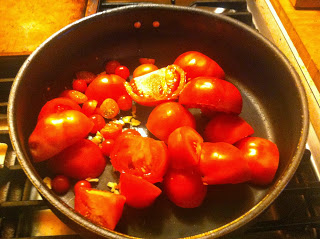
Save Your Own Tomato Seeds

Saving seeds is a great way to ensure a steady supply of heirloom fruits and vegetables in your home garden. All you have to do is collect seeds from your best plant, dry them out, and store them until you're ready for growing season.

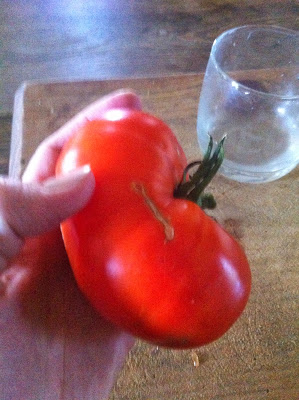
One of our favorite heirloom produce items is the tomato; and each year, we have a bunch of different fruits to choose from that we'd love to duplicate. This autumn, we're selecting some of the best-looking tomatoes and extricating the seeds so that we can grow the plants indoors in a new hydroponics setup (more about that to come!).


Here are some very easy-to-follow instructions for harvesting your own tomato seeds, gleaned from Garden Web:

You may have brought home a particularly delicious tomato from the supermarket, or gotten an heirloom tomato from a Farmer's Market, or grown one in your own garden that is so wonderful you want to save the seeds from it and grow them next year. Nothing ever tastes quite as good as a home-grown tomato!

So, how do you save the seeds? The method is easy to do....it's a little gloppy, and it's a little funky, but you'll be able to save seeds in a manner that will lesson the occurence of tomato disease while giving you plenty of seeds to germinate, and with left-overs to share or trade. This seed saving process is a process of fermentation.


Select to save seeds from a tomato that has a flavor that you love....if you're a home gardener and saving seeds from tomatoes that are growing in your garden choose tomatoes from the very healthiest-looking plants.

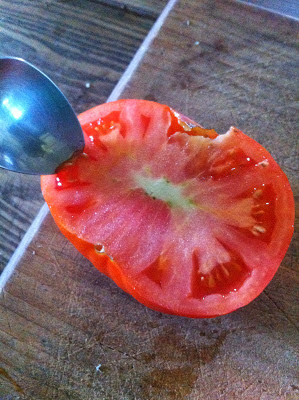
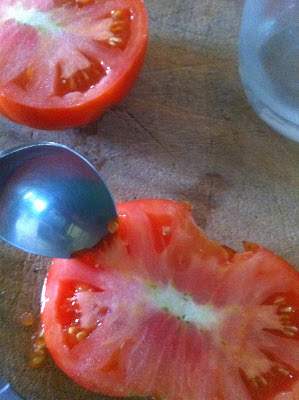
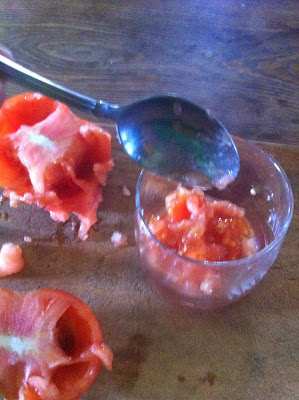
Take your chosen tomato and slice it in half across the middle (its "equator"). With a spoon or your well-washed fingers scoop out the seeds and their gelatinous "goo" into a clean cup or container. Add a couple of tablespoons of water to the seeds.


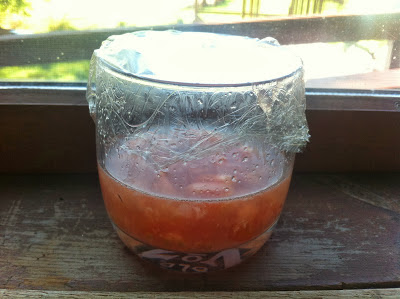
Cover the container with a piece of plastic-wrap and then poke the plastic-wrap with a paring knife or pen point to put a small hole in it...this is to allow for air-transpiration. (A little fresh air needs to get in and out of the cup to help foster fermentation.)


Place the container of seeds in a warm location; a sunny windowsill or the top of the refrigerator are both excellent sites to place the container of seeds. Now Mother Nature will take over and begin to ferment the seed and water mixture. This takes about two or three days. Each night remove the plastic-wrap, stir the seed and water mixture, and then replace the plastic-wrap, if you use a new sheet of plastic-wrap then don't forget to put a small hole in it for air-transpiration. The top of the liquid will look "scummy" when the fermentation process has seperated the "goo" from the seeds. It also helps destroy many of the possible tomato diseases that can be harbored by seeds.

Take the container of fermented seeds to the sink and with a spoon carefully remove the scummy surface. Then pour the container's contents into a fine kitchen sieve and rinse the seeds with water several times...stir them while they're in the sieve to assure that all surfaces are thoroughly rinsed. Give a few sharp taps to the sieve to help remove as much loose water as possible from the seeds.
Line an open plate with a piece of waxed paper or a large automatic-drip coffee filter. Place the rinsed seeds onto the wax paper or coffee filter and spread them about so they are in a single layer. Place the plate in a safe location where the seeds can dry for a few days. Stir the seeds a few times during the drying process to assure that all their surfaces are evenly dry. Spread them out again into a single layer after each time you've stirred them. Tomato seeds are thick and can take up to a week to dry thoroughly. If you're having a rainy week that drying time may lengthen by a few days.


How do I know when the seeds are dry?
Dried seeds move quickly and easily across a plate, they do not stick to each other.


How do I store them?
I like paper packets or some folks like plastic. Whichever envelope style you choose is a matter of personal preferance. If you choose to store your seeds in plastic the seeds must be BONE DRY....otherwise any moisture in the seeds will be transferred to all seeds inside the plastic packet, it will foster mildew and rotting and the seeds will be ruined.


How do I label them?
Tomatoes are generally self-pollinated so there is rarely a chance of cross-breeding. If you save and trade your seeds you might wish to describe your trade offering as "open-pollinated" tomato seeds. That way the trader knows that Mother Nature was solely involved in the fertilization of the flower which produced the tomato that you have saved seeds from.


Onto the packet write the tomato variety name (if you know it) or a very good description if you don't, add the term "open-pollinated" if you're sharing or trading your tomato seeds, and also add the current year to the packet description.


And that's that! Do enjoy saving tomato seeds and growing your own tomatoes at home from them. Home-saved tomato seeds are a wonderful gift to tuck into a holiday card for when you want to add a "little something extra", or to share with friends and neighbors.

—Trudi Davidoff
Comment

Nicole Caldwell

Nicole Caldwell is a self-taught environmentalist, green-living savant and sustainability educator with more than a decade of professional writing experience. She is also the co-founder of Better Farm and president of betterArts. Nicole’s work has been featured in Mother Earth News, Reader’s Digest, Time Out New York, and many other publications. Her first book, Better: The Everyday Art of Sustainable Living, is due out this July through New Society Publishers.

The Rapunzels: A Fairy Tale About Birds

A year and two months after taking 20 "spent hens" under our proverbial wing, we're taking a look back at the lives of our rescue chickens.

It was February of 2012, right around Valentine's Day, when we decided to pursue a rescue of 20 "spent" laying hens from a local egg farm. Since it was a bit of a love story that involved some damsels in distress, we thought we'd name all the rescue birds Rapunzel. The egg farm in question was all too happy to part with the "spent" birds. You see in the commercial egg business, it doesn't make sense to house chickens that are past their peek production. Here are the facts on that:

Read More

Will Farm Bill Turn Control of Organic Industry Over to USDA?

By

Nicole Caldwell for JuJu Good News

A new debate springing up in the organic community

has some concerned

that the commodification of the “organic” label could turn the entire industry over to the USDA—and a small number of big-money companies.

Advertising campaigns funded by “

checkoff programs

” (commodity research and promotion programs) are overseen by the United States Department of Agriculture and run by organizations established to promote certain foods (i.e. beef, soybeans, pork, milk, and eggs); and commission research to produce and market said food. Classic marketing campaigns with checkoff programs include: “Beef. It’s What’s for Dinner.” “Pork. The Other White Meat.” and of course, “Got Milk?” For every sale, the checkoff program makes money. Each head of cattle sold, for example, represents $1 is collected for the beef checkoff program.

So does organic food need its own checkoff program?

The controversial

farm bill

being debated by Congress includes language that would allow USDA to create a checkoff program for organic products. For other commodities, farmers pay into the fund but large food companies are largely in control of decisions on how to spend the money. Many organic farmers are therefore leery of an arrangement in which their dollars are controlled by giant food-processing companies.

Comment

Nicole Caldwell

Nicole Caldwell is a self-taught environmentalist, green-living savant and sustainability educator with more than a decade of professional writing experience. She is also the co-founder of Better Farm and president of betterArts. Nicole’s work has been featured in Mother Earth News, Reader’s Digest, Time Out New York, and many other publications. Her first book, Better: The Everyday Art of Sustainable Living, is due out this July through New Society Publishers.

Necessary Details: Thorough Inspection of Fraud and Damaged Assets

Asset investigation is one of the greatest parts of the modern, DIY culture that has been normally introduced for the safety of residential houses and commercial offices. This kind of specialized investigation will help you to determine easily the exact cause of the damaged assets of houses or corporate offices. Only proper investigation can help you to get back your lost asset or proper compensation for your damaged assets. This kind of investigation is also conducted by insurance companies at the time of occurrence of nay any big fire incidents which have led to the destruction of large number of assets.

The compensation amount is mainly released by the insurance companies on the basis of the proper damage calculation which can be only determined by means of effective and thoroughly asset inspection. In case of nay kinds of frauds, the

fraud investigator

conducts thorough professional investigation in order to determine the actual culprits. This kind of investigation is also similar to that of the asset investigation but only the compensation method is quite different from each other. These investigators are highly efficient and skilled for conducting effective fraud detecting investigation, so that their clients’ objectives can be served.

Asset and fraud investigation both are sometimes conducted by the same investigating professionals in case both the incidents are related with each other. Asset investigation involves the definite compensation of the loss or damaged assets but the fraud investigation might or might not involve compensation. Therefore, asset investigation is quite safe but the fraud investigation is not. There are some business concerns who separately maintain a separate department for the thorough inspection of the company assets. Therefore, in order to know more about this concept, you need to take the help of internet and have to make necessary online research. You can refer to different kinds or websites for collecting valuable information.

Gain Full Knowledge of Online-Based, Small Business Phones' Utilities

Nowadays the modern, technology-based

small business phone

is considered as an essential part of DIY culture. This upgraded culture has led to the discovery of amazing, technically skilled communication equipment that has created a great revelation in the commercial industry.

The improved phone system has facilitated the flexible and convenient modes of communication with overseas clients and branch offices. The DIY culture normally speaks about the introduction of this technically improved equipment, which adds a range of flexibility in the operation of different communication oriented equipment. This kind of improvement has also led to the development, prosperity and expansion of different business concerns.

This kind of advanced phone communication system has also upgraded the

conferencing system

of different commercial concerns. Now, the conduction of conference meetings and business discussions are highly possible with the help of newly developed communication facility which has taken birth from DIY culture. Those business concerns which have multiple offices in different locations of the world can utilize the modern video conferencing communication system for conducting uninterrupted conferencing sessions.

This kind of improved technology has highly facilitated especially to the small business concerns as the modern communication system is quite cost-effective and flexible in nature.

Moreover, DIY culture has led to the creation of such an innovative and improved communication technology which has ultimately resulted into the success and prospect of different commercial industries. The small business phone can help the concerns to held important business meetings at any point f timer from anywhere just with the help of internet connectivity. Therefore, in order to collect more and more info about the same, you can make thorough online research for finding more intricate details. Get into different online links or websites for learning the utilities and functionalities of the modern technology based communication system of business concerns or organizations

.

Comment

Nicole Caldwell

Nicole Caldwell is a self-taught environmentalist, green-living savant and sustainability educator with more than a decade of professional writing experience. She is also the co-founder of Better Farm and president of betterArts. Nicole’s work has been featured in Mother Earth News, Reader’s Digest, Time Out New York, and many other publications. Her first book, Better: The Everyday Art of Sustainable Living, is due out this July through New Society Publishers.

An Apple a Day...

It's a great year for apples. Whether you've got a tree or two in your yard, enjoy picking your own, or just love to load up at farmers' markets, we're coming up on a strong season of pies, fresh-pressed cider, turnovers, and any other apple-related dishes you can dream up.

After a tricky season last year when droughts caused a marked decrease in fruit production, apples have made a comeback with places like the local

Burrville Cider Mill bringing back gallon jugs of cider

and a marked drop in consumer cost for the fruit that did Adam and Eve in.

So however you go about acquiring this most wonderful fruit, consider between bites creating a delicious batch of apple sauce, pressing your own cider, or just utilizing one of the below recipes for a treat that's, well, sweet like apple pie on a Sunday afternoon.

Not for the faint of heart, here's a tutorial on constructing your very own cider press:

http://www.instructables.com/id/Small-Homebuilt-Cider-Press/

And for the rest of you, here are some great recipes being broadcast throughout the Internet in recent days:

Canned Apple Pie Filling

From Canning Homemade

Great as a gift, or for storing until you want a fresh-baked pie this winter!

10 pounds tart apples - peeled, cored and sliced (~20 cups sliced)

5 1/2 cups sugar

1 1/2 cup Clearjel

1 T. cinnamon

2-1/2 cups cold water (2 1/2 qts water if you omit apple juice)

5 cups apple juice

1 tsp. nutmeg

3/4 cup bottled lemon juice

Preparation -

For fresh apples, place 6 cups at a time into 1 gallon of boiling water and boil one minute when it comes back to a boil. Drain but keep fruit covered in a bowl.

In a stockpot, mix the sugar, Clearjel, cinnamon, nutmeg together. Add the water and apple juice, stir to mix well. Bring to a boil and cook until thick and bubbly, stirring frequently. Remove from heat. Add the lemon juice. Fold apples into mixture.

Pack the apples into hot, sterilized quart size canning jars. Best way to fill is in layers. Using the funnel ladle one large scoop and using the spatula press the apples down in the jar to remove the bubbles. Continue filling using this technique so that you work your way up the jar with as little air bubbles as possible. Fill the jars to 1" headspace. (Because of expansion you can go to 2")

Wipe the rims and place the hot lid/rings on the jars. Process in a water bath canner for 25 minutes at a full rolling boil. Wait 5 minutes, remove and place on dishtowel overnight undisturbed. The next day remove rings and clean jars and label with recipe name and date. Store in a cool, dry, and dark place.  This recipe will make 6 - 7 quarts.

Note:

For a great variation substitute brown sugar for the regular sugar and apple cider for the apple juice. This will make an amazing Caramel Apple Pie filling! 

If you need Clear Jel you can order it from the

SB Canning Store

!

BEST Vegan Apple Pie

From

My Vegan Son

IMG_0509

Ingredients:

Pie crust

(

make your own

or check out the “Wholly Wholesome” organic, traditional pie crust)

Filling:

  • 4 large organic apple

  • 1 tsp. ground cinnamon

  • 1/2 tsp. nutmeg

  • 1/2 c. sugar

  • juice of one lime

  • 2 Tbs. flour

Pie Top:

  • 1 stick of butter or vegan replacement (~1/2 c.)

  • 3/4 cup flour

  • (1/3) cup sugar

Preheat your oven to 350F. Wash, peel, and chop your apples. Place them in a bowl. Add the cinnamon, nutmeg, sugar, flour, and lime juice. Mix well. Pour the apples on the pie crust.

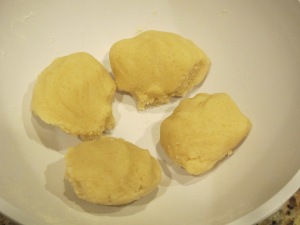
In a separate bowl place the buttery stick, the flour, and the sugar. Using your hands, combine the ingredients until they form a dough. Make one big dough ball and break into four smaller dough balls. Each dough ball should cover about 1/4 of the pie. Using your hands, flatten the dough balls as if you were making tortillas and start covering up the pie until it is completely covered.

IMG_0516
IMG_0518

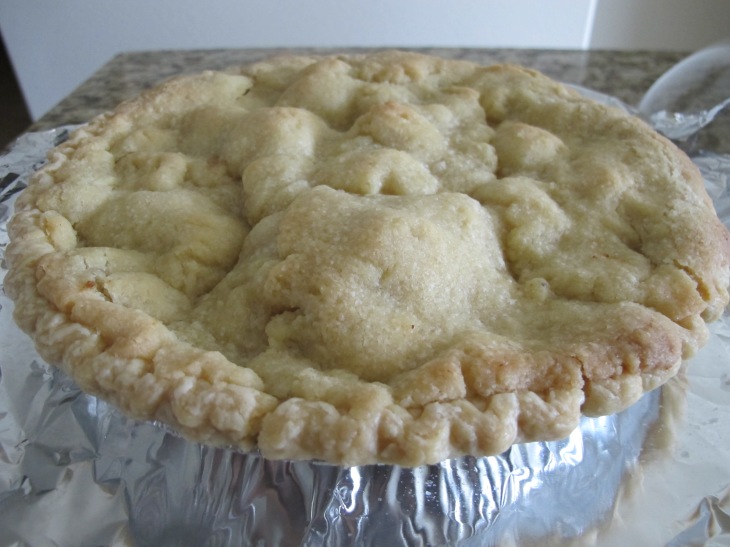
Bake for about 45 minutes or until slightly golden (see picture).

IMG_0614

Let it cool before you dig in

IMG_0524

*Note: Always bake the pie on top of a pizza pan in case of pie drippings. 

Cranberry and Apple Crumble

From 

Spoonful

Cranberry and Apple Crumble

This sweet-tart crumble is best served warm, topped with whipped cream or vanilla ice cream (or vegan alternative). To be sure you're using the freshest berries, you'll want to choose fruit that has bounce in it. Or you can put it to the water test. Small pockets of air trapped in fresh cranberries make them bounce—and float in water.

Ingredients

  • 1/2 cup flour

  • 1/4 cup plus 2 tablespoons sugar

  • 1/4 cup packed brown sugar

  • 1/4 cup chilled butter, cut into small pieces

  • 6 cups peeled and sliced (about 1/2 inch thick) apples (we like Braeburn or Granny Smith)

  • 1 cup fresh or frozen cranberries

  • 1/3 cup fresh orange juice

  • 1 tablespoon cornstarch

Directions

  1. Heat the oven to 375°. Combine the flour, G cup of the sugar, the brown sugar, and the butter in a bowl. Mix the ingredients with your fingertips to create pea-size crumbs. (Alternatively, pulse the mixture in a food processor 10 times or so.)

  2. Combine the apple slices and cranberries in a large bowl. Mix the juice, remaining 2 tablespoons of sugar, and cornstarch in a small bowl. Pour the mixture over the fruit and toss well.

  3. Spoon the fruit into a 2-quart baking dish and sprinkle on the flour mixture. Bake the crumble until bubbly and golden brown, about 40 minutes. Serves 6 to 8.

Comment

Nicole Caldwell

Nicole Caldwell is a self-taught environmentalist, green-living savant and sustainability educator with more than a decade of professional writing experience. She is also the co-founder of Better Farm and president of betterArts. Nicole’s work has been featured in Mother Earth News, Reader’s Digest, Time Out New York, and many other publications. Her first book, Better: The Everyday Art of Sustainable Living, is due out this July through New Society Publishers.

'Food Safety' Act Hurts Small Farms

By Nicole Caldwell for JujuGood News

With the Food and Drug Administration on the verge of finally implementing the 2011 Food Safety Modernization Act, warning flags are being raised that certain elements of proposed regulations would put the kaibash on the Good Food Movement once and for all.

Continued on next page

Comment

Nicole Caldwell

Nicole Caldwell is a self-taught environmentalist, green-living savant and sustainability educator with more than a decade of professional writing experience. She is also the co-founder of Better Farm and president of betterArts. Nicole’s work has been featured in Mother Earth News, Reader’s Digest, Time Out New York, and many other publications. Her first book, Better: The Everyday Art of Sustainable Living, is due out this July through New Society Publishers.

Show Cold Season Who's Boss

We're coming into the time of year when runny noses, sneezes, and chest congestion are the norm and summer days are a thing of the past. While experts agree that

colds can't be cured

, they can certainly be shortened.

Click here for lots of amazing information about how colds fundamentally work

.

Studies suggest the majority of colds are "caught" not through the air, but by touching something (light switch, surfaces) and then touching the face. Keep that in mind, and wash your hands accordingly!  Also be sure, as always, to get plenty of sleep and keep your body fit with regular exercise. If you do end up with a bad case of the sniffles, here are our favorite immune-boosting recipes for scaring away all the germs of Autumn.

The Power of Water

From

Mother Earth News

When you come down with a cold or the flu, your respiratory tract works hard to expel the invading viruses along a veritable “Slip ’n Slide” of mucus. Rather than drying those mucus secretions with an over-the-counter antihistamine, it’s better to accelerate the healing process by thinning them, thus making it easier to expel them.

The best way to thin mucus secretions is to add water to your system by drinking warm liquids, especially herbal teas and soup broth. If you have access to a steam shower, use it. If not, bring a quart-size pot of water to a boil, remove it from the stove and place your face a comfortable distance from the steam, then cover your head with a towel. Inhale through your nose if you’re stuffy, or through your mouth for chest congestion.

You can augment the power of steam by adding a handful of decongesting, antimicrobial herbs to the boiled water, then covering the pot and allowing them to steep for 10 to 15 minutes. Great herbs fort his are eucalyptus, thyme, rosemary and peppermint.

Homemade Decongestant

by Annette McEndarfer

, as posted at

Titus 2 Homemaker

This homemade decongestant is good for breaking up chest congestion so you can clear it out. Anyone old enough to eat honey can take it.

Ingredients

  • 1 c. honey

  • 1 c. lemon juice

  • 5-7 radishes

  • 1 sm. red onion

  • 6 garlic cloves (If my cloves are super-small, I use a couple more.)

Instructions

  1. Wash, peel, and trim the vegetables as appropriate, and cut the onion into 2-4 chunks.

  2. Dump everything into the blender and blend until smooth.

  3. Strain.

  4. Refrigerate between uses, for up to a week or so.

  5. TO USE:

  6. Adults take 2 Tbsp. once a day, or more as needed/desired.

  7. Children take 1 Tbsp. once a day, or more as needed/desired.

  8. Should begin expelling within 24 hours. (We have typically noticed it kicking in within the first couple hours.)

Tomato Tea

This gem was

passed along to us from a neighbor

. We—and everyone else we've since recommended the recipe to—swear by it.

Instructions

  1. Heat up a mug of tomato juice (with or without a bouillon cube) to boiling.

  2. Add 1 fat clove of crushed garlic.

  3. Stir.

  4. Drink two a day (morning and late afternoon) for 10 days.

This concoction will supposedly start to work within three to five days. Can't stand tomato juice? Just use broth or water with bouillon in it. 

Three Words: Apple Cider Vinegar

From

Yahoo

A shot of apple cider vinegar will cut through your congestion. It does taste awful, but the benefits of swigging down a shot of vinegar are amazing. Vinegar kills bacteria, and cuts through the congestion helping you to breathe better. Do not over do it, just a small amount works wonders. Repeat this process every six to eight hours, not before, it will give you an upset stomach if you drink too much of it.

Comment

Nicole Caldwell

Nicole Caldwell is a self-taught environmentalist, green-living savant and sustainability educator with more than a decade of professional writing experience. She is also the co-founder of Better Farm and president of betterArts. Nicole’s work has been featured in Mother Earth News, Reader’s Digest, Time Out New York, and many other publications. Her first book, Better: The Everyday Art of Sustainable Living, is due out this July through New Society Publishers.